-
Title
-
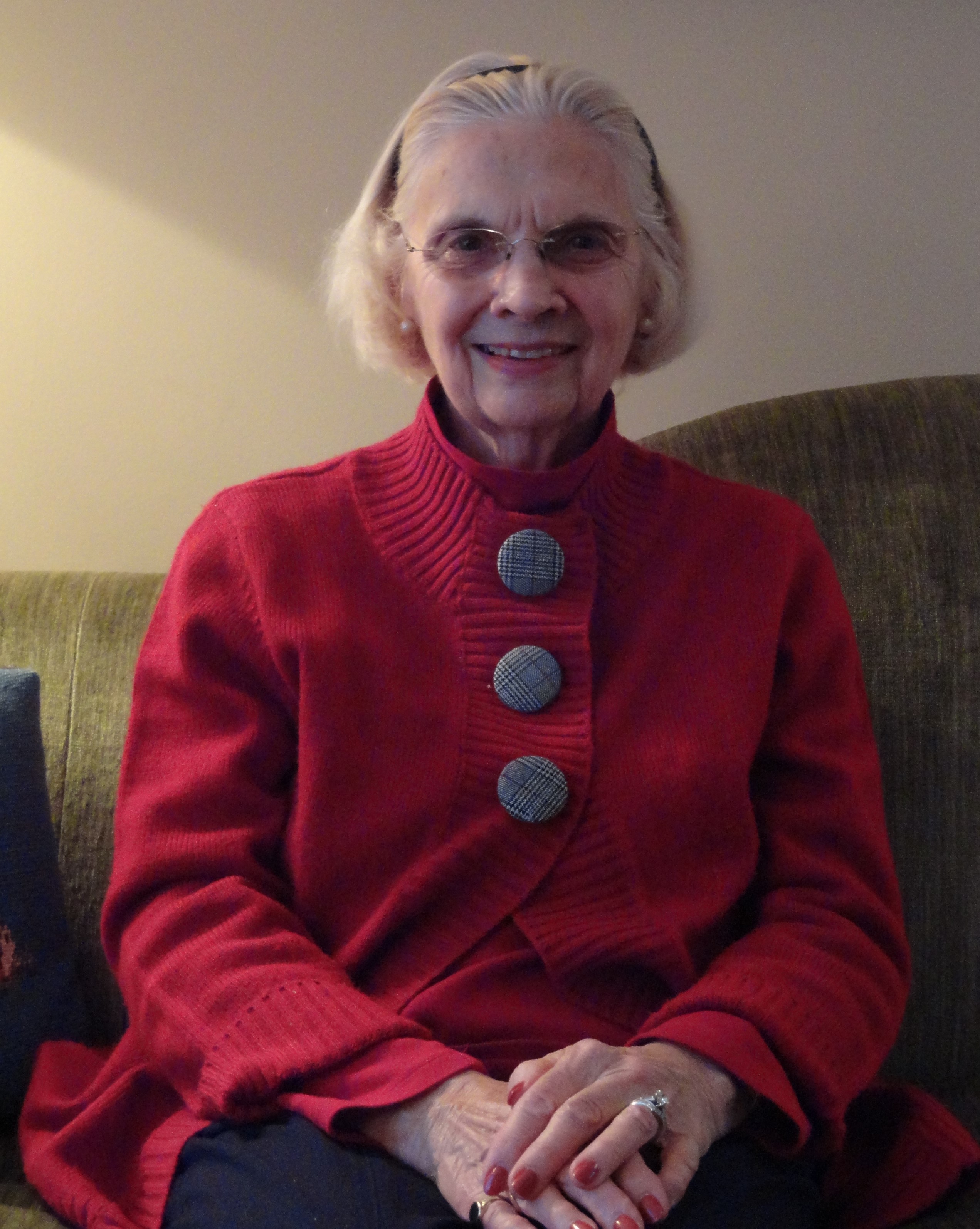
Doris Reiss, December 3, 2013
-
interviewee
-
Doris Reiss
-
interviewer
-
Christine Luthy
-
Date
-
2013-12-03
-
Subject
-
Cooperstown Graduate Program in History Museum Studies
-
New York State Historical Association
-
State University of New York at Oneonta
-
Anchorage (Alaska)
-
Secretary
-
Marriage
-
Mohawk (N.Y.)
-
Description
-
Doris Reiss was born in Mohawk, New York, in 1933, and celebrated her eightieth birthday shortly before this interview was conducted. Doris was a very active young woman. In high school she joined and toured with a trio, became a cheerleader, and learned shorthand. After marrying her first husband, who was in the Air Force, Doris moved to the Wright-Patterson Air Force Base in Ohio. It was there that she secured her first job as a secretary to a colonel, putting her shorthand skills to use. When her husband was transferred for work, Doris found herself living on an Air Force base in Anchorage, Alaska.
After a short stint in Alaska, Doris and her first husband moved to the Cooperstown, New York, area, and that is where her story with the New York State Historical Association (NYSHA) and the Cooperstown Graduate Program (CGP) begins. Doris first worked as a secretary to librarian Paul Du Bois, but eventually came to work under Dr. Louis C. Jones, director of NYSHA. Her position as secretary to Dr. Jones allowed for unique insights into the work and lives of two men who were instrumental in the creation of CGP: Dr. Jones and Bruce Buckley. Through Doris's recollections, it is possible to form a picture of the development of NYSHA and CGP from a time before the library building was built through the changeover in leadership after Dr. Jones retired. Her interview demonstrates that the staff truly became a family during that time.
The interview concludes with a look into Doris's personal life and her involvement within the Cooperstown community. Doris spoke fondly of her two children, Pam and Jim, and of her second husband, Howard. She also discussed several of the business ventures that she and her husband, Howard, became involved in. Although Doris is now retired and living in Oneonta, New York, she maintains very strong ties to her community in Oneonta as well as in Cooperstown.
I interviewed Mrs. Reiss in her home in Oneonta, New York. Although some edits were made to the transcript to remove false starts, pauses, and things of a similar nature, I attempted to reproduce most of Doris's original phrasing. However, the transcript does not align with the audio in instances where I decided it was more important to clarify the meaning of the statement than to create a completely accurate transcription. Since the transcript is not a true reproduction of the oral history, researchers are encouraged to consult the original audio recordings.
-
Transcription
-
Cooperstown Graduate Program
Oral History Project Fall 2013
DR = Doris Reiss
CL = Christine Luthy
[START OF TRACK 1, 0:00]
CL:
This is the December 3, 2013, interview of Doris Reiss by Christine Luthy for the Cooperstown Graduate Program's Research and Fieldwork course recorded at her home in Oneonta, New York. Could you please tell me what your full name is?
DR:
My name is Doris Elaine Reiss.
CL:
What is your maiden name?
DR:
Stowell.
CL:
Where did you grow up?
DR:
I grew up in Mohawk, New York.
CL:
Do you have any siblings?
DR:
Yes…I have a half-sister. But we grew up together.
CL:
So, how old were you…
DR:
I was five when my mother remarried. My sister came after that. So, my sister is living in Florida. We've always been great pals. We really did kind of grow up together.
CL:
Is she younger than you, then?
DR:
Yes, she is. Yes.
CL:
Did you live in the same place throughout your childhood, or did you move around?
DR:
Well, I moved away long before she did. So, I moved away and that parted us for a while, and then I got married and moved away, away. So, we really didn't see each other after my high school plus days.
CL:
Do you have any special memories of your childhood?
DR:
Yes, I have wonderful memories. I went to school in Mohawk Central School system, and I participated in a lot. I sang in the choir. I sang in a trio. We went different places and sang as a trio. My music teacher pushed the three of us girls and we had a wonderful time doing that. I played the drums [laughter] in the band. And I was a cheerleader. I was always busy and enjoying myself.
CL:
What part were you in your choir? What part did you sing?
DR:
I sang the melody, middle one. And then the other girls were sisters, and we called ourselves the Three D's. It was Doris and the Daily's [laughter]. I actually have music that we recorded. It was fun.
CL:
Do you stay in touch with them at all?
DR:
No. One of them has passed away. The other one still lives in Mohawk and we don't see each other very often. But I did a lot of traveling, and I didn't stay in the Mohawk area. I lived in Alaska for two years and had my daughter there. Her dad was in the military. Then I had Jim, my son, when we moved back to Cooperstown.
CL:
Could you tell me when you were in Alaska?
DR:
Let's see, Pam just turned sixty, and she was born there. So it's been a lot of years.
CL:
When did you move to Cooperstown? You said two years later, then?
DR:
Yes. Actually, when we came back, her dad–my husband at the time–he got out of the military and we came back here and started our life here.
CL:
What was it like to live in Alaska?
DR:
It was very different than Alaska is now: There were no paved roads; there was only one street in the whole main street. There was an Air Force base that my husband was at and an Army base. My daughter was born in a Quonset hut [laughter] in the Army base. I had to go and stay there for two days before she was due because of not being able to get there in time and the kind of traveling we had to do on dirt roads and stuff. So there was a big Quonset hut thing. It was all ladies that were either going to have their babies, had had their babies, or whatever. So it was kind of a totally different experience then most any other women, you know, have. It was interesting.
CL:
That sounds like an adventure.
DR:
It was an adventure, yeah.
CL:
Must have been very different than Oneonta.
DR:
Oh, yes [laughter]. Oh, yes. And now Anchorage, Alaska, is a metropolis. It's just a huge, big, city. When I lived there none of the houses that were put up down on the river or anything, nothing was there. We literally lived in very basic, constructed, military-type housing.
CL:
What was it like to move from Alaska to Oneonta?
DR:
I didn't move to Oneonta until four years ago. I lived in Cooperstown. Well, quite different. Quite different. And raised a family. Went to work at NYSHA [laughter].
CL:
If we could just go back in time a little bit for a moment just to fill in some gaps…
DR:
Okay.
CL:
So, you said after you graduated from Mohawk High School you left the area. Where did you go?
DR:
I got married. Yes. And that's when we went to Alaska [for the] military.
CL:
When was that?
DR:
Oh, Lord. Well, let's see, Pam is sixty. So, sixty years ago [laughter] about. In that area. Actually, I better back up on that. My husband was in the Air Force, and I got an absolutely fabulous job at Wright-Patterson Air Force Base in…Trying to think of the state [laughter]. Anyways, I got a very, very, very good job with the Air Force, and became the secretary to a colonel because I could take shorthand. I took shorthand in high school, so I learned shorthand. Then my husband got transferred to Alaska. I should have stayed! I should have stayed in Ohio–that's where it was. But I didn't.
CL:
So then you moved from New York to Ohio first?
DR:
Yes.
CL:
And then to Alaska?
DR:
Yes, mhmm.
CL:
Was your job at the [Wright] Patterson Air Force Base your first job?
DR:
Yes. I had an AEC clearance. It was all officers in the building I was in, in that part of the Air Force. I just happened to fall into it. I was there, and they needed somebody like me, so we did. And I enjoyed that a lot. I was fresh, and I knew how to take the shorthand [laughter] and everything. Don't ask me to do it now. I loved being part of–an important part of–the military. But then I was in love and I went to Alaska [laughter].
CL:
Started a different adventure.
DR:
Yeah.
CL:
What was it like working for the colonel?
DR:
It was very interesting, very good. I took a lot of conference shorthand. And then, because he was an important part of the military there, I had the responsibility of everybody bringing…it was all officers that brought all this paperwork from the day to me and I could put it in the overnight, big safe. Everybody had to come through me to get it back out, too. So, that was really cool. I felt important. I was still young, you know, but I felt important and I liked it and the people were wonderful. You're bringing up a lot of memories I haven't thought about in a long time.
CL:
[Laughter] Well, that's a good thing. Would you've stayed there if you weren't married?
DR:
Oh, definitely. Who knows what would have happened?
[TRACK 1, 12:15]
CL:
So, then, you said you moved to Cooperstown with your husband from Alaska, and that's when you become involved with NYSHA.
DR:
That's right.
CL:
How did you find out about NYSHA?
DR:
Actually, I lived for a couple of years in Richfield Springs before I moved to Cooperstown proper. I mean, the town [Cooperstown] isn't that big [laughter]. How did I get my job at NYSHA? I don't remember but I had wonderful jobs there. It was very small then. There was no library building. It was all in Fenimore House and The Farmers' Museum. That was it. I actually was secretary to the librarian in Fenimore House, and I could look out my window and watch them building the library building. And interestingly enough, it was built by native people–I'm trying to think of the men that put the big roof on and stuff, they walked on–how you see it on the old pictures of guys in New York City that walk on [skyscraper beams], yeah–it was that kind of thing. It was kind of fun. I should have been typing but I was watching them a whole lot [laughter]. Then, after the library building was built then our offices, where I was, moved over into that new building. And then I was secretary to the librarian. Let's see [DR references her notes], his name was Paul Du Bois and he was the librarian, and we're still friends. Carol and Paul. We do Christmas cards and all that kind of stuff. And then I got hired away from the library by Dr. Jones. That was wonderful, that was just wonderful. I loved NYSHA. I loved the people, I loved working there. In the meantime I had divorced my husband, and so I put myself really right into having that new family of people and friends and everything. It was wonderful.
CL:
Could you tell me about a typical day working under Dr. Jones?
DR:
Yes. I did a lot of typing. We were actually friends. He always treated me like a pal. That's the nice part about NYSHA–everybody was friendly. It was like nobody was bigger than the other person. We really became a family there. Dr. Jones did a lot of traveling, going and researching, and lecturing, and going to visit other institutions, and a lot of things. But we were friends. We were always friends. And we lived near each other. He used to make me take care of Aggie–Aggie was his wife. He'd say, “I want you to take Aggie down to Albany or some place and take her shopping. She doesn't know how to shop [laughter].” And he said “I want you girls, you ladies, to go and you take care of Aggie.” And it turns out that even after Dr. Jones–and I got so I called him Louie,–after he retired–Aggie and he got a year's [grant] and went all over the United States. This is after he retired from NYSHA itself, he and Aggie had what they called the Aggie Wagon and it had sleeping quarters in it and everything, and I took care of all of their business. All of their mail came to me in Cooperstown and [unclear]. I still was doing that for them when I met Howard. They would go looking for undiscovered folk art. That's what their mission was. And so they would go in the Aggie Wagon. They'd stay where they could park it in a park where people tented or stayed overnight and so on and so forth, and he would dictate to me. Then I would take the tapes back to work–I'd go back to work at night for him while I was still working with the new director at NYSHA. But we [DR and the new director] did not last long together. So, I basically took care of all of Dr. Jones's private business and the house and all that kind of stuff. Then I met Howard, and I was, like I said, not happy with the new [director]. He thought I was being treated better by the men from New York and everything else than I should be because I was not educated to do that, and so he told me that. It was during seminars [Seminars on American Culture]–and I had met Howard and we had married–and he said, “I think you should consider resigning.” And I said, “Consider it done,” and I pick up my things and walked out during seminars and left him calling me saying, “Ooh, ooh, I apologize,” and whatever. But he only lasted there a couple more months and he was asked to leave. Like I said, I really felt like a family member at NYSHA and it was indeed a family. I loved all the people that I met and a lot of them I just stayed friends with. A lot of them are gone–that's a biggie. Age catches up with you and you start losing people you care about. Yeah, it was a very interesting way, and when I sit here and I think about it, I think about how NYSHA and the [Cooperstown] Graduate Program and everything grew. It started small, and it just grew and grew and grew and grew. I'm very happy to have had this. Those times. Good people.
CL:
Was it difficult for you to resign because it was such a family atmosphere?
DR:
It was not difficult for me to resign because of the person that I was having to deal with. I didn't realize that he would not [laughter] be there much longer or probably I would not have left. But he said he was jealous of me. That was ironic. Here was I, this young woman with no formal education really, just a part of the family, and he suggested that I needed to move on. My husband that I had met–came as a bachelor to Cooperstown–and we met on Christmas Day because I went to a party that was just a get-together because he was new to the area. And I knew everybody that he was entertaining, too. My children went to their grandparents with their dad for the day, so I was there with friends. When we got ready to leave he said, “Now I understand that you ski up around the corner with your family and everything, and I'd love to meet your family and your husband and your children. I have an open door here. I'd love to have you and your family come.” And Betty Morris, who I was with, she was a NYSHA person, too, for many, many years, and she said, “Oh, Howard. She's one of the available people” [laughter]. So he started courting me, and that's how we got together. And everybody loves Howard, too. Everybody got to know him. And still do. The Graduate Program–it was interesting as a bystander to watch it grow. I met a lot of the students, and some of them have remained friends of mine even. They've taken jobs with museums and all that sort of thing. We exchange Christmas cards. So it's been a lasting relationship I've had with that.
CL:
If we could go back just a little bit, what year did you meet Howard? I missed that.
DR:
What year did I meet Howard? Well, we've been married exactly forty years, so it was forty years ago.
CL:
Congratulations.
DR:
Mhmm.
CL:
If we could spend a little more time on your years with Dr. Jones–How did Dr. Jones interact with the rest of the staff?
DR:
Oh, my word! He was everything to everybody. He was a down to earth man. He was a man who you couldn't help but know and love. He treated everybody the same way. He really did. He was a very special man. He's written some very interesting children's books and things. Of course, he's long gone now, he and Aggie both are, but he was wonderful. He would always, when he had been on the road–I probably shouldn't tell these stories–when he had had been on the road and I was the secretary he'd say–and he always had an open door policy, so he was always accessible to the graduate students and everything–but then when he'd been away, he'd say, “Come on in, we need to talk.” And we'd go in and he'd close the door then and he'd say, “Okay, tell me what's been going on around here.” He wanted to know what had been [going on], personal, business, whatever it happened to be, I had to tell all [laughter]. It was fun; it was worth it. The nice part was that obviously he trusted me and because he trusted me we had a nice relationship and I could tell him the things because he was interested in the personal part, and he was interested in the business part. So, I happened to fill both of those jobs [laughter].
CL:
Do you remember any stories that you told him during any of these times?
DR:
I can't even remember now. Probably lots of them [laughter] if I stopped to think about them. If I told him stories, they were not repeated stories [laughter].
CL:
So you said he had a good relationship with the graduate students?
DR:
Oh yes, oh yes. The early ones. I still have some that, like I said, are still friends and one
in particular [DR references her notes]…C.R. Jones, do you know C.R.? Yeah, well he was in the first class, he and Susan. They weren't married then but they got married. He was in the first class. Then Sal Cilella was a graduate student, and he was a great guy. He was a student and friend. He was in the…what is it in the military when you get called back…?
CL:
Drafted?
[START OF TRACK 2, 00:00]
DR:
No. He actually had a job that they could call him back to active duty. He was not on active duty when he was in the Graduate Program here. Then he met a gal, and they had known each other before. She wasn't in the Graduate Program, but they kind of reunited and they were going to get married. And Sal, when he graduated from the Graduate Program, his plan was that they would get married but he got called into active duty before any of that happened. And so I had a sister-in-law that worked for one of the state people. Mary was a secretary for him, my sister-in-law, and he skied with us at Mount Otsego. So, I was telling her about Sal that number one, it was going to put a dent in his plans to be married and also with the Graduate Program. So she talked to her boss about it, and he got Sal excused from going back into the military. Well, Sal has never, never forgotten that we pulled that one off, so we've been friends. And he got married. That was very special. Sam Stratton was the man that she worked for–Sam Stratton was part of the State. That was very nice. And Sal has never forgotten the fact that, you know, he's got two wonderful, wonderful grown, handsome men for children. He said, “I wouldn't have had anything if Sam Stratton and Mary and you hadn't been able to make something happen.” It was another interesting little thing. And this is in little Cooperstown and little old people–just feel like you are part of something wonderful.
CL:
Did you have a good relationship all of the students or were there some that you didn't get along with?
DR:
There's some that you like, you know, they respond to you easier than some others do, but no. In most experiences I think the graduate students all have been wonderful. I've always enjoyed, I enjoy what you're doing, and it's important. It's a growing, growing thing. When I think about forty years ago [laughter] that a lot has happened in forty years.
CL:
Could you tell me more about how CGP got started in the first place?
DR:
Well, I think that had to do with Dr. Jones. Definitely did. He and Bruce Buckley put the Graduate Program together. It didn't exist until they did that. They had that dream. Bruce Buckley, I think, was working at the colleges down here in Oneonta. They really made it all happen, the two of them. And Minor Wine Thomas–you wouldn't have known Minor Wine either–he was all a part of that. He was instrumental in the Graduate Program, and getting the students, and all that kind of stuff, too.
CL:
So, because of Buckley the Graduate Program was always connected to the school at Oneonta?
DR:
Yeah, I think a lot of the classes and things might have [been]. I think he was the one who really kind of controlled and put it all together. He was kind of a chief of the students, just from my recollections.
CL:
So you were working for Dr. Jones before the Graduate Program was created.
DR:
Right.
CL:
Do you remember how other staff were reacting to the creation of the program?
DR:
I think most of the people that were the heads of departments within NYSHA and so forth, they all kind of played a little part in that. Then it became a classroom and a school. It's very interesting how those things just develop and develop and develop, especially when there's so many people out there in the world now that are working because of all that happening. Like C.R. Jones and Sal. I can't imagine how many people there are now on the list of people that have gone through the school system. Can't imagine. It's been a long time since I've been up there poking my nose around [laughter].
CL:
What was your role in that time?
DR:
In the graduate student part, you mean?
CL:
Yeah, so you were working for…
DR:
Dr. Jones.
CL:
…Dr. Jones, but were you involved with the program at all?
DR:
No, not, not really. Not really. They could always approach me if they needed to approach Dr. Jones, and that sort of thing. But then Dr. Jones retired and went off on the Aggie Wagon, and looking for new, undiscovered folk art. Then he wrote some books about that and all that stuff. It's very interesting. It's very interesting to have been on the ground floor and watched it flourish, really. And it wasn't because I was a part of it–you know, I was there to do what I was to do–but you were friends with everybody. It's not like there's the boss who doesn't hardly speak to the whatever. It was a family. That's how it all started; it was all a family.
CL:
What was Buckley like during this time?
DR:
Very nice. Very, very nice guy. Very nice. Busy. Obviously. He had a lot of big things that he did. Brought it all together, too. He really did bring the Graduate Program together.
CL:
So after the program was established, what was it like to have that first group of students come in?
DR:
That was the one that C.R. Jones was in. But I didn't get to know the students right away. That kind of grew because the graduate students kind of relaxed and then started doing something. They came from something to learn something. They weren't already doing it and then coming and doing it. They came and then, through the graduate classes, became what they are because of people's involvement with them. Just like some of the girls that are teaching now are Cooperstown girls. That's pretty nice too. It's like a family up there, isn't it?
CL:
It is. You mentioned a few times that you still keep in touch with a few of the students and that you kept in touch with Jones. Is there any other person on the staff of NYSHA or the Graduate Program that you keep in touch with, or at least did for a while?
DR:
No, I think they've…there's been a lot of changeovers and changeovers and, of course, I haven't been there for almost forty years now either. And some of them have passed on that I was really close with and involved [with]. A lot of the people that are there now don't know me as a part of it, as part of you. So that's different.
CL:
But as for the people that you actually worked with there's really no one that you stay in close touch with?
DR:
No, we're all too old [laughter].
CL:
What are some of your fondest memories from your times there?
DR:
Well I've been telling them to you [laughter].
CL:
Yes, I've heard quite a few [laughter]. Is there something that just sticks out in your head every time you think of NYSHA?
DR:
Dr. Jones. And I loved the fact that we were a family. I don't think it's like that now. I don't happen to see–of course, I'm not there to see it. But I think we grew as a family and it's paying off, obviously.
CL:
How long did you work at NYSHA?
DR:
Well, for probably four or five years before the library building even was constructed. I can't tell you exactly what year or anything. We used to have a gathering before the library building was built, and we used to have coffee hour downstairs. There was a hallway when you came in the front door–probably behind the gift shop, in that area–there was a whole big, long, long table. We all used to gather down there for coffee hour, and that was a learning process, too, for everybody. If anybody had a question, anybody had a joke, [laughter] you know, it was a family. It really was a family. It's not that there were anything talked about that shouldn't be talked about, about a person or anything like that. It was just trading information, what's been going on, and what's this and what's that. That was before the Graduate Program even started, actually. And that was neat because, like I said, it was all a family. I think it's too bad, actually, that the people that work get too involved. It's gotten too big and too big, it can't become that anymore, it can't become that family anymore. But I think as you all go out into the world, keep yourself open to the new people as they come on and let them explore you as helpful [resources]. You'll be learning a lot more that way by interacting with the graduate students. And you won't be staying right with your class. It'll be bigger and bigger. And they've all loved it, like Sal, and I certainly think C.R. enjoys all that. He'll know all this stuff [laughter].–Let's see, he was in the first class. There's a lot went on before him. No, Sal's wonderful. He's been with other different universities, and we've [developed] a bonded friendship, he and his wife, and his two boys. It's special to have a friendship that long, for all the good reasons.
CL:
To switch gears a little bit, you mentioned earlier that when you first started–well, pretty soon after your started working at NYSHA you divorced your husband and so you were taking care of your family, and then later on you met Howard and married him. So, how did you balance your family life with your work life at NYSHA?
DR:
Well, my daughter worked in the loft of the–when she wasn't in school, of course, my kids were in school–for some summer work, she worked up in the spinning and weaving loft with Virginia Partridge and learned to do all that. We always took care of our own brats, all these people that we worked with. Our kids always had a job there if they wanted it. My son worked at the country club, and he did sailing instructions and all that kind of stuff there. But my kids, I could drop them off [at] work, I could drop Jim off at the country club, and Pam over at The Farmers' Museum. So they were brats [laughter], they were NYSHA brats [laughter]. Good experiences for them, too.
CL:
So it was a very accepting place.
DR:
Absolutely. Absolutely.
CL:
Were you close to the children of any other staff members?
DR:
Oh, sure. Sure. I can't put my finger on anybody in particular, but it was a small town. A lot smaller town. I knew everybody's kids. Some of the teachers, some of the bosses, we knew all their kids. They were still growing up, too.
CL:
So you were very involved in the community, then.
DR:
Mhmm.
CL:
After you decided to leave NYSHA, what did you end up doing?
DR:
Married Howard [laughter]. We went into several businesses together. I left NYSHA because of the person, you know. Otherwise I probably would have stayed there for quite a while. But that all changed, and it was not changing for the good with me and some of the other people, too, otherwise he would not have been let go.
CL:
After he was let go did you consider going back?
DR:
No. Because Howard and I were already involved, we've always been involved in something [laughter].
CL:
So what were some of the things you got involved in together?
DR:
Well, we bought a building on Main Street in Cooperstown that was an old car garage right on Main Street that was [owned by] Bob Cook's father. We did it over. We built the buildings [that] were all broken down garages on the back of that building that now are stores in the back. Well, it's attached to the back of that building anyway. And we put in a really, really nice antique shop. But it was good antiques, it was valuable antiques. That's one thing that Howard brought to the forefront because he was a bachelor and he had been in business down-state and then when he sold that business he moved up to Cooperstown. That was something he wanted to do. He'd been up there and he said, “This is where I want to be.” First person he ever spoke to was…Jimmy, my son, and I were taking care of Dr. Jones and Aggie's house. They had moved up on the corner but they were on the Aggie Wagon all over the United States for a year. So the house was for sale–that's the big one just as you go across the bridge on the river, that was their house–and I was taking care of that. And Jimmy used to come from school and go check it out, make sure that the windows hadn't been broken or whatever. And Howard hit town and he was looking for a realtor. He was kind of looking the town over because he wanted to find something. And so, he went down into that house because it had a For Sale sign on it and Jimmy happened to be coming out the front door. So the first person that Howard ever spoke to in this whole town turned out to be his step-son, [phone ringing in the background] which is kind of a neat story I think. [It's] been a real nice family. So Howard just cruised around and Jimmy showed him where there was a realtor, and the realtor took him up to our house that we had up in Pierstown. And then I came along [laughter] and crashed a party [laughter].
CL:
How long was Howard in town before you met him?
DR:
Probably three or four months [laughter].
CL:
Okay, so he was pretty new to the area still.
DR:
But he was getting to know people. He knew Tom Goodyear, Bob Cook, Betty Morris. They were introducing him to all the people that we all knew. So when I got ready to leave that Christmas and he said “Now just bring your family, husband and everything.” Betty said, “Oh for heaven's sake, she's the available one” [laughter]. And then my life was over [laughter]. He wouldn't leave me alone [laughter].
CL:
If I could just ask about Betty for a second–you said you worked with her at NYSHA?
DR:
Oh, yes. She was the PR person for NYSHA. That was her job. That's an important job. We were great buddies, she and I.
CL:
Was she involved with marketing the Graduate Program, then, and trying to bring the first class...?
DR:
No, I don't think she was. I think, actually, that the Graduate Program was [references notes] marketed probably by Bruce Buckley who was involved with the colleges. Got Dr. Jones involved in all and that all kind of worked between the two of them, I think, kind of made it all happen. But I think Bruce was on the staff at the colleges, if I'm not mistaken, and then he was trying to woo Dr. Jones and it worked.
CL:
So you said you lived in the house that Howard moved to when he moved to the area and then…
DR:
I had my own house. I had my own house down on the corner between the Presbyterian Church and the Episcopal Church. I lived at the corner between the two of them [laughter]. That was my house. That's where my kids and I lived.
[START OF TRACK 3, 00:00]
CL:
And then you said you were involved in several businesses…
DR:
With Howard.
CL:
…So besides the antique business what else were you involved with?
DR:
Oh, that was a wonderful, that was a wonderful business. And then Howard came back, I was running–the store, and he was always at the store too, but he left and he came back. And he said,–this very interesting,–we had a young man who also helped us with the store. He repaired clocks and things like that, because Howard was a big clock collector. He had a huge clock collection. So Bob was to tend the store and Howard wanted to show me something. So we got in the car and he drove down toward Oneonta. Smith Ford wasn't even there yet. And there was not one thing on that road when we took that drive down. There was a farm that had gone totally, totally defunct. I felt it was too bad because the family had twelve children and they were farmers, nice, nice people, but they just couldn't make it. So they put their farm up for sale. And Howard's showing me all this land and everything and I said, “What are you, what are we doing?” And he said, “Well, I wanted to show you what I bought you today” [laughter]. And I said,
“What?” And he said, “I think we're going to build a building down here. We'll put the place up on Main Street on the market because it's not big enough, not doing enough, not whatever.” And he said, “I think what I'll do is this is your birthday present.” I don't know how many acres it was. And I said, “Good Lord. Who's going to come way down here in the country?” Smith Ford wasn't there. There was nothing there. There was not another business on that whole road until after we built our building down there. Isn't that interesting? I mean, it's so overbuilt now that it doesn't even make sense. We've been down there for forty years almost. And everything else has happened around us. Howard's always full of surprises like that [laughter]. Makes him a very interesting partner. I never know [laughter].
CL:
Since we are already talking about development a little bit, I thought you could perhaps tell me more about the development around the lake and Reiss Road in particular.
DR:
[Laughter] Well that was that place that he bought and that's where I met him at the house. And that had a lot of vacant land and everything, too. We were there for years, you know, and the guys used to come up hunting and everything. And so then Howard decided that we would develop the land. No, he decided we were going to sell the house up on the main road, the farm house. Actually the house that he bought had a barn garage and the man who had it before had a studio that he did his artwork in. And that's the first year of the Graduate Program. I had a girl living with me down in Cooperstown in the first class that rented a bed, a room and stuff with me. Howard had two men, graduate students, after he bought the house up in Pierstown that were graduate students in the first class also upstairs because there were four bedrooms upstairs and one down. That clicks into the Graduate Program. And so we took that building that was an art studio and we made–let's see, one, two, three, four, five–five graduate student rentals. It had a small kitchenette that had the stove and the refrigerator and the sink all in one unit, and a nice bath, a nice bedroom. So we had graduate students in our barn. And I had the one that I had in the house too. Yeah, first class. That reminded me.
CL:
So then Howard's related to the program as well.
DR:
Oh, yeah. And then we were going to sell the big house and build a house on our land overlooking the lake and everything. That was not too long before–let's see, we've been here [Oneonta] four years–about 8 years ago: That's when Reiss's Road was born, because we decided we got to put in a road, which we did, we have to build a house too big for what we need. So, why don't we sell lots? And that's what we did up there.
CL:
And you said that was eight years ago about?
DR:
Yeah.
CL:
And then you moved here four years ago. So what did you do in between?
DR:
Because we decided not to build the house out on Reiss Road…and his father gave that name to it. We don't usually banter our name around that much. We bought a little place on Huff Road to live in while we decided what we wanted to do. So that's on Huff Road. We still own that.
CL:
Are you renting it right now?
DR:
We are. Sadly, we had sold it to a very, very nice man who unfortunately had–what's the progressive disease?
CL:
Alzheimer's?
DR:
Yeah. And he was a wonderful guy. He bought it and things were not going well. He was really, really going down fast. An interesting thing, it was in his family–and he wasn't married, he had a wonderful dog–they all had that. But it starts in the family at a certain older age, the next one that gets it is a little younger, the next one that gets it is a little younger, and that's the way it progresses through the family. So, we got the house back, anyway, so we're renting it to someone. But that's really sad. What a nice guy. So he's with his sister and her husband down in Florida, they're taking care of him.
CL:
Did you know him before he bought the property from you?
DR:
He had started [showing symptoms of Alzheimer's], but we didn't realize it, and I don't think he really realized it either. It went very, very fast. Very fast. Real nice. But that was an interesting thing to find out.
CL:
Do you keep in touch with him or his sister?
DR:
He's really not able to do anything like that anymore. So, we have the house.
CL:
Then you decided to move closer to Oneonta?
DR:
We never thought about moving to Oneonta. We thought about building something smaller on the land, because it's nice land up there in Pierstown. We came down here to this house because Howard was making an estimate on the move of the people who had this house for sale. I said, “I want to ride down with you because I want to go shopping in Oneonta.” So I sat out there in the driveway, and he's in here to move them. When he came back out I said now, “Now, Howard, if that house was in Cooperstown, up in the country, that's the kind of house we need,” you know, that smaller, whatever. And he said, “My goodness, would I ever get you out of Cooperstown?” [Laughter] And I said, “Well, I don't know about that.” He said, “Well, come in and let me show you around the house.” We said to the couple–and I actually realized I knew her from a mutual friend that lived in Cooperstown. And I said, “Sandra, if this house was in Cooperstown this is the house we would want.” And she said, “We'll make you a good deal” [laughter]. That's how we ended up here. It couldn't be nicer. Couldn't be nicer. We have the most wonderful neighbors. We have the most wonderful family up here. It was a really, really good move. And I can't think of any place in Cooperstown that I would have been more pleased with than being here. This is another whole little world. It starts down there and ends right up here. It's just a short thing and, like I said, the neighbors are family up here, they really are. We have a great time.
CL:
Are there any activities that you do with them?
DR:
Oh, yeah. We do our walking. Bert, kind of across the street here, he's just retired from the college and his thing was bicycle riding. So, he and his wife bicycle all over the place. Well didn't he get us started fast. So we have our bicycles and we can ride up and down this road, we take it over to the park. We've gone to Canajoharie along the river and all the kind of stuff together. When we have time. Love it. It's a great, great group of people. Across the street, he's a professor at the college and got two kids and his wife's a pharmacist at Basset. It's all family. You know, it's just total family. In fact we built that room and the porch on that we were in before because we needed that kind of space [laughter]. We didn't need a formal house for that kind of friends and people. So, that was great. We love it. Love it. And we still have all our friends in Cooperstown, and they come down here and play bridge, snicker, my bridge club comes down.
CL:
Do you go back up to Cooperstown often?
DR:
Oh, I'll be up there tomorrow night playing bridge up there [laughter]. I've got lots of friends. We have lots of friends.
CL:
So you're very much tied to both communities.
DR:
Oh yeah, oh definitely.
CL:
Is your family close? Do you get to see them?
DR:
My son, Jimmy, they live in Cooperstown. My daughter Pam now has just moved to Montana. She'd been up living in Vermont. But they went to school in Cooperstown, and their kids are here, too. Yeah, our digs will always be around here.
CL:
So you're close to your family and you get to see Jimmy often.
DR:
Oh, oh, yeah. We're close to this area, too. I know a lot of people sell out and go south and do all that kind of stuff, but we're happy. Of course Howard works way too much but I keep trying to get him to retire but that's out of the question [laughter]. Then I'd be sorry, probably. I wouldn't know what to do with him [laughter] if he did. Great guy. Everybody likes Howard. Thank goodness. Yeah, we've had a good, good marriage. He's been wonderful with the kids. They're not kids anymore but…and our grandchildren. See, he was never married so my kids became his kids. That was nice for them.
CL:
Well I think we're actually almost out of time. Is there anything that you wanted to add that we didn't cover or something you thought of along the way?
DR:
I think we've covered a lot [laughter].
CL:
I think so too [laughter]. Well, thank you very much.
DR:
We could write a book now [laughter].
CL:
Yes. That's the next chapter of this.
[END OF TRACK 3, 18:20]
-
Coverage
-
Mohawk, NY
-
1933-2013
-
Oneonta, NY
-
Creator
-
Christine Luthy
-
Publisher
-
Cooperstown Graduate Program, State University of New York-College at Oneonta
-
Rights
-
New York State Historical Association Library, Cooperstown, NY
-
Format
-
audio/mpeg
34.4mB
-
image/jpeg
1.3mB
-
Language
-
en-US
-
Type
-
Sound
-
Image
-
Identifier
-
13-07
-
Original Format
-
Born digital