-
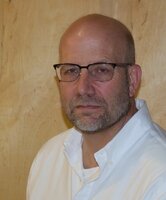 Tom Montan, November 13, 2024
 Tom Montan is the current CEO of Sculpture Space in Utica, New York. Originally from California, Mr. Montan moved across the country eight years ago to pursue his love for art through his role at Sculpture Space. Prior to Sculpure Space, Mr. Montan worked for a large-scale bookstore operation in California for over 20 years, where he worked as their marketing director before becoming the chief executive officer. Mr. Montan is also an artist; his work is mostly figurative portraiture paintings, but he has also experimented with sculptural casting and other mediums. Tom is a passionate advocate for artists, serving on many art boards and councils, and is also a landlord in the Oneonta, New York region.
Hosting up to 20 artists every year, Sculpture Space is an artist residency program located in Utica, New York. Sculpture Space was founded almost 50 years ago in an old boilermaker plant by Charlie Fisher and John von Bergen where the mission, as described by Mr. Montan, is to support artists. Artists from all over the world come to Sculpture Space for two months to create and experiment with their artistic processes.
Mr. Montan’s managerial and creative experiences paired with his deep love for the arts are evident in the interview. Much of the interview focuses on Mr. Montan’s vision for Sculpture Space, potential future endeavors in the form of programs, fundraising activities, as well as bettering the residency experience. In discussing Mr. Montan’s role at Sculpture Space, conversations surrounding the rapid changes in art arose, particularly about sculptural mediums and process evolving.
I interviewed Mr. Montan at the Sculpture Space studio. Prior to the interview, Mr. Montan gave me a tour of the space, including the outdoor sculpture gardens. He makes mention of some of these prior conversations during the course of the interview.
-
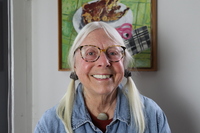 Pamela Cooley, November 20 and December 2, 2024
 From 2000 to 2006, Pamela Cooley was a board member of the New York Folklore Society. She was born in 1945 in Sidney, New York. While growing up she shared close connections with her parents and grandparents, and she discusses their prominence in her life today. Cooley shared various stories, characteristics, and memories of her family members. Throughout her youth, she attended the Pleasant Street School in Sidney, New York. She felt different from other students, as she was interested in taking shop classes and learning cooking instead of traditional education courses.
In college, Pamela fell in love with various shop-style classes at SUNY Oneonta, remembering them fondly. She graduated with a major in English Literature, and after her undergraduate experience she began working at the Graphic School Design Library at Harvard. Cooley worked various jobs and participated in programs that engrossed her in folklore. Throughout the years, she managed a multitude of foodway programs that fostered her love for cooking and folklore. Years later she went back to graduate school at SUNY Albany earning a degree in archives and record management.
I interviewed Pamela Cooley at her home in East Worcester, New York. Pamela currently does freelance archivist work and fills her time with various hobbies. Years prior Cooley was involved in the New York Folklore Society. She enjoys discussing folklore and its prominence in our daily life and the importance it had in her past archival work. She processed the papers of Bruce Buckley, first director of the Cooperstown Graduate Program, as well as those of Congressman Hamilton Fish [III]. She discusses cooking, her archivist career, and the experiences and connections she gained when immersing herself in the New York Folklore Society.
Pamela spoke with a very clear tone. I have eliminated repeated words and corrected confusing phrasing while ensuring all necessary details are included. Based on the conversation, there were parts of laughter and small conversation amongst myself and Pamela that I kept in as I felt it contributed to the positive nature of this oral history. Due to an equipment malfunction, the first half hour of the interview was not recorded properly on November 10th. I returned on December 2nd to re-record that portion of the interview.
-
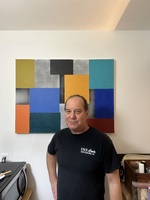 Marc Mancini, November 13, 2024
 Marc Mancini was born in Utica, New York in 1958. Growing up locally, Marc had a lot of friends in his youth, and he remained in the area for part of his college years. Marc's father was a painter as well as an art teacher. Thus, Marc was heavily influenced by his father and this influence ultimately inspired Marc to become an artist and receive a bachelor's degree in sculpture.
Marc's training as an artist included working for and with fellow artists. During the interview, he shares numerous experiences with teachers, friends, and mentors who played instrumental roles in Marc's training to be an artist. He was trained in traditional sculpture techniques, which included welding and framing steel fragments as well as piecing together pieces of wood. Marc was a member of the very first residency program at Sculpture Space. During his time there and beyond, Marc was introduced to various artistic techniques, and he utilized them in his artwork as well as other jobs, including his role at the Museum of Natural History, which he discusses in the interview.
Furthermore, Marc talks about how Sculpture Space has maintained its mission over the years but also has implemented changes. After discussing much of his training, Marc's reflections become more personal, as he shares his reflections about how the art world is changing, but also what the subject of art means to him. This includes him talking about his thought processes when working on a sculpture as well as relevant philosophies he learned from friends and colleagues.
I interviewed Marc at his home in Utica, New York. This setting served the interview process quite well. Marc was able to provide excellent accounts of his childhood and later years, such as his college years and beyond. In the transcription, I have added an occasional missing word when the meaning was unclear to add clarity to what Marc was discussing.
One important note I want to make is that I did ask some "did you/do you" questions, but I would like to argue that it was a useful tool in generating rich responses from Marc. These questions (not asked throughout the entire interview) did get Marc to open up and discuss a lot of topics in depth which in turn produced a productive and knowledgeable interview.
-
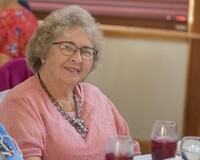 Leona Chereshnoski, November 13, 2024
 Leona Chereshnoski is a proud lifetime resident of the Tug Hill community. Tug Hill is an upland region in northern New York state consisting of many small towns dispersed throughout. Born in the little town of Osceola in 1943, population 242 as of 2023, she spent her formative years surrounded by folk music, her mother, Alice Clemens, being a well-renowned fiddler and founder of the New York State Old Tyme Fiddlers' Association (formed in 1976). She left her Osceola home and worked in Syracuse for two years after graduating from Camden Central School. She met her husband, Ray Chereshnoski, at one of her mother's dances and was married on Feb 23, 1963 during a blizzard at St Mary's Church in Florence, NY . They had three children and lived in Lorraine, NY, Ray's hometown. A friend who knew both families said it was a "marriage made in heaven". They were married until 2009 when Ray passed from Lewy Body Dementia. Their daughter Sherry gave them two beautiful grandkids but she passed from Pancreatic Cancer in 2019. Their son Peter and daughter Jackie gave them five more grandchildren and now we have eight great grandchildren. Pete and Jackie do much to help operate and keep up the Bed & Breakfast Leona runs on the old farm in Osceola and that is where they all try to have a family gathering on Christmas Eve each year! While more of a dancer than a fiddler herself, Leona has also always been involved with the fiddling community, first through her mother and wider family’s involvement with the association, before taking on the role as president in recent years.
Here she explores growing up and living in a small community, reflects on her family history and how the area she calls home has changed over the course of her life, and discusses the value of community and folk traditions. Being first a housekeeper and homemaker, then a librarian for 27 years, Leona shares her experience with education and a career later in life, her story emphasizing the value of family support and finding your passions. Her experience as a librarian greatly informed her work with the association she is now president of, and she considers here how technology can help their efforts to share fiddling with a wider audience and bring people together from different backgrounds.
I interviewed Leona at the Jervis Public Library in Rome, New York, a midway point between her home in Osceola and where I am based in Cooperstown. Her sister is currently being cared for in a care home in Rome, and Leona was able to tie this interview together with a visit to her sister. She mentions in the interview the impact music has had on her whole family, this sister included. Very few changes were made in this transcript from the audio itself, only removing filler words for the sake of clarity to the reader.
-
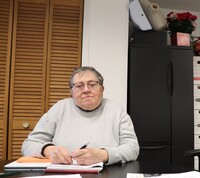 Ellen Fladger, November 13, 2024
 Ellen Fladger is the Head of Special Collections Emerita at Union College's Schaffer Library. She was born on March 8, 1948, and grew up in the town of Saugus, Massachusetts. Storytelling is part of Ellen's DNA. Growing up, she relished learning about local and family history, listening to her mother sing classic folk songs, and visiting Boston's many historic and cultural sights. She eventually grew her childhood interests into a fruitful career. She worked an array of jobs throughout her life but was always guided by her interest in the stories of everyday people.
Ellen talks about her upbringing, her love of folk music, and her educational background at Mount Holyoke, Indiana University, and the Cooperstown Graduate Program. There is an emphasis on her time at CGP, which gives good insight into both the program's history and life in Cooperstown during the 1970s. We talked at length about her career at Union College, and how her background in folklore studies influenced her time there. She also discusses her later relationship with New York Folklore, and her role as a former Board Member and current volunteer at the Schenectady County Historical Society.
The interview was recorded at New York Folklore's headquarters in Schenectady. At certain points, you can hear the whirring of the HVAC system and the beep of the front door alarm as someone walks in. Ellen is a natural, engaging, and witty storyteller. To convey the tone of her responses, I included vocalizations of laughter.
-
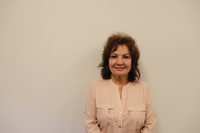 Ladan Nikravan, November 4, 2024
 Ladan Nikravan is a fieldworker with New York Folklore. Born in Tehran, Iran, she moved to the Capital Region of New York during the 1980s. During the Iranian Revolution, she made the United States her home after travels to Canada and Italy to continue her education.
In 1979, Iran faced an uprising of within its own government. During the Iranian Revolution, many suffered due to demonstrations of violence. The country of Iran went from a secular monarchy to a theocratic republic.
I interviewed Ladan at the William K. Sanford Library in Loudonville, NY. Ladan retired back in 2020 after 30 years as the Executive Director of Centro Civico, a Latino non-profit organization working to reach Latino communities in providing social and health-based services. Ladan now is part-time fieldworker with New York Folklore after serving as a former member on their board continuing to serve her community particularly involved with folk and traditional arts and culture.
-
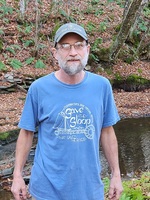 Ira McIntosh, November 13, 2024
 Ira McIntosh has been surrounded by folklore since he was a young child. As the son of prominent Catskills folklorist Karyl Eaglefeathers, he often accompanied her while she conducted fieldwork. This introduced McIntosh to some of the most important Catskills musicians of the time, including Grant Rogers and Ernie Sager. These early experiences also sparked a lifelong passion for music. McIntosh has been performing music with audiences for most of his life. Notably, he has performed with the Hudson River Sloop Singers for over ten years.
McIntosh's family owned and operated the Bobcat Ski Center for many decades. He was involved with the daily operations of the ski center as a young boy and continues to teach ski lessons to this day. Some of McIntosh's recollections concern his experiences using skiing as a community-building activity for local schoolchildren.
As U.S. society continues to become more interconnected, local traditions are often left behind. McIntosh is a vocal proponent of keeping folk culture alive. Some of the most interesting portions of the interview concern the role of participation in music, as well as the importance of keeping traditions alive. McIntosh also shares his memories of prominent folk musicians, including Grant Rogers and Pete Seeger.
I interviewed McIntosh at his home just outside Andes, New York. His daughter, although gently reminded to remain quiet during the recording process, can be heard singing from another room on a few occasions. McIntosh has also dealt with memory issues in the past few years.
-
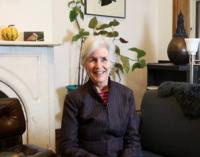 Gina Murtagh, December 4, 2023
 Situated in the rust belt city of Utica, Sculpture Space stands as a haven for contemporary artists from around the world seeking to create and share new ideas. Founded in 1976, Sculpture Space has become a vital residency program that fosters experimentation and artistic growth. The organization's mission is to provide professional artists with time, space, and resources needed for innovative sculptural and mixed media practices. It offers studio space equipped with a diverse array of tools and resources including woodworking and metal working facilities. Artists benefit from the 24/7 access studio and a proximity to light industry and fabrication shops.
Gina Murtagh served as the second executive director of Sculpture Space, and she played an important role in the shaping of the organization. During her time at Sculpture Space, Gina approached her role with a background in the art world. Her leadership transformed the residency program into a space where artists could thrive and share their creations with the public. In the interview, Murtagh shares about her career and the road that took her to Utica, New York.
The interview was recorded at Murtagh’s home in Utica, where she comfortably sat in the living room area of the house. As I prepared materials for the interview, we had a conversation to lessen any tensions. She reminisces about memories from her life. To convey the tone of her response I chose to include vocalizations of laughter.
-
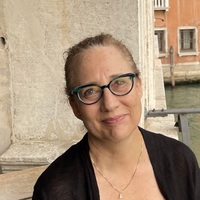 Deborah Seid Howes, October 17, 2023
 Deborah Howes is a museum educator and digital content developer who was a key participant in a project called the Museum Education Consortium in the late 1980s. The Museum Education Consortium (MEC) was a project that involved a group of seven art museums working together from 1987 to 1990 to create experiments using interactive technology as an educational tool in museums and classrooms. The project happened in the years before the internet, and at a time when many companies (Apple, Bell Labs, and others) were hungry for content to test their new technologies, and museums were great partners for this. The project was funded by the Pew Charitable Trust and the Getty Education Center. The prototypes that were created were received enthusiastically by the public in various testing sites, but there was never a plan to produce a commercially available product. The project participants were eager to learn about the best pedagogical approaches, the possibilities of discovery-based learning techniques in the context of technology, the best hardware and software for such a project, as well as the impact of creating early HDTV images of works of art.
The active participants in the MEC were the heads of education and members of their staff. The project was spearheaded by the Museum of Modern Art and the six other partner museums were the Brooklyn Museum, the Boston Museum of Fine Arts, the Philadelphia Museum, the Art Institute of Chicago, the National Gallery, and the Metropolitan Museum. Additionally, Bank Street College's Center for Children and Technology was a central participant, lending their experience and expertise in creating some of the earliest interactive learning technology models from two projects: the Voyage of the Mimi, and Palenque.
Deb Howes talks about how she became a museum educator, first at the Contemporary Art Museum in Los Angeles, and then later at the Art Institute of Chicago, the Metropolitan Museum, and MoMA. She describes her upbringing, her educational background at University of Chicago, her work as an evaluator and a media producer, and her memories of this consortium project.
-
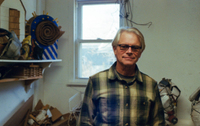 Charlie Fisher, November 18, 2023
 Charlie Fisher is a prominent member of the Utica area’s art community. Born and raised in the Utica area, his family owned the Utica Steam Engine and Boiler Works, a key business in Utica’s manufacturing history. After graduating from Marietta College, in Ohio during the Vietnam era, Charlie spent time in Europe. He returned home and was one of the founding members of Utica’s Sculpture Space, which started in a building at his family’s boiler works and remains there today. Charlie has seen Utica change as the manufacturing industry left the region. Beyond the insight he shared about Sculpture Space, Charlie also provided first-hand accounts regarding Utica’s history.
This interview was conducted as part of a series of interviews done for a planned documentary for Sculpture Space. It was conducted early on the morning of November 18, 2023, at the Fisher family home in Clinton, New York. I cleaned up much of the text, removing filler words like “um,” “ah,” and “you know.” For clarity, I also added words in brackets. My questions focused on the history of his family business, the evolution of Sculpture Space, and the ways Sculpture Space has impacted him.
-
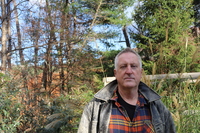 Jonathan Kirk, November 15, 2023 (Video)
 Jonathan Kirk is a self-described object maker and artist currently based outside of Woodstock in Willow, New York. He works with steel, wood, and cardboard. Kirk was a studio manager at Sculpture Space in Utica, New York, from 1980 to 2000. During this time, he helped countless artists find their foothold in the world of sculpture. In this interview, Kirk speaks to his early life in Britain, his time at St. Martin's College of Art, his move across the pond to Syracuse University, and his early days at Sculpture Space. He describes Sculpture Space’s philosophy as uncompromising, staying politically neutral, being principled, finding the best artists we could, not taking any shortcuts. Kirk also describes shifts that he has observed in the art world over the course of his career.
-
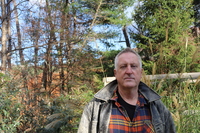 Jonathan Kirk, November 1, 2023 (Video)
 Jonathan Kirk is a self-described object maker and artist currently based outside of Woodstock in Willow, New York. He works with steel, wood, and cardboard. Kirk was a studio manager at Sculpture Space in Utica, New York, from 1980 to 2000. During this time, he helped countless artists find their foothold in the world of sculpture. In this interview, Kirk speaks to his early life in Britain, his time at St. Martin's College of Art, his move across the pond to Syracuse University, and his early days at Sculpture Space. He describes Sculpture Space’s philosophy as uncompromising, staying politically neutral, being principled, finding the best artists we could, not taking any shortcuts. Kirk also describes shifts that he has observed in the art world over the course of his career.
-
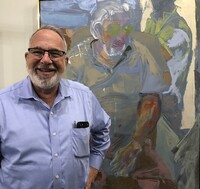 Mark Golden, November 28, 2023 (video)
 Mark Golden was born in New Jersey. He grew up in a creative household full of art, music, and famous artists. His father, Sam Golden, and great uncle, Leonard Bocour, partnered to create Bocour Artist Colors in the 1930s. The pair worked on 15th Street in Manhattan and hand-ground oil colors for professional artists. Mark attended the University of Rochester to study psychology. After graduation, he ended up working as a typesetter. One day he received a call from his, then retired, father. His father wanted to go back into the paint-making business with his son.
Consequently, Mark joined his parents in New Berlin, New York, to make paint in a renovated barn. It was here in 1980 that Golden Artist Colors, Inc. got its start. After initial financial hardship, the company began making custom paint for artists. This proved to be successful, and the company has continued to grow. The barn they started in came down in 1997, as the newer building continued to grow.
In this video, Mark describes making paint with his father for the first time. It is a humorous and compelling tale.
-
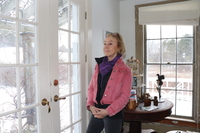 Sydney Waller, December 6, 2023
 Sydney Waller was the director of Sculpture Space from 2003-2012. Among many of her accomplishments were nearly doubling artist applications, implementing the International Advisory Board, helping to create the Griffis International Sculpture Garden, and honoring Sculpture Space’s 30th anniversary.
Sculpture Space is an artist residency in Utica, New York, less than an hour from Waller’s residence in Cooperstown (where the interview takes place). The residency primarily focuses on sculpture as a medium, which can be interpreted in various ways, utilizing a wide range of materials. Sculpture Space relies on its local and regional community for materials, venues, funding, and other types of support. This interview largely recounts the work Waller accomplished and the special position Sculpture Space has in Utica.
Waller describes in depth the symbiotic relationship between Sculpture Space and the larger community. She reminisced on the many artists she worked with and their captivating work. Artists that created interventions around the city, sculptures for the Griffiss International Sculpture Garden, or artwork for special exhibitions. Sydney also recalls the many board members and community partners who provided invaluable support to the organization broadly and to artists specifically. Board members who housed artists or performed manual labor, community members who donated property or materials, and even government officials who visited Sculpture Space or wrote congratulatory letters. Although the location came with its challenges, Sculpture Space is unique because not every city has a community network like Utica.
There is an interruption in conversation between tracks 2 and 3 for a phone call. Some paper rustling and repositioning noises can be heard in the background. There are quiet moments where Sydney reflects on a response or clarifies a question. For conciseness and clarity, repetitions or false starts have been excluded and I have broken up some long sentences into shorter ones. Sydney emphasizes certain words; therefore, it is recommended that researchers consult the audio recordings to capture her connotation.
-
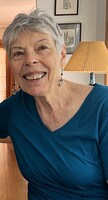 Heidi von Bergen, November 27, 2023 (video)
 Heidi von Bergen is a painter, musician, and registered nurse currently living in Clinton, NY with her husband of 55 years, John von Bergen. Heidi von Bergen was born in Shanghai, China in 1945. She moved at an early age to Canada where she remained until travelling to Bennington, VT to attend college for music. Von Bergen ultimately changed her major to art with a minor in psychology. Upon graduating, Heidi von Bergen moved to New York City where she met her husband. After moving to Clinton, NY in February 1968, they had one child, Erika. They have resided in their current home in Clinton, NY for forty years and have an extensive estate with a guest house, foundry, and numerous sculptures crafted by John von Bergen.
Heidi von Bergen has sold and exhibited art for decades, including a piece currently on display (at the time of the interview) at the 4 Element Studio in Utica, NY. Von Bergen has pulled inspiration from artists such as Cezanne and works such as Claude Monet’s Water Lilies. Von Bergen was taught by the great art teachers and mentors at Bennington College: Ralph Humphrey, Isaac Witkin, Anthony Caro, Jules Olitski and Paul Feeley.
In her video interview, von Bergen touches on moving to Clinton, NY, the organization Sculpture Space, and meeting her husband. Heidi von Bergen is married to John von Bergen, one of the founders of Sculpture Space. John von Bergen was sitting-in during the interview and can occasionally be heard speaking or shifting his chair.
-
 Jonathan Kirk, November 1, 2023
 Jonathan Kirk is a self-described object maker and artist currently based outside of Woodstock in Willow, New York. He works with steel, wood, and cardboard. Kirk was a studio manager at Sculpture Space in Utica, New York, from 1980 to 2000. During this time, he helped countless artists find their foothold in the world of sculpture. In this interview, Kirk speaks to his early life in Britain, his time at St. Martin's College of Art, his move across the pond to Syracuse University, and his early days at Sculpture Space. He describes Sculpture Space’s philosophy as uncompromising, staying politically neutral, being principled, finding the best artists we could, not taking any shortcuts. Kirk also describes shifts that he has observed in the art world over the course of his career.
I spoke to Jonathan Kirk in his new house in Willow, New York. He's recently moved on to this property with his partner Chris, who is an artist in her own right.
Jonathan Kirk speaks with a British accent. He frequently uses conjunctions and pauses in his speech while collecting his thoughts. In the transcript, I have done my best to keep the spirit of his speech intact. Researchers are recommended to consult the audio recordings to understand the tone that Jonathan Kirk uses.
-
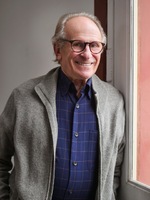 Richard Friedberg, November 5, 2023
 Richard Friedberg is an artist and educator, originally from Maryland but currently residing in Jefferson, New York. Mr. Friedberg attended Antioch College and Yale University, and has taught art as a university professor. As a young man, he was one of three founders of Sculpture Space, an organization in Utica, New York that provides residencies for sculptors.
Mr. Friedberg examines the art of sculpture and how he came to become a sculptor. He discusses his parents, who were both artists themselves, a playwright and a dancer, and probes how he came to appreciate working with his hands as a young child.
Mr. Friedberg was involved in the founding and early years of Sculpture Space, along with John von Bergen and Charlie Fisher. In the interview, he reflects on the history of the organization and how it has changed and evolved over time. The City of Utica was also discussed at length, including the demographic history of the city and social milieu at the time of the founding of Sculpture Space.
Mr. Friedberg also discusses the physical environment of Sculpture Space in the early days, including the state of the workshop and the machinery available to them. He discusses his co-founders and how he came to know them and how they came to work together.
I spoke to Mr. Friedberg in his home, with his dog as an audience. The interview took place only a few yards from his workshop with several of his art pieces in the yard.
-
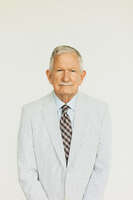 Rand Carter, November 17, 2023 (video)
 The Utica Steam and Boiler works had been in the process of downsizing operations for several years when Sculpture Space Inc. was given the use of the Federal Building. Established by metal sculptors Charlie Fisher, John von Bergen, and Richard Friedberg in the 1970s, the Utica Steam and Boiler Works foundry was acquired and repurposed into an art studio for contemporary metalwork sculptors, thereafter appropriately named Sculpture Space.
The organization centers around providing paid residencies to artists from around the world, particularly metal artists, to come and practice their craft in Utica. Artist residencies allow sculptors to have the tools to be able to succeed in their medium and achieve greater public exposure for their work. Sculpture Space continues these paid residencies to this day, and is now approaching their 50th anniversary as an organization.
Beyond the artists themselves, Sculpture Space plays a significant role in the larger Utica community. It has remained a fixture of visual art in the area for nearly half a century, and continues to influence the work and accomplishments of various educational and nonprofit organizations throughout the region.
-
 Mark Golden, November 28, 2023
 Mark Golden was born in New Jersey. He grew up in a creative household full of art, music, and famous artists. His father, Sam Golden, and great uncle, Leonard Bocour, partnered to create Bocour Artist Colors in the 1930s. The pair worked on 15th Street in Manhattan and hand-ground oil colors for professional artists. Mark attended the University of Rochester to study psychology. After graduation, he ended up working as a typesetter. One day he received a call from his, then retired, father. His father wanted to go back into the paint-making business with his son.
Consequently, Mark joined his parents in New Berlin, New York, to make paint in a renovated barn. It was here in 1980 that Golden Artist Colors, Inc. got its start. After initial financial hardship, the company began making custom paint for artists. This proved to be successful, and the company has continued to grow. The barn they started in came down in 1997, as the newer building continued to grow.
I interviewed Mark at the Golden Artist Colors facility in New Berlin. As such, Golden Artist Colors constitutes a large portion of the interview. Some of the most compelling parts of this interview include how he met his wife, Barbara, and the creation of Golden Artists Colors. While working closely with his family, he found success by working directly with artists. It is inspiring to hear about his philosophy.
I have at times added or removed words to provide more clarification; the added words are in brackets. Mr. Golden’s manner of speech is sometimes difficult to re-create in writing. I urge researchers to consult the audio whenever possible.
-
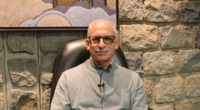 Steven Kowalsky, November 20, 2023 (video)
 Steven Kowalsky is an impactful and important figure in Utica, New York. Kowalsky was born in Utica and is the President of Empire Recycling Company. Empire Recycling is a company that collects and recycles scrap metals in Utica and the surrounding Mohawk Valley. It is a generational company with Mr. Kowalsky having the title of president passed down from his father. Due to his large company, Mr. Kowalsky can be seen investing in multiple organizations of Utica with one of these being Sculpture Space.
Sculpture Space is an organization whose main mission is to discover and recognize up to twenty sculptors each year. These artists are then brought to Utica where they work in the Sculpture Space facility perfecting and honing their craft. In part through Kowalsky’s patronage, Sculpture Space has found success in the Utica area. This patronage has taken many forms, including lending scrap metal to sculptors and providing space for events and activities.
Steven Kowalsky’s involvement with community organizations is extensive. He serves on the board, for example, of the Utica Rescue Mission and Care Net. Kowalsky also has an interest in the arts and his family has forged many connections with the artists of Sculpture Space.
I interviewed Mr. Kowalsky at his place of work at the Empire Recycling Company conference room. He had just gotten out of a conference call with some of his other employees as well as a discussion with Sculpture Space. While the majority of the interview is about Sculpture Space and Mr. Kowalsky’s company, we also discuss his family and his wife as well as his thoughts on defining art and critiques of Sculpture Space.
-
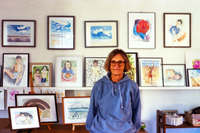 Jan Fisher, November 18, 2023
 Jan Pardee Fisher was born on October 30, 1950, in Dayton, Ohio. She is currently a retired therapist who lives in Clinton, New York. Jan Fisher is an artist who makes sculpture and paintings, and art has long played a vital role in her life. From an early age, she was involved with art and her role as an artist has become a key part of her identity. Her interests and involvement in the arts has shifted throughout her life, but her passion for the arts has never changed even when she switched careers from working with art to working as a therapist. She deeply admires the creativity and feeling that the art process evokes in both the audience and the artists and through her retirement has continued to paint pictures of landscapes, seascapes, and portraits in a studio.
She was involved early on with Sculpture Space in the late 1970s. She was the first woman to be an artist in residence there. She came to the organization in a time when the art world was shifting into a contemporary art perspective. What was considered art was redefined and led to new definitions of art, as there were no longer strict interpretations of what an art object was. It was also a time that was dominated by white men with power and privilege. While Sculpture Space itself never perpetuated sexist ideas or made Jan feel different for being a woman, the broader art world in this era often discriminated against women. Despite changing ideas about art and what it meant to be an artist, women like Jan were still excluded and did not have the same opportunities as white men to participate in these movements. Despite limitations, Jan was able to be greatly involved with Sculpture Space, and the organization has meant a great deal to her as an artist through the connections she made and the experiences she had there—and still has today.
I interviewed Mrs. Fisher at her home in Clinton, New York. This interview was done at the request of Sculpture Space, Inc. as part of a project to collect the history of the organization. Jan recalls the early days of Sculpture Space, sharing her experiences. She discusses how she was shaped and changed by her role with the organization. Beyond the organization itself, the interview includes observations about how the art scene has shifted over time. She also discusses how art has shaped her identity.
In transcribing, I tried my best to replicate as accurately as possible what she said, outside of filler phrases or false starts. Her speech flows naturally, and I wanted to preserve as much of it as possible. I felt that fixing and editing too much would make the interview not flow as nicely, and it would feel stricter and less inviting than it was originally intended. I wanted to ensure that the audience was getting as much of the interview as I did when listening to it. Researchers are encouraged to consult the original recordings.
-
 James Oldick, November 5, 2023
 James Oldick is an organic dairy farmer who lives on his family farm in Richfield Springs, NY. Born and raised on the farm since 1965, James is still one of the main farmers who operates the business. Through the help of neighbors and relatives, the 550-acre farm produces grain, millet, and milk through the company Organic Valley. Starting as a conventional farm in the early 1960s, the farm turned organic in 2011. The change to organic is a meticulous process with a trial period of three years. After hard work of changing crops, fertilizer, organic medicines, and cow care, in 2013 the farm was successfully transitioned to organic. Becoming organic brought on a new age of positive revenue from organic milk prices and the health of the cows improved.
In 1986 James met Sheila Fahey and by 1990 they were married. Together they had Mike and Milleta (the interviewer), as well as Crystal and Tiffany through Sheila’s previous marriage. In 2001, James and Sheila became foster parents through Otsego County. Throughout the years, James and Sheila have hosted over seventy-six foster kids in their home. Their kindness and generosity led them to be Otsego Foster Parents of the Year in 2006. Throughout foster care, they have adopted five children into their family including David, Nick, Hunter, Layla, and Landon.
James's recollections range from him growing up on the family farm to his added job as a bus driver for Owen D. Young Central School. Throughout the years, James has seen generations of family climbing on and off his bus, including his own children. James drives the Amish children to their school in Springfield, NY and has become known and liked in the Amish community as “Bus Driver Jim.”
I interviewed James at Springfield Center, NY after he had come home from his afternoon barn chores. He had just finished feeding and laying hay for the cows and as a result, farming was a main source of topic. Throughout the interview James reflects on the day-to-day requirements for an organic dairy farmer, bus driver, and dad.
-
 Heidi von Bergen, November 27, 2023
 Heidi von Bergen is a painter, musician, and registered nurse currently living in Clinton, NY with her husband of 55 years, John von Bergen. Heidi von Bergen was born in Shanghai, China in 1945. She moved at an early age to Canada where she remained until travelling to Bennington, VT to attend college for music. Von Bergen ultimately changed her major to art with a minor in psychology. Upon graduating, Heidi von Bergen moved to New York City where she met her husband. After moving to Clinton, NY in February 1978, they had one child, Erika. They have resided in their current home in Clinton, NY for forty-three and have an extensive estate with a guest house, foundry, and numerous sculptures crafted by John von Bergen.
Heidi von Bergen has sold and exhibited art for decades, including a piece currently on display (at the time of the interview) at the 4 Element Studio in Utica, NY. Von Bergen has pulled inspiration from artists such as Cezanne and works such as Claude Monet’s Water Lilies. Von Bergen was taught by the great art teachers and mentors at Bennington College: Ralph Humphrey, Isaac Witkin, Anthony Caro, Jules Olitski and Paul Feeley.
In her interview, von Bergen touches on her early childhood, life at Bennington College, her artwork, moving to New York, and the growth of the Utica, NY organization Sculpture Space. Heidi von Bergen is married to John von Bergen, one of the founders of Sculpture Space. John von Bergen was sitting-in during the interview and can occasionally be heard speaking or shifting his chair. I have chosen to omit false starts and fix grammatical errors in order to provide a clear narrative and conversation flow.
-
 Sidney Chase, November 12, 2023
 Sidney ("Sid") Chase has lived most of his life in Worcester, New York. Chase is the proud owner of Chase Organ Company and has been building and repairing pipe organs for over sixty years. This career combines his love of making music and the technical skills he learned at a young age. After meeting a distant relative who built pipe organs, Chase spent the summers of his teenage years working with and learning from him. After graduating from Albany Business College, Chase returned to Worcester to start his own company and builds pipe organs for the churches in Otsego County and the surrounding area.
After refurbishing a vintage pipe organ to be used at The Farmers' Museum in Cooperstown and watching the process of a church building being taken apart and rebuilt for the museum, Chase became interested in doing something similar. For much of this interview, Chase describes the trials and tribulation he faced in purchasing a neglected historic house in Harpersfield, deconstructing it piece by piece, refurbishing and replacing pieces as needed, including an entire wing, and rebuilding the house on a hill in Worcester for his family.
I interviewed Chase in his home in Worcester, New York. Throughout the interview, Chase's sentences flow together. I have included punctuation to improve comprehension. I have removed most false starts and fixed minor errors while remaining as close to the audio as possible.
-
 Rand Carter, November 17, 2023
 Rand Carter is a retired art history professor and longtime board member of various arts organizations throughout the greater-Utica region of New York. He worked as an art history professor at Hamilton College for 47 years, specializing in architecture and the larger art movements of the 17th, 18th, 19th, and early 20th centuries. In addition to his distinguished academic career, Carter served as a longtime board member and two-term president of Sculpture Space, Inc. during its fledgling years as an organization.
The Utica Steam and Boiler works had been in the process of downsizing operations for several years when Sculpture Space Inc. was given the use of the Federal Building. Established by metal sculptors Charlie Fisher and John von Bergen in the 1970s, the Utica Steam and Boiler Works foundry was acquired and repurposed into an art studio for contemporary metalwork sculptors, thereafter appropriately named Sculpture Space. The organization centers around providing paid residencies to artists from around the world, particularly metal artists, to come and practice their craft in Utica. Sculpture Space continues these paid residencies to this day and is now approaching their 50th anniversary as an organization.
During his time with Sculpture Space, Carter worked to revise and update the traditional bylaws defined within the organization’s original mission, in addition to trying to secure permanent housing for the artists traveling to Utica to partake in Sculpture Space’s artists-in-residence program. Carter continued to serve on other Utica-based art organization boards throughout his tenure as an art history professor and board member/president of Sculpture Space, including the Landmarks Society of Greater Utica, Players Theater of Utica, Utica Symphony, and Utica's Scenic and Historic Preservation Commission. He continues to serve on the Clinton Symphony board and Chamber Music Society of Utica board today.