-
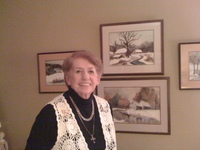 Joan Clark, November 11, 2010
 Mrs. Joan Clark lived most of her life on Main Street in Cooperstown, NY. She grew-up in Atlantic Highlands, NJ and moved to Cooperstown at nineteen. She met her husband, Jerry Clark, in Cooperstown. Together, they lived above Clark's Men Shop on Main Street in Cooperstown. Mrs. Clark recounts many events from Cooperstown history, including living on Main Street and the 1963 fire. She worked as a museum teacher at the Farmers' Museum in the 1990s. Her mother's family had a Hops farm in the Cooperstown area, her father owned a prominent construction company in Cooperstown, and her husband was Mayor of Cooperstown in the 1970s.
Mrs. Clark remarks on the changes in Cooperstown during larger changes in United States history. She was born during the Great Depression. She discusses how the Depression affected her family's life. She met her husband after he returned from the Korean War. Much of the interview is about how Cooperstown has changed since the Korean War.
In the middle of the interview, Mrs. Clark talks about her mother's family. Her mother's family owned a hops farm. Some of the most interesting material in the interview concerns Mrs. Clark's thoughts about the change of the farms around Cooperstown. She recounts about the different types of laborers at various farms.
Mrs. Clark offers insight into living on Main Street in a small town in upstate New York. She vividly recounts the fire on Main Street, Cooperstown in 1963. She also discusses what it was like to own a store in Cooperstown and reveals the workings of a small town.
-
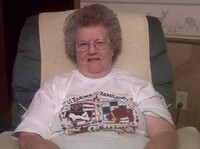 Carolyn Lindberg, November 7, 2010
 Carolyn Lindberg, a long-time resident of Burlington Flats, New York, was born on August 29th, 1936, in her family home in Burlington Flats. Carolyn went to school, church, and attended social activities all within the local community. She married her husband Bud in 1955 after a courtship that began with a meeting on the school bus. Bud's family, originally from Long Island, moved to Burlington Flats in 1948, where they purchased the farm on which the couple still reside.
Carolyn and Bud lived, worked, and raised their family on the dairy farm, which provided them with an income selling bulk milk. Carolyn recounts her experiences on the farm including daily work, cooking, and gardening. Carolyn also recalls her extensive cross-country travels with her husband to visit family and see the sites of the Western states. Carolyn and Bud have three sons, two daughters, and a host of grandchildren. Carolyn, who plays piano and directs the local choir, passed on her musical talents to many of her grandchildren, who play instruments and sing. Carolyn's sons now operate the dairy farm and reside on pieces of land abutting their property that they have acquired over their years in the area. The most interesting material in the interview concerns Carolyn's descriptions of the intricacies of dairy farming and how life has changed since she began working and living on the farm.
-
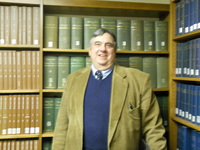 Lynn Green, Jr., November 13, 2010
 Lynn Green, Jr., is an attorney in Cooperstown, New York. Green was born in Oneonta, New York on May 15, 1945 and grew up in Hartwick, New York, although he attended school in nearby Cooperstown. After graduating from Cooperstown High School, Green attended Colgate University and Syracuse College of Law. He practiced law in Watertown, New York for four years before returning to his home town. He opened his law office, now called Green & Green, on Main Street in Cooperstown in 1974. A man of strong opinions and deep family values, Green is also an experienced farmer, avid hunter, and devoted grandfather.
A life-long resident of the Cooperstown area, Green vividly describes life in Hartwick and Cooperstown in the 1950s and 1960s. He fondly reminisces about childhood on his family farm and recalls the many lessons he learned from his father. Green also recreates his time at Cooperstown High School in the late 1950s and early 1960s though a detailed description of the academics and extracurricular activities. Green laughs as he remembers that making a phone call between Hartwick and Cooperstown was once considered long-distance and that Cooperstown did not have police officers on duty between midnight and 6:00 AM when he was a teenager. Green's tone turns more serious when asked about his experiences at college and law school. He describes the methodical approach he used when deciding which college to attend and honestly accesses his law school experience. Two highlights of the interview are Green's reminiscences of his study abroad experience in London and his admission of why he decided to become a lawyer. Finally, Green applies his firsthand experience in Cooperstown to provide a sophisticated analysis of how and why Cooperstown has changed over the years.
Green's expressive, yet concise, speaking style translated well to transcript form. False starts were edited out for clarity, but Green's sentence structure remains intact. Occasionally, pronouns and missing words were added in brackets. The recorder was stopped four times because the interview was interrupted. Each interruption is noted on the transcript.
-
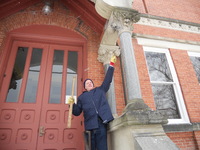 David Petri, November 14, 2010
 David Petri is a longtime resident of Cooperstown, NY and grew up visiting his grandparents' dairy farm. Petri collects material culture from the surrounding Leatherstocking region and has actively gathered information about farming techniques from central New York farmers.
In this interview, Petri shares his family's history in the region and goes into great depth about the architectural changes that occurred on the family farm. Petri uses photographs throughout the interview to anchor his discussion. The interview talks about the barn, house, and schoolhouse that are on the property. This leads into explanations of people who influenced his collecting. His grandparents played an important role in his childhood, and Petri shares a lot of information learned on their farm about dairy practices. He also talks about his grandparents' trips into Cooperstown and their interest in square dancing. About his own life, Petri, shares information about his maple syrup business and his role with local history research including the advisory board at the Farmers Museum. There have been significant changes made from the literal transcription.
-
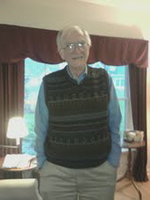 Fred Miller, November 16, 2010
 Fred Miller was born in 1930 in Muncie, Indiana into a show business family. As a child, Mr. Miller traveled around the United States as part of the "Flying Millers," a trapeze act in the circus. As a circus-performer, Mr. Miller eventually had his own radio show called "Circus Boy," where he discussed his life in the circus and answered questions from his listeners. Mr. Miller's circus career spanned the length of the Great Depression, a topic which he discusses at length in his interview.
After graduating high school at fifteen, he attended college, received a master's degree and a doctorate degree. Mr. Miller is married and has two children. As a professor in the theater arts at such universities as Columbia University, Boston University, and SUNY Oneonta, Mr. Miller experienced various different performing opportunities. Along the way he met Helen Keller, Lyndon B. Johnson, and Amelia Earhart. Mr. Miller talks about what it was like to meet such famous people. Fred Miller currently lives in Oneonta where he has been living since the 1960s.
-
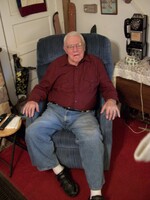 Charles A. Coleman Jr., November 15, 2010
 Charles Alfred Coleman Jr. was born in Cooperstown, NY on April 30, 1928 as one of five children. His father was a bartender and a painter, and his mother was well-known for playing piano engagements around the area. Coleman attended school in the village and participated in a number of sports and activities, most notably: football, swimming, fishing, and hunting. As a senior in high school during World War II he attempted to enlist in the Navy, but as a minor he needed a signature from his father. His father refused and instructed him that it was better to finish school. Coleman then graduated in 1946 and began work with local electric companies. On December 27, 1948 he was married to his wife, Dolores, with whom he has three sons. Coleman held numerous jobs throughout his life, but he spent the most time working as manager of the Cooperstown branch of Buchanan Hardware and as a press operator for the Freeman's Journal and Otsego Farmer. In addition to his work, Coleman was a member of many community organizations including the Watershed Council and the Cooperstown Fire Department, the latter of which he is a life member. Now retired, he enjoys fishing, hunting, and spending time with his family.
As a lifetime resident of Cooperstown, Coleman is able to recount the many changes that occurred in the village, particularly regarding the Hall of Fame's impact on the local lifestyle. His narrative provides a look at what it was like to growing up, living, and working in the Cooperstown community. Common themes include sports, local businesses and organizations, family connections, and the effects of tourism. One of the most notable discussions in the interview deals with Coleman's work as a press operator. Researchers pursuing perspectives on community life and issues in Cooperstown should find a range of useful topics.
Several editorial choices were made to increase the readability of the interview's transcript. False starts or unrelated asides have been edited out to maintain clarity and continuity. Several sentences have been edited by either adding words or punctuation to create easier to read sentence structure. The interjections of Coleman's wife and conversational elements of the interview remain since they provide valuable information and bring character to the transcription.
-
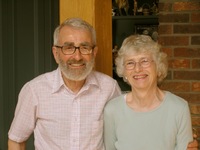 John Davis, November 10, 2010
 John S. Davis, M.D. was born June 17, 1930 in Buffalo, NY. He grew up Orchard Park, NY. He received his BA from Hamilton College in 1952 and married his college sweetheart, Jean in 1953. He earned his M.D. from Harvard Medical School in 1956. After residency training at the Mary Imogene Bassett Hospital (1956-58), a three year stint in the Army Medical Corps (via the “Berry Plan”) in Fort Sam Houston, Texas and Neurbucke, Germany and fellowship training at the University of Rochester in psychosomatic medicine, he returned to Bassett in 1964 to begin a career as clinician and medical teacher. He was Bassett's first gastroenterologist, and with his wife, Jean, they established the clinical gastroenterology laboratory and brought fiber-optic endoscopy into the clinical arena. His medical practice was a mix of gastroenterology and general internal medicine with a focus on patients with psychiatric problems. From 1980 until his retirement in 1995, he was also Bassett's Director of Medical Education, and attained the rank of Clinical Professor of Medicine at the College of Physicians and Surgeons of Columbia University. A founding member of the Medical Alumni Association of Bassett Hospital, he has remained on the Board and edits the Association's thrice-yearly journal, The Cupola.
He has begun working on a book of the history of The Mary Imogene Bassett Hospital and currently lectures on the history of Bassett Hospital via SUNY-Oneonta's Center for Continuing Adult Learning. For several years, he has volunteered at the New York State Historical Association (NYSHA) in organizing the Bassett/NYSHA Archives.
A lifelong birder, in retirement he has continued a main focus on the natural world and in environmental causes and organizations including the Animal Care Committee of Hartwick College, Oneonta, NY and lecturing on birds though SUNY-Oneonta's Center for Continuing Adult Learning. Since 1995, he has been a member of the Board of Directors of the Delaware-Otsego Audubon Society, Otsego 2000, and Otsego County Conservation Association. His land of 200 acres six miles northeast of Cooperstown in the hills of Upstate New York is protected from development into perpetuity by a conservation easement by the Otsego Land Trust. He spends a lot of time enjoying the ramifications of digital photography and continues to live in Cooperstown, NY year round.
I have intended to capture all of the details of Dr. Davis's interview by maintaining his phrasing and speech. Necessary punctuation and very few words have been added for clarity. Additional information on Mary Imogene Bassett and Bassett Hospital are included in the background note.
-
 Mrs. Edna Cushman, December 4, 1971
 Mrs. Edna Cushman interviewed on December 4, 1971 describes her life in Schuyler Lake, NY. Houses and businesses are described, including a former tannery. Mrs. Cushman also talks about dairy farming in the area.
-
Elizabeth Denison Shaver, April, 1974
An interview with Mrs. Elizabeth Denison Shaver sometime in April 1974.
A continuation of the first interview done with notes of questions provided by Christina A. Shaver, daughter of the informant.
74-0120 (Fourth Interview with this accession number)
-
Elizabeth Denison Shaver, March 20, 1974
An interview with Mrs. Elizabeth Denison Shaver on or about March 20, 1974.
Done with notes of questions provided by Christina A. Shaver, daughter of the informant.
74-0120 (Third Interview with this accession number)
-
Mrs. C.E. Denison, Sr., January 10, 1974
An interview with Mrs. C.E. Denison, Sr. by Christina Shaver, granddaughter of the informant. 74-0120 (Second Interview with this accession number)
-
Mrs. C.E. Denison, Sr., January 7, 1974
An interview with Mrs. C.E. Denison, Sr. by Christina Shaver, granddaughter of the informant. 74-0120
-
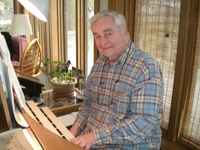 Charles Schoenlein, November 20, 2009
 Dr. Charles Schoenlein was born in 1929 in Queens County, New York. His upbringing encouraged a love of music and an active, involved life-style. Educated at Queens University and then at Columbia Dental School, Dr. Schoenlein met his wife, Louis, in New York City. The couple moved to Richfield Springs in the early 1960s. He maintained a busy dental practice in Richfield Springs with Louis, his administrative assistant and a registered nurse. Raising three children, Dr. Schoenlein became deeply involved in the community around Schuyler Lake; he sat on several boards, including the school and library boards and the Rotary Club. He continues to be involved in the community, particularly through his contributions of pipe organ music on Sundays at the Church of Christ United. A recurring theme in this interview, are the close friendships Dr. Schoenlein has made throughout the course of his life. A lengthy friendship with the Archbishop of the Russian Orthodox Church Outside of Russia afforded him extensive opportunity to travel abroad, and to experience Russian orthodox culture at the monastery in Jordanville, New York. At present, Dr. Schoenlein continues to enjoy the scenery of his lakefront home, gardening, and being a grandfather.
-
 CGP Community Stories Video
 In the fall of 2009, the Cooperstown Graduate Program Class of 2011 completed oral history interviews with members of the Cooperstown community and surrounding villages of Otsego county, adding to the rich oral history database started by the Program in the 1970s. In CGP Community Stories, the interviewees share their personal histories, touching on themes of community, family, trends, travel, work, school, wartime, and recreation.
-
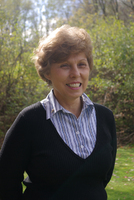 Geri Erwin, November 19, 2009
 Geri Erwin grew up in Milton, Massachusetts. When she was twenty, she married her husband, Richard, nicknamed Marston, and together they had two children, Kristen and Matthew. Marston's job as a high school administrator took the family first to New Hampshire before moving to New York. After her children entered school, Geri began working as an administrative assistant in a variety of part- and full-time jobs.
When Geri was growing up, most women with families worked as homemakers, including her mother. While Geri hoped to continue this tradition with her own children, after they entered school she quickly realized that she needed an activity to occupy her time. Working part- and full-time administrative assistant jobs brought her out of the home. Geri asserted that her biggest accomplishment was in raising her children, but she also enjoys the organizational structure of office work and learning how to use computers.
Geri's recollections focused on the importance of family throughout her life. Some of the most interesting material in the interview concerns her father's control of the family and the complex emotions that memory evoked.
-
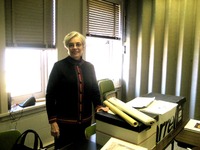 Pamela Washburn, November 18, 2009
 Pamela Washburn, originally from rural Ohio, arrived in Cooperstown in 1970 and has been involved in a number of community-oriented projects throughout the village since that time. A member of the League of Women Voters and a teacher, she has worked with the Regional Council of Historical Agencies, Bassett Hospital, and the Baseball Hall of Fame. From 1985 to 1997, Washburn was a driving force in the formation and operations of Friends of the Parks, a Cooperstown organization that worked hand-in-hand with the village Parks Committee. Analyzing the parks' resources and targeting key renovation and accessibility projects, the Friends of the Parks obtained several grants for improvement and made many updates and upgrades to Cooperstown's parks during this period.
Washburn's recollections about the Friends of the Parks include the time of its formation, drafting its first twenty-year plan, key members, the politics of change, specific memories of renovations in Lakefront and Three Mile Point Park, and information about working with a Spring 2009 Cooperstown Graduate Program class to research and compile information about the parks. She shares some insight into Cooperstown's winter festivities, including the lighting on Main Street, Santa's house in Pioneer Park, and the custom of Cooperstown's village ice-skating.
-
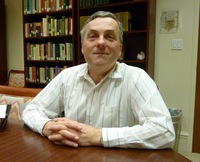 Wayne Wright, November 18, 2009
 Wayne Wright is the Associate Director for the New York State Historical Association Library. He was born in Oneonta, New York and has lived there his entire life. Wayne grew up in a typical American family during the 1950s. During his childhood his mother introduced him to the public library and his love of books grew from there.
Attending the State University of New York at Oneonta he obtained a Bachelors Degree in English and later a Masters Degree in English. During his second Masters program in Library Science from the State University of New York at Albany he was drafted into the Vietnam War. After the war he obtained his second Masters Degree and a few years later he obtained a temporary job at the New York State Historical Association, which he later obtained a permanent position there.
For 32 years Wayne has worked with and helped with many NYSHA patrons from genealogy researchers to the Cooperstown Graduate Program students. In the interview Wayne talks about his various experiences at the NYSHA Library over the years. He also discusses his activities outside of the library as well as the places he enjoys visiting in the local area. Wayne enjoys his job at the NYSAH Library and this interview tells us why he loves the job.
-
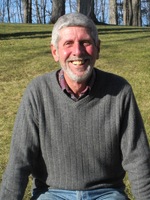 Dennis Savoie, November 16, 2009
 Dennis Savoie was born on April 12, 1945 in Putnam, Connecticut. He moved to Cooperstown in 1971 for a two-year internship as a part of his general internist degree. After his internship, Savoie worked at Mary Imogene Bassett Hospital and raised his family in the Cooperstown community. He participated in many activities with his three sons, one of which led him to a passion that has defined and outlined his life: self-supported, self-contained bicycling. After more than 100,000 miles, Savoie has seen much of the Northeast, Canada, and the National Parks of the West from the seat of his bicycle. In addition to writing a successful book about bicycling, Cranks from Cooperstown: Fifty Bike Rides in Upstate New York, Savoie has spearheaded bicycle advocacy in Otsego County and New York State. He is a founding member of the Otsego Regional Cycling Advocates. Savoie's recollections trace changes in the practice of medicine, bicycling, and the village of Cooperstown over a forty-year period. Some of the most interesting material in the interview consists of Savoie's explanation of his central role in two large movements: the shift in medicine towards outpatient treatment and health promotion, and environmental conservation through bicycle education.
-
 Leslie Gray, November 9, 2009
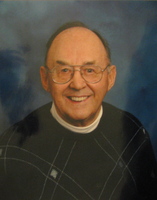
 Leslie Gray was born on 8 April 1924 in East Springfield, NY and grew up on a hundred-acre dairy farm. In high school Gray was an active member of the Boy Scout Troop 47 and was the first troop member to become an Eagle Scout. With the Boy Scouts, Gray traveled to the 1939 World's Fair in New York City. After graduating from high school he attended Morrisville Agriculture and Technology Institute and then returned home to farm with his father. In 1944 he married his wife Janet; together they had five children. During World War II, Gray was exempt from military service because of a previous heart condition and later received an agricultural exemption. Gray sold the family farm in 1956 and began a successful career in the real estate appraisal business. After working for the state and several smaller firms, he joined Pomeroy Appraisal Associates in Syracuse, NY and served as president for twenty years. Gray and Pomeroy earned a reputation for working with difficult properties. As president, he appraised bankrupt railroads in the Northeast for the U.S. Railroad Association, formulating and developing a methodology still in use today. Gray retired in 1988 and spent several years traveling around the country in a travel trailer with his wife. At the age of eighty-five, Gray still remains involved in the Springfield community as a member of Saint Mary's Episcopal Church, Springfield Public Library Board, a local pitch (card game) group, and Meals on Wheels.
Aside from the twenty years he spent working for Pomeroy Appraisal Associates in Syracuse, Gray has spent the bulk of his life in Springfield. He speaks extensively about Springfield and how the community has changed over time. Farming, agriculture and work are predominant themes. Gray also discusses recreational activities such as playing cards, reading, and traveling. He references to twentieth-century events of national importance, such as the Great Depression, the 1939 World's Fair, and Pearl Harbor. In one of the most interesting sections of the interview, Gray discusses making maple syrup as a substitute for sugar during World War II. Many of the interview questions were derived from Gray's memoir, a short, unpublished document. The memoir covers certain subjects, like the Great Depression, in greater depth. Researchers interested in corporate history or real estate appraising may find Gray's comments on Pomeroy useful. Overall, the interview is a thorough account of farm life in the second quarter of the twentieth century. It also addresses the challenges the rural Springfield community faces today.
Several editorial decisions were made to make the transcript more readable. False starts were omitted unless they served a distinct function within the sentence, such as introducing a description. In many cases, longer sentences were shortened and additional words - that do not impact the meaning of the sentence - were removed. Most other grammatical particularities were preserved.
-
 JoAnn Van Vranken, November 18, 2009
 JoAnn Van Vranken was born on April 4, 1959 in Cooperstown, New York. As a child she lived on a dairy farm and after graduating high school she attended SUNY Morrisville for an Associate's Degree in Secretarial Science. She married in 1979 and moved to Holloman Air Force Base in Alamogordo, New Mexico with her husband Bob who was in the Air Force. With him she moved to Griffiss Air Force Base in Rome, New York, where she had two children, and Davis-Monthan Air Force Base in Tucson, Arizona before returning to Holloman Air Force Base. When her husband retired, they returned to New York, settling in Edmeston. She got a job at the New York State Historical Association Library nine years ago.
Mrs. Van Vranken's recollections include growing up on the farm, celebrating Thanksgiving as a child, meeting her husband, and describing the many places she lived and worked resulting from his being in the Air Force. She also discusses her children and reflects on being the third person in her family to participate in the Cooperstown Graduate Program's Oral History Project. Her grandmother, Verna Schielto, was the first in 1977 and her aunt, Marjorie Schellhammer in 2008 (her interview can be found on this website in the Fall 2008 Oral History Project collection).
This tri-generational family participation in the oral history project provides unique insight into one family's life in Upstate New York. It will surely be of interest to scholars interested in the area, scholars who study family units, and especially to Mrs. Van Vranken's family. Her story is important in and of itself because it chronicles the changes in Cooperstown over the course of her twenty year absence, the trials of being a military wife, and stories about growing up on a dairy farm and the desire to get back to her roots. It will also be of importance to anyone doing an institutional history of NYSHA.
Mrs. Van Vranken speaks passionately throughout most of her interview, but was reserved when trying to find the right words to express herself. I have chosen to edit out false starts, both at the beginning of her answers and within them. I also changed tenses, particularly the verb to say, from says to said, at the request of the interviewee and for clarity. I also deleted the umms, sos, and you knows throughout this interview, but have left a few where it was deemed appropriate. All of this was done to allow for clear understanding of the transcript. I have noted the laughter of Mrs. Van Vranken and strongly encourage researchers to consult the actual recordings to experience the tone of this interview, especially as she describes her family and recounts family stories, a key component of the interview.
-
 Barbara Mook, November 9, 2009
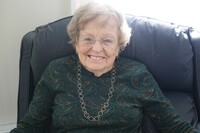
 Barbara (Ives) Mook was born July 27, 1922 in Walton New York. Raised in a rural setting, Mrs. Mook experienced the Great Depression, education in a one-roomed schoolhouse and many other events. Her early life was foundational to her eventual career in nursing and raising a large family in Cooperstown, New York.
Mrs. Mook's career as a nurse in New York City illuminates the role of nurses in women's health during the World War II period. Her lifelong love for helping others stemmed from a family tragedy of which she described in depth. Family and education are central themes in this interview as they are important to the entire Mook family.
Having lived in Cooperstown since 1944, Mrs. Mook offers observations about the village's transformation as well as references to several of its citizens. Details about the Hall of Fame, the Village Garden Club and Main Street are of particular interest.
This interview spans over the course of many events and time periods. Mrs. Mook's generous spirit made for a deep and inspiring interview.
-
 Emery Herman, November 16, 2009
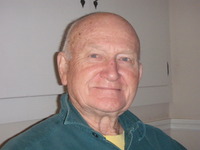
 Emery Herman was born and raised in LaGrange, Georgia, the oldest of three children. While in his early teens, Herman's family moved to Pensacola, Florida to stay with his father who was then serving in the Navy Medical Corps during World War II.
Following in his father's footsteps, Herman earned his M.D. from Johns Hopkins University in Baltimore, Maryland. Following his residency in Atlanta, Georgia and two years in the Public Health Service in Bethesda, Maryland, Herman accepted a position at Bassett Hospital in Cooperstown, NY. He practiced medicine there for over 40 years.
Herman also became involved in local government, serving on both Cooperstown's Board of Trustees and Zoning Board of Appeals, and as mayor. In the his oral history, Herman also discusses a number of other topics, including his involvement in Habitat for Humanity, remarriage after the death of his first wife, and studying German.
Herman speaks with a definitive southern accent, which I did my best to relay in the transcription. His cadence and speech patterns are imbued with meaning, though, which cannot be properly conveyed in text. I therefore fully recommend that researchers consult the audio recordings.
-
 Frank Rollins, November 16, 2009
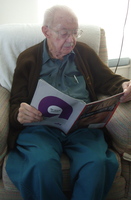
 Frank Rollins has been a local resident of Cooperstown, New York since 1957. In that time, he was a teacher and photographer, in a unique position to document life in the village for over 50 years. He was born near Syracuse, New York on November 13, 1917 and remained in upstate New York for the rest of his life.
A music teacher and band director, Frank earned a bachelor's degree in music from the State University of New York at Potsdam in 1941 and later went on to earn a master's degree in music. Frank began photographing at the age of eight, and never stopped. By the time he came to teach music at the high school in Cooperstown, he began photographing for class pictures, school events, weddings and even Baseball Hall of Fame events. This dual role in the community gives Frank a unique insight into the history of the village of Cooperstown.
Frank's recollections mostly center on community life in Cooperstown, family, his music career and photography. Some the most interesting material concerns life during the Great Depression and World War II, as well as stories from Frank's early years in Cooperstown.
-
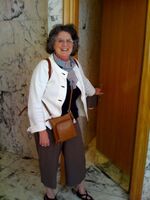 Veronica Seaver, November 20, 2009
 Veronica Gil Seaver moved back to Cooperstown, New York to raise her children in the late seventies. The daughter of Spanish and Italian immigrants, she grew up in the village, and recalls the way things were back then. Sharing the layout of the businesses on Main Street, she remembers Cooperstown before the impact of the tourism industry. From dingbat ice cream treats at the soda fountain, to street dances on the waterfront and sledding down Pioneer Street, Veronica demonstrates why she chose to raise her kids in her hometown.
Veronica's love for Otsego Lake is evident in her home located in the former trolley ticketing office at 160 Main Street, where a painting on the wall shows the view over the lake which she used to see from her previous home on Five Mile Mountain. Veronica's husband, Robert B. Seaver is the author of Cooperstown, Otsego and the World...as seen by the Badger, a compilation of his newspaper articles that she helped publish as a book in 2005. Together they enjoyed many activities on the lake, including ice skating and cruising in a 1929 Chris Craft boat.
One of the most unique aspects of the interview is when Veronica describes a kitchen hutch painted by a local folk artist that depicts her life in Cooperstown.
Mrs. Seaver's youthful personality is evident in her speech. She recalls anecdotes through conversations, and often defers to slang. I have attempted to normalize her speech for easier reading, but researchers are encouraged to consult the audio recordings to hear an accurate representation of her excitement in telling these stories.
-
Harriet Cramer, November 1973