-
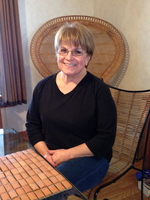 Mary Cassell, December 3, 2013
 Mary Cassell owns Shortcuts, a full-service beauty salon located in The Commons off of Route 28 in the town of Hartwick, New York. She was born in 1947 in Kingston, New York. Her father was a butcher and owned a grocery store, and Mary and her sister and brother helped out at the store. In high school, she completed a pilot program (later BOCES) for cosmetology. She married at 18 and after high school, worked at a salon in Woodstock, New York, and then in a department store salon in Kingston, where she helped open salons in New York, New Hampshire, and Rhode Island. She also attended college at night for art. She moved with her husband, who worked for Philip Morris, to Syracuse, New York, where she designed and sold sweater knitting patterns to several magazines. They then moved to Cooperstown and Mary opened up Smooth Operators, a salon on Grove Street. They then moved to Connecticut, where Mary worked in sales for a beauty supply house, and back to Cooperstown, where she opened The Clip Joint on Main Street, and then Shortcuts. She has three children, two of whom own their own restaurant businesses, and one grandson, whom she often cares for.
-
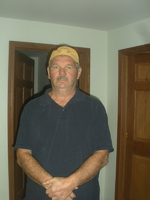 Timothy Kelso, November 14, 2013
 Tim Kelso is a lifelong resident of Delaware County, New York. His father was a dairy farmer who was prominent in the community due to his large farm, adoption of new agricultural technologies, political activism, and purchase of Hanford Mills after the location ceased being a business. Tim Kelso's father is the one who turned the mill site into a museum.
Kelso takes after his father in his political activity and love of farming, but his career path was more varied than his father's. Kelso decided at the age of seventeen to avoid a career in farming. He initially worked in a local slaughterhouse for a couple of years, then moved on to meat retail at a store run by two brothers. Kelso then worked as a dump truck driver for two years before starting a decade-long career in the Office of Children and Family Services. Kelso eventually returned to dairy farming after his retirement from the office. He had an unsuccessful run for a local office in 2013.
Kelso's hometown of East Meredith has changed significantly in his lifetime. The area mostly consisted of dairy farms when he was growing up, but unfavorable prices forced many of those farms to close. The dairy farms that are still in East Meredith are much larger than the ones that existed during Kelso's childhood, and there are far fewer farms than before. Much of the remaining space is no longer dedicated to farmland, but to second homes for residents of New York City. Hanford Mills has provided a source of continuity for East Meredith through all of the changes the town has experienced.
-
 Frank Van Auken, November 16, 2012
 Frank Van Auken is a life-time resident of East Springfield, New York. He was born in 1920 in the house in which he currently resides. He has lived there all his life except for the four years he served in the United States Army during World War II. Stationed both stateside and in the European theater, Mr. Van Auken belonged to several ordnance companies and saw no combat; however, he had significant encounters with French and German civilians in his time in Europe during the war and its immediate aftermath. He elected to return home after Germany's surrender, embarking from Le Havre, France on a “Victory Ship” and arriving in New York City.
In the army, Mr. Van Auken learned the trades of metalworking and machinery repair, skills he made a career out of following his discharge. He opened a shop in the former barn next to his house. He completed many jobs and commissions for entrepreneurs and farmers in the surrounding area. He has been an active in the community, serving in administrative positions with the city's fire department and now defunct regional insurance company.
Van Auken has a multitude of memories that range from his early life as a boy. He recounts working to support his family during the Great Depression and provides excellent historical information on Otsego County from the 1920s and onward. Being a member of what Tom Brokaw called “the Greatest Generation,” Van Auken's military service stands out as an exceptional part of the interview. Particularly interesting is his discussion of interactions of the German and French populace with American troops.
Mr. Van Auken speaks clearly and understandably with some exceptions. In his speech he generally begins many sentences with “and” and “but.” I have included these in the transcript where they are required for comprehension. There are also moments where he mumbles words or concludes thoughts or statements with, “I don't know,” I have included these, but they should not be considered as Van Auken not knowing his story or the matters he is discussing. They seem to indicate that he is uncertain about the validity of some of his opinions. There are also some colloquialisms used at different junctures in the interview.
-
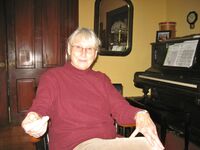 Dorothy Hudson, November 16, 2012
 Dorothy Hudson, known to friends and family as Dotty, was born on January 16, 1937 and spent her childhood in East Brunswick, New Jersey. After graduating from Syracuse University with a degree in microbiology, Dotty married her husband, Charles Hudson. She followed Charles, or Chuck, to medical school in Montreal, and on to many adventures, including a stay in Dillingham, Alaska. During this time she took care of their three children.
In 1974, the family relocated to Cooperstown after Chuck accepted a job at Bassett Hospital. Since coming to Cooperstown, Dotty has been involved in various organizations, including volunteering at the hospital, Friends of the Library, and the League of Women Voters. She is also an environmental activist, speaking out most recently for the anti-fracking movement in Upstate New York.
During the interview Mrs. Hudson discusses growing up in New Jersey during and after World War II. She also speaks about her time in Alaska and adjusting to life there in the 1960s. Some of the most interesting material in the interview concerns her involvement with the League of Women Voters in Cooperstown and the work they have done on behalf of environmental causes and voters' rights. Throughout the interview she discusses her views on climate change and the wars in the Middle East. It is clear Mrs. Hudson finds a civic outlet through activism, voicing her opinions on local and international issues.
Mrs. Hudson speaks clearly and with great detail, but she does admit to having some issues with memory. Any false starts have been edited out of the transcript to maintain clarity.
-
 Maple syrup production, excerpt from oral history interview with Brian Ryther, November 30, 2013
 In October 2014, the Cooperstown Graduate Program hosted an Oral Histories in Dialogue session in Cooperstown, New York. Partially funded by the New York Council for the Humanities, this session sought to develop a new model for dialogue programs that include oral histories. This video was created in response to participant requests for greater integration of images, text, and audio in oral history clips.
-
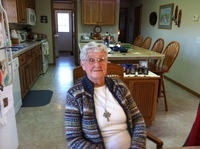 Dorothy Bolton, November 14, 2012
 Dorothy Bolton is a lifetime resident of Burlington Flats, New York. She grew up as the daughter of a maple syrup producer and continued her agrarian lifestyle when she married a dairy farmer. Though farming remained a major aspect of Mrs. Bolton's life, she held a career within the Edmeston school system for 32 years. She held various positions within the school from cafeteria worker to classroom aid to her final position as secretary to the guidance office.
Mrs. Bolton has witnessed profound changes in her community. She remembers living without the conveniences of electricity and running water, the centralization of rural schools, gas rationing during World War II, and the introduction of "hard" roads. As the daughter of Murray Benjamin, Mrs. Bolton recounts her childhood on her father's sugar farm and memories of rural healthcare and recreation. She provides a unique perspective that supplements her parents' 1970 shotgun interview (housed in the NYSHA library, 70-0069). The memories of her adult life highlight the ways farming families worked to make ends meet and drastic changes in both farming and the Burlington area since the 1930s.
This interview provides snippets of everyday life in Burlington over the past seventy years as well as contemporary reflections on the past and how it differs from today. Mrs. Bolton paints a vivid picture of her childhood by showing what Burlington and the surrounding area once looked like. It highlights the past struggles of small farmers in comparison to farming practices today. The observations on rural healthcare and how farming families provided medical care to their children are particularly interesting in light of the Bassett Healthcare Network's presence in Cooperstown, NY and the surrounding area.
-
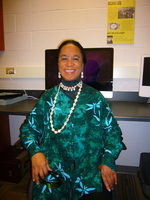 Claire Beetlestone, November 11, 2012
 A radiologist and specialist physician, Claire Beetlestone was born just outside Philadelphia in 1936. She has lived many places including Nigeria, Scotland, Connecticut, Arizona, and New York. Beetlestone credits her experiences living abroad to strengthening the worldview that she has shared with so many people as a storyteller
As a child, she loved to collect insects and ride her bicycle all around Philadelphia. As an adult, she raised four children while living in Nigeria for twenty years. While there, she worked as a docent at the zoo and later as a doctor who took care of soldiers and children.
-
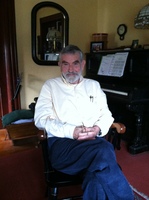 Dr. Charles Hudson, November 15, 2012
 Dr. Charles J. Hudson has lived in Cooperstown since 1974. He was born in 1937 and grew up in Oak Tree, New Jersey. After attending Princeton and the McGill University Faculty of Medicine, Dr. Hudson spent time in Salt Lake City and then in Alaska, where he served in the Indian Health Service of Alaska. He played an instrumental role in organizing mental health services for the Native Peoples of Alaska. He moved to Cooperstown in 1974 to work at Bassett Hospital, though he also served in the Naval Reserves. He has had a distinguished career as a psychiatrist and physician.
Dr. Hudson's recollections include his father, a Baptist from Georgia who worked as a maintenance engineer in New York City, his mother, an Irish Catholic nurse from New York City, his childhood in New Jersey attending an integrated elementary school in the 1940s, his work in Alaska, and his family with his wife, Dorothy (Dotty). He also discusses issues of mental illness in the United States, including its relation to problems of homelessness. Of particular interest is Dr. Hudson's description of psychiatry education in the 1960s and his stories of circumventing the law while serving in the Public Health Service and the Naval reserves.
-
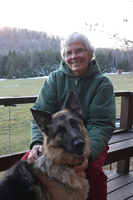 Marion Karl, November 16, 2012
 Marion Karl was born in 1928 in India where her parents were working as Baptist missionaries. She and her family returned to the United States from India at the cusp of the Second World War. Mrs. Karl went to Keuka College and Syracuse University and studied to become a nurse. She moved to Cooperstown in 1961 with her husband and young children, and she has lived here ever since. Soon after her arrival, she purchased 100 acres of land on Cornish Hill, which she has kept in a natural state at the behest of the previous owner.
I conducted the interview in her cabin on her land on Cornish Hill. After concluding the interview we hiked up to her lean-to, which she speaks about in the interview, to watch the sunset over Cooperstown. Being on her land, it was easy to understand why her reminiscences touched on conservation, especially the fracking and the Constitution Pipeline debates. Marion Karl's reminiscences also include discussions of school in India and the United States, higher education, nursing, and the centrality of religion in her everyday life.
-
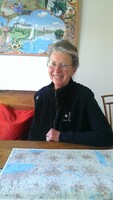 Erika Heinegg, November 17, 2012
 Erika Heinegg is a German immigrant living in Oneonta, NY. She was born in 1934 in PlÓ§n located in Schleswig-Holstein, the northern-most part of Germany located between the North Sea and the Baltic Sea and bordering Denmark. During the World War II, her family sold hats and gloves to the Navy and Marine cadets that were stationed at Great PlÓ§n Lake. Many restrictions were put onto the people in terms of food and supplies.
When she was 18, she left the country to find her future in nursing. After spending a year in Sweden and a few years in England, she married and moved to North America where she first spent a few months in Canada on Lake Superior before moving to Rockland County in New York. In New York, she worked for 10 years at Nyack Hospital in Nyack County before moving to Delaware County where she was forced to earn her nursing degree as her experience in England was not accepted. She experienced several instances of discrimination based on her nation of origin. She worked in public health for Delaware County for 10 years while she took night classes at Russell Sage College in Albany for her Master's Degree in Epidemiology.
After Delaware County, she worked simultaneously at Albany Medical Center in discharge planning and as the Chair of the Nominating Committee for the New York State Nurses Association in Albany. She worked there for 4 years before her husband's health began deteriorating; she moved back to Delaware County to nurse him.
She now is a member of the Continuing Cooperative Adult Learning program in Oneonta as well as a member of the curriculum committee of the same organization. She is on the administrative board of the Catskills Symphony and is involved in both the Otsego County Sailing Club and the Adirondack Mountain Club. She also aided in the creation of the Plains at Parish Homestead, a retirement community in Oneonta, NY.
-
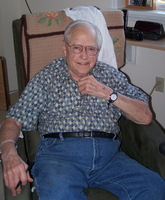 Glenn Harrison, November 12, 2012
 Mr. Glenn Harrison is a former resident and community leader of Mt. Vision, New York. Throughout his life, Harrison has been active in the agricultural industry, involved in the various aspects of farming, such as dairy, planting, and collective organization. Harrison's family has held a long and strong presence in central New York, even serving as founding members of the community of Mt. Vision. Harrison also has served in several community roles and functions, representing farmers in The Grange, serving as a church deacon, and drawing mail for more than 15 years. Besides his community and agricultural contributions, Harrison has created a lasting family legacy through his children and grandchildren.
Harrison's stories and recollections describe various aspects of his day-to-day experiences and activities while living in Otsego County. During the course of the interview, Harrison reflects upon growing up during the Great Depression, comparing experiences then to current situations today. Moreover, Harrison explains how living in a rural community impacted farming techniques and practices, as well as how this area witnessed the evaporation of small farms. Explaining the current financial situation of many local farms, Harrison provides insights into the farming industry and structure within Otsego County.
-
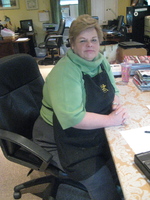 Carol Waller, November 16, 2011
 Carol Waller, the first female mayor of Cooperstown, New York, is a local businesswoman and lover of the town she calls home. Waller was born in Queens, New York and grew up on Long Island before moving to Cooperstown after marrying. She has spent over 40 years raising her three children and developing a floral business in the village.
Her father was a county representative until his death and heavily influenced her decision to go into politics. After eight years as a representative, Waller ran uncontested for the mayorship of Cooperstown. Her knowledge of living and working in a small town gives great insight into her life.
Waller's memories vary from her time spent as an only child on Long Island to observations about the relationships she has developed while working in the floral industry. Highlights from the interview include her reflections about life, death, and friendship in small communities.
Mrs. Waller has a distinct Long Island accent but is relatively easy to understand. I chose to leave in some colloquialisms and phrases of speech but have removed others for clarity purposes.
-
 C.R. Jones, November 30, 2011
 C.R. Jones is a member of the first class of the Cooperstown Graduate Program and conservator at the New York State Historical Association. He was born in Charles City, Iowa on Oct. 20, 1939. He grew up in Charles City and went to college at Iowa State University for Botany. After a brief stint at NYU, Jones became a member of the first class of the Cooperstown Graduate Program in 1964-5 for History Museum Studies.
After graduation he worked at the Concord Antiquarian Society for three years. He then returned to Cooperstown to become the associate curator at the New York State Historical Association. He then went through the conservation program at CGP in order to become the conservator at NYSHA. Over Jones' career he worked under seven directors at NYSHA and was an adjunct professor at CGP teaching classes on both exhibits and collections.
C.R. Jones has been involved with the boards of several organizations including the Association for Gravestone Studies, Hyde Hall, the Cooperstown Planning Board, and the Cooperstown Art Association Board. Jones has a life-long interest in architecture, conserving objects, and funerary customs.
Mr. Jones speaks very clearly and expressively but suffers from illness, which at times can hinder his speech. Any impediments, false starts or interruptions have been edited out of the transcript in order to maintain clarity.
-
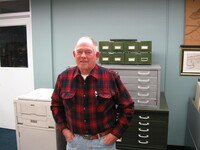 Raymond Key, November 16, 2011
 Raymond Key was born in Cooperstown, NY in 1935, but first lived in West Edmeston. He moved to Pierstown with his family in 1944 or 1945 and acquired a dairy farm there. He lived with his parents, three brothers, a sister, and a cousin. Key experienced major changes in farming as production shifted away from human and animal power and machinery took over for much of the work on the farm. His interview includes an excellent account of the technological development of farming in the Cooperstown area.
Key's recollections involve his daily chores on the farm, hobbies and amusements such as hunting, fishing, dancing, and baseball, and his recent career as a state licensed wildlife management practitioner. He also addresses contemporary issues like the importance of family, community, and the environment for local farms.
He lives in Pierstown with his wife on part of his family farm and has one son, two grandsons, and a granddaughter.
-
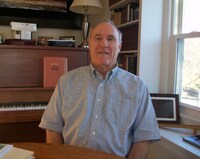 J. Taylor Hollist, December 1, 2011
 Mr. J. Taylor Hollist has lived a life of exploration and learning. He was born in Phoenix, Arizona in 1936. Mr. Hollist moved to St. Anthony, Idaho and Brigham City, Utah during his childhood. He settled in Oneonta, New York with his wife and children upon accepting a geometry professorship at the State University of New York - College at Oneonta. At the college, Mr. Hollist taught many disciplines of mathematics in addition to geometry, including computer science. Mr. Hollist has done extensive research on the Dutch artist M.C. Escher. He has published four articles on symmetry within Escher's art and has spoken at several conferences. The highlight of Mr. Hollist's career was his speech at an M.C. Escher conference held by the University of Rome in Rome, Italy.
In addition to his career, Mr. Hollist has always been an active outdoorsman. He has participated in athletics and was part of local Boy Scout troops, as both a scout and scout master. Mr. Hollist is part of the Church of Jesus Christ of Latter-Day Saints. As a retiree, he devotes his time to Mormon history. In 2005, he and his wife, Suzanne, went on a mission trip to Nauvoo, Illinois. Mr. Hollist is the treasurer of the Center for Continuing Adult Learning in Oneonta, New York. He participates in the program as both a student and teacher of interdisciplinary courses. Mr. Hollist enjoys spending his spare time with his wife, his six children, and fourteen grandchildren.
The transcript was edited for purposes of clarification. Words have been removed and inserted to ease the flow of events. Captions for track times and photograph references are also included.
-
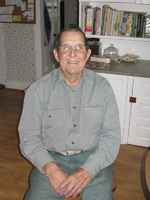 Oakley Whiteman, November 18, 2011
 Oakley Whiteman, at age 85, looks back at his life with no regrets. He was born on his family's farm in Westford, New York. Though he has moved around a bit, he has never strayed far from his hometown. As a young man, he had a few odd jobs, but poultry was his passion. After he married his wife, Connie, the couple started their own poultry business, which they ran for 25 years. In 1969, medical reports about cholesterol and changing market structures spelled the end for their business. After 1973, Connie began to work full time for Basset Hospital, and Oakley tried out a few jobs. He spent most of his time with the Baseball Hall of Fame, where he met many interesting figures from the baseball world. Since retirement, the pair have traveled to many fascinating places and have watched their sons grow up from afar.
Oakley is passionate about raising poultry for egg production. He recounts in detail their lifecycle and his business strategy. He attributes his success to his one-on-one approach to egg distribution. This approach worked well in the ‘50s, and ‘60s, but he was not able or willing to change his practices to compete with new forces in the early ‘70s.
Throughout his recollections, Oakley's main message is that of acceptance. He doesn't see the point in worrying over what could have been. He shares some disappointments and some joys amidst his accounts of previous occupations, but he takes the good and the bad equally. It is clear that his family is important and that he is proud of his choices in life.
-
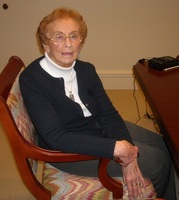 Mary Soule, Novemember 17th, 2011
 Mary Soule was born in 1925 in Little Falls, New York. She spent her childhood in Little Falls, until she married and moved to Richfield Springs, New York. Mary has spent her entire life living in rural upstate New York, and both she and her husband have worked for several local businesses. Her husband worked for a local saw mill and eventually worked for the Library Bureau. This is the organization that made much of the furniture in the NYSHA Library. The Soule's had five children who all remained in the region and attended local colleges. Though now 86 years old, Mary still works and is currently an employee of the New York State Historical Association in Cooperstown,New York.
Mary's career spans the entire second half of the 20th century and she has seen computers rise in importance over the past fifty years. While working at Mohawk Data Science (MDS) in Herkimer, New York, Mary became one of the first people in her department to be trained to use the computer. Mary also discusses changes within institutions she has worked for, such as the New York State Historical Association. During her time at NYSHA, the organization has grown and professionalized. Educators are no longer “guides” and programs have shifted from arts and crafts to historic interpretation.
Another important aspect of Mary's interview was her discussion of her home life. Her childhood involved attending a small parochial school, going to school dances, and being a cheerleader. Her own children enjoyed roller-skating, swimming in Canadarago Lake, camping, and horseback riding. She discusses small town life in Richfield, pushing her baby carriage up and down Main Street, and shopping at the local A&P. Overall, Mary's story showcases the changes that have taken place in rural communities over the past 50 years, both in the workplace and in the home.
-
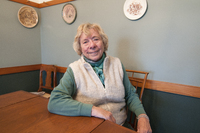 Barbara Mulhern, November 16, 2011
 Barbara Harrison Mulhern was born September 26, 1925 in New York City. Her father, Francis French Harrison was a doctor and her mother, Carlotta Creevey Harrison was a college educated housewife. Barbara grew up in Cooperstown in the 1930s during the Great Depression and World War II with a brother and a sister. Barbara talks of the social dynamics of Cooperstown in the 1930s and how those dynamics were changed by the Second World War. Education was always a large part of Barbara's life. She attended The Knox School, Smith College, and the Radcliffe Summer School for Publishing Procedures. Barbara went on to teach at Knox and spent some time in publishing. She also served on many different boards of education. She has worked tirelessly to better the educational system and talks extensively about the value of education and what it has meant to her over the years. Barbara married Francis Arthur Mulhern on March 6, 1949 in New York City and they had six children together over the years. Barbara talks of her childhood, the values that shaped her, and the values that she passed on to her children. Even at 86 years old Barbara skis: she discusses her love of skiing and how it has been and still is a major part of her recreational and family life. At the end of the interview, Barbara talks of her future goals and of changes she would like to see in the world.
Barbara's interview translated well into written form. I have eliminated false starts for ease of reading. I included non-verbal communication such as laughter in brackets to aid the reader in interpretation of the transcript. I do, however, highly suggest listening to the recording to best understand the dynamics and the tone of the interview.
-
Verna Shillieto, October 20, 1978
In 1978, Nancy Kesler recorded an interview with Mrs. Verna Shillieto of Burlington Flats, New York. A prominent family in the area, Verna's daughters, Carolyn Lindberg and Marjorie Schellhammer, were interviewed in 2010 and 2009 respectively. Her granddaughter, JoAnn VanVranken,
Shillieto carries on the tradition of farming, detailed in her 2010 interview. Discussing a variety of topics, Shillieto remembers raising sheep, chicken, and cows, and the old fashioned processes that affected farm production, such as hand milking and egg washing. Shillieto also details maple syrup production on her farm. Although Shillieto focuses extensively on farm life, she also fondly discusses memories of family and church. Remembering a time before plumbing, Shillieto gives great insight into early twentieth century farming techniques and rural farm life.
-
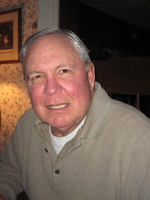 Donald Bruce, November 17, 2011
 Donald Bruce is a lifelong resident of Richfield Springs. Born in 1945, he has spent the majority of the past 66 years living and working on his family's farm. While living on the farm as a young boy he attended the local schools, but in his later teen years, his father's work with American Indian programs required the family to move to New York City. While living in Greenwich Village Bruce was enrolled in a private school. After finishing high school, he left to attend Baldwin Wallace College in Ohio; however, prior to finishing he moved back home to Richfield Springs to help his mother with managing and running the family farm.
Bruce describes how the family farm served a dual purpose as both a means of support and also a teaching tool. Through his father's work with American Indian youth programs, the family farm served as an alternative for Indian foster children. They lived and worked on the farm while also attending the same local school as Bruce. He reminisces on the diverse groups of people that have passed through his home over the years: Indian foster children, college students, lacrosse teams, and friends of his father, Louis R. Bruce Jr. Louis R. Bruce Jr. was an advocate for American Indian's rights and served as Commissioner of Indian Affairs from 1969 to 1973. Don Bruce shares his observations regarding alcoholism and American Indian communities and hints at the Indian politics regarding tribal status. There is a serious tone in his manner when discussing the family farm at present and the current issue of family farms slowly disappearing.
The narrative nature of Bruce's speaking style translated relatively well to written format. For clarity, repetitive words or phrases spoken by both Bruce and the interviewer were edited out. Any run-on sentences were broken up into smaller sentences.
-
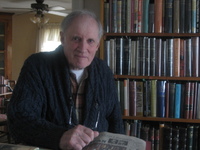 James Hurley, November 12, 2011
 In 1838, James Weeks, a free African American, purchased a plot of land on the periphery of Brooklyn. Over the next 40 years, Weeks' settlement expanded to include the homes of free blacks and vibrant institutions, such as churches, schools, social services organizations, and anti-slavery associations. From the 1840s to the 1880s, the residents of Weeksville strove not only to improve their social, economic, and political conditions, they advocated for the eradication of slavery, housed fugitive slaves, and provided asylum for African Americans who fled Manhattan during the draft riots of 1863.
In 1968, James Hurley facilitated a workshop at the Central Brooklyn Neighborhood College that provided community members the opportunity to explore local and neighboring communities in Brooklyn and Manhattan. Little did he know his endeavor would lead to the rediscovery of Weeksville. The rediscovery of Weeksville is important not only because it provides tangible evidence that a free black community existed in Brooklyn during the mid- to late-nineteenth century, but also because the site conveys narratives about sustainability, self-determination, resistance, and the fight for equality and citizenship.
The dialogue between Ashley Bowden and James Hurley captures Hurley's involvement in the rediscovery of Weeksville. Particularly, Hurley recounts the events that preceded and followed the unearthing of Weeksville. He provides a glimpse into the social, political, and economic climate in which the site was founded, and he explores the people, institutions, myths, and challenges the supporters of Weeksville encountered in the first five years after the site's discovery. Some of the most interesting material in the interview concerns the site's leadership, and the assigned and assumed roles individuals embraced during the rediscovery process.
I removed false starts, repetitive phrases, and fillers–such as “so” and “um”–from the written transcription. Other than the aforementioned eliminations, no other changes were made to the transcript.
-
 Marjorie Landers, November 21, 2011
 Marjorie Landers is an important member of the Cooperstown community. She was born in New Jersey in 1940. Striving to achieve at a high level in many areas, she has raised a family, attended nursing school, and run two successful businesses.
Her decision to attend nursing school in her thirties took her life in a new direction. During this period, Marjorie Landers balanced raising a family with the demands of school. She graduated from nursing school, and moved her family to Cherry Valley, just outside of Cooperstown, New York. She started work in radiation/oncology floor at Imogene Bassett Hospital, bringing cheer and hope to the patients on her floor. A few years later, Marjorie Landers left Bassett Hospital and began working with hospice care. She considers her work with hospice to be the most important and meaningful work of her life. Caring for many patients in the area, Marjorie Landers brought peace to many families who had sick loved ones. After a few years working with hospice, Marjorie Landers decided to return to Basset Hospital and began work in Agricultural Health. She was in charge of farming families in fifteen counties, and she made sure they received the same medical attention and treatments as everyone else. Today, Marjorie owns the White House Inn with her husband, Ed, and runs her own cake decorating business. She hopes in the future to enhance her art skills, and spend as much time as she can with her family. Marjorie Landers truly exemplifies what it means to live life to its fullest. Because the interview takes place at the White House Inn, there is a lot of background noise going on throughout the interview.
-
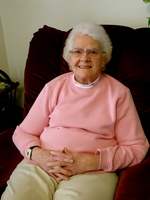 Helen Shillieto, November 16, 2011
 Helen Shillieto was born Helen Green in Huntington on Long Island, New York on September 28, 1928. Growing up the daughter of Danish immigrants, as a young girl she worked as her father's assistant on the family's two hundred acre farm on Clock Hill in Burlington, New York. Shillieto recounts getting an education during the 1940s when she attended a one-room schoolhouse with only one other person. Both before and after school, she worked on the farm. She recounts the first time she met her husband. She was only fourteen and laughs at how embarrassed she was to have a man fourteen years older picking her up by the seat of her pants.
After marrying Stanley Shillieto at age 19, she found herself again immersed in farm work. Living on a one hundred and fifty acre farm, the Shillietos raised dairy cows, turkeys, and enough crops to feed their main harvest, chicken eggs. One of the largest and only egg producers in the area, the Shillieto farm had 2,200 eggs at full-scale production. Doing everything from milking cows and dressing turkeys to washing chicken eggs, Shillieto explains her life experiences in a relaxed and interesting manner.
While farming was her profession, Shillieto is most proud of being a mother to four children whom she put through school with the income from all those eggs. Fiscally responsible, Shillieto speaks in detail about her family's money policies. She recalls many great memories with her husband Stanley and reminisces about their travels in retirement from farming in the 1980s. While commenting on changes in farming in Central New York, Shillieto remains an advocate for “changing with the times” and gives insight into the practices of the small farming community of Burlington.
The interviewer has edited the transcription for reading capabilities and per the interviewee's corrections. In the background, noise from State Hwy 80 can be heard at times. The abrupt banging often heard is from construction on her garage roof. Through a technical error, the interview ends prematurely, but the interviewee was thanked for her participation.
-
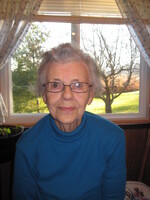 Barbara Weaver, November 21, 2011
 Barbara Louise Gray was born in East Springfield, New York in 1923 and grew up on a small dairy farm next to what is now Route 20. After marrying Herb Weaver, she raised three children and spent many years working outside of her home. She remains very involved in her community by volunteering for numerous local organizations and her church.
Mrs. Weaver has great knowledge of the history of East Springfield and was able to use this interview to add important anecdotes to her grandmother's book, The History of Springfield. Some of the most interesting material is from her experiences working outside of the home during the mid-twentieth century. Other topics in this interview are education during the 1920s and 1930s, rural foodways, and early-twentieth-century dairy farming. Her family is actively recording its past with written sources and photographs which can aid future researchers.
I have chosen to fix some grammatical errors. I have also inserted missing words in brackets, removed repetitive oral acknowledgements, e.g., “uh-huh” and false starts, and added punctuation where needed. I have tried to say as true to the audio as possible.
-
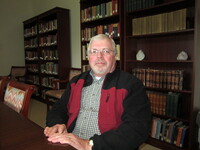 David Burch, November 16, 2011
 David Burch was born on December 8, 1950 and grew up in Hartwick, NY. After attending SUNY Delhi for animal husbandry, he went to the University of Georgia to study dairy science. He spent much of his adult life working in the dairy industry throughout the Northeast, first for Dairylea and later for HP Hood.
Dairy has been an important industry in upstate New York and the Northeast for the past 150 years. Beginning as small family-owned farms selling dairy products locally, during the twentieth century the industry gradually moved toward co-operatives and larger farms selling raw milk to corporate processing plants that produce dairy products for stores throughout the Northeast and beyond.
Burch's recollections combine his work history within the dairy industry with the industry's history in general and personal achievements and stories. Particularly interesting are the introduction of the Pasteurized Milk Ordinance and, later, Burch's experiences with introducing aseptic plastic bottling into the United States.
Mr. Burch generally speaks very clearly and I have been able to transcribe most of the interview as is; however, I have occasionally removed unnecessary conjunctions. While his words are clear in the transcript, the text fails to convey the emotion behind them, especially when he is proud of an accomplishment or amused by an experience. For a richer understanding of the interview, researchers should consult the audio recordings.