-
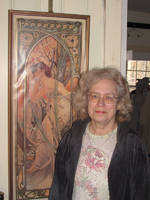 Susan Jones, November 19, 2014
 Susan Jones is a Cooperstown Graduate Program alumna from 1968. She is originally from North Adams, Massachusetts. She graduated from Williamstown College with a degree in occupational therapy and attended Kansas State University's art history program before transferring to the Cooperstown Graduate program. After graduating she became director of the Oneida Historical Society in Utica, New York. She kept the position until she met and married her husband C.R. Jones, a fellow alumnus. They live in nearby Roseboom, New York. Mr. Jones worked for the New York State Historical Association as a conservator. Mrs. Jones obtained a second master's in textile and object conservation from the Fashion Institute of Technology in order to start a conservation business in Cooperstown.
Mrs. Jones attended the Cooperstown Graduate Program a few years after it was founded. During its first few decades, the curriculum at Cooperstown changed drastically, the conservation program was newly added, and the folklore program discontinued. Mr. Jones is a member of CGP's first graduating class. Both Mr. and Mrs. Jones took their degrees in History Museum Studies. Later, Mr. C.R. Jones worked at the Fenimore House when the founder of the Cooperstown Graduate Program Louis C. Jones retired and Peter Welsh from the Smithsonian became director.
The conversation with Mrs. Jones ranged from industry in her hometown of North Adams, Massachusetts to her time at the Cooperstown Graduate Program. Later, she provides a detailed an interesting description of the changes in the conservation field since she opened her business. We met in the studio on 14 Eagle Street, Cooperstown. The hum heard in the background of the recording is the heater.
-
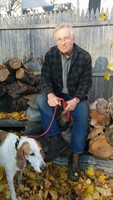 Michael Whaling, November 12, 2014
 Michael Whaling is an artist and environmental activist. Whaling was born in Sharon Springs, and currently resides there. He has lived in Sharon Springs, New York, Hallandale, Florida, Maine as well as around the world in U.S. Naval bases. Michael has been creating art since he was a young man, and for the past twenty years he has weaved his environmental concerns into it. Michael grew up during the 1950s and 1960s, and had many experiences with race and racism growing up, which were formative for him.
Whaling's art often takes the form of manual works, such as building stone walls or furniture. As stated before, he also creates works of art that weave his environmental messages in them. These messages often relate to local issues that Michael is passionate about, such as pesticides on Doubleday Field in Cooperstown.
Whaling's recollections range from his experiences from childhood to his recent environmental concerns. His most interesting recollections are in regards to race and growing up with parents with racist parents. Also he ruminates about local environmental concerns.
I interviewed Mr. Whaling in his home in Sharon Springs. His home is a converted barn, and is filled with his art and hand-made furniture. He lives with his dog, and lives without the distractions of modern technology.
-
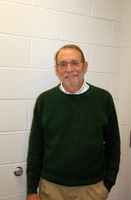 William Streck, November 16, 2014
 Dr. William F. Streck served as President and CEO of the Bassett Healthcare Network from 1984-2014. Born in Parsons, Kansas, Streck grew up in Oklahoma City in a family that valued both faith and education. After graduating from the University of Missouri, where he met his wife Karen, Dr. Streck completed his internship and residency in internal medicine and a fellowship in endocrinology and metabolism at the University of Rochester. In 1978, Dr. Streck came to Bassett as the institution's first board certified endocrinologist and by 1984 was serving as the President and CEO. Dr. Streck was instrumental in the creation of the Bassett Healthcare Network, an integrated healthcare delivery system, which employs more than 400 providers and serves eight counties across Central New York.
The Bassett Medical Center (formally known as the Mary Imogene Bassett Hospital) located in Cooperstown, NY was opened in 1922. Since the 1920s, Bassett has utilized an employed physician model with a commitment to both research and education. Bassett Medical Center is a teaching hospital with postgraduate medical programs offered through an affiliation with the Columbia University College of Physicians and Surgeons. During the course of Dr. Streck's career, Bassett has grown from a single hospital to a large regional network of providers and continues to lead the field in rural healthcare.
I interviewed Dr. Streck at the Cooperstown Graduate Program building in Cooperstown, NY. In July of this year, Dr. Streck retired after a thirty-year tenure as CEO. In the interview, Dr. Streck discusses his medical training and his experiences at Bassett as both a practicing physician and President and CEO of the institution. He also provides insight on how the healthcare system has changed over time, as well as the political nature of the field.
I have attempted to capture the flow and emphasis of Dr. Streck's narration. However, for readability I have made some editorial decisions such as eliminating many words such as “so,” “and,” “kind of,” and “but,” as well as shorting sentences. I recommend listening to the audio tracks for a more nuanced and accurate experience.
-
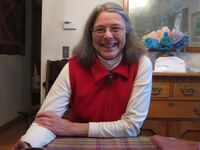 Florence Carnahan, November 22, 2014
 Florence Carnahan is an environmentalist living in Burlington Flats, New York and a friend of the Cooperstown Graduate Program. After living everywhere from Orange County, Pennsylvania to Barrow, Alaska, Carnahan has seen the effects of oil drilling on communities. Carnahan became active in the anti-hydraulic fracturing movement in Burlington, New York in 2011 when she cofounded Concerned Burlington Neighbors. Concerned Burlington Neighbors raised awareness about the effects of hydraulic fracturing on the environment through activities like participating in Town Board meetings and creating an informational website.
Hydraulic fracturing is a process by which fluid is injected into horizontally drilled wells to fracture rock so that natural gases are more easily accessible. Hydraulic fracturing is currently a contentious issue in communities throughout the United States. Those in favor of hydraulic fracturing argue that it is both an energy source and a catalyst for economic development. Those against hydraulic fracturing cite its potential dangers for the water supply, human health, and human safety. There is currently a moratorium on hydraulic fracturing in the state of New York.
Carnahan's recollections range from explanations of how she conserves energy in her home to an analysis of the hydraulic fracturing debate. Some of the most interesting material in the interview concerns strained community relations in Burlington as a result of this debate. I interviewed Mrs. Carnahan at her home in Burlington Flats, New York. The hydraulic fracturing debate has become less heated since the founding of Concerned Burlington Neighbors in 2011 so she is able to speak to the challenges and successes of the organization. Carnahan is still involved in environmental organizations.
Mrs. Carnahan speaks in a clear, concise manner. I have fixed some grammatical and acronymic errors but have otherwise directly transcribed her speech. Researchers are encouraged, however, to consult the audio recordings to hear Carnahan speak in her own voice.
-
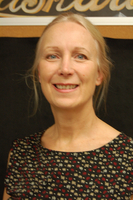 Carol Mandigo, November 5, 2014
 Carol Mandigo has made a life in the arts and community service since the 1970s. She was born and spent her childhood residing in Clay, NY. Ms. Mandigo has extensive familial roots in Oneonta, NY and fond memories of visiting family there as a child. She went on to study sculpture and fine arts at Stony Brook University in Stony Brook, NY and graduated with the class of 1975. From there, she and her husband, John Potocnik, moved to a family homestead in Laurens, NY, where they currently reside.
Ms. Mandigo co-founded The Catskill Puppet Theater with her husband in 1979, and has served as its artistic director for thirty years. At the time of its inception, The Catskill Puppet Theater was the only organization of its kind in central NY and quickly gained popularity in the niche market of live puppet entertainment. Largely self-taught in puppet making and puppeteering, Carol and John combined their love of art, music and theater with multicultural stories and lessons in tolerance to create unique and highly sought-after entertainment programs for children.
The memories captured in this interview center around Ms. Mandigo's time spent in Oneonta as a young girl, then later returning post-college graduation to live in an 1840s farmhouse previously owned by her great-grandmother. She speaks about her grandmother as a restaurant owner in Oneonta, what it was like to spend time in the city as a child and how she later used her creativity and artistic skills to give back to Oneonta and the surrounding communities. The interview includes what it was like to begin a creative business in the arts, to manage its unexpectedly rapid growth, to balance the demands of parenting and managing a business, and to let go of some responsibilities within the Puppet Theater to take on the role of prevention specialist at an anti-addiction organization (LEAF, Inc.) in recent years.
I interviewed Ms. Mandigo at her office at LEAF, Inc. in Oneonta, NY early one evening. She had just finished a day at work and was preparing to play back-up guitar with a few other jazz musicians that night at the B-side Ballroom restaurant and venue in the Clinton Plaza. As she explains in the interview, Ms. Mandigo plays rhythm guitar in many bands. In addition to playing the event, before I arrived, she was also in the midst of finding another musician to fill in for the leader of the jazz group who had recently fallen ill. As demonstrated in her career and personal life, Carol Mandigo is committed to lending a hand to serve her community whenever she sees a need.
Ms. Mandigo's office, is located beneath a restaurant adjacent to the main street of Oneonta. Noises from above commingle with Carol's responses, but do not hinder understanding of the content of this interview. She is easygoing and often infuses her stories with humor and laughter, which is noted in the transcription. To fully experience Ms. Mandigo's delightful personality and positive attitude, researchers are encouraged to consult the audio recording.
-
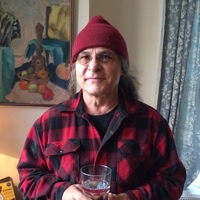 John Potocnik, November 7, 2014
 John Potocnik was born on Long Island, New York in 1952, and grew up on Long Island and in Brooklyn. His life has been strongly influenced by his time in the Experimental College at SUNY Stony Brook, which he attended while pursuing his undergraduate degree. It was at Stony Brook that he met Carol Mandigo, his wife, with whom he would go on to found the Catskill Puppet Theatre. He has worked as a puppeteer for many years, and has had the opportunity to travel around the country and display his craft in a variety of institutions. John is also an accomplished traditional fiddler who is particularly interested in revivalism, which he studied during his time at the Cooperstown Graduate Program's folklore program. He and Carol have played music together for decades, including composing soundtracks for their puppet shows.
The Experimental College at SUNY Stony Brook was a short-lived program that ran in the 1970s. The Cooperstown Graduate Program's folklore track was also discontinued a couple of years after John graduated. His interest in folk music revivalism came on the heels of the folk revival of the 1960s, and he was influenced by Greenwich Village musician and leatherworker Allan Block, whose sandal shop had become a hub of that movement.
John talks about how his education has influenced him, but also how his interests drove his education. He examines the difficulties and joys of making a living in the arts, especially being a self-employed folk artist. He discusses the Catskill Puppet Theatre's focus on multiculturalism, and the tricky navigation required to be inclusive to different cultures while avoiding offensive stereotypes. John also talks about his objections to the rigid guidelines meted out by some folk musicians who feel they can define the validity of music by how traditional it is.
I interviewed John in my home in Cooperstown, New York. He drove to Cooperstown because he and his wife had been hired to play a contra dance in town that night. He was also in the midst of preparing for a performance with his contemporary country music band.
I have chosen to edit John's speech slightly for the sake of easier reading. I have omitted a few words and added a few for clarity, but I have not changed the feel or the meaning of his words. As it is impossible to reproduce the subtleties of speech in writing, I encourage researchers to consult the audio recording.
-
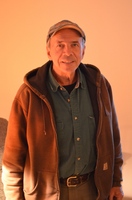 Wilfred Bruneau, November 10, 2014
 Wilfred ("Willy") Bruneau is a fruit farmer in Cooperstown New York. He was born March 14, 1944 in Middleborough, Massachusetts. He now owns and operates Middlefield Orchard.
-
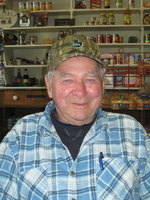 Larry Roseboom, November 6, 2014
 Larry Roseboom was born in Westford, NY on October 15, 1935. The Rosebooms founded and established the town of Westford in 1829 and generation after generation of the Rosebooms have maintained residences in the surrounding area ever since. Larry started out as a dairy farmer on the farm of his father, which then became his as he continued to dairy farm and eventually began to incorporate maple syrup production into his daily business. Over time, Larry turned the majority of his focus to his maple syrup and ceased dairy farming altogether when he established Breezie Maples Farm with a neighbor. Larry is also involved in many local committees and organizations, maintaining a respected and visible place in the surrounding community.
The maple syrup industry has experienced many technological changes during the time that Larry has been involved. Maple tubing has replaced the laborious process of using sap buckets. Vacuums, reverse osmosis, and other advances have been brought into the production of maple syrup. The maple syrup industry is also evaluating and updating their grading system, which is to take effect in early 2015.
Larry's recollections range from his early life on the farm in a small Upstate New York town to his opinions on the growing technological advances going on in the maple syrup industry. Some of the most interesting material in the interview concerns small town community relationships and the culture of small town Upstate New York built through rural politics, organizations, and events.
I interviewed Mr. Roseboom at the Westford Town Hall, where he sat on the town board for many years. He had just broken ties with his Breezie Maples Farm business partner and was beginning his own independent maple syrup production out of his home.
Mr. Roseboom speaks in a slow, but deliberate manner. I have tried to convey the self-deprecating humor and unique phrases in Roseboom's speech. I have also chosen to preserve some grammatical particularities. It is impossible, however, to accurately reproduce all of the details in Roseboom's dialect and it is crucial for researchers to consult the audio recordings to get a complete sense of the interview.
-
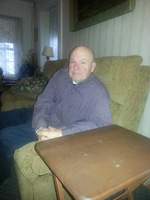 Orrin Higgins, November 17, 2014
 Orrin Higgins is the town justice for the town of Hartwick, New York. He was born in 1940 in Hunter, New York. After attending college at State University of New York-Oneonta, Orrin moved with his wife to nearby Hartwick. He lives near the center of town, just across the street from some of his children and grandchildren.
Mr. Higgins had a career in law enforcement lasting over twenty years. He served as a state trooper and was based out of several different posts in the central New York region. Throughout his tenure as a policeman, and later a judge, Mr. Higgins has been an active member of the Hartwick community. He has served on town boards, organized community events, been on the board of the Hartwick Insurance Co., and lobbied to keep Hartwick's schools active.
The interview took place in Mr. Higgins's home. It is a large stone house at the main intersection of Hartwick and is decorated with many antiques. The property includes a circular driveway, two garages, one containing many pieces of antique farm equipment, and a yard where the cats and chickens roam free.
Mr. Higgins speaks thoughtfully and deliberately about several topics including the community life in Hartwick, the consolidation of Hartwick schools into the Cooperstown district, his experiences as a judge, and his observations of national politics. The transcript contains minimal editing; only in such instances where the addition of punctuation or changes in sentence structure aid the readability of the document. I encourage researchers to refer to the recording as it reveals Mr. Higgins' passion about the many topics discussed.
-
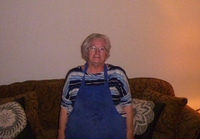 Joan Bruneau, November 10, 2014
 Joan Bruneau, the owner of Middlefield Orchard, has become an important part of the Cooperstown community because of the farm-grown goods she brings to the area. Joan Bruneau, and her husband Willy, have owned and operated Middlefield Orchard for the past 12 years. Their delicious jams and farm-grown products have become a staple in local farmer's markets, bed and breakfasts, and various stores in the area. Middlefield Orchard has also become a destination for families to from miles around.
Joan Bruneau was born in Miami, Florida in 1947 and spent most of her youth traveling around the world. As the daughter of a member of the United States military and World War II veteran, Bruneau moved from Florida to Wisconsin, to California, to Germany, to Washington State, to South Carolina, and from there to Hawaii where she graduated from high school.
While in Hawaii, Bruneau experienced some difficulty being one of only a few white students at her school and church. However through her membership in the Church of Jesus Christ of Latter Day Saints, or the Mormon Church, she met her husband, Willy. After graduating high school, Bruneau went to college at Brigham Young University and graduated with a Bachelor of Science in genealogy. During this time Joan Bruneau also married Willy Bruneau and they moved to Massachusetts.
Joan and Willy led a happy life in Massachusetts where they raised a family and had successful careers. Bruneau owned her own bookstore, as well as lectured and taught classes about genealogy. After Bruneau's husband retired, they moved to Central New York and established Middlefield Orchard.
Joan Bruneau and Willy work hard to participate in local farmers' markets as well as welcome people to the orchard to pick their own apples, strawberries, and raspberries through the U-Pick program. They are always looking for ways to expand and build on the success of Middlefield Orchard.
While Bruneau stays extremely busy with all of the demands of running an orchard, including twelve-hour days preparing jam as many as three times a week, she still maintains time for church and volunteering at the Family History Center. Through her volunteering, Bruneau helps locals to research their family members and their histories.
I interviewed Mrs. Bruneau at her home in Middlefield Orchard in Cooperstown, NY. She was in the middle of preparing loaves of bread for the upcoming farmers' market; as a result the researcher will hear a timer go off during the second track of the interview. This interview was a live recording and therefore contains some beginning of sentences, which trail off and a new sentence begins. Researchers are encouraged to listen to the audio recording as well as reference the transcript for greater context.
-
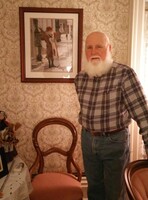 Paul Kuhn, November 12, 2014
 Paul Kuhn was born in Glen Cove, New York in 1938. He grew up in a modest Catholic home during World War II with his older brother and parents. He received his first introduction to Cooperstown in 1945 after his family rented out their home and spent the majority of their time at a summer camp in Cooperstown, where his father worked. This camp became an integral part of his family's life, and Kuhn served as a counselor there until he graduated from college. After graduating from Villanova University in Philadelphia, Kuhn served in the military, then returned to work at an insurance company for several years in Philadelphia where he met his wife, Mary Margaret Kuhn. Once they retired, Mr. and Mrs. Kuhn moved to Cooperstown where they became important members of the community. Mr. Kuhn worked at The Farmers' Museum as an interpreter in Bump Tavern for seventeen years and as Santa Claus for sixteen years.
Mr. Kuhn talks about how his exposure to Cooperstown during the summer was limited, but the overall impression it left on him as a child stayed with him throughout the years. In 1996, Mr. and Mrs. Kuhn moved into their dream home in Cooperstown and instantly became involved in the community. Mr. Kuhn started working as a volunteer docent at the Fenimore Art Museum, where he was introduced to the Director of Education at The Farmers' Museum after an impressive interview for an opening in the museum's American Paper-Staining Manufactory.
Mr. Kuhn talks about his experience as an interpreter at Bump Tavern in depth, reflecting on his experience and the people he met, and the history behind Bump Tavern. Mr. Kuhn goes on to discuss how he became Santa Claus and how that role in the community has shaped his life substantially. Mr. Kuhn ends by discussing his role as Village Trustee and Deputy Mayor, reflecting on the challenges of the job and the successful changes he helped incorporate in Cooperstown.
I interviewed Mr. Kuhn at his home in Cooperstown, New York. He lives next door to me, so we found his home most convenient for the both of us. I have chosen to edit Mr. Kuhn's speech slightly for easier reading. I have omitted a few words and added a few for clarity, but I have not changed the feel or the meaning of his words. As it is impossible to reproduce the subtleties of speech in writing, I encourage researchers to consult the audio recording.
-
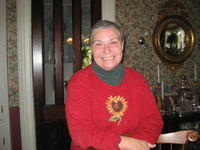 Mary Margaret Kuhn, November 12, 2014
 Mary Margaret Kuhn is one of Cooperstown's best loved and most well-known residents. She is originally from Philadelphia and today she can be seen at the Farmers' Museum running the carousel. At Christmastime she plays Mrs. Claus in downtown Cooperstown.
-
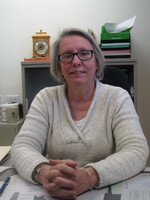 Vicky Lentz, November 20, 2014
 Dr. Vicky Lentz has been involved with the Otsego County Conservation Association (OCCA) since 2007, and currently serves as the president of the Board of Directors. She is an Assistant Professor of Biology at the State University of NewYork Oneonta. Dr. Lentz grew up in Indiana, completed her undergraduate degree at the University of Delaware, and earned her PhD in immunology from the University of Pennsylvania. She has lived in Otsego County since 2001.
I interviewed Dr. Lentz in her office at SUNY Oneonta. Dr. Lentz recalled her early interest in environmentalism and training in biology, and discussed how helping to run a family farm has influenced her views on environmentalism and sustainability. She discussed her involvement in several OCCA projects, including advocating against hydrofracking in Otsego County, commenting on the Edic-to-Fraser electrical line expansion, working on a riparian buffer project along Butternut Creek, and organizing local educational and recycling events. Topics also included the importance of guarding against invasive species in Otsego Lake, ways to balance economic development and environmental protection, incorporating environmental advocacy into her role as a professor, and her hopes for Otsego County in the future.
Dr. Lentz speaks in a standard English dialect. I have chosen to make minimal edits for clarity and consistency. Researchers are encouraged to consult the audio recordings.
-
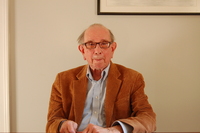 Noel Dries, November 11, 2014
 Noel Dries plays an important role in the overall establishment and maintenance of Hyde Hall in the Cooperstown, NY area. He was born in Springfield Center and still lives there today. His historical knowledge of the area is expansive. Mr. Dries was a chemistry and physics teacher in Walton, NY for many years. After his retirement he became heavily involved in Hyde Hall as well as Saint Mary's Church and the Springfield Historical Society. He is very knowledgeable regarding the transfer of land and its usage on the northwestern part of Otsego Lake. Mr. Dries's parents worked on the Cary Mede estate, located directly next to the Glimmerglass Opera today.
During Mr. Dries's life he has seen many changes in the area. When he was a boy the area was full of small dairy farms. Over the years these small farms were forced to close due to technological and economic changes in agriculture.
Mr. Dries's recollections of his time spent on Cary Mede and growing up in the area provide wonderful insights into the changing face of the area over many years. He recalls fond memories of swimming in Otsego Lake as a boy and current efforts to make Springfield Center a historic district. Additionally, he discusses the challenges facing Springfield Center and what he believes can be done to ensure the long-term success and growth of the area.
I interviewed Mr. Dries at Hyde Hall. As a volunteer in the collections department he is intimately aware of the history of the home and how it is relevant to local history today. Hyde Hall is located in Glimmerglass State Park at the north end of Otsego Lake.
Mr. Dries speaks in a clear and proficient tone. Very few changes were made to the transcript as his dialect and thoughts are highly organized and easy to follow. He refers to numerous people and places throughout the area. All spellings were confirmed with Mr. Dries for accuracy. As the interview took place at Hyde Hall, there was a bell that rings as people come in and out of the building. It can be heard a few times throughout the interview. Additionally, there was a fly that can be heard flying by a few times during the interview.
-
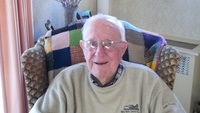 Howard Talbot, November 14, 2013
 Howard Talbot was born in 1925 in New Berlin, New York. Talbot grew up in Edmeston, New York, where he lived for most of his childhood and adolescence. Talbot was drafted into a Tank Destroyer battalion during World War II, eventually serving with the U.S. Armored Field Artillery in the Philippines. The draft prevented Talbot from achieving his high school diploma, but he did attend the Utica School of Commerce after the war. After graduating, Talbot was hired by the Leatherstocking Corporation as an accountant and later worked at the Baseball Hall of Fame.
Throughout the early half of the twentieth century, there were a wide variety of youth camps established on the shores of Lake Otsego, including Camp Chenango. These camps provided organized and educational, yet entertaining, activities for both boys and girls who spent their summers there. Talbot shared stories about his time at Camp Chenango, as well as some stories about his life in Cooperstown after World War II. Talbot had asthma as a kid, which prevented him from working at his father's feed business. A family doctor suggested that Talbot attend Camp Chenango to help with his asthma, and Talbot did not observe any symptoms after going to the camp. Talbot started out as a regular camper at Camp Chenango before becoming a counselor there.
Talbot's recollections provide insight into the activities provided by some of the camps on Lake Otsego and the significance these camps had in the development of campers. The stories portray a strong camp community where boys from all places, even metropolitan areas like New Jersey and New York City, were able to spend the summer and be introduced to nature. While Talbot does not think that his time at Camp Chenango affected his experiences in the army, he credits the camp for providing him a strong foundation.
I interviewed Mr. Talbot at his home in Cooperstown, New York. Talbot's daughter entered the house during the interview, which accounts for some of the sound that can be heard in the background. I have edited the transcript in order to put Talbot's thoughts into more complete sentences. This is intended to make it easier to understand the interview when reading the transcript; however, I would suggest that researchers listen to the interview in order to receive a more complete understanding. There were a few words and terms that I was not certain of, but I have placed suggestions in brackets when applicable. I also use brackets to denote any words or gestures that were important to reading the transcript but were not said.
-
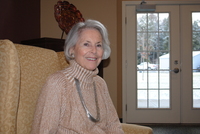 Anne Evans, November 17, 2013
 Anne Evans was an active member of the Cooperstown community before her recent move to the Plains at Parish Homestead in Oneonta, New York. She was born in England in 1931 and immigrated to the United States with her husband and three children in June 1966. Evans talks of her childhood experiences. What it was like for her living in England during World War II, her love of horseback riding, her typical school day, what it was like to lose a family member to the war, adapting to air raids and bomb shelters, and her experiences dating. She also details her experience sailing to the United States and her struggle to adjust to America after her disastrous first day in New York. Evans talks about almost joining a commune, her work life as an entrepreneurial business owner of Déjà vu, her encounter with sexist bank policies, and ends with a delightful story regarding famous actress Julie Andrews.
I interviewed Anne Evans in a private room at her home in the Plains in Oneonta, New York. She was very excited to participate in the oral history project. I chose to take the opportunity to ask Evans about her life, emphasizing her immigration to the United States and her career.
Mrs. Evans carries a distinctively British accent, evident in some of the Briticisms and turns of phrase used throughout her oral history. I have done my best to keep them intact, only having to remove some grammatical redundancies. It is impossible to accurately reproduce the energy of her tales and because of that, researchers are encouraged to consult the audio recordings.
-
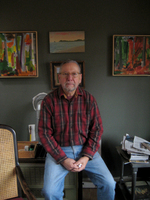 Richard Kathmann, December 6, 2013
 Richard Kathmann was the first director of the Hanford Mills Museum, originally called the Old Mill Museum. After training and working as a landscape painter, Mr. Kathmann decided to look for more consistent work. At the time, Mr. Kathmann was living on his family's farm in East Meredith, so when Hanford Mills advertized for leadership positions within the museum, Mr. Kathmann saw his opportunity and took it. Once employed there, he assembled a team of intellectuals, museum professionals, and community members to gather the best possible advice and support as he built the future Hanford Mills.
Mr. Kathmann began his career at Hanford Mills in 1975, a time when preparations for America's 1976 Bicentennial were in full swing. Along with this patriotic fervor came a desire to highlight and support local history, in addition to regional and national history. This environment of public support, along with the rich collection of experts Mr. Kathmann had enlisted, created the “perfect storm” of favorable events that contributed to the museum's successful opening. Locals in East Meredith and the surrounding communities felt proud of the museum, and they exhibited a sense of ownership over the museum in its early days.
Mr. Kathmann discusses the people involved in the launch of the Hanford Mills Museum, his role in the museum's development, and where his career has taken him since. He closes with a summary of his split career. Having spent twenty years in museums and almost twenty years in his studio since then, he refers to his time in museums as his “twenty-year mistake” and speaks of his work as a painter in spiritual, reverential terms. A collaborative thinker and lifelong learner, Mr. Kathmann dove into each of his works with intention and excitement.
I interviewed Mr. Kathmann at his home and studio, the Sap House in East Meredith, New York. We sat in this small cottage, immediately surrounded by his landscape paintings and by the forest on his land. Mr. Kathmann's intense emotional connection to the forest is evident not only in his artwork, but also in his choice of home. The Sap House embodies his philosophy as an artist and as a learner, to “get to the mystery of what's behind the landscape.” In his art as well as in his museum work, Mr. Kathmann looked deeply and acted intentionally.
-
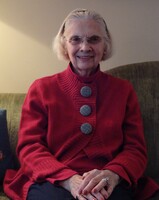 Doris Reiss, December 3, 2013
 Doris Reiss was born in Mohawk, New York, in 1933, and celebrated her eightieth birthday shortly before this interview was conducted. Doris was a very active young woman. In high school she joined and toured with a trio, became a cheerleader, and learned shorthand. After marrying her first husband, who was in the Air Force, Doris moved to the Wright-Patterson Air Force Base in Ohio. It was there that she secured her first job as a secretary to a colonel, putting her shorthand skills to use. When her husband was transferred for work, Doris found herself living on an Air Force base in Anchorage, Alaska.
After a short stint in Alaska, Doris and her first husband moved to the Cooperstown, New York, area, and that is where her story with the New York State Historical Association (NYSHA) and the Cooperstown Graduate Program (CGP) begins. Doris first worked as a secretary to librarian Paul Du Bois, but eventually came to work under Dr. Louis C. Jones, director of NYSHA. Her position as secretary to Dr. Jones allowed for unique insights into the work and lives of two men who were instrumental in the creation of CGP: Dr. Jones and Bruce Buckley. Through Doris's recollections, it is possible to form a picture of the development of NYSHA and CGP from a time before the library building was built through the changeover in leadership after Dr. Jones retired. Her interview demonstrates that the staff truly became a family during that time.
The interview concludes with a look into Doris's personal life and her involvement within the Cooperstown community. Doris spoke fondly of her two children, Pam and Jim, and of her second husband, Howard. She also discussed several of the business ventures that she and her husband, Howard, became involved in. Although Doris is now retired and living in Oneonta, New York, she maintains very strong ties to her community in Oneonta as well as in Cooperstown.
I interviewed Mrs. Reiss in her home in Oneonta, New York. Although some edits were made to the transcript to remove false starts, pauses, and things of a similar nature, I attempted to reproduce most of Doris's original phrasing. However, the transcript does not align with the audio in instances where I decided it was more important to clarify the meaning of the statement than to create a completely accurate transcription. Since the transcript is not a true reproduction of the oral history, researchers are encouraged to consult the original audio recordings.
-
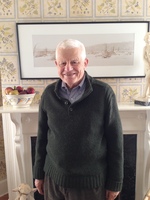 Earle Peterson, November 20, 2013
 With early roots in agriculture and farm life, Dr. Earle N. Peterson has always been much in tune with nature and the environment. It is no surprise that his life work reflects these influences. Growing up on a farm, Dr. Peterson worked very closely with large farm animals, which became his primary interest in veterinary school. He earned his doctorate degree in veterinary medicine at Cornell University in 1958, a seven-year-long process where he not only met the love of his life, but also had a tremendous mentor. In the interview, Dr. Peterson reflects on his childhood, undergraduate experience, life endeavors, career, and more. As the founder of the Greenwoods Conservancy, a local foundation committed to protecting the environment and improving a local habitat, Dr. Peterson has contributed substantially to the Otsego area. In addition, Dr. Peterson was instrumental in creating a neuroscience institute in a hospital in New Jersey in response to the inadequate care of strokes many people were suffering from at the time. Throughout his life, Dr. Peterson has had a number of successes that not only benefitted his life, but also the lives of many others.
-
 Jean Shea, December 6, 2013
 Jean Shea was born in Syracuse, New York, on May 10, 1928. Shea had a happy childhood growing up in Bradford Hills, east of Syracuse. Living on the edge of the Jewish neighborhood, she discusses the religious diversity in her community. She tells stories of rites of passage, such as obtaining a driver's license and dating.
Considering education to be of paramount importance, Shea elaborates on the changes in schooling from her days as a student to being a parent with children in school. She attended Syracuse University herself and all of her children went on to pursue higher education. After working a year at the Internal Revenue Service, she married and became a stay-at-home mother of six children. Her husband worked for a telephone company and they moved around New York State before settling in Oneonta.
Shea's recollections explain the day-to-day activities of living in town. She offers her insights regarding home life, dating, sex, marriage, divorce, and parenting. She analyzes the use of technology as a means for parents to increasingly police their children. Seeing the present day as allowing more freedom of choice than in the past, she explains how providing children with their own freedom is beneficial.
I interviewed Shea at her home in Oneonta. Once an avid skier, Shea remains active through many bridge groups; a gym membership; and many hobbies, including backgammon and collecting Hallmark ornaments, tops, and marionettes.
-
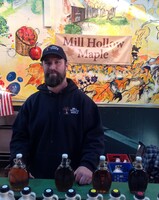 Brian Ryther, November 30, 2013
 Brian Ryther is an independent maple producer in New Lisbon, New York, the town where he was born. Alongside his father and brother, Ryther spent his childhood collecting and boiling maple sap from the family's trees. Having attended Castleton State College in Vermont, Ryther began work in the industrial construction industry. He utilized these skills to fabricate a new arch and new pans for use in a converted sugar house on a piece of land called Mill Hollow. After the economic downturn, Ryther and his wife moved the family back to New Lisbon, allowing him to work full-time in maple syrup production. By 2006, he purchased a commercial evaporator and established his own company, Mill Hollow Maple.
In this interview, Ryther describes everything from the process of making syrup to the state of agricultural production in Otsego County. Particular emphasis is placed on the importance of environmental consciousness and locally-grown produce. Ryther discusses his personal connections with the industry, tree tapping, and the process of refining maple sugar. I visited Mill Hollow Maple twice, once at the old barn and the second at the location of Ryther's new sugar house, which was then under construction. I interviewed Ryther at the NYSHA Library in Cooperstown, where he is a regular vendor at the farmers' market.
-
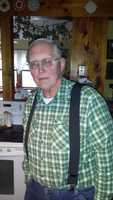 Albert ("Al") C. Bullard, November 19, 2013
 Albert C. Bullard is a long-time upstate New York resident, who spent 35 years teaching in Cooperstown Central School. Raised just outside Philadelphia, his interest in folklife was piqued by his father's antique business, and it eventually led him to pursue a master's degree in folklife studies and museum management at the Cooperstown Graduate Program in Cooperstown, New York. While there, Mr. Bullard met his wife and got married before returning to Pennsylvania to teach. After just a year, the couple returned to Cooperstown, and Mr. Bullard began studying hop growing in upstate New York while also teaching at Cooperstown Central School.
Mr. Bullard's research focuses primarily on the technology involved in cultivating hops. According to him, the history of hop growing in the United States is fairly well understood, but the technology involved in hop cultivation in his region is poorly documented. He is writing a book to fill the gap in knowledge, and is well-known as a local expert on the subject. Much of his collection was loaned to The Farmers' Museum for its When Hops Were King exhibit.
Mr. Bullard's recollections focus on the Cooperstown Graduate Program and his experiences there, as well as his experience with oral history, hops, antiques, and teaching. Some of the most interesting material in the interview concerns his analysis of how history seems to overlook common people, and how the study of folklife can help fill those gaps. His description of the antique market as well as his critiques of the Cooperstown Graduate Program and The Farmers' Museum are also quite interesting.
I interviewed Mr. Bullard at his home in Milford, New York. While I attempted to preserve the colloquialisms and mannerisms of his speech, I have mildly edited this transcript to improve the readability of certain sections. As a result, I strongly encourage researchers to consult the audio recordings.
-
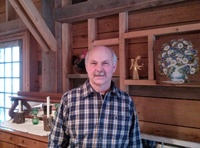 David Ingalls, December 2, 2013
 The Ingalls family has a long history in the Cooperstown area. David Ingalls, part of the third generation to reside on land straddling State Route 28 in Hartwick Seminary, was born on August 1, 1949. Growing up on the hundred and twenty acre farm, Mr. Ingalls helped his father and grandfather raise dairy cows. After the decline of small dairies in the 1960s, the Ingalls farm predominantly grew small fruits, including blueberries and strawberries. Though Mr. Ingalls' brother sold part of the land to make way for the Cooperstown Dreams Park, David still resides on a hill overlooking Route 28, where he runs a “you-pick” blueberry farm.
While studying Liberal Arts at a college just north of New York City, Mr. Ingalls met the women who would become his wife. He returned to farm during the summers, and says that a love for the farm and for central New York brought him back after graduation. In addition to working on the farm throughout his adult life, he also worked as a K-12 guidance counselor for thirty-five years. He currently resides in a recreated nineteenth-century barn, which he is currently building with his sons.
David Ingalls' story chronicles the many changes to the landscape of the Cooperstown area in the latter half of the twentieth century. He speaks passionately about the farm and his family; he recalls his brother's time in Vietnam; and also remembers his father, Rodney Ingalls, who passed away shortly before this interview. He also talks about the next generation of Ingalls and the values he hopes to have instilled in them.
 
-
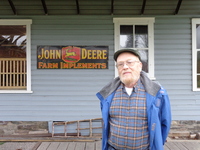 Bill Coleman, November 22, 2013
 William Coleman was instrumental in the founding of the Hanford Mills Museum. After securing the loans the museum needed to gain independence, Coleman headed the financial committee for the first few years of the museum's existence. Though at times funding for operational costs was brought into question, Coleman worked to ensure that through loans and grants, the museum was able to continue to grow.
Ken Kelso, who saw the need to preserve the land and the mill, purchased Hanford Mills. In 1977, in part due to the work of Mr. Coleman, the mill was purchased by the newly formed non-profit organization, “Old Mill at East Meredith, NY.” By bringing together multiple banks in the area and enlisting the aid of the O'Connor Foundation, the team of early board members founded the Hanford Mills Museum.
Mr. Coleman spoke with me about the early days at the museum, discussing the finances, board of directors, and staff members. He also spoke with me about he became involved in banking and why he eventually moved to Delaware County. We ended our interview with a discussion of organizations that Mr. Coleman is involved with today and his thoughts on where the museum is now.
I interviewed Mr. Coleman at the Hardware Store at Hanford Mills Museum in East Meredith, New York. He pointed out to me some of the different parts of the museum that they had to repair and showed me the different areas of the museum that we discussed during the interview. Mr. Coleman had a cough the day that we met for our interview, so coughs have been omitted from the transcript.
-
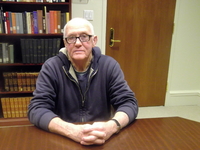 Rex Shaw, November 22, 2013
 Rex Shaw was born in Delhi, NY in 1944 and grew up in East Meredith, NY. Shaw's father worked at the mill in East Meredith for a number of years when Shaw was young. The mill opened in 1846. In 1860, David Josiah Hanford bought it, and it was the primary employer in East Meredith until it closed in 1967. The mill complex included a sawmill, feed mill, gristmill, woodworking shop, and hardware store. It also served as the primary provider of electricity to the town. Since its closing, the mill has functioned as a museum, operating under the name Hanford Mills Museum since 1973. After being away for thirty years, Shaw has lived in East Meredith for the last seven years. After returning to East Meredith, Shaw worked for several years as an interpreter for the museum. This interview was commissioned by the Hanford Mills Museum as part of an ongoing project to document the history of the mill.