-
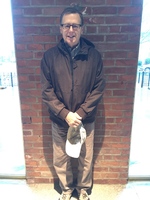 Brian McMurray, November 10, 2015
 Brian McMurray is a resident of Otsego County, New York. For many years he has operated an antiques picking business. His interest in material culture was sparked at an early age, which he describes in the first part of our interview. Later on in the recording, Brian discusses his lifelong attraction to objects--both functional and decorative--and their social history. He also vividly recounts some of his most memorable antique finds, which have included wood carvings done by a talented war veteran and an eighteenth-century spoon rack. Scholars and hobbyists interested in the antiques business and freelance buying and selling, or “picking,” should reference this interview for Brian's detailed characterization of the profession.
Brian is also an alumnus of the Cooperstown Graduate Program for museum studies in Cooperstown, New York. In this interview, he describes the wide-reaching and positive impact that CGP had on his life and work.
This transcript has been lightly edited for clarity. Most repetitions and false starts have been removed. Many of Brian's iterations of the phrase “you know” have been removed as well.
-
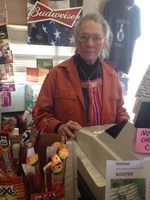 Dorothy Smith, November 15, 2015
 Dorothy Smith is the wife of Roger Smith, who owns Spurbeck's Grocery in Cooperstown, NY. She grew up in Atlanta, Georgia, and was one of the first women admitted into Georgia Tech in the 1950s. After receiving her degree in Materials Engineering, Dorothy worked at the Oak Ridge National Laboratory in Tennessee, where she made diamonds and other crystals for experimental use. She moved to Cooperstown, NY with her husband when she was twenty two and has lived in the area ever since. Currently, she works at Spurbeck's where she runs the cash register and is the face of the store.
Dorothy reflects on her experience as one of the first women admitted into Georgia Institute of Technology and the only woman working as an engineer in the crystals laboratory at Oak Ridge. She also describes her experience as a wife of a small business owner and mother. She describes her travels abroad including a trip to visit her relatives in her father's hometown in Croatia.
I interviewed Dorothy at Spurbeck's grocery, the business her husband owns, while the store was closed. Her husband, Roger, can be heard in the background vacuuming and cleaning the store.
-
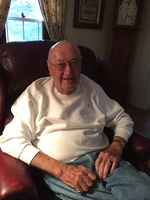 Warren Rynmiller, February 8, 2016
 Warren Rynmiller recounts his years working at the ice cream shop at his family's dairy, Wagar Brothers' Dairy.
-
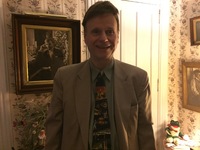 Gerard Snyder, November 12, 2015
 Gerard Snyder was born May 5, 1956 in Troy, New York. He is an established lawyer and holds his general practice, with specializations in real estate and estate planning, in Dolgeville, New York. Mr. Snyder is highly educated, having graduated from Pace University Law School in 1981. He is an important and influential member of his community, through his participation in various non-profit organizations, such as Little Falls Hospital where he serves as secretary on the board, and his local Episcopal church, St. Mary's.
Religion and spirituality play an important role in Mr. Snyder's life. He is a devout Christian, and believes strongly in acceptance for all within the church community. Mr. Snyder has dealt with many difficulties in his life, but has come full circle as a very successful and well-spoken individual.
I interviewed Mr. Snyder in his beautifully kept white, framed, Gothic-Victorian home in Van Hornesville, New York, where he lives with his spouse, Byron. His home is filled with pictures of his large family and other items that are important to his character.
Mr. Snyder speaks clearly and concisely. He is not difficult to understand, and talks very passionately about topics that are important to him. I encourage researchers to listen intently for changes within his tone throughout the interview that cannot be transcribed efficiently.
-
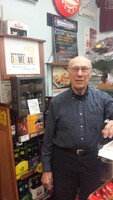 Roger Smith November 14, 2015
 Roger Smith is a born and raised member of Cooperstown that has played a major role in the community. After serving the United States Navy, he went to school at Georgia Tech University. There he met his wife and soon after moved back to his hometown. After serving as Postmaster for 30 years, he took over his family store Spurbeck Grocery in 1997. Known for their wide beer selections and cheese, Roger and his wife Dorothy continue to run Spurbeck Grocery. The interview took place in the backroom of Spurbeck Grocery and the buzzing of the lights and fridges are heard in the audio.
-
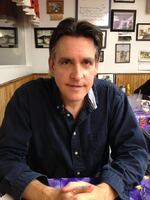 Keith Schue, November 14, 2015
 Keith Schue is an environmental activist living in Cherry Valley, New York. Mr. Schue was born in California, but grew up in Virginia. He moved to Florida and worked as an engineer after finishing college at the University of Virginia. After transitioning into environmental advocacy as a career, he and his wife Shirley moved to Cherry Valley. He works with the local advocacy organization, Otsego 2000, which has been involved in the fight against hydraulic fracturing (hydro-fracking), a hot-button issue in recent years. He is also part of the ongoing protest of new pipelines, such as the Constitution Pipeline and compressor stations, particularly ones in Madison, Chemung, and Montgomery Counties proposed by the power and energy company Dominion Resources, Inc.
As the United States struggles to develop alternatives to fossil fuels, some environmental activists, scientists, and engineers are working to turn people away from other options such as natural gas, which seem environmentally friendly, but which they argue have a negative environmental impact. Hydro-fracking is the process by which natural gas is extracted from layers of rock by fracturing it with high-pressure fluids, usually water mixed with an array of chemicals. According to critics, such as Mr. Schue, hydro-fracking is dangerous because it contributes to ground and surface water contamination and air pollution. Research has demonstrated that it also increases risk of seismic activity and earthquakes. Critics maintain that the pipelines that carry the fracked natural gas are also problematic; they require causeways through forests which suffer permanent ecological damage, and leaks from these pipelines are also a hazard. In addition, the pipelines require the construction of compressor stations. These stations serve to compress the gas in the pipeline in order to keep it moving towards its destination. According to critics, the stations create large amounts of emissions and contribute to air pollution. In New York State, efforts have been made to curtail use of fracked gas, and legal battles have occurred in several municipalities over the issue of whether or not fracking could be legally banned. In 2015, New York's Governor Andrew Cuomo announced a statewide ban on fracking. Mr. Schue was involved in advocating for local bans and the statewide ban on fracking.
Mr. Schue has been a part of environmental activism through his work as a technical consultant for Otsego 2000, putting his degree in engineering and previous experience in that field to work. He interacts with many people, from local and state politicians and community leaders, to Amish families in areas affected by compressor stations and emissions related to fracking. Mr. Schue has a certain presence in the public eye, having testified before the State Supreme Court in Albany, as well as regularly attending environmental rallies and interacting with the media.
I interviewed Mr. Schue at his home in Cherry Valley, New York. While the majority of the conversation centered on environmental issues, we also discussed his decision to move to New York, and what it is like living here. Mr. Schue talked about the differences he has noticed between New York and Florida, namely the type of people who live here and their dedication to their homes and local communities, as well as the prevalence of history and the natural beauty of the Leatherstocking region.
-
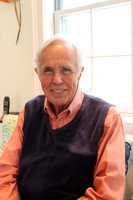 Bill Smith, November 13, 2015
 H. William Smith Jr., known as Bill Smith, grew up locally in Cooperstown, NY. Mr. Smith's family has lived in the area for several generations on his maternal side after his great-great grandmother first settled in the area. Mr. Smith grew up around automobiles; his father originally worked at gas stations along Route 20 and later owned a local automobile dealership. Mr. Smith's childhood passion for cars resulted in his multiple successful business endeavors, all within the automobile industry.
Mr. Smith has owned several automobile dealerships nationwide and is one of the founding members of McLaren Racing Limited, developing race cars, and later on McLaren Engines, where he built engines and tested emissions for multiple well known automobile companies. Mr. Smith is currently retired and now lives between Norwich, New York, Cooperstown, New York, and Colorado. He enjoys spending time skiing, golfing, and working on his farm in Norwich.
I interviewed Mr. Smith at his home, 4 Pioneer Street, Cooperstown, NY. I have taken the liberty of making some minor edits to this transcript for the sake of clarity.
-
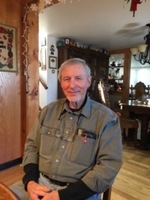 Stewart Anderson, November 9, 2015
 Stewart Anderson is a native upstate New Yorker, who has lived in Herkimer County for thirty-plus years. He and his wife Kay live in Richfield Springs, New York. Mr. Anderson, a longtime resident of Herkimer County, has witnessed changes in the thirty years since he moved there. His family owns and operates a farm in Livingston County, which is run by his brother and father. The farm had been in Mr. Anderson's family since 1940 when his grandfather purchased it. As a child, Mr. Anderson was raised on his family farm and has seen many changes to the farming industry since then. His grandfather and father were both involved in the Dairymen's League, and his father and uncle oversaw the running of the farm during World War II. As a salesman for farm equipment, Mr. Anderson experienced firsthand the farming depression of 1982.
The Dairymen's League Corporative Association started in the early 1900's to distribute milk from dairy farmers in rural New York State to bigger cities in the New England area. In the 1960's a transition from milk cans to bulk tanks eliminated the need for the factory workers who distributed the cans of milk, changing the Dairymen's League dynamics. During World War II farms flourished as the war effort took off to feed the country. The transition to keep up with this growth brought changes in farm machinery. Farms like that of Mr. Anderson's family traded their horses for a tractor to help make farming easier and faster. The 1980's saw high-interest rates and an overload of dairy farms. The government paid farmers not to milk their cows, leading too little to no farmers buying equipment for the farm or producing manure. The agriculture economy as a whole suffered devastating effects.
I interviewed Mr. Anderson at his home in Richfield Springs, New York. Mr. Anderson retired from his hardware store business and is employed by the local school district as a school bus driver. Since much of Mr. Anderson's life revolved around agriculture, our discussion is mainly farming based. We also cover his time as a small business owner of the local hardware store in Richfield Springs. He and Kay now enjoying spending time together and traveling.
-
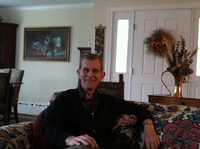 Dr. Walter Franck, November 16, 2015
 Dr. Walter Franck was born in Shanghai, China in 1941, the son of Belgian parents engaged in international finance. In 1943, Franck and his family were interned by Japanese forces in a concentration camp until Japan's surrender in 1945. Following the internment period, his family lived in China until the 1949 Communist Revolution, after which his father's work led the family to move to many cities throughout Asia. In 1953, his family moved to the United States. Franck advanced rapidly through school, entering Yale at age fifteen and later graduating from Columbia University's medical school.
After serving residencies at the University of Michigan and Massachusetts General Hospital, along with a stint in the military as chief-of-medicine at the SHAPE/NATO hospital in Belgium, Franck was hired in 1973 by Mary Imogene Bassett Hospital in Cooperstown as their first rheumatologist. During his time there, he became involved in academic research and the teaching of residents who came to Bassett for training. This work continued along with his main medical duties after he became chief-of-medicine at the hospital in 1981, a position he held until his retirement in 2008.
During his later years as chief-of-medicine, Franck helped spearhead the creation of the Columbia-Bassett Program, an innovative program where medical school students spend their clinical training in Cooperstown, working at Bassett Hospital and gaining experience with a rural health care environment and the inner-workings of a larger regional healthcare network. Franck served as the senior associate dean of the program from 2009 until his retirement from this position in January 2015.
I met with Dr. Franck on November 16, 2015 at his home in Cooperstown. Dr. Franck discussed his early years abroad and the impact they had on him, his years in medical school and how this shaped his thoughts of medical education. He also discussed how Bassett Hospital, the medical field, and medical education have changed over the years, and how his experiences informed his work at Bassett, both as chief-of-medicine and in the creation of the Columbia-Bassett Program.
As much as possible, I have attempted to capture the nature of conversation between Dr. Franck and myself during the course of our interview. That said, for the purposes of flow and continuity, I have removed several pauses and false starts that occur through the interview, as well as a number of extraneous words or phrases such as “so,” “you know,” “I mean,” “and,” etc. For a more accurate experience of our discussion, it is recommended researchers consult the audio recording.
-
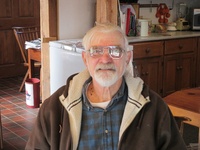 John Dunlap, November 23, 2015
 John Dunlap was born in New Rochelle, New York in 1940. Dunlap recounts his struggles as a young boy with dyslexia and the ways in which his learning disability affected the rest of his educational career. After receiving help at the Taft School in Watertown, Connecticut, Dunlap was able to graduate and attend Johns Hopkins University. It was during this time at Johns Hopkins that the Vietnam War began. Not willing to wait for the draft, Dunlap joined the Air Force and became an officer after attending Officer Candidate School. Dunlap served in Laos and at a radar site on the border of North Korea. After serving for nearly five years, Dunlap came home to the United States. Unhappy with civilian life in America, Dunlap joined International Voluntary Services and began teaching English in Laos. After many of his students went missing while on holiday, Dunlap left Laos and moved to Indonesia to prepare students to take the Test of English as a Foreign Language (TOEFL). After blowing the whistle on the improper handling of testing materials, Dunlap moved to Cooperstown, New York, where he had a small steel garage. Dunlap remembers this garage as his first place to call home.
It was in Cooperstown that Dunlap met his wife, Karen, and started his family. Dunlap moved his two children and his wife to Mexico so they too could experience life in a developing country. The experiences in Mexico and Asia greatly influenced Dunlap's life and his willingness to sponsor refugee families. Helping refugee families is something that Dunlap is clearly very passionate about and he still assists the Presbyterian Church in Cooperstown and the refugee center in Utica, New York. Aside from sponsoring refugees, Dunlap was a restoration contractor in Cooperstown, a job he enjoyed very much.
Dunlap's plans for the future include traveling if physically capable, but most likely staying in the house he and his wife own in Richfield Springs, New York. They enjoy gardening and raising their chickens.
The interviewer has edited the transcript for reading capabilities. In the background, noise from Mr. Dunlap's wife's interview can be heard, as she was being interviewed at the same time upstairs.
-
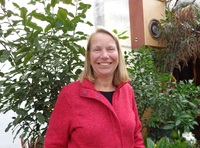 Mary Leonard, November 15, 2015
 Mary Leonard, along with her husband, is the owner and founder of Carefree Gardens, a greenhouse and landscape services business, in Cooperstown, NY, which just completed its 30th season. The two have also helped to create the Origins Café in Cooperstown with their two daughters, which just finished its 4th season. She was born into a Dutch immigrant family, attained an associate's, bachelor's and master's degrees, traveled across the country, and started two successful businesses. She has also raised her own family in Cooperstown. She continues to actively serve the community as a member of the Rotary Club and as Vice President of the local school board while maintaining a global perspective of the impact of her work. Through her landscaping business and the café she started with her daughters, Mary continues to provide educational experiences to the community in regards to food choices, where food comes from, and how everyone plays a role in our global environment.
Mary is a strong woman with a dry sense of humor, an aspect of her personality that is expressed in this interview. Her thoughtful perspective on her transitioning to life in Cooperstown, her active engagement with the community, and the changes she has witnessed and helped create in Cooperstown elucidates the strong community and familial ties present in small town America.
The recording of this interview has some static-like background noise. This was caused by rain hitting the roof of Origins Café during the time of the interview.
-
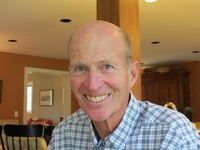 Patrick Dietz, November 11, 2015
 Dr. Patrick Dietz was born in Poughkeepsie, New York. He first attended school at the College of the Holy Cross in Massachusetts, and later attended Dartmouth College and Harvard University medical schools. He did his internship and residencies in San Francisco, California, a fellowship in Detroit, and began his professional career in Reno, Nevada. Dietz ultimately became the first vascular surgeon hired at Mary Imogene Bassett Hospital in Cooperstown, New York.
The conversation begins with Dietz's childhood summering in the Adirondacks in order to limit exposures to polio, and continue into his education in the healthcare field. He reflects upon how Boston has changed since his time at Harvard University, as well as how Cooperstown has changed since moving to the town in 1979, including the tourist industry. The interview focused primarily on the medical field as he has experienced it. Dietz discusses the differences between a big city hospital and a small town hospital, and focuses on the relationship between the town of Cooperstown and Bassett Hospital. He also explains the residency program at Bassett.
-
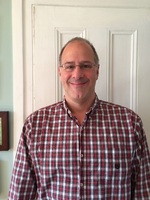 Jeff Katz, November 16, 2015
 Jeff Katz currently serves as the mayor of Cooperstown, and has since 2012. Katz was born in Brooklyn, New York in 1962. He lived around New York State until he married his wife, Karen, and moved to Chicago, Illinois to work as an options trader. They settled there and had their three boys, Nate, Robbie, and Joey, and lived there until deciding to move to Cooperstown in 2003. It wasn't long before Katz got involved in local politics, running for the board of trustees, and has been involved ever since in a variety of capacities.
Katz has lived in Cooperstown for twelve years now, though he has been a regular visitor to Cooperstown for most of his life, coming since childhood as an avid baseball fan. He loved Cooperstown as a tourist and his love for the town only grew as a resident. He discusses his and his family's adjustment from life in a big city to a small village, and how his son's hyperlexia played into their decision and transition. He talks about his election history and his involvement in local politics. He addresses the role of tourism in Cooperstown, its growing and changing identity, population and economy on the whole. He also speaks about [Mary Imogene] Bassett Hospital's continually important role in the community, and his involvement in those changes. He also briefly touches on his experiences as a Jew in a small, rural village and relates some stories that were told to him about anti-Semitism in town as well as his and his wife's experiences with prejudice earlier in their lives. Throughout the entire interview, he kept looking at many of these topics as both a local and an outsider and highlighting the relations between both views and how the lines between them are blurring as the town changes.
I interviewed Mr. Katz at his home in Cooperstown, New York. We spoke largely about his and his family's experiences in Cooperstown, his involvement in local politics, and his insights into some of the challenges he and the town have faced in the last decade. As a small note, Mr. Katz' son, Nate, walks through the room a few times and prepares lunch, which you can hear in the background of the recording. He also speaks to Mr. Katz towards the end of the interview, which is included in the transcript.
Mr. Katz, as a politician and author, is very comfortable and familiar when being interviewed. For transcription, I have kept it as true to his style of speaking as possible, but chose to remove some filler words, such as “so”, “you know” and “kind of.” However, researchers are encouraged to consult the audio recordings.
-
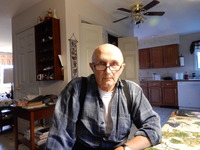 Dean Utter, November 14, 2015
 Dean Utter was raised on his family's dairy farm in Cherry Valley, NY and has been in the dairy farming business his whole life. Dean attended school locally up through high school before attending Cornell University. After returning to Cherry Valley, he continued working on his family's farm with his brother. This interview includes his experiences in the agriculture industry and the changes he has witnessed in the business. The interview begins with Dean's recollections of growing up on the farm and his schooling. Dean's narrative relates to agriculture but is not solely limited to that scope. The interview includes his experiences of early schooling and later college education. Another theme is change over time specifically in the dairy farming business. Dean's early memories of growing up on the farm with his family are necessary to fully understand changes over time. In the latter part of the interview, Dean gives his insight into what dairy farming and agriculture might look like in the future.
-
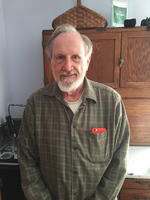 Eugene McLaren, February 12, 2016
 Eugene McLaren recounts his years working at the Wagar Brothers' Dairy ice cream bar from the late 1930s to 1941. He also discusses his job as a milk boy for Miller's Dairy. McLaren delivered milk around Troy, New York.
-
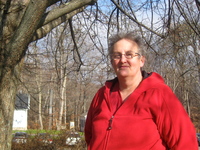 Jennifer Huntington, November 01, 2015
 Jennifer Huntington is the owner of the Cooperstown Holstein Corporation in Middlefield, New York. She was born in Cooperstown on February 28, 1962. She has spent her life in the Cooperstown area, apart from four years at Cornell University, and has worked her farm for the past 25 years. Ms. Huntington and her father, the farm's previous owner, have overseen technological advancements in everything from milking equipment to genetically modified seeds. She discusses society's gradual move away from agricultural connection and the subsequent responsibility of farmers to teach the public about what they do and why they do it. To meet that responsibility, she has organized events that bring people to her farm and give them the chance to learn about her work.
In 2012, Ms. Huntington was involved in a controversial lawsuit related to hydrofracking. The New York Supreme Court ruling in "Cooperstown Holstein Corporation v. Middlefield" determined that local zoning laws could legally restrict oil and gas drilling within a town's geographical borders. Prior to the town of Middlefield's decision to ban hydrofracking, Ms. Huntington had executed leases with a company that wanted to explore the option of drilling on her farm. She brought a lawsuit against the town to determine whether or not they had the legal right to place this restriction on private property. She ultimately lost the case, which gained widespread publicity for its importance to zoning enforcements across the state of New York. Ms. Huntington was at the center of a heated debate that polarized the community.
Ms. Huntington's interview covers her experiences with farm work over the decades. She speaks at length about her relationship to the land, which informed her decision to fight for the ability to use it as she saw fit. She explains how she weighed the risks of oil and gas development on the environment and the reasons she felt it was an important option for rural landowners. The interview also takes a broader look at economic, social, and technological changes in farming over recent decades.
-
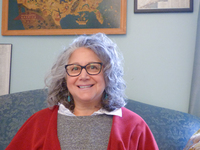 Karen Katz, November 18, 2015
 Karen Katz grew up in Niskayuna, NY. After graduating from college she moved to New York City and began working in publishing for a trade magazine and Billboard Magazine. She went back to school to earn a degree in publishing from New York University. After completing her degree she moved to Westchester where she worked for a few years before meeting her husband Jeff. They married in 1986 and moved to the Chicago area.
Karen has three sons: Nate, Robbie, and Joey. Her eldest, Nate, was the focus of much of the interview. Nate is high functioning autistic. He has a form of autism known as Hyperlexia, meaning he struggles to grasp verbal communication but has an affinity for written language. Karen and Jeff found out about Nate's communication issues when he was still a toddler and began treating him in Chicago where he and his brothers were born. Nate started in special education classrooms before being mainstreamed in second grade. They continued to living in Chicago until 2003 when they moved to Cooperstown. Karen discusses that part of the reason for the move was because of the school system available to them in Cooperstown for Nate and her two other boys.
Towards the end of the interview we discussed how education and therapy have continued for Nate in his adult years and what some of Karen and Jeff's concerns and fears for Nate are in relationship to the future, specifically how they are planning to care for him as they get older. A small but important portion of the interview focused on how autism affected the Katz family and may have changed the dynamic of the family altogether.
-
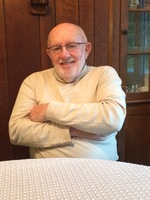 Derwin Utter, December 15, 2015
 Derwin Utter, known to friends and family as Darry, was born in 1934 and grew up in Sprout Brook, New York on his family's farm. After attending Cherry Valley School, Darry began his career as a dairy farmer on his father's farm and then purchased his father's farm with his younger brother, Dean. From there, Darry expanded his single farm to three different properties in the Sprout Brook and Cherry Valley area. He and his brother produced milk, grew hay and corn, and raised pigs, cows, and chickens. Darry is a third-generation dairy farmer and his comments on the transformations in farming techniques and technology reflect his experience in the agriculture industry.
The evolution of farming equipment, from the use of horses to the introduction of the tractor and the use of computers in machinery, are only a few of the changes that occurred in the agriculture industry from the 1930's to the present. These changes presented new challenges and benefits for farmers. More technology led to faster harvesting and more efficient milking, but it also led to the creation of large, corporate farms that could potentially dominate and take out smaller family owned farms. Not only that, but in recent generations, changes in lifestyle and work ethic have contributed to the disappearance of family farms. Small farms have been slowly revived by the Amish families who have adopted small farming practices in the Upstate New York Cherry Valley area.
I interviewed Darry at his residence in Cherry Valley, New York. His recollections vary from opinions on family life, farming techniques, technology development, to the use of pesticides and the farm-to-table movement. There is also a secondary narrator in the interview, Darry's wife, Roseta. I have taken the liberty of editing the transcript to create a more readable narrative of the interview and removed false starts and a variety of filler words. I encourage researchers to take the time to listen to the full recording to get a more complete sense of Darry's knowledge and passion for the agriculture industry.
-
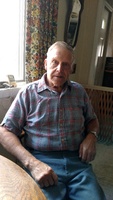 Richard Rathbun, November 11, 2015
 Richard Rathbun is the descendant of a long line of farmers that have worked in Springfield, New York for centuries. His ancestor, Benjamin Rathbun, bought the Rathbun land (where Richard currently lives) from the Clarke family in 1788. Richard was born at Bassett Hospital in Cooperstown in 1941. Since then, Richard has lived his entire life in Springfield and has had a very active presence in the town. In addition to farming, Richard has served with the Springfield Fire Department for the past fifty years and has served on the Springfield town board for the past thirty years.
During Richard's lifetime, the United States has witnessed an enormous shift in agricultural practices. The growth of large farms after the Second World War made it much more difficult for small, family-run farms to compete. As a result, many families have sold their farms. Another major shift witnessed by the United States occurred in the 1950s with the introduction of the Interstate Highway System. Before the development of the Interstate in the 1950s, many small businesses existed along U.S. Route 20, which served as a major route crossing the United States. With the development of the Interstate, however, many of these businesses lost customers, as much their traffic was redirected towards the Interstate.
Richard's recollections of Springfield's past and the state of farming as well as U.S. route 20 entail both regional trends that he often times parallels with what is occurring nationally. A particularly interesting part of the interview occurs towards the end of our interview when Richard describes the effect small chain stores, such as Stewart's Shops and Red Apple, have had on small businesses in the area.
I interviewed Richard in his family home, located in Springfield, New York. In my pre-interview with Richard, we mostly discussed his family's long history with farming, so that was the major topic of our interview. However, we also spent a significant amount of time talking about U.S. Route 20, his experiences as a firefighter and local town board member, and some of his views on renewable energy.
Richard gave very detailed answers. For the sake of readability, the transcriber took the liberty of standardizing syntax and grammar that may not correspond verbatim with what was said during the interview.
-
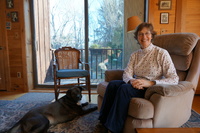 Karen Dunlap, November 23, 2015
 Karen Dunlap is a long-time resident of Cooperstown, New York. Dunlap grew up in Schenevus, New York. Dunlap attended Binghamton University, graduating with a degree in biology. After college, Dunlap worked as a nurses' aide at Mary Imogene Bassett Hospital in Cooperstown. She became a registered nurse while working at Bassett. During that time she met her husband John. The two were married in August of 1983. Dunlap raised her two children, Sarah and Tim. The Dunlaps moved to Mexico for a year and a half in the early 1990's. Within this interview, Dunlap reflects on that move and life when coming back to Cooperstown.
Dunlap is an active member of the First Presbyterian Church of Cooperstown. Her work and faith are an important part of her life. Although she was raised Catholic, Dunlap began attending the Presbyterian Church while dating John. She has been an active member there since her marriage. At the time of the interview Dunlap was a member of the Deacons' board at her church. Near the end of the interview Dunlap reflects on changes in the church and in the world.
The interview is recorded at the Dunlap's home in Richfield Springs. There are a few interruptions and some background noise, as John was being interviewed downstairs by Patricia Norman.
-
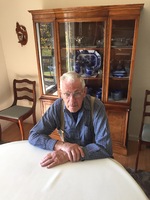 C. David Smith, November 05, 2015
 C. David Smith is a retired local farmer and carpenter who has been involved in the community of Springfield, New York throughout his life. Born in Mary Imogene Bassett Hospital in Cooperstown, New York and raised in Springfield, Smith always has held his community in high esteem. Always very cautious in his approach to life, Smith persisted through the challenges faced by most every farmer by not overextending himself too far. After taking over the family dairy farm, Smith decided to pursue his passion of carpentry along with farming. Following the realization that the modernization of the farming industry would require a large financial commitment to stay viable, he decided to sell the machinery and cattle and dedicate himself to creating a largely successful construction company, which is now owned by his nephew.
Outside of his careers, Smith was a dedicated community member, who went out of his way to help his neighbors. Not only did he develop valuable business relationships, he was also a volunteer firefighter and fire commissioner, as well as a local representative for the Red Cross. Smith did not stop there; he was also involved in various farming organizations and served on the local school board.
I interviewed Mr. Smith at his home in Springfield Center, a house that he built himself. Now retired, Smith and his wife spend time together at home and travel when possible. He has had a lot of time to catch up on the political climate of today. A registered Democrat, he shows a genuine concern for the future.
Mr. Smith speaks fairly clear, so it was not hard to capture much of what he was saying. However, he does have a very effective tone when speaking; therefore, I highly encourage researchers to pay close attention to the audio recording for the nuances that simply cannot be transcribed.
-
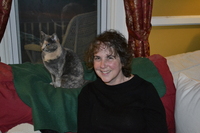 Shirley Schue, November 05, 2015
 Shirley Schue is a Pediatric Nurse Practitioner at Bassett Medical Center and an active environmentalist. She was born in a small town in Virginia to two parents who were educators. After graduating from Virginia Tech, Shirley moved with her husband, Keith, to Orlando, Florida, where they lived for the next twenty years. Shirley and Keith relocated to Cherry Valley, New York in 2010 after visiting the area on vacation. Both Keith and Shirley are highly conscious of environmental concerns such as fracking (high-volume hydraulic fracturing) and natural gas pipelines and both actively work to preserve the environment.
Although at the time of this interview, Governor Cuomo had recently banned fracking in New York State, it is still a major concern of Shirley and many other environmentalists. Fracking involves releasing natural gas from the earth by shooting high-pressure water and chemicals into the ground. Concerns regarding contamination and wastefulness have arisen surrounding the issue of fracking. In addition, Shirley discusses natural gas pipelines and their corresponding compressor stations, which are set to expand their operations in upstate New York. These pipelines are run by large natural gas companies, such as Dominion Transmission Inc., and are used to move natural gas supplies across the East Coast.
Many of Shirley's environmental actions stem from her concerns for people and their well-being. Her approach to environmentalism is personal and community-centered. She emphasizes the importance of one-on-one connections and leading by example in bringing about change. In addition, as both an environmentalist and a health care professional, Shirley has an invaluable perspective on the effects of the environment on people's health. Her insights on how issues such as fracking, natural gas pipelines, and pollution have affected the people of this area are particularly interesting.
I interviewed Shirley in her home in Cherry Valley. As it is an older home, some creaking and footsteps can be heard in the recording. In order to increase readability in the transcript, I have deleted false starts and fillers. In some cases, I have added words in brackets for clarity.
-
 Wendell Tripp, November 18, 2014
 Dr. Wendell Tripp is the former director of publications at the New York State Historical Association (NYSHA) Library in Cooperstown, New York. Dr. Tripp worked at NYSHA from 1964 until 2000. During his time there he was in charge of editing and writing different articles in a quarterly journal called New York History. During his many years at NYSHA he researched a variety of subjects, including the inception and move of the New York State Historical Association and the profound changes that the New York State Historical Association went through over both his years there and the years preceding his arrival. During his time at NYSHA, Dr. Wendell Tripp taught classes as an adjunct professor at the Cooperstown Graduate Program, also located in Cooperstown, New York.
During our interview Dr. Tripp recollects many important women who dedicated their time and effort to preserving the history of New York State, who during the mid to late 1960's would have had the title of secretary, and have gone unappreciated by many others. As Dr. Tripp pointed out in this interview, which he had learned from side research on cinema history, oral histories can help an audience understand the interviewee more through his words and mannerisms that cannot simply come from a transcript.
-
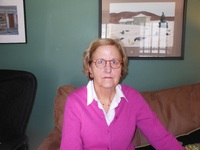 Carla MacMillan, November 10, 2014
 Carla MacMillan was born in Brooklyn, New York in the 1940s. She grew up in New York City and attended boarding school after her parents moved to Saratoga, New York. She attended Elmira College and obtained a bachelor's degree in psychology; she also obtained a Master's degree in special education from Boston College. She worked in Boston, San Francisco, and Cooperstown, all of which involved teaching children who were mentally or physically disabled. She met her husband, Roger MacMillan, in Boston, and they moved to Cooperstown so Roger could work at Basset Hospital. The couple's two children were born and raised in Cooperstown.
Mrs. MacMillan's recollections range from the difference between urban and rural living, changes in job availability, teaching, family, and how Cooperstown has changed. I interviewed Mrs. MacMillan at her home in Cooperstown, New York, which she and her husband have lived in for almost thirty years. She also discusses recent volunteering and future plans with her family.
-
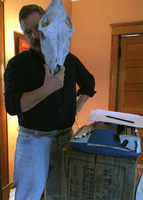 Russell Honicker, November 13, 2014
 Russell Honicker was born in Mobile, Alabama in 1957, and grew up in Nashville, Tennessee. He grew up in a family of six and both his parents worked. He grew up under the supervision of his sisters. He became interested in environmental activism as a child when his father brought in newspapers and pictures that did not run in the newspaper of the Vietnam War, as well as journalists, scientists, and environmentalists that were against nuclear power and other issues at the time. Russ went to New York City after having various jobs and started photographing people, places, and issues in different areas in the United States and in Latin America. He was always interested in what was happening in the world and what we can do about these issues. His photography was a way to let the world know what was happening.
Russ has played a significant role in environmental activism in Cooperstown and is involved in several anti-fracking campaigns and sustainability projects in the community. He has done research on the effects of fracking and other environmental issues in Cooperstown, bakes bread, and is currently working on a narrative of his life and the environmental issues in the community.