-
 Dominic Timpano, April 13, 1978
 1978 interview with Dominic Timpano covering his family's move to the United States from Italy, their religion, and gender dynamics in his house.
-
Emma Timmerman, October 14, 1977
Non-directed interview with Emma Timmerman from October 14, 1977.
Photo Credit:
Fenimore Art Museum Library, Cooperstown, New York, Cooperstown Graduate Program Archive, 78-0008 slides 3, 4, 5.
-
Edna Countryman, October 17, 1974
Edna Countryman was born in Decatur, NY in 1892. After her father's death, her family moved to Pleasant Brook, NY, where she lived most of her life. Her father, Judson Thompson, was born in Cherry Valley, NY, as were his parents. Her mother, Viola Hedsell, and her parents were from Roseboom, NY. She married William Countryman in 1911 and worked as Pleasant Brook's town clerk, in addition to being a foster mother. She died in 1988.
John Carnahan interviewed Ms. Countryman at her home in Pleasant Brook, NY on October 17, 1974. The interview begins with an overview of her life, including how she became Pleasant Brook's town clerk. It covers farm life in the early to mid 1900s, although Mrs. Countryman mostly speaks about her childhood and early married life. In particular, Ms. Countryman discusses growing up, picking hops, social gatherings and celebrations, and how Pleasant Brook has changed since her youth.
-
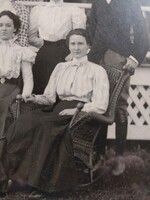 Diary of Nellie (Helen) Converse Carr, 1878-1968 (cont'd)
 The final three years of Nellie Converse Carr's diary. See first entry for full description and attached files.
-
 Diary of Nellie (Helen) Converse Carr, 1878-1968
 Nellie (Helen) North Converse Carr was born on October 1, 1877 in Otsego County, New York and died on April 24, 1968 in Unadilla, New York. She married William Carr on November 21, 1907. William Carr was born on Sept 13, 1866 in Wisconsin and died on Dec 24, 1941 in Otego, New York. Both Nellie and William are buried in Flax Island Cemetery, Otego. They had two children, Helen Francelia Carr Daniels (1909-2004?) and Norma Alice Carr Leonard Collins (March 30, 1912 - May 5, 2005). Norma & Neil Leonard had two children, Alicia (born Jun 29, 1929) & Rita (born Dec 19, 1931). Alicia (Ione Leonard McNutt) Pagano is the transcriber of her grandmother's diaries and has provided the description as well as extensive explanatory notes in the attached files.
Nellie Carr lived most of her life in Otsego County, primarily Gilbertsville, Unadilla, Otego. During the 1889 period their home must have been near Cope's Corners. Oregon (Oregen Rd?) is mentioned. She went to Morris Training Class. She and her sister Carrie Carr Cope both taught school for several years before they were married. Carrie married Walter Cope.
The family moved to Norwich around 1902 and then back toward Gilbertsville by 1906. They lived near the Adelbert Leonard farm, River Rd. & Rt 3, as noted in her 1906 diary. She taught in the school house on River Rd near Route 3. Mr. Leonard was her superintendent. Later they became related by marriage when, in 1928, his son Neil married her daughter, Norma. (These are the parents of the transcriber, Alicia Pagano.)
During her marriage to William Carr they lived on Lobdell Rd just outside of Gilbertsville, a mile up the dirt road (then) from the Tillson's. In the early 1940s after the death of her husband, she moved to live part of the time with a cousin, Jessie Teed in Unadilla or with her daughter Helen in Otego. From 1954-1959 she lived with Mrs. Seaman on Main St. in Unadilla. She lived her final years from early 1959 until her death in 1968 with her daughter Norma and Norma's second husband, George Collins, in Sidney, NY, just across the river from Unadilla.
The following is a list of JOURNALS & ITEMS of NELLIE (HELEN) CONVERSE CARR. Originals are in the possession of DANIEL NEIL (MCNUTT) PAGANO. The diaries were
saved by Norma Alice Carr Leonard Collins, then by Rita Leonard Mott and given to Daniel Pagano in 2016. They were transcribed by Alicia Ione Leonard McNutt Pagano, granddaughter of Nellie Carr.
1889 Small red leather cover. Excelsior Diary. 2x4"
1902 Dark Red Leather cover, National Diary. Also 1941 on bottom of pages.
1906 Dark Red leather cover, National Diary. Beginning May 5, 1940 is on same page.
Some days no writing in 06, just 1940.
1940. Written in 1906 book
1941 Written in 1902 book
1943 Dark Red, National Diary. Has 1943 and 1949 starting March 20, 1949.
1944 Red 5 year diary from Betty and Mary.1944-1948 written intermittently each year
1945 "
1946. "
1947 "
1948 "
1952 Small brown notebook w wire edge. 2x5"
1954 Desk Dairy. Red 4"x7"
1955 Desk Dairy. Red 4"x7"
1957 Aug 1 - Mar 27, 1959. Small 6 ring black book, 3x5.
1959 July-December Brown wire back notebook 6 x 8"
1960 Jan 8 to Feb 1, 1961 Black and White Square Deal composition book
1961 Feb 1, 61- Feb 13, 1962 Black and While Square Deal composition book.
1964 Aug 20- 1965 and - Mar 18, 1966. Metal ring tan composition book
1966 Mar 19- Feb 1, 69. Black & white Composition book.
1967 Feb 2-Oct 26 plus Nov 8.
Editorial comments from Alicia Pagano (transcriber):
I began to copy the diaries of Gramma Carr in November 2016 and am in the process of copying other years which are now available. As of December 15, 2016 I have copied through the 1940's. I have tried to use the same format for each of the diaries to make them easier to read.
Although I have been able to understand most of the writing, I have used italics to indicate the few words that I did not recognize. I have dated each entry by day of the week because it helped to enhance the interpretation of her writing as many activities were carried out on specific days. I have added comments from my memory as I read these journals. Sometimes I realize I have made errors in understanding something as I gain new information from later diaries.
Reading Gramma's writings I have begun to feel as if I am reading a novel (the novel of my own family) and I have had a difficult time putting it down. I want to transcribe "just one more month." I feel that my grandmother has bequeathed her memory to me.
I am impressed by the active social and economic community in which my grandmother lived. They were constantly "calling" on family members and neighbors, especially in Mt. Upton and Gilbertsville. Often they stayed for dinner (at noon) or supper. In the later years it was Unadilla, Otego, Oneonta and beyond. They went to churches in Mt Upton as well as in Gilbertsville when they lived there and in Unadilla and Otego later.
By connecting what was said as well as what was implied, I believe these diaries reflect not only the lives of my family and their community, but life in rural Otsego County and Upstate New York during these years. One is able to follow the transitions from horse and buggy and an expansive train and bus system to today's major reliance on private vehicles. The development of phones and electricity are noted as well and I remember some of these in my own life; for example, our first telephone. Barter and trading among neighbors is especially noted in the 1930s and early 1940s. Neighbors helped each other in various ways. When there was a need, the neighbors were present.
Through these diaries, I have gained a new understanding of and appreciation my family, and I am now connected to the vibrant history of my family. During my high school teen years I was very active in school, community, and church and did not notice the many comings and goings of my family. After high school I went away to college, was married, and lived in Germany, Ohio, Florida, Washington, DC., and finally New York City. I visited home briefly and always considered Unadilla my "home," but I never returned to live Upstate until I retired from New Jersey City University in 2004 and moved into the home of my mother in Sidney.
At the time I retired, my mother, Norma (Carr) Collins, was in her 90's and was no longer able to live in her own home. I would take her for rides around Gilbertsville and the roads on which she lived and traversed during her childhood. She would relive her life as we rode along, telling me her stories and life in that world of her childhood. Her memories were rich. After each visit, I wrote her memories in a journal and still intend to place them on record in the future. (Written December 2016)
-
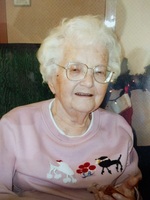 Diary of Norma Alice Carr Leonard Collins, 1912-2005
 Diary of Norma Alice Carr Leonard Collins, 1912-2005. 24 years old. Copied by her daughter, Alicia Ione Leonard McNutt Pagano
Notes from Alicia Pagano (for full commentary see attached documents):
These are partial diaries as mother didn't write throughout the year. They are all in a small beige leather "5 Year Diary" with a lock and leather strip that was removed. It was given to her by Jean Bostwick as a Christmas gift. Jean Bostwick and another young woman, Juanita, were friends of my Dad's that became friends of my mother's as well. The 1936 diary begins when we lived on Martin Brook Street over a machine shop by the railroad and documents our February 15, 1936 move to Bridge Street, one house away from the river. I remember many of the events of these years, but had not remembered the exact dates. In 1936 I was in second grade. In April 1937, Grampa Carr's son Fred by a previous marriage died in California and his body was shipped back to be buried here.
My mother was 17 and my father 20 in 1929 when I was born. Our small family moved to Unadilla in 1933 when I was four and my sister was two. We lived in two places on Martin Brook Street. First, upstairs in a lovely big house near the bridge over Martin Brook Creek. I had mastoid that winter and Dr. Heimer was our physician after I returned from the hospital in Oneonta. Fifteen years later, his wife would provide the temporary home for my mother when she first separated from my father. These links between people in our community are part of the social structure of the period.
We soon moved to an upstairs apartment over a machine shop on Martin Brook Street next to the railroad and I remember my mother, in her later years, recalling that tramps would get off the nearby train and come to ask for coffee or food. I began first grade at the Community House as the Unadilla Central School Building was in the process of construction.
When I began to retire from teaching at the University and returned home in 2004, I went to the library to get my card. I will never forget that day. It was snowing and when I got out of the car the fragrance of the fresh, cold snowy air immediately told me I was "home." I jumped back in years to the many winters my mother walked Main Street with my sister and I during the snow storms. An affirmation that, "you can never be lost when you know place by smell." I walked in to the library and again I was taken back in time. I stood in the library on the very spot where my little chair was placed during first grade. I could see Mrs. Cameron in front of me and my friends beside me. Some of these friends and I graduated together in 1946 having spent our whole childhood together.
In January 1934 my mother was sent to the Sanitorium in Mt Vision as she was very ill. I was sent to my father's brother's home in Hartwick and I finished first grade there. But that is a whole story in itself. My mother regained her health and returned home and we continued to live on Martin Brook Street until we moved down to Nubby's house on Bridge Street. This 1936 diary begins just before we made that move. My memories of our life on Bridge Street for the next four years are a highlight of my childhood. Playing with Anna Adams, Effie York, Phyllis Vought, George Silvernail, Helen Clum, Hannah Earl, Ted Fuller, Billy Chamberlin, Walter Bacon, Barbara Murphy and others in our neighborhood and beyond. My parents' garden, my father's work at York Modern as he demonstrated, helped build, and repaired the York road machines. And then later in 1948 when I finished Ridley Business School, I worked as a secretary for Mr York until I went away to College.
I remember mother baking bread to sell. She would put it in the kitchen window to cool and when it was cool enough she would cut slices for my sister and I, butter them and we would enjoy this treat while playing out doors. I remember mother digging dandelion greens and selling them. I did this too, in 1937, and earned my first money. Bought pansies for mother for Mother's Day. (Comments continued in attached document)
-
Frances Butler, October 24, 1974
An excerpt from Frances Butler's 1974 interview. Clip created for Spring 2017 Cooperstown Graduate Program Exhibition "Hop City Pickers" at the Fenimore Art Museum Research Library.
Photo Credit:
Harvesting Hops, ca. 1880-1889, Arthur J. Telfer, glass plate negative, H: 5 x W: 7 in. Fenimore Art Museum, Cooperstown, New York, Gift of Arthur Telfer, Smith and Telfer Photographic Collection, 5-02,097.
-
Lucy Page, December 7, 1972
Excerpt from 1972 interview of Lucy Page by Gary Ernest. Clip created for Spring 2017 Cooperstown Graduate Program Exhibition "Hop City Pickers" at the Fenimore Art Museum Research Library.
Photo Credit:
Busch Hop Yard, 1906, Arthur J. Telfer, glass plate negative, H: 5 x W: 7 in. Fenimore Art Museum, Cooperstown, New York, Gift of Arthur Telfer, Smith and Telfer Photographic Collection, 5-02,212.
-
Laurence D. Hansen, 1973
Excerpt from 1973 interview of Laurence D. Hansen by James D. Stambaugh. Clip created for Spring 2017 Cooperstown Graduate Program Exhibition "Hop City Pickers" at the Fenimore Art Museum Research Library.
Photo Credit:
Busch Hop Yard, 1906, Arthur J. Telfer, glass plate negative, H: 5 x W: 7 in. Fenimore Art Museum, Cooperstown, New York, Gift of Arthur Telfer, Smith and Telfer Photographic Collection, 5-02,212.
-
Bertha Harvey, 1973
Excerpt of 1973 interview of Bertha Harvey by Richard Gnatowski. Clip created for Spring 2017 Cooperstown Graduate Program Exhibition "Hop City Pickers" at the Fenimore Art Museum Research Library.
Photo Credit:
Female Hop Pickers, 1893, attributed to Charles F. Zabriskie, photographic print, H: 6 x W: 8 in. Fenimore Art Museum Research Library, Cooperstown, New York, Florence P. Ward Local History Collection, PH1127.
-
Mr. Fred Havens, Mrs. Fred Havens (formerly Linda Pitts), and Mrs. Helen Mar North Pitts, October 5, 1973
Excerpt from a 1973 interview of Mr. Fred Havens, Mrs. Fred Havens (formerly Linda Pitts), and Mrs. Helen Mar North Pitts, by Michael Maloy. Clip created for Spring 2017 Cooperstown Graduate Program Exhibition "Hop City Pickers" at the Fenimore Art Museum Research Library.
Photo Credit:
Harvesting Hops, ca. 1880-1889, Arthur J. Telfer, glass plate negative, H: 5 x W: 7 in. Fenimore Art Museum, Cooperstown, New York, Gift of Arthur Telfer, Smith and Telfer Photographic Collection, 5-02,097.
-
Jessie Wells, 1965
1965 interview of Jessie Wells by Henry Glassie. Clip created for Spring 2017 Cooperstown Graduate Program Exhibition "Hop City Pickers" at the Fenimore Art Museum Research Library.
Photo Credit:
Female Hop Pickers, 1893, attributed to Charles F. Zabriskie, photographic print, H: 6 x W: 8 in. Fenimore Art Museum Research Library, Cooperstown, New York, Florence P. Ward Local History Collection, PH1127.
-
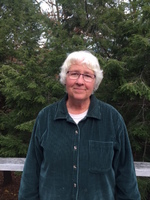 Rebecca Gretton, November 10, 2016
 Rebecca (Becky) Gretton of Springfield, New York grew up in rural Brockport in the western part of the state. She attended the State University of New York at Fredonia before beginning her career in Cortland County as an itinerant music teacher for students K-12. Later, Gretton worked in Richfield Springs. She has also been active musically outside of teaching, having played flute in pit orchestras since she was in high school.
Since her childhood in western New York, Gretton has been a lover of nature and particularly of birds. After her retirement in 2006, she became secretary on the Board of Directors for the Delaware-Otsego Audubon Society (DOAS), which was founded as a local chapter in 1967. She now serves as board co-president and program chairman. At the time of the interview, Gretton and the DOAS were getting ready for the organization's fifty-year anniversary. Among other activities related to birds and wildlife, the DOAS runs the Franklin Mountain Sanctuary and Hawkwatch in Oneonta. There, she and others watch for migrating hawks and eagles.
Throughout her time living in Springfield, Gretton has seen changes to the natural and human-made environments around her. She has made and maintained community ties to local residents and visitors, including those involved with the Glimmerglass opera festival and members of St. Mary's Episcopal Church. One of her fellow church members mentioned in the interview is Gretchen Sorin, director of the Cooperstown Graduate Program. In this interview, Gretton discusses the challenges of teaching music, past and present threats to birds, the joys of watching wildlife on deserted local roads, popular area restaurants that have long been closed, and many more topics.
I interviewed Gretton in November 2016 at her home. She has used her birding expertise to attract bird life to her property, and at one point in the recording, a bluejay call is heard at her window (Track 1, 21:45). Gretton speaks with a cheerful tone and rhythm. I have retained some, but not all, instances of laughter, which I have placed in brackets. Readers with the ability to hear audio recordings are encouraged to do so - at many points Gretton's voice reveals her personality and words she chose to emphasize. I have lightly edited grammar in her and my speech, including the addition of punctuation. For the sake of readability, I have removed the word repetition and false starts that are characteristic of oral speech.
-
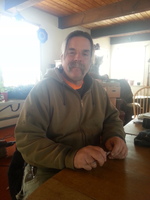 Kenyon Parsons, November 22, 2016
 Kenyon Parsons was born in Cooperstown, New York in 1966 to dairy farmer and teacher Kenyon Day Parsons and SUNY Cobleskill Professor Maryanne Rocket Parsons. With his four older sisters, Mr. Parsons worked on his father's dairy farm in Sharon Springs, New York until pursuing higher education at Syracuse University and graduate studies at the State University of New York College of Environmental Science and Forestry, graduating from the latter institution in 1988. In 1989, Mr. Parsons returned home to the family farm in Sharon Springs and in 1993 inherited the farm from his sister, converting it into Parsons Vegetable Farm which he operates today.
In addition to family history in relation to the farm, much of Mr. Parsons's oral history contains descriptions of contemporary agricultural practices and fond descriptions of interactions with customers at his roadside stand–the basis of his income. It was here, at his home at Parsons Vegetable Farm, where the interview was conducted, resulting in the occasional inclusion of background noise in the recording.
Mr. Parsons speaks in a contemporary and casual manner making regular use of colloquial slang and false starts. Many of these have been edited in transcription to best preserve the readability of the document. Numerous instances of laughter between narrator and interviewer have been preserved in the transcript to denote sarcasm when employed by Mr. Parsons.
-
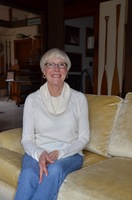 Scottie Baker, November 17, 2016
 Scottie Baker, an antique-lover and retired teacher, shared her passion for the environment and all it provides with her late husband, Dave Baker, who worked for New York DEC Parks and Recreation and Interior Trails in the Adirondacks. In 1967, the couple moved into the Cooperstown's area and built their lovely cabin home. Scottie Baker now owns 150 acres, with a creek on the property, in Fly Creek. The home was named Natúra, which is also the name of Scottie Baker's art company of environmental based artworks.
Before her husband's passing, the two purchased a “row and sail” skiff. The model type was number 106 Florida model grade AA and made by John Henry Ruston. In the interview, she discusses how she and her husband acquired the skiff, what research they had achieved, and how they restored the skiff. The skiff was named “Felicity” by Scottie because it represented the joy it brought her, and the memory of her late husband. Scottie Baker would like to make known that “Felicity” was discussed in an article in “Wooden Boat” magazine (July/August 2007). The article mentions how a reproduction was created named “Apple Pie” that is owned by Dave Kavner. Even though the original Felicity was shown at the Farmer's Museum's “Otsego Lake: Past and Present” exhibit in 2006, “Felicity” was not able to stay in the area and was eventually sold.
Ms. Baker also discusses her involvement in the Otsego Lake Association and Otsego 2000 –environmental groups in the Cooperstown area–and what they are doing to make the Cooperstown community environmentally aware and proactive. There is also a discussion about Natúra Production's artwork and what impact they have had on both Scottie and society as a whole.
Scottie Baker was interviewed at her home, Natúra. The major source of discussion was “Felicity” since this was an important part of her life. There are some grammatical particulars that I chose to keep to preserve the integrity of Scottie's speech in the interview.
-
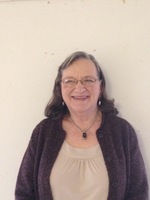 Hetty Adams, November 15, 2016
 Hetty Adams has long been a member of the Cooperstown community. She was born in Hobart, NY, in 1938, but moved to Oneonta when she was two years old. She stayed in Oneonta for college, getting her nursing degree from Hartwick College and her teaching degree from SUNY Oneonta. She met and married a man from Cooperstown and has lived here ever since. For the past fifteen or so years, Hetty has spent the winters in Myrtle Beach, but during the rest of the year she is still an active member of the Cooperstown community.
Hetty worked as a nurse for many years, first at the Bassett Medical Center and then at the Cooperstown Elementary School. She also worked for the Otsego County Public Health Department during the summers. This portion of the interview offers interesting insights into what nursing was like during the mid-twentieth century and how it has changed since.
Hetty also has been a member of the Cooperstown First Presbyterian Church for as long as she has lived in Cooperstown. She talks at length about the church's importance to the community, from hosting Head Start and the Food Pantry to opposing local hydraulic fracturing. She describes how accepting and progressive the church is; when she first joined the congregation during the 1950s, the church already had its first female elder, and it has since become the first church in the area to be LGBT friendly. She also talks about the various ways she has been involved in the church, including being an elder in the past, serving on the worship team, singing in the choir for many years, and participating in the Women's Association's sewing group. Hetty also stresses the strong sense of community and family among the members of the congregation.
Hetty loves music; in addition to singing in the church choir, she also has played the clarinet for many years in the Cooperstown Community Band. She and her husband raised three sons in Cooperstown, and they now have four grandchildren, with a great-grandchild on the way.
I interviewed Hetty at the Cooperstown Presbyterian Church on November 15, 2016. The Christmas season was approaching, so Hetty mentions Christmas traditions at multiple points in the interview. Hetty was also preparing to go to Myrtle Beach for the winter at the time of the interview.
In the transcript, I make some minor changes to make the interview easier to read, such as removing vocal crutches, breaking up run-on sentences, and making incomplete sentences complete. However, Hetty is quite eloquent, so these changes are minor.
-
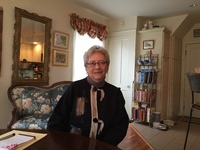 Jean Johnson, November 6, 2016
 Jean Johnson has been a regular face in the Cooperstown community for decades. Her family has been established in the area for over a century. While serving his apprenticeship in England, her father, Joseph Worrall, was hired by Ambrose Clark to come to Cooperstown and be his steeplechase jockey. Unfortunately, his riding career was curtailed after his horse stumbled and crushed him, leaving him in a body cast. The family eventually moved to Detroit to be with her father's side of the family, and to look for gainful employment. Though she moved away when she was five and spent thirteen years in Michigan, Jean never considered Detroit home. During the summer, she and her sister would come back to Cooperstown, and spend the weeks with her mother's family, and her “Gram.”
Jean's recollections vary from her earliest experiences in Cooperstown with her sister, to the struggles of living in the large urban landscape of Detroit, to family hardships, to the importance of community, and community togetherness. Some of the most interesting material mentioned in the interview concerns the struggles her family has faced over the years and the important female role models she had while growing up.
-
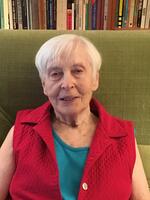 Lucy Webster, November 8, 2016
 Lucy Webster was born in Ames, IA in May 1931. Her family moved to Princeton, NJ when she was in fifth grade. During eighth grade, she began attending Miss Fine's School, where she began doing social justice work, particularly with the World Federalist Movement (WFM). While attending Wellesley College, she became the chairman of the Student Division of the United World Federalists (UWF). She continued working with the World Federalist Movement throughout her life. Because of her work with the World Federalist Movement, she met and worked with prominent people, such as Albert Einstein and Senator Harris Wofford. She also worked at the United Nations for many years and continues to be involved in politics.
The World Federalist Movement is a conglomeration of separate groups from around the world. Various federalist groups, which began working towards a better international government during the 1930s and 1940s decided to join together in 1947. Their main priorities included international justice, human rights, peace, and a world federal government, and reforming the United Nations. Although those are still major concerns, they have also begun to focus on environmental and development issues more recently. Ms. Webster asked that I attach a document on world federalism written by Senator Harris Wofford and Tad Daley, which can be found at https://fas.org/wp-content/uploads/2014/08/JFK-one-world-or-none-Summer-20142.pdf.
I interviewed Ms. Webster at her home in Cooperstown, NY. Because of her long-term social justice and political work, we spoke mainly about her work and her views on politics. Ms. Webster talks about human rights and how her perspective was shaped by her experiences during World War II. During the interview, Ms. Webster also shares her views on what she believes the United Nations does well and what needs to be improved. Because we spoke on Election Day, the interview touches briefly on her views about the 2016 election.
I have made extensive edits to the transcript at Ms. Webster's request, where she rephrased parts of the interview, rearranged sentences, or added more information. Places where sentences have been rephrased or rearranged have not been marked in the transcript. Text that has been added is set apart by brackets. In addition, in several places, brackets are used to clarify someone's name or an acronym's meaning. I have also taken out false starts and filler words throughout the transcript. Therefore, researchers are encouraged to consult the audio recording.
-
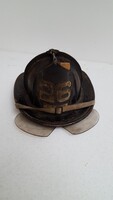 George Hymas, November 9, 2016
 George Hymas has been a part of the Cooperstown Area community since he arrived in the area. Born at home on Staten Island in New York City in June 1943, George grew up in a diverse neighborhood and was surrounded by a variety of cultures and people. George comes from a long line of craftsman and was exposed to many different trades as he was growing up. The values and skills he learned from both his family and other skilled workers in his neighborhood have been carried with him through his life. In addition to his career as a craftsman, George worked as a professional fireman in New York City.
George Hymas has had a strong connection to the Cooperstown area dating back to the summers he spent here as a boy. After leaving firefighting, he and his family moved to the Otsego area to get away from the city and to raise their three children. He feels that Pierstown and the larger Cooperstown area is a great place to live and to raise a family. George stays active in the community through his work, participation in the Pierstown Grange, and by being a good neighbor. George is skilled in woodcarving and, in addition to making puppets, he crafts replica insects. He is an avid cyclist and continues to enjoy riding his bicycle.
In our interview George speaks about his life growing up as well as his activities following his arrival in Cooperstown. We speak about his views on the area and its people as well as his thoughts on the village. The interview took place at the New York State Historical Association Library in the building's conference room. The previous day was the 2016 Presidential Election, which I allude to in the interview.
George spoke quickly at times, and would correct himself on word choices, or would restart a thought. I chose to exclude these types of occurrences from the transcript, as well as eliminating any non-meaningful utterances. I tried to keep the integrity of his words and filled in words to finish or clarify some of his statements.
-
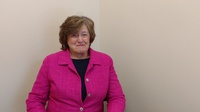 Faith Carmichael, November 22, 2016
 Faith Carmichael was born in 1933 and grew up in Washington, DC. Her father was Chairman of the Civil Service Commission during President Dwight D. Eisenhower's administration and he also worked with President Franklin Delano Roosevelt. She moved to New York City for high school and then attended Radcliffe College in Cambridge, Massachusetts. After graduation, she moved back to DC where she taught history and worked with orphanages and settlement houses. In 1958, she married a Princeton economics professor, Bill, who later became a Vice President at the Ford Foundation. Faith followed him on his career path all over the world, including an extended stay in Brazil. Upon her return from Brazil in 1972, she settled in Connecticut to focus on bringing up the children, community commitments, and teaching piano. In the early 1980s, she decided to go back to school and attended Yale Divinity School for three and a half years receiving a Master of Divinity degree. She was particularly interested in theology, spirituality and the history of ideas. She was ordained in the United Church of Christ (The Congregational Church). For many years, she worked at the Yale Divinity School with Spiritual Formation and Spirituality. In the 1990s, she continued her education in New York City with theoretical and clinical training in Pastoral Counseling and Pastoral Therapy. Faith has three children, two in Connecticut and one in the Seattle area, as well as five grandchildren.
Faith's father's family is from Van Hornesville, New York and that is where she spent her holidays growing up. She recently retired to Van Hornesville. She is involved in the area, both with the Presbyterian Church and the Calleo Workshop for Performing Arts. The Calleo Workshop teaches young and adult singers to be better singers, performers, and musicians through voice studies, recitals, and short opera performances. It also helps young people with auditions and applications for conservatory. In Van Hornesville, Faith participates in large family reunions which happen yearly in August. These reunions involve musical performances and a square dance. Her family has always invested in the Van Hornesville community, especially her grandfather, Owen D Young, an industrialist, businessman, lawyer, and diplomat. He founded RCA, a GE subsidiary. He built Van Hornesville's school as part of his dedication to education.
I interviewed Faith at the New York State Historical Association library shortly before Thanksgiving in 2016. Our interview ranged from recollections of her early life in Washington, DC to her current involvements with the Calleo Workshop. She was among the first women on staff at Yale Divinity School, so we discussed the challenges of being a woman at Yale and at college (Radcliffe was an all-girls school, but classes were coeducational at Harvard). We also talked about the importance of music throughout her life, as well as the importance of spirituality and theological studies. Faith is particularly concerned about her family and community and we talked about her future hopes for her family and Van Hornesville. She speaks slowly and her speech is very clear and easy to understand. Faith has heavily edited her transcript before it was published on CGP Community Stories. I encourage readers to consult the audio as well, to hear her speech patterns and how she originally phrased her answers.
-
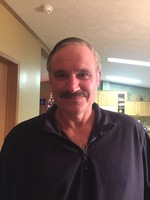 Matthew Wichowsky, November 23, 2016
 Matthew Wichowsky has always been a farmer. He was born in Cobleskill, New York and moved around to different homes during the early part of his childhood before settling in Dutchess County, New York, or more specifically in Lagrangeville. He grew up in a farming environment with his father farming for a few years before working on someone else's farm. From a young age, Matthew worked on neighboring farms and knew that is what he wanted to do when he was older.
In the 1980s, he moved to Starkville, New York to work on his uncle's farm for a few years all the while searching for a farm to call his own. Finally, in the late 1980s, he was successful in finding a farm and rented it for a few years before buying it outright in 1989. In total, Matthew worked on that farm for twenty-five years. He began the farm as a dairy industry and for the last eight years on the farm, it served as the center for his hay business. As a small business farmer, Matthew relied mainly on himself to take care of the cows, plant the crops, and maintain the farm overall.
Matthew has few recollections of his childhood and is vague about his early farming experience. Matthew talked mostly about some of the larger aspects of farming such as the milking equipment, farming income, and taking care of the animals as well as changes from farming in the 1980s to the early 2000s to the difficulty farming in this area now.
I interviewed Matthew in his home. He has been out of the dairy business for eleven years now and off the farm completely for the last three years. Currently, he drives school buses for the Mount Markham Central School District. Matthew is also my father.
Matthew talks slowly and carefully. He tries to pick his words and phrases wisely. He often started each response with an exasperated “well” which I have chosen to leave out. Sometimes, he began a sentence one way but changed it during the middle to go in a different direction. I tried to maintain some of that disconnect as it speaks to his memories; however, for clarity, words have been added to make the sentences flow.
-
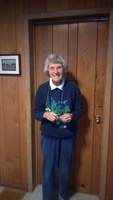 Ellen St. John, November 7, 2016
 Ellen St. John is a staple member of the Cooperstown community. She was born in China in a rural area outside of Beijing in a community that consisted mainly of professors who worked at the local university, as her father did. She and her family moved to New York City in the 1940s and she has lived in the United States ever since. She studied nursing in a college that was connected with Columbia Presbyterian Hospital in New York City, which eventually led her to get a job at Mary Imogene Bassett Hospital in Cooperstown. Once she was in Cooperstown she became involved with a number of organizations; most important, she was a founding member of the food pantry in Cooperstown in 1977. Ms. St. John also discussed how she is involved with the weekly anti-war vigils that are held outside the Post Office in Cooperstown. This led her to further expand on some of her thoughts on the country today and some of the political issues that she believes are important in order to make the United States a great country that treats every person fairly regardless of economic status or race. She has lived in Cooperstown ever since she initially moved to the area with her late husband and four children, two of which were adopted from Asia.
During transcribing I kept almost all of what Ms. St. John said, except for adding a few words and deleting others to make clear and concise sentences. She repeats words sometimes, usually for emphasis so I included those repeated words.
-
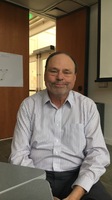 Bill Elsey, November 16, 2016
 Bill Elsey is originally from Chicago, Illinois and has been Springfield Town Supervisor since 2009. In addition, he owns and operates a rare book dealership, Leatherstocking Books. Bill's career path and involvement in local politics have been interesting and varied journeys. Bill initially graduated from the University of Illinois with a bachelor's degree in English Literature in 1968. Following his passion for the environment and the outdoors, he and his wife moved from Chicago to California in 1976, where Bill began studying Wildlife and Fisheries Management at San Jose State University in 1978. After three and half years attaining this degree, Bill began working and researching with a wide range of specialized scientists in the mountains, rivers, and coastlines of Southern California. After deciding to leave this job, Bill was introduced to the rare book business through the owner of his local used bookstore who taught him how and where to look for and sell books.
He continued collecting books into the 1990s, when he relocated to Florida for three years. His love of baseball and the quiet, outdoor lifestyle of the Cooperstown area and Otsego Lake enticed him to move to Springfield in 1999. Bill brought his collection of books with him and continued to build upon it until personal tragedy occurred in 2005. Due to an electric short in the kitchen, the Elsey's home in Springfield burned down on November 15. The entire house, Bill's collection of books, and a beloved family cat were lost in the fire. Though Bill recalls this as one of the worst experiences of his life, he reflects on the generosity and kindheartedness of those in the book selling and Springfield communities who helped him after the fire. In fact, this is what inspired him to volunteer as an EMT with the Springfield Volunteer Fire Department and eventually to run for town board and then town supervisor. Bill has rebuilt his book collection and uses internet sellers for most of his business.
After a close election against the long seated supervisor, Bill became town supervisor and began working to update the financial and record keeping systems of the town, as well as facilities upgrades in an effort toward energy efficiency. Bill's time as town supervisor has seen opposition to fracking, or hydraulic fracturing, which inspired a law prohibiting heavy industry in the town, making Springfield one of the few towns in New York State to successfully prohibit fracking. The most recent accomplishment in business development occurred just recently, as Farm Credit East, a financial services company for the agricultural industry has chosen Springfield as the location of their new 19,000 square foot office building.
I interviewed Bill in the Cooperstown Graduate Program's conference room, shortly after the groundbreaking for Farm Credit East and only one day after the anniversary of the 2005 house fire. His recollections focused on his changing career paths, politics, the local economy, his experiences as town supervisor, and some of his childhood in Illinois. Bill enjoys narrating and relating stories. I took care to eliminate some false starts and extraneous “and's” and “so's,” as well as added appropriate sentence breaks to improve the flow and readability of the transcript.
-
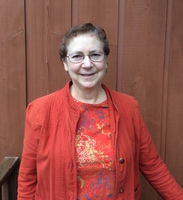 Carol Beechy, November 9, 2016
 Dr. Carol Beechy is a doctor with Bassett Healthcare in Cooperstown, New York. Dr. Beechy was born in Wooster, Ohio in 1948. She grew up there with her two sisters as the daughters of two Mennonites. She later went to Goshen College in Indiana for her undergraduate degree. After graduating, she moved to Kentucky where she briefly worked in politics before attending medical school.
During her time in medical school, there was a 10% cap on female students and she experienced sexism from her teachers. In 1977, she moved to Cooperstown, New York, and started a residency at Bassett. She began working as an attending in 1985. She specialized in primary care, though she now focuses on palliative care.
During this interview, Dr. Beechy discusses sexism, changes in the medical field, and the shift that Cooperstown experienced from a predominantly farming community to one focused on tourism. She talked about what Cooperstown was like when she first moved here, as well has the changes it has experienced over the years. Dr. Beechy talks about her partner Katie Boardman, the Cooperstown Graduate Program, the First Presbyterian Church, and the Bassett Healthcare Network.
When transcribing, I added some words for clarity and removed others. There was a clock in the room where we were conducting the interview that occasionally chimed. Additionally, Dr. Beechy's phone went off near the end of the interview and I paused the recording while she answered it. Though I included a note of this interruption in the transcript, I did not add the clock chimes.
-
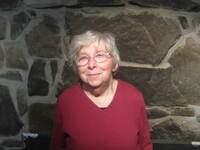 Mohamed and Geraldine Allie, February 5, 2016
 Geraldine Allie and Mohamed “Moxie” Allie Jr. purchased Wagar Brothers' Dairy in 1969 and opened Moxie's Ice Cream Shop in Wynantskill, New York. Using an ammonia refrigeration system, the Allies have been making and selling unique ice cream flavors for nearly 50 years. The ice cream shop serves intergenerational customers from around the Troy area and beyond.