-
 Judith Dell, November 03, 2019
 Judith Sawyer Dell, the daughter of Percival and Doris Sawyer and known to her community as “Judy,” grew up in Camden, Maine. She attended the University of Maine with a focus on journalism, where she met her future husband, Joe, a Long Island native who was studying cattle nutrition. The pair moved to Ithaca together when Joe took a position at Cornell Cooperative Extension.
Just two years later in 1961, the couple moved 12 miles out of Ithaca to Mecklenburg, a small hamlet on Route 79 in the town of Hector in Schuyler County. They purchased a 103-acre property for Joe to start testing his cattle nutrition ideas, which revolved around pasture at a time when the dairy industry was largely silage-focused. They named their farm “Woodwind Farm,” inspired by the mature trees and resident songbirds that welcomed them. Their first daughter, Cathy, was only eight months old when they arrived on the farm. The couple would eventually raise three children: Catherine Ann, Jennifer Marie, and Andrew Charles.
The Dells' commitment to cattle nutrition and improving Holstein genetics brought them national attention within the industry. Woodwind Farm eventually became a Dairy of Distinction in Schuyler County in 1989, and it was named the #3 dairy in New York State for herds under 50 cows in 1997.
Driven by her passion for education, not only did Judy become a student of the Holstein cow with Joe as her teacher, but she also made the farm into a place of learning for others. She hosted Cornell pre-veterinary interns and Fresh Air kids from New York City in the summers and French exchange students during the school year. She wanted her children to grow up with children from many other backgrounds, despite their rural location.
The Dells are both in their eighties now. After 59 years at Woodwind Farm, their farm has become more financially unsustainable for them, without the tax breaks from being full-time farmers. In 2018, they decided to put their farm on the market and move in with their son, Andrew, at his home in New Hope, Pennsylvania. They hoped to find a young family who wanted a farm of that size, but have been unable to find a buyer. Just days before this interview, Joe and Judy's children told them that they wanted to keep the farm. The three children will eventually decide what that looks like–as Andrew and Cathy are in Pennsylvania and Jen is in California–but in the meantime, their parents' move off the farm is no longer contingent on the sale.
Judy is an energetic, passionate narrator and dynamic storyteller. As I transcribed the interview, I found that she frequently skipped words that were implied, so I inserted them in brackets for ease of reading. She typically connected sentences with the word “and,” so I eliminated most “ands” for the transcript. A few times I rearranged the grammar for better reading comprehension. The audio recording of the oral history remains the primary source and I encourage readers to listen to the recording, as it is the only way to capture Judy's animated spirit and her mid-coast Maine dialect.
-
 Leslie Rathbun, November 14, 2019
 Otsego County was first settled by Euro-Americans in the late 18th century. These families farmed in order to prosper and some of their descendants remain in the same field of work today. Born in 1931 in Middlefield, New York, Leslie Rathbun is a seventh-generation farmer. His family was heavily involved in the National Grange of the Order of Patrons of Husbandry, otherwise known as the Grange. This agricultural organization originated after the Civil War and lobbied for legislation affecting farmers in America.
Throughout the mid to late 20th century, the Grange expanded their focus to encompass rural Americans generally instead of focusing on farmers specifically. This shift in focus broadened the order's audience to affect more than farmers. Leslie was initiated in the order as a full member at the age of 14, the youngest age eligible. He then went on to become a prominent member of his community, serving on the boards of many organizations, not agricultural organizations exclusively.
A few positions Mr. Rathbun has held are Town of Middlefield Board Member, Baptist Church of Middlefield Trustee, President of Otsego Cooperative Extension, President of the Cherry Valley and Springfield Board of Education, Master of the local and county Grange Halls as a seventh degree member, Otsego Soil and Water Conservation District Board Chair, President of the Dairy League of Otsego County, and Middlefield Historical Association Historian. If there is an agricultural organization in Otsego County, there is a high likelihood that Mr. Rathbun has been involved with it in some capacity.
I interviewed Leslie about his childhood. He grew up in the midst of the Great Depression and during World War II. He describes his experiences with family members, his education, the effects of the war effort, and the economic and technological changes he saw come to his community. We closed the interview by discussing the current state of his community.
Leslie's wife, Dorothy Rathbun, sat with us and contributed to the conversation a few times. Her voice was not picked up well by the recorder.
I have tried to reproduce many of the turns of phrase and colloquialisms of Leslie's speech. I have also chosen to preserve some grammatical particularities. It is impossible, however, to accurately reproduce all of the details of Rathbun's dialect and therefore researchers are encouraged to consult the audio recordings.
-
 Leslie Rathbun, November 14, 2019 (video)
 Mr . Rathbun's family has resided in Otsego County for several generations. Many of his ancestors made their living as dairy farmers, provided for themselves, and did not buy everything from the market. Mr. Rathbun discusses how his grandparents helped provide for the family through slaughtering.
-
 Maureen Murray, November 05, 2019 (video)
 Maureen Murray is a retired nurse currently living in Cooperstown, New York. Originally from the Bronx in New York City, she grew up as Maureen Fitzgerald in the 1950s and 1960s. She was the eldest child in a family of two parents and seven children. Her family was Catholic and heavily involved as volunteers in their community, and with the Christian Family Movement, which was the first Catholic organization for lay couples. Maureen's family frequently hosted traveling officials from the church, which is how she met her husband Dennis Murray. Dennis and Maureen grew closer by writing letters to one another, despite Dennis being drafted into the Vietnam War.
Maureen was always an excellent student, and was encouraged from a young age by her family to pursue nursing. She started her education in nursing at Hunter College in New York City, and married Dennis in her senior year. Maureen mentions protesting rising tuition costs in Albany during her time as an undergraduate student. Maureen moved to Cooperstown, New York when she was offered a job at Bassett Hospital - she originally became interested in Bassett because of its status as a teaching hospital. Maureen achieved her Master's in Nursing from Russell Sage College while working at Bassett, which is when she wrote her thesis relating to the history of Bassett nurses. Maureen was inspired to write her thesis when she realized no comprehensive history had ever been done of Bassett nurses, and how important it was to capture and record this history - she interviewed many nurses while performing research for her thesis. Maureen worked in several different departments at Bassett Hospital, including Medical/Surgical, Obstetrics/Gynecology, and Oncology. She also worked with a struggling rural hospital in Cherry Valley, and presented at lectures and seminars pertaining to the medical field.
Maureen frequently discusses topics of gender equality and her pursuit of uniqueness and individualism, telling several anecdotes exhibiting ways she questioned societal expectations, challenged the status quo, and traversed the less traveled path. She was a proponent of preserving women's contributions to the medical field before comprehensive histories were being written about nurses. From the mid- to late-20th century, Maureen grew up and began working when the role of women in the workplace was largely contested - this time period saw major changes with women becoming more independent as they pushed for gender equality. She describes her interests in helping and uplifting women through her work, both as a nurse and as a member of the League of Women Voters.
I interviewed Maureen in her home in Cooperstown, New York. Maureen completed the video interview right after the audio interview, which may have impacted what she chose to talk about. I would highly recommend watching the video to get a better sense of the interview.
-
 Christopher Kelly, November 07, 2019
 Christopher Kelly (Chris) has spent the majority of his life in upstate New York. A graduate of New Hartford High School and then Syracuse University, Chris is the retired owner and vice president of Jay-K Independent Lumber, a three-generation family-owned local business in New Hartford, New York.
With his wife Virginia, he raised his family in the Village of Holland Patent, where he restored his family home, one of the four stone churches on the village green. Chris has always lived an active life, and retirement has found him volunteering for a number of organizations. He has served as V.P of the Trenton Falls Association, Secretary of the West Canada Creek Riverkeepers, Chairman of the Holland Patent Planning Board, Tug Hill Tomorrow Land Trust, and as a Trustee of Utica College.
Upon retirement Christopher's attention turned toward restoration and preservation of the Wethersfield Stone One-Room Schoolhouse in the Town of Trenton. He became President of the Wethersfield Historical Preservation Society, overseeing the full restoration of the Wethersfield Stone Schoolhouse.
Through the years they have been able to get the property listed on the National Register of Historic Places, find funding through grants, and gather the community in preserving local history. He speaks in great detail about the process of reconstruction and how the community came together in the preservation of the space. A local, he is very aware of the history of Trenton. Though he believes he is not nearly as informed as his colleagues, I found him to be quite insightful.
Chris speaks with a colloquial Mohawk Valley accent that has been slightly edited for clarity's sake. In some moments of dialogue through his storytelling, his inflections become animated and I encourage listeners to consult the audio to understand the full breadth of Chris's knowledge.
-
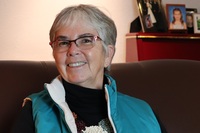 Maureen Murray, November 05, 2019
 Maureen Murray is a retired nurse currently living in Cooperstown, New York. Originally from the Bronx in New York City, she grew up as Maureen Fitzgerald in the 1950s and 1960s. She was the eldest child in a family of two parents and seven children. Her family was Catholic and heavily involved as volunteers in their community, and with the Christian Family Movement, which was the first Catholic organization for lay couples. Maureen's family frequently hosted traveling officials from the church, which is how she met her husband Dennis Murray. Dennis and Maureen grew closer by writing letters to one another, despite Dennis being drafted into the Vietnam War.
Maureen was always an excellent student and was encouraged from a young age by her family to pursue nursing. She started her education in nursing at Hunter College in New York City, and married Dennis in her senior year. Maureen mentions protesting rising tuition costs in Albany during her time as an undergraduate student. Maureen moved to Cooperstown, New York when she was offered a job at Bassett Hospital - she originally became interested in Bassett because of its status as a teaching hospital. Maureen achieved her Master's in Nursing from Russell Sage College while working at Bassett, which is when she wrote her thesis relating to the history of Bassett nurses. Maureen was inspired to write her thesis when she realized no comprehensive history had ever been done of Bassett nurses, and how important it was to capture and record this history - she interviewed many nurses while performing research for her thesis. Maureen worked in several different departments at Bassett Hospital, including Medical/Surgical, Obstetrics/Gynecology, and Oncology. She also worked with a struggling rural hospital in Cherry Valley and presented at lectures and seminars pertaining to the medical field.
Maureen frequently discusses topics of gender equality and her pursuit of uniqueness and individualism, telling several anecdotes exhibiting ways she questioned societal expectations, challenged the status quo, and traversed the less traveled path. She was a proponent of preserving women's contributions to the medical field before comprehensive histories were being written about nurses. From the mid- to late-20th century, Maureen grew up and began working when the role of women in the workplace was largely contested - this time period saw major changes with women becoming more independent as they pushed for gender equality. She describes her interests in helping and uplifting women through her work, both as a nurse and as a member of the League of Women Voters.
I interviewed Maureen in her home in Cooperstown, New York. Maureen and I discussed potential talking points before the interview, which can be attributed to a few of the hesitations between topics during the interview itself. I chose to omit transcribing some of the interruptions during the interview to prevent disrupting the flow of the transcript. I would recommend listening to the audio to get a better sense of the interview itself. Maureen chose to restrict some elements of the interview.
-
 Katherine Miller, November 14, 2019
 Katherine Miller, who goes by Kate, is a small organic farmer and resident of Sharon Springs, New York. Kate is the proprietor of Weathertop Farm, a small organic herb and produce farm located in Sharon Springs. Using what she grows on her farm, Kate makes and sells shelf stable goods such as herbal drink mixes and teas to drink, as well as all-natural massage oils, salves, and deodorant.
Born in Staten Island, Kate and her family moved upstate to Sharon Springs during her adolescent years. Before becoming a farmer, Kate enjoyed her career in human services and activism, during which she spent about seven years living and working in Ireland. Upon her return to the United States, she began farming, which led to her eventual purchase of her current farm and property. She has now been farming for nine years.
I interviewed Kate at her homestead in Sharon Springs, where she lives with her dog Jasper. The property includes her home, farmland, and a small pond. In her interview, Kate discusses topics such as organic farming and what it means to her, the sense of responsibility and community associated with organic farming, what kinds of goods she produces and sells, and her goals for the future of her farm. Kate also has just recently harvested her first crop of CBD hemp. Considering the laws and legislation around growing and processing hemp that are still changing, Kate discusses some of the obstacles she and other farmers are facing while growing this controversial plant. She does so with a good sense of humor and an optimism for the future. This transcript has been lightly edited for grammar and clarity.
-
Ron Bishop, November 9, 2019 (video)
Dr. Ronald E. Bishop is an Assistant Professor of Chemistry and Biochemistry at SUNY Oneonta in Oneonta, New York. Dr. Bishop was born in 1957 in Youngstown, Ohio. He received his bachelor's at Youngstown State University before moving to West Virginia for work and eventually received his Ph.D. from WVU's School of Medicine. After attaining his Ph.D. in Biochemistry, he worked for a branch campus of the National Cancer Institute in Frederick, Maryland. While in Frederick, he was on the cutting edge of cancer research at the time and was part of a team that discovered a vitamin B6 metabolite with ties to out of control growth states.
In 2008 Ron moved to Cooperstown, New York to be closer to family and found himself involved in environmental work in addition to his academic work at SUNY Oneonta thanks to friends he made in the area. He also is a certified electrician and heavy equipment operator, in addition to being a federally accredited Chemical Hygiene Officer. With this background, he was uniquely poised to do a technology assessment on hydraulic fracturing and energy services. He worked directly with oil companies and environmental groups during this research, while being beholden to neither group. In this video interview, we discuss how he got started in the environmental field and his involvement with Brookwood Point and other local organizations.
-
 Ron Bishop, November 9, 2019
 Dr. Ronald E. Bishop ("Ron") is an Assistant Professor of Chemistry and Biochemistry at SUNY Oneonta in Oneonta, New York. Dr. Bishop was born in 1957 in Youngstown, Ohio. He received his bachelor's at Youngstown State University before moving to West Virginia for work and eventually received his Ph.D. from WVU's School of Medicine. After obtaining his Ph.D. in Biochemistry, he worked for a branch campus of the National Cancer Institute in Frederick, Maryland. While in Frederick, he was on the cutting edge of cancer research at the time and was part of a team that discovered a vitamin B6 metabolite with ties to out-of-control growth states.
In 2008, Ron moved to Cooperstown, New York to be closer to family and found himself involved in environmental work in addition to his academic work at SUNY Oneonta thanks to friends he made in the area. He is also a certified electrician and heavy equipment operator, in addition to being a federally accredited Chemical Hygiene Officer. With this background, he was uniquely poised to do a technology assessment on hydraulic fracturing and energy services. He worked directly with oil companies and environmental groups during this research, while being beholden to neither group.
This interview largely discusses his cancer research and his fracking research, as well as how simply being in central New York influenced his path. I interviewed Dr. Bishop at his home in Cooperstown, New York. His research has not ended, and he is currently in the midst of related studies that he did not want to discuss before being published.
-
 Muriel Werbovetz, November 13, 2019
 Muriel Werbovetz is a kind-hearted community leader and retired teacher living in Holland Patent, New York. Muriel was born at Crouse Irving Hospital in Syracuse, New York on July 14, 1942. She grew up on the north side of Syracuse where all her neighbors spoke Italian, including her parents who had to learn English at an early age.
Muriel and her parents moved to Holland Patent, New York when she was four years old, due to her father getting a new job as a social studies teacher at Holland Patent Central School. She attended Holland Patent from kindergarten to graduation, and loved going to school there. Muriel had a lot of friends in high school, including her best friend, Peggy Kidder. She also met her husband when she was a sophomore and he was a senior.
When Muriel graduated from high school, she attended college at SUNY Oswego to become a teacher at Holland Patent Central School, where she held many memories. She happily taught 4th grade at Holland Patent for 30 years until her retirement. After retiring, Muriel worked as a substitute teacher and as an ESL instructor to immigrant adults from Bosnia, Ukraine, and Belarus for BOCES in Utica, New York. Muriel expressed deep care for her immigrant students and was in awe of how much they respected educators compared to American students.
Muriel is very active in her community. She started a grief group at her church and is the Secretary of the Wethersfield Historic Preservation Society, which was founded to restore the Wethersfield one-room schoolhouse in Holland Patent, New York. Her interest in the project started when she taught at Holland Patent school, where students completed a unit on New York State History. As part of the unit, Muriel and fellow teachers thought it would be a great idea to take a field trip to the one-room schoolhouse to meet a former student who attended the schoolhouse and immerse them in old rural American education.
The historic preservation society was founded in 1996 with successful funding efforts for the project that allowed for the restoration of the schoolhouse to be completed in 2018. Muriel is now working to encourage the community to use the schoolhouse for events or gatherings and liaise with the superintendent for the Holland Patent school district.
I interviewed Muriel at her home in Holland Patent, New York. We conducted the interview in an attached apartment to her home that she had built for her mother as she grew older. She casually conversed with me about how this is the quietest area of her home and how her mother lived to be 99. Muriel expressed that much of the information regarding the Wethersfield Schoolhouse Project was lost to memory, so she read many passages from documents during the interview which are italicized and in quotations. Muriel tends to start her sentences with "and" or "so" which were mostly removed for enhanced reading flow. There are also three brief instances where her grandfather clock sings.
-
 Lee Fisher, November 18, 2019
 Lee Fisher is the President of the Oneonta Branch of the NAACP. Fisher was born in Williamsport, Pennsylvania on May 27th, 1940. He grew up in Williamsport with his mother, father, and four brothers: Jim, Chuck, Harold, and George. Williamsport was a segregated community with many people of color holding service jobs and working at the local steel plants. Following in the footsteps of his brothers and community role models, Fisher pursued a career in education. Fisher moved to Oneonta, New York and worked nearby in the Davenport school system teaching seventh, eighth, and ninth grade social studies until his retirement in 1995. In 1992, Fisher worked as an assistant basketball coach at the State University of New York, College at Oneonta.
In 1992, in Oneonta, there was an incident where a woman was assaulted at knifepoint supposedly by a person of color. Subsequently an administrator at the State University released a list to local, county, and state police containing the names of all the students of color who attended the school and where they lived - on and off campus. In the days that followed, people of color were sought out and stopped throughout Oneonta as they were driving, walking, boarding buses, and sleeping in their residences. As an assistant basketball coach who was living in Oneonta, Fisher saw first hand the effect this had on his players, students, and community. Out of this incident, called the "black list," the provost of the State University, Grace Jones, set out to create a chapter of the NAACP in Oneonta, becoming its first President.
Fisher's recollections range from his upbringing in Williamsport, Pennsylvania, contrasting it to Oneonta, New York, to the inception of the NAACP in Oneonta out of the "black list" to its current role in the community. The contrast between the segregated upbringing of Fisher, deeply knowing the community and police, and his current life in Oneonta is interesting material. In addition, Fisher's take on the "black list" and how the memory of it affects the community today is of interest.
I interviewed Mr. Fisher at his home in Oneonta, New York. Fisher retired from his formal teaching career in 1995, but he still teaches driver's education to the greater Oneonta community and is in his fourth term as President of the Oneonta branch of the NAACP. Fisher's role as branch president, connection to the "black list," and knowledge of the community were major sources for discussion.
While transcribing, I added some words for clarity within brackets to complete sentences or mark moments of laughter, and I edited the text for grammar purposes. In addition, I removed false starts to sentences and conjunctions if they were not used to join two sentences together. At one point in the interview, Mr. Fisher's wife, Joanne Fisher, said goodbye as she headed to work. I mark her coming into the interview as another speaker, but the interaction did not warrant me stopping the recording.
-
 Mary Karam, Segean Karam, November, 20, 2019
 Tucked away in Yorkville, New York, is a Lebanese Bakery owned by Mr. Segean Karam and Mrs. Mary Ann Karam. The Karams have operated the bakery for nearly 40 years, which is just about the length of time they have been married.
During this interview, Segean and Mary talk about Lebanon, the bakery, their children, and the love they have for each other. After meeting in Lebanon, the Karams began their lives together in the Utica area and started the bakery, which has had a large impact on many people in the area.
Segean Karam was born in Sarine, Lebanon. He was one of eight children to their parents who owned and rented land. He became a police officer at eighteen and patrolled the ski slopes in the area to protect the skiers from any people who may have wanted to cause harm. At twenty-seven, Segean moved to the United States where he married Mary Ann Karrat. Mary Ann Karrat was born in New Hartford, New York to a Lebanese couple who owned a bakery in the area. She went to New Hartford High School and attended Utica College where she received her degree in social work.
After marrying in 1979, they began to work in a bakery that was owned by Segean and his brothers. They had two children in the early 1980s, John and Christopher. Mary and Segean eventually bought out his brothers nearly twenty years ago to completely own the bakery. They have expanded since the early 2000s, and now have twice the space for customers in their bakery as well as a new bread baking system.
-
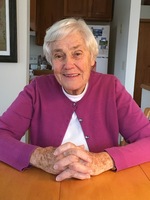 Kathryn Allen, November 13, 2018
 Kathryn, or Kathy, Allen (née Clark) was born in rural Illinois in 1929. As a child, she lived through the Great Depression and experienced the rural home front's response to World War II. An agricultural specialist, her father worked as a soil tester in northern Illinois. Because of his work, she witnessed the transformation of Midwestern agriculture that occurred during and after the Depression. After World War II, when her father joined the faculty of Southern Illinois University, she and her family moved to the southern part of the state. After the Korean War, she and her husband Bill moved to the diverse community of Glen Cove, Long Island, where she worked as a school librarian for several decades. She moved to Cooperstown later in life.
As a result of the Great Depression, the number of farms in the Midwest decreased and the sizes of those farms increased. Wealthy individuals bought up land that less affluent people had lost. This farm consolidation, which continued through the rest of the twentieth century, transformed the nature of agriculture. Kathy's life changed as a child as her father's occupation shifted in response to these trends and the increasing professionalization of agriculture.
Kathy reflects on how both her life and the communities in which she lived changed in response to national events in the 1930s, 40s, and 50s, primarily. Her father is a particularly important figure in the interview, and she discusses how his work shaped her worldview. She remembers experiencing strict violin lessons provided by the Works Progress Administration, witnessing Nazi prisoners of war work in fields in her heavily German-American community, and discussing the formation of Israel in her college housing. She discusses her feelings on the ways children learn by doing, gender roles during World War II, America's place on the world stage, and the nature of Midwestern character.
The interview took place one week after the 2018 midterm elections, to which she briefly alludes. The transcript has been lightly edited for clarity and sentence structure. Long stretches of speech have been broken into paragraphs.
-
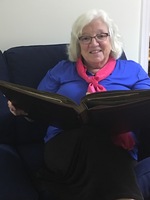 Margaret McGown, November 12, 2018
 Margaret McGown is a member of one of the oldest families in Cooperstown and remains very involved in the community. She was born in Binghamton, New York, on April 29, 1947 but spent her childhood in Cooperstown, where her father's family lived. After graduating from high school, she attended Elmira College and worked there for several years before returning to Cooperstown. She has remained in Cooperstown and raised all of her children in her hometown.
During McGown's lifetime, Cooperstown has undergone a number of changes. Like many rural regions in America, the growth of large-scale farming has pushed many small farmers out of business, hurting the local economy as a whole. In Cooperstown, the population dropped from 2,727 in 1950 to 1,769 in 2017. To combat the economic fallout of this decline, Cooperstown has reinvented itself as the baseball capital of America, a transformation that McGown was involved with in 1996 when the Dreams Park was founded, and one that she continues to be involved with today. McGown has mixed feelings about the changes that Cooperstown has experienced, and her unique perspective as both a long-time resident and someone involved in the village's transformation provides an important window into Cooperstown's history.
McGown's comments range from descriptions of growing up in a small town in the 1950s to her work in Cooperstown's two most profitable businesses: healthcare and baseball. In addition to remembering the past, McGown also hypothesizes about the future of her village and the challenges it will face in the next two decades. Her interview also touches on the importance of family and the meaning of “home.”
For clarity's sake I have omitted most unfinished sentences from this transcript and provided filler words where necessary. Filler words are notated with brackets. None of these edits change the meaning of the text.
-
 Jay Harrison, November 12, 2018
 Jay Harrison is a lifelong resident of Otsego County. He grew up in Mt. Vision, a hamlet in Laurens, NY, and moved to Milford, NY as an adult. The Harrisons have been a prominent family in the region of New York since the 1700s. In fact, the hill the family lived on, is still referred to as Harrison Hill. Jay Harrison’s legacy lives on through his children and grandchildren, now off Harrison Hill and across the nation. Currently, he works as a building superintendent for SUNY Oneonta, stationed at the Biological Field Station and the Cooperstown Graduate Program in Cooperstown, NY. Harrison has also worked as a mechanic and farmer. In addition, Harrison was active in the Boy Scouts as a child, as well as with his own children, and as a Scout leader. Harrison is proud of his children and grandchildren as well as his family’s legacy in the area. CGP Community Stories previously conducted an interview with Glen Harrison, Jay Harrison’s father. Jay Harrison’s interview exposes the next generation’s experience growing up in rural Otsego County. He explores the perceived differences between his and his children’s lives on a dairy farm and how this background has influenced the course of his life. Harrison also discusses the change in the landscapes and industries in Otsego County. Residents of this region in New York State sometimes use specific pronunciations of certain phrases. Harrison also had personal inflections and changes in tone that are currently only represented through the audio recordings.
-
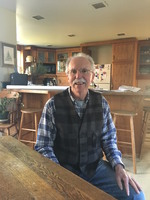 Keith Willcox, December 16, 2018
 Mr. Keith Willcox, born in Groton, NY in 1947, was raised on his family's dairy farm. After attending Harpur College, at Binghamton University, he married his wife, Nadene, and began a new chapter in his life. A conscientious objector to the Vietnam War, Mr. Willcox adhered to mandated community service as an orderly at Wilson Hospital in the Binghamton Tri-City area. After receiving his Master's in Library Sciences, he transitioned into respiratory therapy as an in-home caregiver. His commute often entailed hundreds of miles a day, sometimes going as far as the edge of the Canadian-American border.
Although a relative newcomer to Roseboom, Mr. Willcox has lived in the township for 43 years and continues to participate actively in his local community. He explains transformations in the rural landscape of agriculture, discusses local politics, recalls community activities, and explores how full-time and part-time residents of the town have interacted. His personal stories illustrate a portrait of a man taking each day step-by-step.
I conducted this interview at Mr. Willcox's home in Roseboom, NY. His recollections of the past shed light on a rural lifestyle with which many people are not accustomed. I have attempted to capture Mr. Willcox's style, mild manner, and good nature in the transcript as best as I could, and I have removed false starts and sentence fragments to capture the main idea as best as possible. However, I encourage researchers to consult the audio recordings, as it is impossible to reproduce the exact tone and particularities of an individual's voice.
-
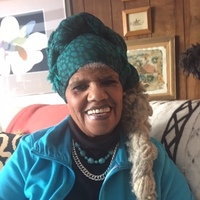 Juanita Bass, November 12, 2018
 Juanita Bass, née Holmes, was born in Bridgewater, New York, on May 19, 1935. She is the daughter of Everett Holmes, who was the first African American to be elected to the position of mayor in New York State. Juanita grew up on a farm; her father was a sharecropper, and she describes her family as being poor. However, she talks at length about how attentive her father was to all the children's needs.
Bridgewater is a very small, rural town in Central New York. There would not have been many African Americans living there during Juanita's childhood. She did have some cousins that lived close by. Juanita attended the local public school with white children from the community. Her father and his siblings were musical and put on hoedowns for the white people in the community. He would cook, play the banjo, and call the square dances. He also traveled around with his children and put on minstrel shows. Juanita did not like wearing the exaggerated make-up and pickaninny braids She excelled at school, participated in many activities, and was elected Queen of the Senior Ball. She frequently faced racism as a child, especially when she went out of the community or someone new came in. She had white friends who defended her, and they planned their Senior Trip so that she could participate. To her dismay, Washington DC and New York City revealed the prejudice that was rampant in the 1950s, and she suffered the sting of the Jim Crow era even as her classmates stood by her.
Juanita got her first job at General Electric in Utica, got married, and had six children. After several promotions, she finally left GE after the birth of her fifth child. She devoted herself to being a mother–gardening, sewing, cooking, and having fun with her children–in their home in Frankfort, NY. She also began her entrepreneurial career. She got into collecting and selling antiques, and then purchased a Victorian home in Bridgewater in 1988. She gutted and restored the home and opened the White House Berries Inn, a restaurant and bed-and-breakfast. She became famous for her soul food–especially her banana cream pie. People would come from all over to get their “Juanita fix,” and she was written up in several newspapers, magazines, and even a book. She received many famous guests along with loyal regulars.
After 13 years, she closed the business, but she has continued to be an entrepreneur. She holds estate sales and supplies the military with sweet potato pie. Products from Juanita's Soul Classics, like seasonings and fish coating, can be found in local Price Choppers and specialty stores. Juanita has earned many awards for her leadership in the community and for her entrepreneurial spirit, but she is probably most proud of her children. She loves life, and at 83, she is still working on her next great idea.
Juanita speaks with a lot of energy and knows how to tell a tale. My interview with Juanita (she does not like to be called Mrs. Bass) barely scratched the surface. She spoke candidly about her experiences with racism. There were several stories that did not make it into our interview, like the yearly “Colored Picnic” at Sylvan Beach and racial profiling by a police officer when she went to meet with someone about antiques. These topics would be good subjects for future interviews and additional research. We spent a lot of time focusing on her businesses, but she would willingly discuss her views on politics and the current state of race relations in our country.
-
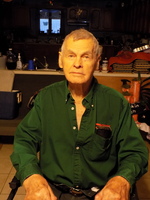 Elliot F. Brodie, November 15, 2018
 Elliot Brodie has lived the majority of his life in the area of Roseboom, NY. Born in the mid-nineteen-twenties, Elliot grew up on a farm and went to school for the duration of the Great Depression. In his adult life he would work as both a trucker and farmer. Elliot has passed down the tradition of farming and maple sugaring to his children.
At the age of 94 in 2018, Elliot is full of memories. Elliot recounts growing up during the Great Depression as a child of a rural family and how this affected his family growing up. As Elliot grew up, he would attend school in first a one room, then a two room schoolhouse. He explains the transition from one school to the other along with other accounts of school life, including playing football and baseball.
Elliot was also kind enough to share what it was like to grow up on a farm and to witness new innovations in farming technology, such as the tractor. While growing up on the farm was difficult, there were always neighbors around to help each other out. In the story of his life, Elliot puts extra emphasis on his life as a child on the farm both at home working and going to school.
-
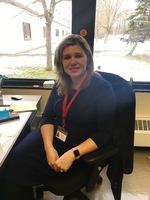 Hanka Grabovica, December 2, 2018
 Hanka Grabovica is a resident of Utica, New York. She was born in Bosnia in 1985. After the Bosnian War ended, she came to America with her parents and her brother in 2001. Grabovica is a black belt in karate and traveled to Japan in 2004 with the USA national team to compete, which she describes in the interview. Grabovica also details her time at Proctor High School, Mohawk Valley Community College (MVCC), and Utica College.
After graduating college, Hanka Grabovica worked as an English as a second language (ESL) teacher to both elementary students and adults at the Mohawk Valley Resource Center for Refugees. She eventually became a Dean of Students and is now a Student Affairs Officer at the Utica Academy of Science. She recently ran for a position on the Utica School Board. Grabovica married her husband when she was 20 years old. They have two children together.
I interviewed Mrs. Grabovica at her home in Utica, New York. She lives there with her husband and her two children. Due to her experience growing up in Bosnia and moving to the Mohawk Valley, she provides a unique perspective of someone who was new to the community, but now has been a resident for 17 years. Grabovica speaks about her own education and the education of children in American schools today. She also provides insight into the processes of immigrating to America as well as the challenges of adjusting to a new country and culture while never forgetting her own background.
Mrs. Grabovica speaks with a distinct Bosnian accent and speech pattern that is not evident in the transcript. As it is impossible to accurately reproduce all of the details of Grabovica's dialect, researchers are encouraged to listen to the audio recordings of the interview.
 
-
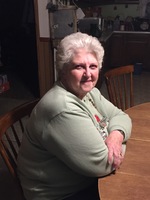 Norma VanBuren, November 14, 2018
 Norma VanBuren was born Norma Johns in Cobleskill, New York on May 28, 1947. She married her husband, Jack VanBuren, in 1965. The couple lived in Richmondville for a few months and later moved to Mr. VanBuren's hometown in East Worcester. They farmed in East Worcester but moved after they bought a farm in Roseboom in 1966. Norma recalls helping take care of cows and working in the fields, and she discusses the challenges of farming in upstate New York.
In addition to remembering her life on the farm, Norma talks about the community's reaction to her family purchasing the Grange in Roseboom. The Grange, officially known as the National Grange of the Order of Patrons of Husbandry, is a fraternal organization that encourages families to promote community and agriculture. This organization used to be very active in Roseboom and hosted dances and suppers. After the VanBuren's bought the Grange, they used the land to host the Roseboom Antique Power Days. This event, now in its 18th year, plays a key role in the history of Roseboom. The tractor show brings in visitors from all around the country and celebrates Roseboom's agricultural history.
While Norma feels proud of her role in the creation of the Roseboom Antique Power Days, she is most proud of being a mother to her four boys. Norma recalls many memories of her children's adventures over the years with their neighbors. Her comments on raising a family in Roseboom reflect the importance of community in rural areas.
Norma's love for children shines through her recollections of her work at the Cherry Valley-Springfield Central School District as a bus monitor. Her fond remembrance of the students with disabilities that she has worked with shows her compassionate nature. In addition to working as a bus monitor, Norma worked in a restaurant in Roseboom. Her comments draw attention to the instability of businesses in Roseboom that reflects a broader understanding of changes in rural communities in New York. Her volunteer efforts with the fire department's auxiliary board, the Roseboom planning board, and the election board demonstrate her active role in the community.
I interviewed Norma VanBuren at her home in Cherry Valley, New York. While visiting Norma, I had the pleasure of meeting her family and seeing photographs of the Roseboom Antique Power Days. In the transcript, I edited for grammatical purposes. During the interview, the interviewer stopped the recording two times at Norma's request when visitors entered her home. These pauses are marked in the transcription. While the transcript is helpful, I highly recommend researchers consult the recording of the interview to gain a better sense of Norma's story.
-
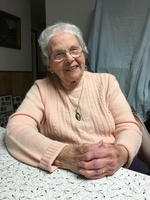 Esther Brooker, November 19, 2018
 Esther (Mathewson) Brooker was born July 16, 1930 in her grandparents' home near Westford, NY. She grew up the third of six children on a dairy farm of about one hundred acres near Westford. In addition to dairy production, her father also grew crops, including buckwheat, oats, corn, and potatoes at different times. Her family was also very involved in the local community, her father serving on the school board and electric cooperative's board, and her mother an active member of the church. Esther grew up in a time of much technological change and got to see tractors take the place of horses and electricity replace kerosene on her farm during her childhood.
Influenced by the push for nurses in the 1940s, Esther obtained a bachelor's in nursing at Hartwick College in Oneonta, NY, graduating in 1952. After graduating she held a variety of nursing positions in Cooperstown, Cobleskill, Oneonta, and Sidney in the next few years. She was always eager to gain different experiences in new healthcare settings and worked as an obstetric nurse, private duty nurse, and night supervisor at different times.
Esther met her husband Louis Brooker at a local barn dance, and they married in 1956. They moved to a house in East Worcester where they raised their four children and where Esther still resides. The couple enjoyed 56 years of marriage before Louis's passing in 2013. Esther continued working while raising her family, and in 1960 took a position as school nurse-teacher in Worcester Central School where she could be close to and hold the same hours as her children. Taking classes during her summers off, she received her Master's in Education from SUNY Oneonta in 1966. She continued her position as school nurse-teacher for 18 years before returning to Bassett Hospital in 1979 as Discharge Planning Nurse. At this time Esther also got involved in a task force similar to hospice and used the breaks during her shifts at Bassett to spend time with patients associated with this group. After more than 35 years in the field, Esther retired in 1987 but continues to remain an active member of the Worcester community.
I interviewed Esther in her home in East Worcester, NY, where she showed me pictures and a painting of the hop house still standing on her childhood farm near Westford. The farm is a cherished part of her life still today, and much of the interview centered on her experiences growing up on the farm, the camaraderie of the local community, and the methods and practices of farming as they changed through time. Esther's lifelong passion for learning and understanding the world around her is demonstrated in her insights on farm life and detailed descriptions of farming processes, making this interview a valuable resource for those interested in agriculture and rural life as it evolved through the twentieth century.
When transcribing the interview, I edited for clarity but worked to retain the message of Esther's words; however, I encourage researchers to listen to the audio recordings, as the demonstrative power of Esther's inflection and storytelling cannot be captured on page. Despite the many interesting topics covered in this interview, it covers a mere fraction of Esther's experiences. Her long and varied nursing career spent spread across the local area would provide wonderful insight into rural healthcare, and a second interview covering these topics is suggested.
-
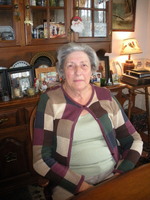 Christine Hickling, November 12, 2018
 Christine E. Hickling is a native of New Berlin, NY whose family has deep roots in the Roseboom community. Her maternal grandmother, Edna Countryman, was interviewed by a Cooperstown Graduate Program student in the 1970s. Like her grandmother Countryman, Mrs. Hickling served the Roseboom community as the town's clerk.
-
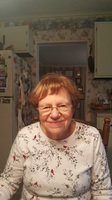 Susan Drake, November 12, 2018
 Susan Drake is a long-time resident of Roseboom, New York. Drake was born in Union, New Jersey on September 9, 1940. After spending her childhood summers in Cooperstown, Drake married Donald Drake of Cooperstown and moved to Otsego County permanently, settling in Roseboom. Over her years in Roseboom, Drake raised three boys, became close with her many neighbors on John Deere Road, and rose to a leadership role in the Pierstown Grange.
The town of Roseboom sits outside of the larger community of Cherry Valley, New York and was home to 684 residents as of 2017. Founded in 1854 by Abram and John Roseboom, the town consists of several hamlets. The town has relied on an agricultural economy with at one point several dairy farms, a Grange, a cheese factory, and a John Deere dealership that sold equipment to surrounding farmers. Since the middle of the twentieth century, agriculture in Roseboom and surrounding communities has declined due to both out-migration from Roseboom and the growth of larger, mechanized farms.
Drake's narrative spans the breadth of the second half of the twentieth century and speaks to the changes that befell Roseboom. Some of the most poignant information in the interview comes in Drake's description of the changes in the Grange community of Otsego County and the effects this organization had on her life.
-
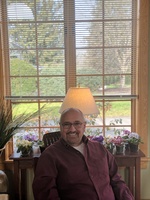 John Webb, November 12, 2018
 John Webb is a current resident of Cooperstown, NY. Born in the neighboring town of Roseboom, NY, Webb spent his youth working on the family farm with his father and mother. When he wasn't tending to the cows or at school, Webb would explore the surrounding woods with his dog, “Yeller,” read, listen to music or practice playing the piano at the local church. Upon high school graduation, Webb pursued higher education, eventually earning his Ed.D in bilingual education with a concentration in Haitian Literature and Culture.
After leaving Roseboom and earning his doctorate, Webb spent his career as the chair of the foreign language department at Pomona Junior High School in Spring Valley, NY, at Hunter College High School in New York City, and finally as director of the Program in Teacher Preparation at Princeton University. Much of his work was focused on social justice and diversity, teaching English to immigrant students and developing programs to enable children from marginalized communities prepare for college. Though Webb occasionally returned to Roseboom to visit family, Webb spent the majority of his time moving between Rockland County, NY, Manhattan, NY Princeton, NJ, and Miami Beach, FL, before finally settling in Cooperstown.
Miami, FL became Webb's primary home after his retirement from teaching. It's there that he met his husband, Nelson Mondaca–a military veteran. Webb and Mondaca spent several years together before visiting Cooperstown and Roseboom for the first time in their relationship. After their visit, the two decided Miami was no longer for them and decided to move permanently to Cooperstown. Webb and Mondaca are now married and live in a quiet but friendly neighborhood between Main Street and Bassett Hospital.
This interview was conducted in Webb's home in Cooperstown, NY. His and his husband's three dogs; Jersey, Dakota, and Savannah, were present and spent the majority of the interview mildly frustrated because Webb and I were paying attention to each other and not them. Jersey makes a brief appearance.
The primary focus of this interview is community and what various communities have meant to Webb throughout his life. A large portion of the interview revolves around Webb's life in Roseboom. This is because Webb is on the board of the Roseboom Historical Association and arranged interviews through CGP Community Stories for himself and his fellow Roseboomians specifically to document stories of the rural town.
Webb is a very deliberate speaker. Some edits have been made to the transcript for clarity, but in order to fully grasp the meaning of Webb's words it is encouraged researchers consult the full audio.
-
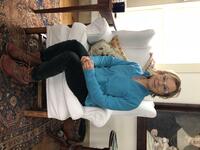 Sydney Waller, November 20, 2018
 Sydney Waller was born in the late 1940s in Sharon, Connecticut. She grew up in a village called South Kent and spent her summers in Roseboom, NY. Located in Central New York State, the town of Roseboom consists of several hamlets and maintains a community defined by agriculture and farming.
Waller's recollections reflect her personal experiences in Roseboom during her childhood and her early 20s. Her stories expand beyond herself and family to her neighbors and friends, both natives and transplants to Roseboom. Her memories give specific insight into farm life without plumbing and electricity and the counterculture movement of the [19]60s and 70s.
I interviewed Ms. Waller in her home in Cooperstown, New York. Prior to the interview she offered me a cup of hot tea, a welcoming gesture and a testament to her hospitality. Her farmhouse and the woodstove she installed in it indicate the long lasting influence impressed upon her by her experiences in Roseboom.
Ms. Waller speaks plainly and is easy to understand. I omitted excess wording, run-on sentences, and repetition for legibility purposes. It is impossible, however, to accurately reproduce all of the details of her speech and therefore researchers are encouraged to consult the audio recordings.