-
 J. Ritchie Garrison, November 19, 2020
 J. Ritchie Garrison is an esteemed alumnus of the Cooperstown Graduate Program, a member of the class of 1974. He was born in Worcester, Massachusetts and grew up in Atherton, California before moving back to Worcester as a child. He attended Tilton School in New Hampshire, then Bates College in Lewiston, Maine, before his time at Cooperstown, then went on to the University of Pennsylvania for his PhD in American Civilization. Following his academic career, he worked as Director of Education at Historic Deerfield before moving to the University of Delaware and the Winterthur Program in American Material Culture. He became Director of the Winterthur Program in 2004 and served in that role until 2019, when he retired.
Mr. Garrison's time at CGP involved intense study of the local region, from agricultural and economic history, to architecture, craft, and material culture. In addition to that, Mr. Garrison and his wife, Carla, faced an extraordinary event during their time in Cooperstown: a house fire. No one was harmed, but it was a life changing moment.
In this interview, Mr. Garrison speaks about his early exposure to material culture, his academic experience in Cooperstown, the event of the house fire and the lessons it brought, and, finally, his observations about both the Winterthur and Cooperstown graduate programs.
This interview was conducted over Zoom on Thursday, November 19, 2020. Despite the COVID-19 pandemic necessitating a virtual interview, it made little difference in the depth of what was shared.
-
 Sylvea Hollis, November 11, 2020 (video)
 Sylvea Hollis was raised in Birmingham, AL. After high school, she remained in the South and attended the University of Montevallo where she earned a bachelor's degree in History. In 2004, Hollis enrolled in the Cooperstown Graduate Program in pursuit of a career working in museums and moved to New York. Post-graduate school, she returned home to work for the Birmingham Civil Rights Institute, where years earlier she developed her love for museum work as an intern. In 2008, after working several jobs in the museum field, Hollis decided to recommence her academic journey and started toward a doctoral degree at the University of Iowa. In 2020, Dr. Hollis works full time as an Assistant Professor at the Montgomery College in Rockville, Maryland.
During her interview, Sylvea looks back on her time as a graduate student in Cooperstown. Her recollections range from her first encounters with snow to the tragic passing of former Professor Langdon Wright during her first week of classes. Her accounts are honest, heartbreaking, and extremely funny at times. Throughout the interview, it is apparent that her time in Cooperstown was important to her personal and professional development and has had a positive impact on her life beyond the village.
This interview occurred during the Covid-19 pandemic, and, as a result, I interviewed Dr. Hollis remotely via Zoom. Hollis was at her home in Harrington, VA. She is in the midst of culminating the fall semester at Montgomery College.
I have placed in quotations conversations between Dr. Hollis and those who she came in contact with during her time in Cooperstown. These are all from the memory of Hollis and are not direct quotes. I have also placed in quotations the thoughts she remembers having. Although Hollis grew up in the deep South, her accent is mild. Yet, she does speak quickly with a modest southern drawl. It is impossible to reproduce Hollis's dialect, as well as the dynamism and energy with which she speaks, and therefore researchers are encouraged to consult the audio recordings.
-
 Roger Howlett, November 12, 2020 (video)
 Video interview with Roger Howlett, 1967 graduate of the Cooperstown Graduate Program. Roger discusses the adventures of his pet fox, Foxy.
-
 Roger Howlett, November 8, 2020
 Mr. Roger Howlett was born at Memorial Hospital in Syracuse, New York in 1945 and attended Syracuse Central Technical High School. His mother grew up on the south side of Syracuse and his father is from Morrisville, New York. Growing up in Syracuse, he attended public school, where as a teenager he took part in a number of activities, including attending concerts and taking painting lessons at the local art museum. After high school, he attended Hamilton College where he met the people who helped to bring him to Cooperstown.
While at Hamilton College, Howlett originally had a strong interest in geology, and he had a focus on geology until the first semester of his junior year. As a member of an all-men's, liberal arts college, he was actively involved in a fraternity on campus. His time at Hamilton College exposed him to the man who helped get him into the Cooperstown Graduate Program, David Ellis, a professor of history and a friend of Louis C. Jones, the founder of the Cooperstown Graduate Program.
Howlett joined the Cooperstown Graduate Program Class of 1966-1967 and was in what would be characterized as the museum track today, but he also took a few courses in folklife. In his time at CGP, he wrote a thesis on Utica City Hall, a building designed by the famous architect, Richard Upjohn. In his spare time, Howlett enjoyed ice fishing with professors, bobsledding with friends, hosting the “Blue Lady Eating Club” at his “town house” in Cooperstown, and caring for his pet fox, Foxy.
This interview occurred during the COVID-19 pandemic; as a result, I interviewed Mr. Howlett remotely via Zoom. Mr. Howlett was in his office at Childs Gallery in Boston, Massachusetts, where he is currently the Senior Research Fellow.
-
Ansel Lurio Nov 6 2020 (video)
Video Interview with Ansel Lurio, 2009 Graduate of the Cooperstown Graduate Program. Ansel goes into detail about his projects with The Farmers' Museum and the Fenimore Art Museum.
-
 Ansel Lurio, November 6, 2020
 This interview details Ansel Lurio's time at the Cooperstown Graduate Program. Ansel graduated in the class of 2009. Some major highlights of the interview include: Ansel's projects with The Farmers' Museum and the Fenimore Art Museum, his internship at Hyde Hall, his social life in Cooperstown, and the challenges he faced in regards to accessibility.
-
Kathryn Boardman, November 4, 2020 (video)
Kathryn (Katie) Boardman is a 1982 graduate of the Cooperstown Graduate Program. Boardman is from Roanoke, Virginia. As a child she enjoyed spending time in her grandparents' antique shop. While in undergraduate school she earned a degree in Liberal Studies including music performance, history, and art history. When an internship opened up at The Farmers' Museum she applied. This led to a twenty-year career at The Farmers' Museum. Today, she is an adjunct professor at the Cooperstown Graduate Program.
-
 Kathryn Boardman, November 4, 2020
 Kathryn (Katie) Boardman is a 1982 graduate of the Cooperstown Graduate Program. Boardman is from Roanoke, Virginia. As a child she enjoyed spending time in her grandparents' antique shop. While in undergraduate school she earned a degree in Liberal Studies including music performance, history, and art history. When an internship opened up at The Farmers' Museum she applied. This led to a twenty-year career at The Farmers' Museum. Today, she is an adjunct professor at the Cooperstown Graduate Program.
-
 Tara White, November 11, 2020 (video)
 Dr. Tara White is an esteemed alumna of the Cooperstown Graduate Program, as well as a prominent historian in the fields of women's history and Black history. She was born in 1971 in Montgomery, Alabama, where she resides now. She is currently a professor of history at Wallace Community College in Selma, Alabama.
Dr. White graduated from the University of Alabama at Birmingham with her bachelor's degree in biology and chemistry prior to her time at the Cooperstown Graduate Program. She attended the Program from 1997 to 1998, and received her master's degree in 1998, before pursuing a PhD at Middle Tennessee State University. She is a member of the Cooperstown Graduate Association.
Dr. White's recollections of her time while at the Cooperstown Graduate Program range from fond memories of her community in the Program and in the Village of Cooperstown, to instances of microaggressions she faced as a Black woman, to observations about urban life versus rural life. Some of the most interesting moments from the interview were when she discussed some of the relationships she was able to build during her time at the program.
This interview occurred during the Covid-19 pandemic, and, as a result, I interviewed Dr. White remotely via Zoom. She was at her home in Montgomery, Alabama. Dr. White is a Southern lady, and as a result often uses Southern expressions, which I have kept intact. Her identity as a Southerner is a major source of discussion throughout the interview.
-
 Lili Ott, November 10, 2020 (video)
 Lili Reineck Ott was born on December 25th, 1947 in Hudson, New York. As a child, Lili loved visiting museums with her family. She explained that an experience she had at the Albany Institute when she was just 12 years old inspired her to enter the museum field as an adult. Lili attended high school at St. Mary's Academy in Hudson. She contracted rheumatic fever her senior year in high school which prevented her from applying to colleges after graduating. After fully recovering, she applied to the State University of New York at Albany where she studied for the duration of her undergraduate career. Lili was guided by wonderful mentors and professors who helped determine her future career path. During her time at the State University of New York at Albany, Lili decided that she wanted to pursue a career in museum studies.
After an interview at the Cooperstown Graduate Program, Lili was impressed by the wide variety of classes that were offered through the program, and by the professors who were dedicated to passing on their knowledge of the field to students. Once Lili was accepted into the program, she immediately found an apartment in town and linked up with classmates. In Cooperstown, Lili describes spending time outside of class with professors and other students at dinner parties, enjoying the lake in town, and having parties at her apartment. In class, Lili loved having hands-on experiences where she was able to see her work being produced and showcased in exhibits. She was even given the chance to design and help build an exhibit on Redford glass which was displayed at the Fenimore Art Museum.
After graduating from CGP, Lili went on to have a very successful career and has filled numerous positions at different institutions. She explained that her experience at the Cooperstown Graduate Program was invaluable in moving her career forward. She learned numerous life skills that have helped her as a museum professional. She also made lifelong friends and priceless network connections within her field.
-
 Tara White, November 11, 2020
 Dr. Tara White is an esteemed alumna of the Cooperstown Graduate Program, as well as a prominent historian in the fields of women's history and Black history. She was born in 1971 in Montgomery, Alabama, where she resides now. She is currently a professor of history at Wallace Community College in Selma, Alabama.
Dr. White graduated from the University of Alabama at Birmingham with her bachelor's degree in biology and chemistry prior to her time at the Cooperstown Graduate Program. She attended the program from 1997 to 1998, and received her master's degree in 1998, before pursuing a PhD at Middle Tennessee State University. She is a member of the Cooperstown Graduate Association.
Dr. White's recollections of her time at the Cooperstown Graduate Program range from fond memories of her community in the program and in the Village of Cooperstown, to instances of microaggressions she faced as a Black woman, to observations about urban life versus rural life. Some of the most interesting moments from the interview were when she discussed some of the relationships she was able to build during her time at the program.
This interview occurred during the Covid-19 pandemic, and, as a result, I interviewed Dr. White remotely via Zoom. She was at her home in Montgomery, Alabama. Dr. White is a Southern lady, and as a result often uses Southern expressions, which I have kept intact. Her identity as a Southerner is a major source of discussion throughout the interview.
-
 Lili Ott, November 10, 2020
 Lili Reineck Ott was born on December 25th, 1947 in Hudson, New York. As a child, Lili loved visiting museums with her family. She explained that an experience she had at the Albany Institute when she was just 12 years old inspired her to enter the museum field as an adult. Lili attended high school at St. Mary's Academy in Hudson. She contracted rheumatic fever her senior year in high school which prevented her from applying to colleges after graduating. After fully recovering, she applied to the State University of New York at Albany where she studied for the duration of her undergraduate career. Lili was guided by wonderful mentors and professors who helped determine her future career path. During her time at the State University of New York at Albany, Lili decided that she wanted to pursue a career in museum studies.
After an interview at the Cooperstown Graduate Program, Lili was impressed by the wide variety of classes that were offered through the program, and by the professors who were dedicated to passing on their knowledge of the field to students. Once Lili was accepted into the program, she immediately found an apartment in town and linked up with classmates. In Cooperstown, Lili describes spending time outside of class with professors and other students at dinner parties, enjoying the lake in town, and having parties at her apartment. In class, Lili loved having hands-on experiences where she was able to see her work being produced and showcased in exhibits. She was even given the chance to design and help build an exhibit on Redford glass which was displayed at the Fenimore Art Museum.
After graduating from CGP, Lili went on to have a very successful career and has filled numerous positions at different institutions. She explained that her experience at the Cooperstown Graduate Program was invaluable in moving her career forward. She learned numerous life skills that have helped her as a museum professional. She also made lifelong friends and priceless network connections within her field.
-
 Emily Holmes, November 02, 2020
 Emily Holmes was born in 1980 in Exeter, New Hampshire. She grew up on a dairy farm and eventually moved to Belmont, Massachusetts with her mom and two siblings. Emily obtained her undergraduate degree with a major in History and a minor in English at Smith College in 2002. She concentrated on American History and had a summer fellowship at Historic Deerfield, where she learned administration and curatorial work. After graduation, Emily continued at the Paul Revere Memorial Association, working part time.
Emily had a passion for Museum Education and visited various master's programs across the east. In the fall of 2004, she applied to the Cooperstown Graduate Program to get her degree in Museum Studies. Emily describes her various experiences, such as living on Leatherstocking Street in Cooperstown, going to various town festivals, and interacting with the community. She also talks about her experience as a graduate student, such as impactful moments visiting museums, parties thrown with classmates, and her internship at The Farmers' Museum.
Currently, Emily is the Education Director at the Paul Revere Memorial Association, which operates the Paul Revere House in Boston, Massachusetts. Emily looks back at her experience at the Cooperstown Graduate Program as consistently being applicable to the real world. She is now the President of the Cooperstown Graduate Association and talks about how enjoyable it is to stay connected with alumni and current students at CGP.
-
 Emily Holmes, November 02, 2020 (video)
 Emily Holmes was born in 1980 in Exeter, New Hampshire. She grew up on a dairy farm and eventually moved to Belmont, Massachusetts with her mom and two siblings. Emily obtained her undergraduate degree with a major in History and a minor in English at Smith College in 2002. She concentrated on American History and had a summer fellowship at Historic Deerfield, where she learned administration and curatorial work. After graduation, Emily continued at the Paul Revere Memorial Association, working part time.
Emily had a passion for Museum Education and visited various master's programs across the east. In the fall of 2004, she applied to the Cooperstown Graduate Program to get her degree in Museum Studies. Emily describes her various experiences, such as living on Leatherstocking Street in Cooperstown, going to various town festivals, and interacting with the community. She also talks about her experience as a graduate student, such as impactful moments visiting museums, parties thrown with classmates, and her internship at The Farmers' Museum.
Currently, Emily is the Education Director at the Paul Revere Memorial Association, which operates the Paul Revere House in Boston, Massachusetts. Emily looks back at her experience at the Cooperstown Graduate Program as consistently being applicable to the real world. She is now the President of the Cooperstown Graduate Association and talks about how enjoyable it is to stay connected with alumni and current students at CGP.
-
 Lynne Ireland, November 11, 2020
 Lynne Ireland graduated from the Cooperstown Graduate Program in 1975 with her Master's in American Folk Culture History Museum Studies. Ms. Ireland was born in Fremont, Nebraska in 1953. Before attending the Cooperstown Graduate Program, she attended Nebraska Wesleyan University from 1971 to 1974. After attending the Cooperstown Graduate Program from 1974 to 1975, she continued additional coursework at the University of Nebraska-Lincoln from 1977 to 1978. Among her classmates at Cooperstown, she was one of four students from the west of the Mississippi.
Among the topics we discussed, one regarded the environmental differences of living in a mountainous area filled with vegetation, and how “dark” it was compared to the open spaces and flatland of the Great Plains of Nebraska. Another topic was the lack of diversity of her graduating class at Cooperstown; but because she specifically mentioned the make-up of the class. Perhaps the most revealing part of the interview was the description of her demanding studies at the Cooperstown Graduate Program, and as difficult as she thought they were, including having to be creative and inventive for her classes, the experience was nonetheless very important. She experienced conducting research, studying, and doing fieldwork, specifically at The Farmers' Museum in Cooperstown, and also the various school trips where they visited diverse historical locations that directly helped her in her focus of study.
Ms. Ireland felt that the hands-on experience of the program correlated to the cause of her success in her professional career. She chose to pursue it in Nebraska. As a professional, she directly used her knowledge and applied it to the various jobs and successfully brought with her a diverse and alternative view of the history in her community and state.
The interview occurred during the Covid-19 pandemic, and, as a result, I interviewed Ms. Ireland remotely via Zoom. Ms. Ireland was at home, in Lincoln, Nebraska. She is now retired, her latest employment being the Deputy Director at the Nebraska State Historical Society.
-
 Sylvea Hollis, November 11, 2020
 Sylvea Hollis was raised in Birmingham, AL. After high school, she remained in the South and attended the University of Montevallo where she earned a bachelor's degree in History. In 2004, Hollis enrolled in the Cooperstown Graduate Program in pursuit of a career working in museums and moved to New York. Post-graduate school, she returned home to work for the Birmingham Civil Rights Institute, where years earlier she developed her love for museum work as an intern. In 2008, after working several jobs in the museum field, Hollis decided to recommence her academic journey and started toward a doctoral degree at the University of Iowa. In 2020, Dr. Hollis works full time as an Assistant Professor at the Montgomery College in Rockville, Maryland.
During her interview, Sylvea looks back on her time as a graduate student in Cooperstown. Her recollections range from her first encounters with snow to the tragic passing of former Professor Langdon Wright during her first week of classes. Her accounts are honest, heartbreaking, and extremely funny at times. Throughout the interview, it is apparent that her time in Cooperstown was important to her personal and professional development and has had a positive impact on her life beyond the village.
This interview occurred during the Covid-19 pandemic, and, as a result, I interviewed Dr. Hollis remotely via Zoom. Hollis was at her home in Harrington, VA. She is in the midst of culminating the fall semester at Montgomery College.
I have placed in quotations conversations between Dr. Hollis and those who she came in contact with during her time in Cooperstown. These are all from the memory of Hollis and are not direct quotes. I have also placed in quotations the thoughts she remembers having. Although Hollis grew up in the deep South, her accent is mild. Yet, she does speak quickly with a modest southern drawl. It is impossible to reproduce Hollis's dialect, as well as the dynamism and energy with which she speaks, and therefore researchers are encouraged to consult the audio recordings.
-
 Margaret Parsons, November 24, 2020
 Margaret “Peggy” Parsons (née Bouslough) was born December 23, 1946 in Richmond, Virginia. As a child, she moved with her parents to Utica, New York, where she later graduated from the Utica Free Academy in 1964. She received her Bachelor of Arts in Art History from Boston University in 1968, before taking a year to visit Europe and work in New York City. She then attended the Cooperstown Graduate Program and received a Master of Arts in Museum Studies in 1970. Following her graduation, she moved to Washington D.C., where she continues to live today. She has worked for the National Gallery of Art since 1978; her current position is Film Curator.
Since childhood, Margaret Parsons has been interested in museums and art history, believing in the importance of preserving the past. She has worked at the Boston Children's Museum in Massachusetts and in the Slides Library at the Metropolitan Museum of Art. She has a particular interest in photography, a skill she acquired during her time at the Cooperstown Graduate Program. This grew into an appreciation for film which she later brought back to Cooperstown, having founded the Glimmerglass Film Days festival in 2012. Mrs. Parsons may one day retire to Cooperstown, New York.
During the interview, Mrs. Parsons recalls her time at the Cooperstown Graduate Program from her application to graduation. A focus is placed on location–her home and the businesses on Main Street–and the program's curriculum. Due to Mrs. Parsons long history with the city, having visited often since the late 1970s, comparisons are drawn between the Cooperstown of 1970 and its transformation into the Cooperstown of today. This transformation includes Parsons's own work in bringing a film festival to the village.
Due to the current COVID-19 pandemic, the interview was conducted remotely via Zoom, with Mrs. Parsons at her home in Washington, D.C. The pandemic also affected Cooperstown's Glimmerglass Film Days, which was held virtually this year. Mrs. Parsons visited Cooperstown in early November to finish preparations. By the time of this interview, the virtual festival had concluded successfully.
-
 Jeanne-Marie Havener, November 26, 2019
 Dr. Jeanne-Marie Havener (née Systrom) was born on August 16th, 1958 in Newton, Massachusetts. She has worked as a registered nurse, nurse practitioner, and nurse educator and is currently employed as a Nursing Associate in the New York State Department of Education Office of Professions where she reviews professional education programs. She received her baccalaureate degree from Millikin University in Decatur, Illinois and later her master's degree, post-master's advanced certificate, and doctoral degree from Binghamton University.
In this interview, Dr. Havener recounts the path of her professional career, highlighting important mentors and educational experiences. She speaks of her tenure working at Bassett Hospital in Cooperstown, New York as well as at Beth Israel Hospital in Boston, Massachusetts. She compares her time at both of these institutions and how Beth Israel's urban setting made for a different experience than the rural setting at Bassett and explains Beth Israel's success as a magnet hospital. Dr. Havener also details her time as the Director of the Nursing department at Hartwick College in Oneonta, New York. In reflections on gender, Dr. Havener speaks about the similarities between feminist literature and the nursing profession. She also discusses the variety of care delivery systems in which she has worked (or worked to implement), as well as the effect of Code Green on the healthcare system.
-
 Sonia Martinez, November 18, 2019
 Ms. C. Sonia Martinez is the Co-Founder/Chairman/Executive Director of the Mohawk Valley Latino Association, Inc. in Utica, New York. She was born in Santo Domingo, Dominican Republic and came to the United States in 1972 where she settled in the South Bronx of New York City. She later moved to Herkimer County where she attended Herkimer County Community College and graduated with an A.A.S. (Associate's degree in applied science) in Travel and Tourism. For 27 years, Ms. Martinez's career was in healthcare, working with Excellus BlueCross BlueShield (BCBS) until 2013. Also, she worked in the Utica City School District as a Spanish Academic Coach until 2019. Currently, Ms. Martinez has two children and two grandchildren and lives in Utica, New York.
Ms. Martinez is very dedicated to keeping the mission and goals of MVLA intact. She continues to help her community grow by providing them with the services that MVLA offers, such as help with immigration forms, citizenship services, job applications, attorneys, translators, and so forth. Also, she puts a great deal of effort into teaching the youth community in Utica, NY, how important it is to stay in touch with their grassroots through music, dance, and culture. By creating a youth group called Ritmo Caribeño, Ms. Martinez is teaching children from ages 5 to 18 how important it is for them to stay in touch with their Hispanic heritage, as well as how important it is to be involved with the community they're surrounded by.
She is a member of many community boards, such as the NAACP of Oneida County Utica Branch, the Mohawk Valley Non-Profit Leaders, YWCA Mohawk Valley, the Upstate Family Health Center, and the Munson-Williams-Proctor Institute. She has been recognized many times for her dedication in helping not only the Utica community but the Latino community. In the fall of 2017, she was awarded the Oneida County History Center Living Legend award. Also, in October of 2018, she was awarded the Genesis Group “Joseph R. Carucci” Legacy award for her dedication to helping her community. That same year, she was recognized by the Maranatha Church in Rome as a Latina leader for the 2018 Hispanic Heritage Month. On February 6, 2019, she received the New York State Senate Commendation award by Senator Joseph A. Griffo.
Ms. Martinez continues to strive for a great future for her community by advancing the Mohawk Valley Latino Association, Inc.'s mission and goals through events, fundraisers, and more.
-
Bob Murphy, November 13, 2019 (video)
Robert (Bob) Murphy was born in 1948 in Potsdam, New York. He grew up in nearby Canton, New York, where he graduated from high school in 1966. Murphy attended LeMoyne College in Syracuse, receiving a Bachelor's of Science in 1970, followed by a Master's in Public Administration in 1979 from Russell Sage College. He went on to have a career in correctional services, which is how he found himself in Holland Patent, New York in 1983, following the opening of a new correctional facility.
Now fifteen years retired, Bob Murphy continues to live in Holland Patent, and leases rental properties in the area. Since the 1990s, he has been involved in the Wethersfield Stone Schoolhouse project, if only tangentially. His direct involvement began in the second half of the first decade of the 2000s, and he now serves as the president of the Wethersfield Historical Preservation Society, a position his wife, Cynthia Rye, also once held. The society was formed in response to the deterioration of the school, which is located on the corner of Pierce Road and Route 365 just outside of Holland Patent. Over the past twenty years the site has found much success, through support from its community, and folks such as Mr. Murphy, Chris Kelly, and many local craftsmen and volunteers.
Today, the restoration of the school is nearly complete, and the society is continuing to look towards the future. They now focus on providing the maintenance and upkeep necessary to preserve the historic structure. It is heated throughout the winter and contains modern amenities such as electricity and a composting toilet. There is no running water at the site, as well as limited parking, challenges the society is continuing to work with. They are actively looking for individuals and groups to use the space. Murphy believes that the space is ideal for meetings and other small gatherings, and he hopes that soon the local school will be able to incorporate it into their curriculum as they once did many years before the restoration. Bob Murphy holds a deep knowledge of the history of the area, the schoolhouse, and the restoration that has taken place, and covers each over the course of his interview.
-
 Bob Murphy, November 13, 2019
 Robert (Bob) Murphy was born in 1948 in Potsdam, New York. He grew up in nearby Canton, New York, where he graduated from high school in 1966. Murphy attended LeMoyne College in Syracuse, receiving a Bachelor's of Science in 1970, followed by a Master's in Public Administration in 1979 from Russell Sage College. He went on to have a career in correctional services, which is how he found himself in Holland Patent, New York in 1983, following the opening of a new correctional facility.
Now fifteen years retired, Bob Murphy continues to live in Holland Patent, and leases rental properties in the area. Since the 1990s, he has been involved in the Wethersfield Stone Schoolhouse project, if only tangentially. His direct involvement began in the second half of the first decade of the 2000s, and he now serves as the president of the Wethersfield Historical Preservation Society, a position his wife, Cynthia Rye, also once held. The society was formed in response to the deterioration of the school, which is located on the corner of Pierce Road and Route 365 just outside of Holland Patent. Over the past twenty years the site has found much success, through support from its community, and folks such as Mr. Murphy, Chris Kelly, and many local craftsmen and volunteers.
Today, the restoration of the school is nearly complete, and the society is continuing to look towards the future. They now focus on providing the maintenance and upkeep necessary to preserve the historic structure. It is heated throughout the winter and contains modern amenities such as electricity and a composting toilet. There is no running water at the site, as well as limited parking, challenges the society is continuing to work with. They are actively looking for individuals and groups to use the space. Murphy believes that the space is ideal for meetings and other small gatherings, and he hopes that soon the local school will be able to incorporate it into their curriculum as they once did many years before the restoration. Bob Murphy holds a deep knowledge of the history of the area, the schoolhouse, and the restoration that has taken place, and covers each over the course of his interview.
-
 Herbert Marx, November 11, 2019
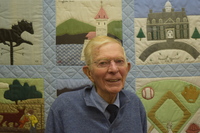
 Dr. Herbert J. Marx is a retired cardiologist from Cooperstown, New York. Born in Queens, New York, he attended school there until moving to Troy, New York to attend college at Rensselaer Polytechnic Institute where he studied electrical engineering. Following that he attended medical school at Columbia University. He spent time training and working at the University of Washington in Seattle, University of California in San Francisco, and the University of Rochester before moving to Cooperstown in 1971 to begin work at Bassett Hospital. He worked at Bassett Hospital in Cooperstown until his retirement in the 1990s. Today he continues to teach medical residents at Bassett how to interpret electrocardiograms.
In this interview Dr. Marx recalls his academic trajectory and talks at length about his decision to change career paths in order to become a cardiologist. Some of the topics discussed were his time growing up in New York City; his first job after college with a company working on air reconnaissance electronic equipment; his time as a medical student, resident, cardiologist and teacher; and memories of his time in Cooperstown.
I interviewed Dr. Marx at the First Presbyterian Church of Cooperstown where he is an active member of the congregation, although this part of his life was not discussed in the interview. His recollections were focused on his early life and career as well as reflections on his time at Bassett Hospital in Cooperstown, where he helped start the formal Cardiology Program, and advancements in his profession.
The transcript may very slightly from the audio. Some words may be added, adjusted, or removed, but this is solely for clarity when reading the transcript. Otherwise the transcript is not altered. I have not adjusted grammar that would alter Dr. Marx's voice, but have made some amendments, again, for clarity.
-
Maureen Kuhn, November 6, 2019 (video)
Maureen Kuhn is a general practitioner in Cherry Valley, New York. Kuhn was born in Mount Vernon, New York on April 16th, 1956. She became interested in medicine at an early age by taking care of her siblings. She wanted to do something with her life that allowed her to take care of people and help them with their health.
Kuhn has been working in the area for 37 years and is fond of working in a small community. Even though there have been changes to the medical field during her career, she still tries to emphasize the importance of listening to her patients and building real relationships with them. She also enjoys helping her patients adjust to diversity in the community. As a member of the LGBTQ+ community she was met with a lot of questions and concerns from conservative patients and she helped them adjust to something new. Kuhn is keenly aware of the changes that are happening to the medical field because of technological advances and new research. The improvements with surgery and record keeping come with their own new challenges and complicated relationships with drug and insurance companies.
Outside the office she enjoys a lot of activities that the area has to offer. Kuhn and her wife are both very active people and enjoy skiing and playing golf. They often spend time with friends dining at local restaurants and listening to music. They also enjoy traveling and have future aspirations to travel Europe and explore the United States more. They have already visited Ireland and Paris together, and have taken a Mediterranean cruise.
-
 Maureen Kuhn, November 6, 2019
 Maureen Kuhn is a general practitioner in Cherry Valley, New York. Kuhn was born in Mount Vernon, New York on April 16th, 1956. She became interested in medicine at an early age by taking care of her siblings. She wanted to do something with her life that allowed her to take care of people and help them with their health.
Kuhn has been working in the area for 37 years and is fond of working in a small community. Even though there have been changes to the medical field during her career, she still tries to emphasize the importance of listening to her patients and building real relationships with them. She also enjoys helping her patients adjust to diversity in the community. As a member of the LGBTQ+ community she was met with a lot of questions and concerns from conservative patients and she helped them adjust to something new. Kuhn is keenly aware of the changes that are happening to the medical field because of technological advances and new research. The improvements with surgery and record keeping come with their own new challenges and complicated relationships with drug and insurance companies.
Outside the office she enjoys a lot of activities that the area has to offer. Kuhn and her wife are both very active people and enjoy skiing and playing golf. They often spend time with friends dining at local restaurants and listening to music. They also enjoy traveling and have future aspirations to travel Europe and explore the United States more. They have already visited Ireland and Paris together, and have taken a Mediterranean cruise.
-
Christopher Kelly, November 07, 2019 (video)
Christopher Kelly (Chris) has spent the majority of his life in upstate New York. A graduate of New Hartford High School and then Syracuse University, Chris is the retired owner and vice president of Jay-K Independent Lumber, a three-generation family-owned local business in Utica, New York.
With his wife Virginia, he raised his family in the town of Holland Patent, where he restored his family home, one of the four stone churches on the village green. Chris has always lived an active life, and retirement has found him volunteering for a number of organizations. He has served as V.P of the Trenton Falls Association, Secretary of the West Canada Creek Riverkeepers, Chairman of the Holland Patent Planning Board, and as a Trustee of Utica College.
Upon retirement Christopher's attention turned toward restoration and preservation of the Wethersfield Stone One-Room Schoolhouse in the Town of Trenton. He became President of the Wethersfield Historical Preservation Society, overseeing the full restoration of the Wethersfield Stone Schoolhouse.
Through the years they have been able to get the property listed on the National Register of Historic Places, find funding through grants, and gather the community in preserving local history. He speaks in great detail about the process of reconstruction and how the community came together in the preservation of the space. A local, he is very aware of the history of Trenton. Though he believes he is not nearly as informed as his colleagues, I found him to be quite insightful.
Chris speaks with a colloquial Mohawk Valley accent that has been slightly edited for clarity's sake. In some moments of dialogue through his storytelling, his inflections become animated and I encourage listeners to consult the audio to understand the full breadth of Chris's knowledge.