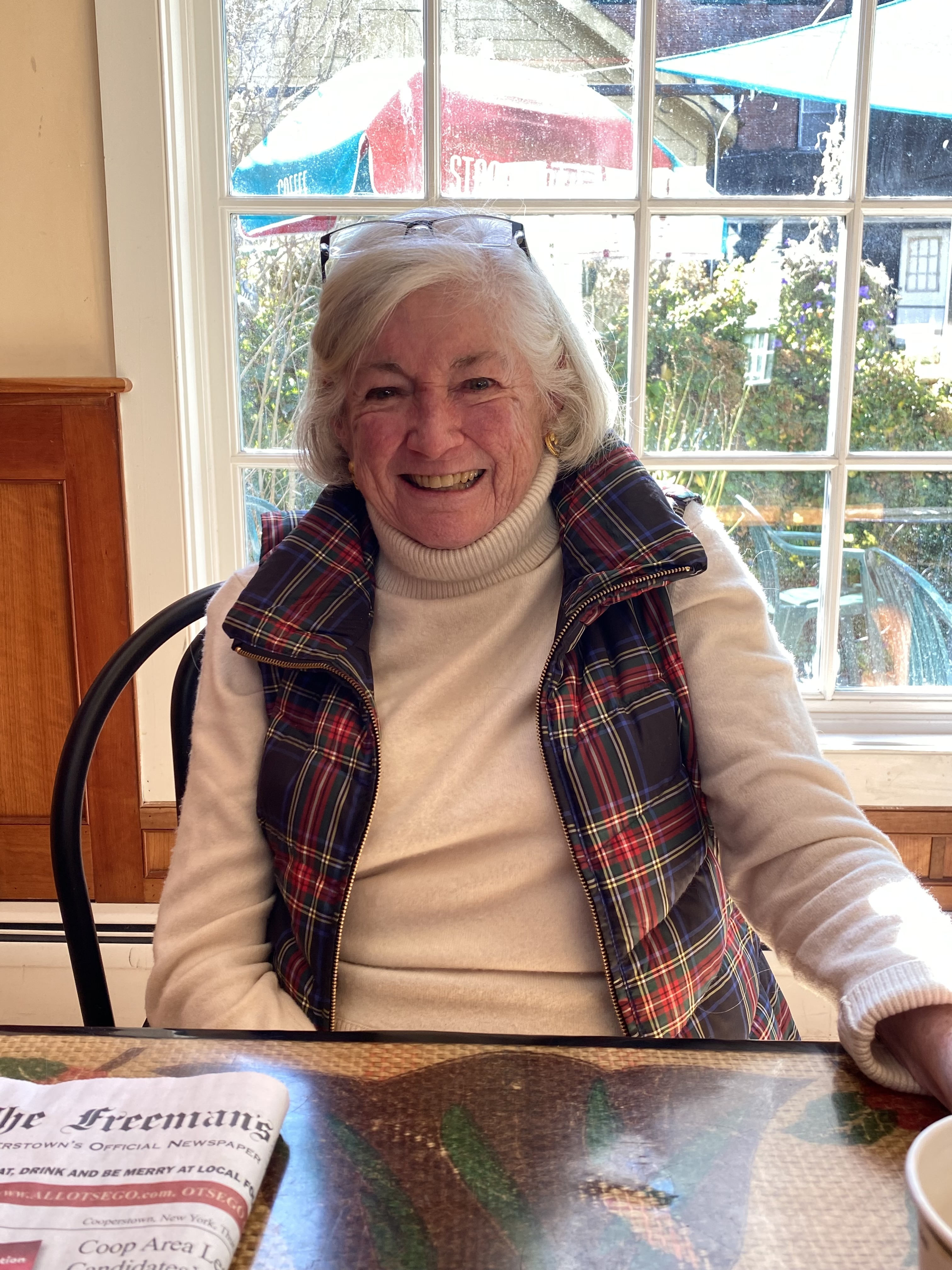
-
Title
-
Barbara Pope, November 6, 2025
-
interviewee
-
Barbara Pope
-
interviewer
-
Claire Knowlton
-
Date
-
2025-11-06
-
Subject
-
Affordable Housing
-
Aging Population
-
Army
-
Climate Change
-
Community Supper
-
Cooperstown, NY
-
COVID-19
-
Farmers' Market
-
Fireman's Carnivals
-
Food Pantry
-
Glimmerglass Opera
-
Lockdown
-
Navy
-
Otsego 2000
-
Otsego County
-
Quarantine
-
SNAP Benefits
-
Speculation Building
-
Spec Houses
-
Tourism
-
Veterinarian
-
Volunteer Fire Department
-
Washington, D.C.
-
Description
-
Barbara McEwan Pope is a long-term resident of Cooperstown, New York, with family roots in the village stretching back several generations. Pope was born in Sandy Spring, Maryland, in 1942. Although she spent her childhood primarily in Washington, D.C., she spent her summers in Cooperstown visiting her grandparents, forming an enduring attachment to the community. After spending much of her adult life relocating frequently as part of her first husband’s military career, she settled permanently in Cooperstown more than thirty years ago. Her memories connect mid-20th-century village life, square dances, fireman’s carnivals, and small family-owned shops to the present-day realities of tourism, development pressures, and environmental change.
The interview provides a broad view of social and cultural life in Cooperstown from the 1940s through the early 21st century. Historically, this period includes the post-war transformation of rural communities, the rise of heritage tourism around the National Baseball Hall of Fame, changes in local institutions such as Bassett hospital, and the increasing economic challenges facing Otsego County. The narrator also discusses more recent issues, including the effects of climate change on Otsego Lake, the growing need for affordable housing, and the local experience of the COVID-19 pandemic.
I conducted the interview at Mrs. Pope’s home in Cooperstown on November 6, 2025, as part of the Cooperstown Graduate Program’s Research and Fieldwork course. The setting was informal and conversational, and the interview followed the format of the program’s oral history project. In preparing the transcript, I also followed the program’s oral history transcription procedure. Speakers are identified by initials, and time markers indicate the progression of the conversation. Nonverbal actions, such as laughter or gestures, are recorded in brackets. Brief clarifications have been added in brackets when needed for clarity, such as providing exact dates when the narrator used approximate ones. I did not significantly alter the narrator’s wording, but like most oral history transcripts, it is not a verbatim reproduction of every pause, filler word, or inflection. Researchers interested in nuances of tone or delivery should consult the audio recording.
-
Time Summary
-
Track 1, 0:00 – Family Background & Early Life
-
Track 1, 4:41 – Places & Community Spaces
-
Track 1, 5:22 – How Cooperstown Has Changed Over Time
-
Track 1, 7:22 – Local Businesses (Past vs. Present)
-
Track 1, 10:16 – Family Generations & Connection to Cooperstown
-
Track 1, 11:59 – COVID-19 Pandemic in Cooperstown
-
Track 1, 13:34 – Community Response to Economic/Social Needs
-
Track 1, 14:43 – Cooperstown & Environmental Relationship
-
Track 1, 21:18 – Life Differences: City vs. Cooperstown
-
Track 1, 21:49 – Marriage, Divorce & Staying in Cooperstown
-
Track 1, 24:35 – Cultural Experiences Abroad
-
Track 1, 28:45 – Daily Life in Cooperstown
-
Track 1, 29:31 – Parents’ Move to Cooperstown
-
Track 2, 01:22 – Hopes for Cooperstown’s Future
-
Track 2, 02:17 – Favorite Community Events
-
Track 2, 04:42 – Childhood Perspective
-
Track 2, 05:08 – Words to Describe Cooperstown
-
Track 2, 05:49 – Life Lessons from Cooperstown
-
Track 2, 06:55 – Closing Remarks
-
Creator
-
Claire Knowlton
-
Publisher
-
Cooperstown Graduate Program, State University of New York at Oneonta
-
Rights
-
Cooperstown Graduate Association, Cooperstown, NY
-
Language
-
en-US