-
Title
-
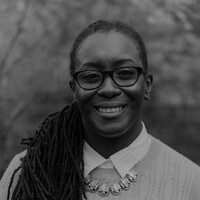
Sylvea Hollis, November 11, 2020
-
interviewee
-
Sylvea Hollis
-
interviewer
-
Jimmy Nunn Jr.
-
Date
-
2020-11-11
-
Subject
-
African American History
-
Birmingham Civil Rights Institute
-
Cooperstown
-
Clark Sports Center
-
Fenimore Art Museum
-
LGBTQ+ History
-
Description
-
Sylvea Hollis was raised in Birmingham, AL. After high school, she remained in the South and attended the University of Montevallo where she earned a bachelor's degree in History. In 2004, Hollis enrolled in the Cooperstown Graduate Program in pursuit of a career working in museums and moved to New York. Post-graduate school, she returned home to work for the Birmingham Civil Rights Institute, where years earlier she developed her love for museum work as an intern. In 2008, after working several jobs in the museum field, Hollis decided to recommence her academic journey and started toward a doctoral degree at the University of Iowa. In 2020, Dr. Hollis works full time as an Assistant Professor at the Montgomery College in Rockville, Maryland.
During her interview, Sylvea looks back on her time as a graduate student in Cooperstown. Her recollections range from her first encounters with snow to the tragic passing of former Professor Langdon Wright during her first week of classes. Her accounts are honest, heartbreaking, and extremely funny at times. Throughout the interview, it is apparent that her time in Cooperstown was important to her personal and professional development and has had a positive impact on her life beyond the village.
This interview occurred during the Covid-19 pandemic, and, as a result, I interviewed Dr. Hollis remotely via Zoom. Hollis was at her home in Harrington, VA. She is in the midst of culminating the fall semester at Montgomery College.
I have placed in quotations conversations between Dr. Hollis and those who she came in contact with during her time in Cooperstown. These are all from the memory of Hollis and are not direct quotes. I have also placed in quotations the thoughts she remembers having. Although Hollis grew up in the deep South, her accent is mild. Yet, she does speak quickly with a modest southern drawl. It is impossible to reproduce Hollis's dialect, as well as the dynamism and energy with which she speaks, and therefore researchers are encouraged to consult the audio recordings.
-
Transcription
-
SH = Sylvea Hollis
JN = Jimmy Nunn Jr.
[START OF TRACK 1, 0:00]
JN:
This is Jimmy Nunn Jr. interviewing Sylvea Hollis remotely on the Zoom videoconference platform. Ms. Hollis is at her home in Harrington, Virginia and I am at my home in Cooperstown, New York. It is Wednesday, November 11, 2020 and this interview is being conducted for the Cooperstown Graduate Program's oral history project, which is part of the Research and Fieldwork course. Alright. Ms. Hollis, can you tell me a bit about your family?
SH:
I'm from originally Birmingham, Alabama and most of my family is from Alabama as well. My mother was born and raised there. My father, their family came there by way of South Carolina. A small town. We know it as Gaffney. We also trace a little bit further back beyond that, but they came from South Carolina. My dad's side of the family is from Birmingham. My dad's family is older than the city of Birmingham. The city was founded in 1871. Very likely, we descended from the Roebuck plantation in the city and so the same can be said for both sides of his family. My mom's mom, I'm pretty sure they came from the black belt of Alabama. But I'm an Alabama person [laughs]. Most of the history I know is from there and of course, through family reunions, we know larger extended relatives in South Carolina.
JN:
Awesome. How did you become interested in history?
SH:
You know, Birmingham is a civil rights city. I didn't grow up having that opportunity to learn about it in schools because Alabama, when I was growing up, didn't really prioritize that history. But my family talked about it a lot, so I grew up just deeply in love with hearing family stories and memories. By the time I was in high school, college, the Birmingham Civil Rights Institute opened and it was one of the first physical places in the state where I learned about all kind of civil rights history. I had gone to Tuskegee to visit friends, like my family members that went down there and saw Booker T. Washington's house and the Institute. That was probably one of the first historic sites that I visited that was preserved. I definitely think that listening to my family and those kinds of early memories of going to the Civil Rights Institute and surrounding areas is what made it such an interesting area for me.
JN:
How did you end up working at the Civil Rights Institute?
SH:
When I was in college, I attended a small, private liberal arts called The University of Montevallo. That college was associated with a consortium of five colleges that were a part of the metropolitan Birmingham called BAC, Birmingham Area Consortium Higher Education. At BAC, we would do workshops around race and equity. The whole idea of it was us, as college students, wanting to make sure that we didn't repeat the errors of the past. A lot of people in our city had created a really infamous name for Birmingham because of the racism there. We were a group of folks that were very diverse in all of the possible ways you could imagine who would do workshops for college students to talk about what happened here in this city. Because when you leave the city, if you don't know what happened, people are very happy to tell you [laughs]. Oh wow, I can't tell you how many times people [would] say, “Oh, you're from Birmingham? That place must have been horrible for you as a black person.” You know, that kind of stuff. We wanted to make sure that the local students knew the history, but we also wanted to make sure that we didn't repeat that history. So we did workshops and the location was at the Civil Rights Institute. My last semester of college, after having worked with BAC for two years, I asked the curator if I could intern for him because I didn't have any more classes I needed to take. I didn't want to take classes for the sake of taking classes. It was a small liberal arts college. The curriculum wasn't that robust and I was ready to figure out something else that I could do with a history degree. So I asked him, he said yes, and so I did the thing that most people do in the field. I went into my career path with an unpaid internship, but it was a remarkable experience [that] changed my life. At the time I thought I wanted to go into law. I was a pre-law student. [I] wanted to learn civil rights history through the museum because I thought that was going to be my path, but I fell in love with it and didn't look back.
JN:
That's amazing. What drew you to the Cooperstown Graduate Program?
SH:
So when I was at the Civil Rights Institute, when I realized that I wanted to pursue museums and public history as a profession, I started talking to people. The director of my museum, the president and CEO at the museum's name was Dr. Lawrence Pijeaux. Dr. Pijeaux told me about Cooperstown. He said if you want to do museums, you need to go to the premier program to do graduate study in the field and that's Cooperstown. And I also, at the time, was working very closely with the head of education and the curator at the museum, Ahmad Ward, who was an alumnus of Hampton's museum studies program. I remember being intrigued by both programs to be honest. [At Hampton], I don't know what happened. For a period of time, they had a robust museum studies program. But at the time that I was applying, I won't say [it was] defunct, but they weren't accepting students at the time. There wasn't a way for me to even apply. My plan had been to apply to Hampton and Cooperstown. I had a phone conversation with Dr. Pijeaux who told me about Cooperstown. I called and I remember calling the direct number and Dr. Sorin picked up [chuckles] and just started asking me a few questions. I just was saying, I'm curious about your program and I didn't know I was talking to the director, like the director. I don't know who I thought I was talking to, but she was just so friendly, so kind. I remember hanging up and thinking “I hope I get in there” or “I hope I make it to interview weekend” because she talked about interview weekend. The conversation with her definitely made me want to come to Cooperstown. I wanted to meet that woman. I wanted to learn from her, you know.
JN:
How was your interview weekend?
SH:
It was cold! [laughs] Coming up from Alabama, I remember there was a lot of snow on the ground. It wasn't snowing when I was there. I don't remember seeing any snow when I was there, but it was a lot of snow on the ground. A lot of ice. That was a new experience for me. I had never lived in a place where it was so cold that the snow stayed. I realize that that's not foreign for a lot of people, but it was quite foreign for me and that's a memory I have. Like wow, there's snow on the ground still. It's spring and snow. I also remember how rural it was like, the drive from the airport. Coming into Albany airport. I think the program connected via telephone tree [with] similar students that were coming in at the same time. I ended up riding into the village with Valerie Aquila. I had one ride in with Valerie and I had a ride out with Katherine, so I don't remember which one. Katherine Chaison. We split the cost of the rental car. The further away we got from Albany, I had looked at it on the map, but just physically feeling how further and further away. It's like an hour and a half ride. Nowadays, that's not that long, but back in the day the cell phone towers weren't as robust. Once we got to the Catskills, there were whole sections where you couldn't call. You couldn't use your phone. It made it feel even further than it actually and honestly was. As well as the ice plus how steep the mountains were. It created a kind of [thought] in my mind like, “Wow, this is far.” You get there and it's quaint. It's quiet. I remember coming around the bend and seeing that lake for the first time, just bits of it. There's various parts of the trees where it opens up. It's gorgeous. I had never in my life seen such a stunning landscape and I remember being in awe of that. Every time we talked about the work, I just remember feeling fired up, very excited, very intrigued. I don't remember what we called it, but the place where [they] had basically like a teaching collection. It's kind of like a stable where you can see all of the various collections, the material culture and artifacts study. Walking through there, I was like wow. Going to the library and learning that we get our own carrel. It was just the whole experience. Thinking about studying and taking classes off of basically a lake house. I'll never forget meeting Langdon Wright there. He walked up to me. He was a professor of social history at the time. He walked up to me and didn't say anything, but he had this little key chain in his hand and showed it to me. It was from a barbecue spot in Alabama. I couldn't have felt any further from home, but here he is. I can't remember if it was Dreamland or Rib-it-up. I think it was Dreamland out of Tuscaloosa. He had his key chain and was just like, “Yeah, my wife and I travel around on break and test out different barbecue.” I remember thinking, “This guy is interesting.” It was an interesting weekend. When I say interesting, that's a vague word. It was full. I was full. I was excited. I was intrigued. I was anxious, but mostly excited.
JN:
So once you settled in and that excitement continued, what was your life like in the village?
SH:
I want to acknowledge I'm thinking backwards, right. [laughs] So, there's a strong possibility that I'm not summarizing how my life was then. But how I remember it now was three things. Work. I worked a lot. School work I did a lot. I thought a lot. I worked on my work a lot. I wasn't the most proficient writer and so I was always trying to work on my writing. But I also remember feeling like my writing wasn't ever good enough. So, it was kind of a cycle in that kind of a way. I was very gifted in terms of thinking and analyzing certain questions and texts. But I always was working on trying to make sure that my ideas got over in a way that they could be understood fully. We also worked a lot on group projects. So work, I remember a lot and I worked out a lot. I joined the Clark [Sports] Center. That was a saving grace because, when I wasn't working, I was working out. I mean, I even got a job there [laughs]. Like who is this person hanging around this gym. Just give her a uniform [laughter continues]. I played basketball; I joined the women's league. I was playing squash. I was playing racquetball. I was doing weight training. It was a great stress reliever and it also was a way for me to disconnect from school. It's one thing to be in a very small community in school, but it's another thing to do that at the prime of your life. There was so much of me I was learning about at the same time when I was living in this very small place that gave me limited space to learn about myself. And so in hindsight, I can say I worked out a ton because that was a way I got to work on myself. It was a way I got to connect with the community. I made teammates. Not just, “Oh I think that person goes to the program.” I became friends with people in the community. I got to know their children. On Saturday morning, I used to do the tallies for the basketball games for the kids. You get to know the people in the Clark Sports Center. Work, working out and then probably the third thing about my life was just angst man. I was in my twenties. I found myself in those two years looking around at my friends that were not in the village and being anxious about at times seeing people getting married or have kids. It's just two years. It's literally just two years. But the angst of the twenties had me thinking that somehow the two-year commitment I made to myself was cutting two years of experience from my life. It's not like I was dating in the village. It's not like I was getting to hang out socially in the village beyond my classmates. At the time, the program was much smaller. Twelve of us in my cohort and there were fifteen in the year above and then fifteen in the year under. If all of those folks are your best friends, twenty-seven best friends, great! But if you have people who people who don't know what it is to be black, to be queer, to be southern, to be Christian, doesn't mean you can't be friends with them. But it means you have to communicate a lot to be understood. Some of the things you naturally say are just foreign to your friends. That third part was just kind of angst over feeling disconnected.
JN:
Wow. Can you talk a little bit more about your experience as a black woman, a queer black woman in Cooperstown?
SH:
I think the best way I can put it is my existence as a black queer woman was nonexistent. [laughs] It was nonexistent. I did my best to be all three things. I wasn't out to my classmates. I was honestly coming out to myself. I knew I was attracted to women. I didn't know I was not attracted to men yet. I literally put myself on a shelf. I wasn't in a physical geographic place. And it's not to say New York didn't exist. Time to time, we'd take the train and go down state. Even Gretchen had some projects she would work on and sometimes she would ask me if I wanted to come. I don't care how much work I had to do. I would bring my work with me sometimes on the train. I'm just working. You just can't turn down those kinds of opportunities to go to the city. It's not to say that I didn't leave. Maybe it's easier now, [maybe not] because of corona virus. At the time, the cell phone tower issue plus me not being that experienced driving through snowy Catskills in the wintertime. I'd imagined myself sometimes going to Ithaca because Cornell was not that far away relatively. I never drove to Ithaca. It's a college town. It's like brilliant beautiful people. Albany and New York were the places I, for the most part, longed for seeing a bit more of. Those identities didn't mix much. There was internet. There's always been internet. I remember trying to go on internet dates and it wasn't a good zone for my tags [laughs]. We'll say that.
JN:
Sure. Can you tell me about a class you took at CGP?
SH:
I loved the idea of Methods of Artifact Study. I love the idea of that. I still use it and I use it as a teacher. I have primary source labs with my students weekly. Whereas with them, we're working on primary sources, a lot of them being documents. I always, no matter what week we're teaching, draw on artifacts. I talk to them about the material culture behind the artifact. We talk about provenance. We talk about the accessioning process. I talk to them about how to read the accession numbers, what they mean, what they represent. And for my field, I'm teaching African American history. I often times talk about how rare it is to have African American history read through the lens of material culture. How the social history movement has transformed our ability to appreciate those objects for the integrity of which they've always had. The National Museum of African American History and Culture, if you look at those accession numbers, most of them are accessioning those objects [in] 2010, 2012. Some of those things came from the National Museum of American History and other parts of the Smithsonian, but many of them did not. I think Methods of Artifact Study class was phenomenal for me because it taught me about the nomenclature, ways of understanding, what the materials are that create objects, how they're made, the people behind the production, mass consumption, consumer markets versus these rare commodities. All of that. And now I also get to use that to teach African American history. But I couldn't do it the way I'm doing it if I didn't understand that as a foundation.
JN:
So what were some of your other interests while you were in grad school?
SH:
Like academic?
JN:
Sure.
SH:
I loved history. Loved it. So Lanny [Wright], the guy I told you a little bit about at the beginning. I met him on my interview weekend. He taught our research seminar for the first semester. I can't remember what we call it. Before you start taking your core classes, you have to do an intensive seminar on how to write, how to research, what this is going to look like. All of that. So he taught that for us on research. It was like a week or two weeks. I think it was just a week. And I'll never forget his example of what is a grammatically correct and perfect topic sentence. Meaning the first sentence of each paragraph tells you what the paragraph is going to be about. And he said a perfect topic sentence is “Woodrow Wilson was a racist prig.” [laughs] He went through and he was like, “This is perfect.” It's got a subject. It describes what kind of person he was and explains the presidency. You know like President Woodrow Wilson was a racist prig. I just died. I thought it was the most hilarious thing ever. He had a great sense of humor. I couldn't wait to take his social history classes. At the end of our first week, we were supposed to have a major party. Everyone does it the Friday before you transition into your classes and it was September 10, 2004. I'd had problems with my check for the university. I don't remember. I was supposed to get some check and I remember having problems. That was the first day because we had so much stuff scheduled. That was the first day I could go talk to Oneonta to say, “Hey, where's my money, what's going on?” So I drove to Oneonta, met with them about the check, got that cleared up. I'm driving back the same route that I took going out and I saw a crazy detour. It's not that many routes to get from Cooperstown to Oneonta. I saw an insane detour and I'm new there. I don't know. I'm new driving around Upstate New York and now you're sending me all these other places. Everywhere I tried to go as a detour was taken. It was like ambulances, cops, everything. Like all over the place. Cars for roads. As I'm driving back, I kid you not, I don't know why I thought, “This is a major car accident and we lost someone from CGP.” I thought that as I'm driving back. Also, I'm kind of activated because I just [lost] my grandmother before I moved up. So like my grandmother died two weeks before I move up, so I'm just like anxious about death in general. Somehow, I'm just like, “We lost someone.” [laughs] It's not funny. I was uncomfortable, you know. We lost someone. So I'm driving and all of a sudden I'm crying because I am convinced that we lost someone and now I'm trying to figure out who we lost, right? I'm literally driving from Oneonta to the party. So I get to the party and as I'm walking up, three of my classmates meet me at my car and they look very serious and it becomes apparent to me. The thing, my angst, my fear. It wasn't even knowing. It was a deep not knowing and fear. They told me there was a devastating, horrible car accident. I don't remember if it was a drunk driver or someone on drugs, but somebody crossed over the median and hit Lanny head on with his wife in the car. His wife, I had met her before too. She was an amazing person. She had some kind of a neurological, chronic disorder that was debilitating. It's kind of like MS, but it was worse than MS. He was taking her back and forth to the hospital all the time for treatments and so she survived and he died on contact. I know that's a long answer, but it was devastating. I often times think that my favorite class at Cooperstown would have been the class I didn't get to take. It would have been Lanny. Everything about the guy, spirit and energy. I only got to hang out with him like three times one on one. The one time with the interview weekend. Every now and then, we did these one on ones in the course of that one week when we were studying, when we were learning how to do research. And I'd also walked up to him within my first week. I went into his office and told him, “I don't know what I want to do for my thesis yet, but I know I want you to help me as a researcher.” And I was telling him, “I think I might do something with African Americans in Cooperstown.” It's like I had those three experiences with him and that's it. He was a Cornell Ph.D., social history scholar and I often times think about what it would've been like to study history under him.
JN:
That's a big impact for someone you briefly met.
SH:
And also you're young. The longer you live, you realize how rare those kinds of people are. He was rare. It was a brief interaction. I've met a lot of people in schools, on campuses. I've been in a lot of classes and his passion for history was just rare. It's rare to see.
JN:
How was the atmosphere in the program following his death?
SH:
I definitely think we came together. We weren't apart. We just didn't know each other; you know what I mean? So I feel like the experience forged us as a class. As a cohort, it forged us. Also as first and second years, because the second years had had him for a year. We got to learn about him also through them. I think it made that time period there very distinct because we had to lean on each other a lot. One thing CGP did was they created that Langdon Wright fund which, when I have extra coin, I always try to contribute to. That and I also am passionate about the rural-urban partnership. I consider those different ways to give back to the kind of person he was.
JN:
Can you talk a little more about the rural partnership?
SH:
Rural Urban Partnership. It was a funded project for students that had internships that wanted to go to urban places or rural places. I don't remember the criteria. It might still exist. It was a funding source for students. Let's say you get an internship and it's not paid because a lot of museum internships are not paid. You don't want to turn down an opportunity to be able to do this amazing thing that's not paid. So CGP would help supplement the cost of the experience so that you could say yes to some of these institutions that get you a lot of things. Those institutions get you robust experience in a field at a scale that you would like to have. They also get you access within the larger network of the field, which is really important. It gets you an opportunity to experience a different environment. At Cooperstown, we learn how to do museum work within a rural landscape. But learning how to do the work within an urban landscape is equally as important. Thinking about community engagement, stakeholders and all of that kind of stuff, curatorial practices. Who are your audiences? The audiences look vastly different in those different places.
JN:
Can you talk about a project or projects you worked on during your time at CGP?
SH:
The one I think I'm the most proud of is [that] Tobi Voigt and I co-curated and did a whole bunch of other stuff for the Cooperstown Volunteer Fire Department. For a fire department, they had a pretty impressive collection of materials. They're ungodly old, like very old. I remember they had things going all the way back to the 19th century. We created an exhibition to tell their history, to introduce their history to the local village incase people weren't familiar with it. In the process, we also worked with, I believe it was, C.R Jones. I might be wrong about that though. I can't remember. There was a conservator out of [the] Fenimore Art Museum who trained us how to conserve some of the objects that needed the most TLC. He trained us and we did the rest. He would do a sample, like “This is how you work with this.” There was a brass helmet with different leather that was breaking down and buckling with these big plumes. He showed us how to work on different samples and then we would do the rest of the preservation work. So we interviewed the firemen. We talked to community members. We created the script for the exhibit. We manufactured, designed the exhibit, painted. We installed all of it and had a showcase for the opening exhibition event for the community. I was incredibly proud of that. A lot of the firemen had also served September 11th and had their own really interesting stories going down there. In the event, they made Tobi and I honorary firemen and gave us Cooperstown firemen pins. We got a whole suited and booted outfit [laughs]. But also want to say, yo, group projects can be interesting. They require equal commitment from all parties. Projects that I was excited about that I cannot say that everybody was equally as excited about were things like there was a feasibility study on a Frederick Douglass [museum] in Rochester, [New York]. The Strong Museum out of Rochester had curated an impressive exhibit on Frederick Douglass, pulling together a group of collections from across the city that were from Frederick Douglass. He lived there. From his family, from networks, from his friends, people had their own collections that were tied to his story. As they were getting ready to pull the exhibit apart, Gretchen had talked to the Strong about the possibility of those collections living together in a more permanent environment. So maybe somewhere in Rochester, there could be a venue to tell Frederick Douglas's story because his house is preserved in [Washington], D.C. He has a couple sites in D.C., but Rochester was a stronghold for abolition and for the bulk of his early activism. She was like, “What happens if you have a group and you do a feasibility study? You work with the Rochester folks to see if it's possible.” Remarkable project, very thoughtful idea. I think that everybody wasn't as excited. It was a great idea, but what I learned was that there's ways that I think about history that comes with a kind of reverence around topics related to African American history that not everybody has. And I don't mean that as a knock. I just mean it pragmatically. When you work in teams, you see how there's differences of energy. Coming from Alabama, I remember having all kinds of feelings about that. But the older that I've gotten and I think this recent election has shown us that there's not an equal lens of energy for all versions of history and pragmatically so. It is what it is. I'm incredibly grateful for that opportunity, but it just is what it is. We had several other projects.
JN:
Were you able to see that project through or did it stop?
SH:
So ultimately, the decision of the team was that Rochester wasn't a feasible city for the project. In part because, through the economic lens, Kodak was folding and xyz. I saw ways to see it as feasible, but you're on a team and if the majority of the team doesn't see it as feasible and if the majority of the team are more likely to understand Rochester than I would. I wouldn't want to live in Rochester. If the majority of the people are not seeing it as feasible, then it's not worth it for me to push it as feasible if I know I would not want to live in Rochester. It requires kind of a local audience. Who knows? There's a lot of ways. I think it's interesting to consider what happened in terms of interpretation during the phase before digital humanities became more expansive as a concept. There's all kinds of ways now to do these kinds of work that, when we were studying, didn't exist professionally. Technology had not evolved yet to the way that it has now. I think some of that is there too. I feel like a dinosaur sometimes.
JN:
I understand that. Can you talk a little bit about your thesis research on African American workers in Cooperstown?
SH:
Yeah. We did a tour and I don't mean to deadname this person or misgender this person. I haven't met them since their transition, but I believe at the time their name was Tom Heitz. There was Tom Heitz and Hugh MacDougall, but I believe their name was Tom Heitzs. They gave a tour of Christ Church cemetery for us because they were giving us a tour of the village. There were three tombstones or headstones and [they] said we know there are African Americans in this village. We know that. You may not see that many now, but there were some. This person showed the tombstones. I remember thinking, “Oh wow, that's interesting. Huh! Wonder what we know about them.” I immediately started thinking, “I don't know what I want to do with this fact, but I want to know these folks. These folks in this cemetery, I want to know. I want to study them.” That became my project and like I told you, I told Lanny about it. I went to the library, the New York [State] Historical Association. Wayne [Wright] was the archivist and JoAnna [VanVraknken], I think, was another cataloguer and there's another woman I can't remember. Those three people became my best friends [laughs]. I hung out there all the time. I just dug and dug and dug and dug. Also, the Fenimore Art Museum. Gretchen helped me learn about this because I wouldn't have known how to search for it. But the Smith and Telfer collections at the Fenimore Art Museum had a pretty impressive file of African Americans who lived in Cooperstown in the 19th century. Smith and Telfer studios was a photography studio on Main Street. So she said, “Maybe you want to go check out the Smith and Telfer file.” I'm like, “I don't know what that is.” She was like “Go talk to the Fenimore.” So I go talk to the Fenimore. I think she was a curator. I'm pretty sure she was a curator. I go and talk to her and she gave me just open access. It's not as if I was allowed to just run amuck in there. As long as I reached out to her for research visits, she just let me come in and just dive into the photographs. When I struggled the most in terms of trying to be able to connect some of the stories and follow some of the people, I would go to the Fenimore Art Museum and sit with the Smith and Telfer collection and just look at these pictures. Gradually, I became able to identify some of the pictures with other types of sources or the names were on the back and it took a while for me to figure, “Oh this is this. Oh, this is what this name means.” My master's thesis was on African Americans in Cooperstown and it would not have been possible without the entire village because it took the whole village. Gretchen with her leads on where the archival sources were, Wayne with his understanding of the NYSHA Library. But also, I was living, eating, and breathing in there. There were whole times when I might ask him, do you think that this collection? I would go through the whole card catalogue. This is how old the thing is. We had it on a computer to. There wasn't a line for the computers to access those. So sometimes I would just go through the card catalogues. I remember going through the card catalogues and just looking at names for the collections and thinking “Hmm. I wonder if it's in this.” He had cards for the NYSHA archives and I'd say Wayne, “Do you think this has black people in it?” [laughs] I would say that kind of stuff and he'd say “I don't know Sylvea. Listen, let me take you over there. You got fifteen minutes.” He'd go upstairs, pull the file and say “You got fifteen minutes” or “You have thirty minutes.” It just always depended on how busy it was downstairs, but I got into a rhythm. I realized Fridays were dead in the library, so eventually I would just have my little list throughout the week and go to Wayne and say, “I got four collections I want to look at.” [Professor] Chris Sterba came our second year. He was remarkable in helping with my writing because the sources for finding black people in the village were so sparse in the way that I traditionally was used to looking for sources that when I found anything, I was excited about citing those sources in the language of the time period. And the work of a historian isn't just to quote the time period. It's to think about what that means in terms of the time period, to contextualize, to analyze. So I kind of laugh when I think about Sterba reading some of the stuff where I was quoting people from the village that were saying stuff like blackie [laughs]. No, of course I understand blackie is a racist term, but I'm using the term that the people in the village used. I say that to say it took everybody. It's one of the projects that I'm so excited about still. I have since heard from some of the descendants of the village[rs] that lived in the village. They've reached out to me. I've talked to their families. That project was one that intersects in many ways far beyond the village that people can think of. There's black folks in Cooperstown that are connected to Princeton University's story. There's black folks in Cooperstown that are connected to Panama and the building of the Panama Canal. There's black folks in Cooperstown that are connected to the Copperhead story and this kind of Upstate New York white conservatism. It's bananas. It's very fascinating. There's black folks in Cooperstown that are connected to this kind of distinct culture of leisure. White leisure, but black labor in terms of hospitality and tourism. Yeah, no, that's a gift that keeps on giving.
JN:
Were you in contact with some of those descendants while you were doing your research?
SH:
No, they found me later. I published along greatly with Chris Sterba's help. I published in the NYSHA journal [New York History] on the thesis. One of the descendants reached out to me via email and said she found my article. She sent me copies of photographs of her family members. Interestingly enough, they had since left Cooperstown. The family left Cooperstown and settled in Memphis, Tennessee in the early 1900s. Her mother or grandmother was still alive at the time. This is when I was starting in Iowa. I was very excited about it, but I also was starting my Ph.D. program. I was overwhelmed by the impact of that reaching her. I would write back and forth to her via email and stuff, but I also was overwhelmed with all these readings that I had to do for seminars. But I still have the photographs and all of that that she sent.
JN:
Sounds really meaningful.
SH:
Yeah.
JN:
Okay, I have one more question for you, Sylvea. We're almost at our time. I just wanted to ask you how you felt when you left Cooperstown?
SH:
I'd wanted to go from Cooperstown straight to D.C. In my frenzy of finishing, I also really wanted to practice what I learned in the place that I started which was the Civil Rights Institute. I was excited about going back to Birmingham and working at the Birmingham Civil Rights Institute. I wasn't as excited about going back to Birmingham and navigating my sexual identity as a queer, black woman. So, D.C I prioritized because I thought it was the best place for me to be a whole person, a queer person and a museum person. [In] Birmingham, I knew I could be an amazing museum person because the institution was amazing and I couldn't wait to get there for that. But I was very anxious about what the segment of my life that was out would look like at home because there was a lot of homophobia in my family and in that town. I felt kind of severed in ways and also hadn't had a space to navigate that or talk about that really with anybody. So I leaned into my work heavy in Birmingham when I got back down there. I leaned in heavy. It's kind of surreal when I think back to the hours I was pulling and the kind of projects I was doing and all of that kind of stuff. I was definitely excited about getting back to a bigger city and getting back to a more diverse city. I would be lying if I didn't say that there weren't Saturday mornings where I didn't miss being able to go to the gym at Clark and show up at Otsego Lake and watch the mist on the lake and look at the foliage change and even the quiet of the winter. It's kind of crazy. People pick on me all the time. After that, I went to Iowa and it's like “You can't tell you didn't like the cold.” I came to appreciate four seasons because of Cooperstown I think. I think I came to underestimate the cold of the Midwest because of Cooperstown. I was like “I lived in lake effect snow. Oh there's a difference” [laughs]. There's a difference between lake effect snow and that tundra, that constant wind. Both are beautiful in their own seasons and their own places. Leaving Cooperstown was different. It was definitely different.
JN:
Thanks, Sylvea, for joining me today.
-
Coverage
-
Harrington, VA
-
1980-2020
-
Creator
-
Jimmy Nunn Jr.
-
Publisher
-
Cooperstown Graduate Program, State University of New York-College at Oneonta
-
Rights
-
Cooperstown Graduate Association, Cooperstown, NY
-
Format
-
audio/mpeg
-
46 mB
-
image/jpeg
-
1.5 mB
-
Language
-
en-US
-
Type
-
Sound
-
Image
-
Identifier
-
20-013