-
Title
-
Karen Dunlap, November 23, 2015
-
interviewee
-
Karen Dunlap
-
interviewer
-
Leanne Schmadtke
-
Date
-
2015-11-23
-
Subject
-
Cooperstown, NY
-
Schenevus, NY
-
Bassett Hospital
-
Presbyterian Church
-
Monterrey, Mexico
-
Presbytery
-
Description
-
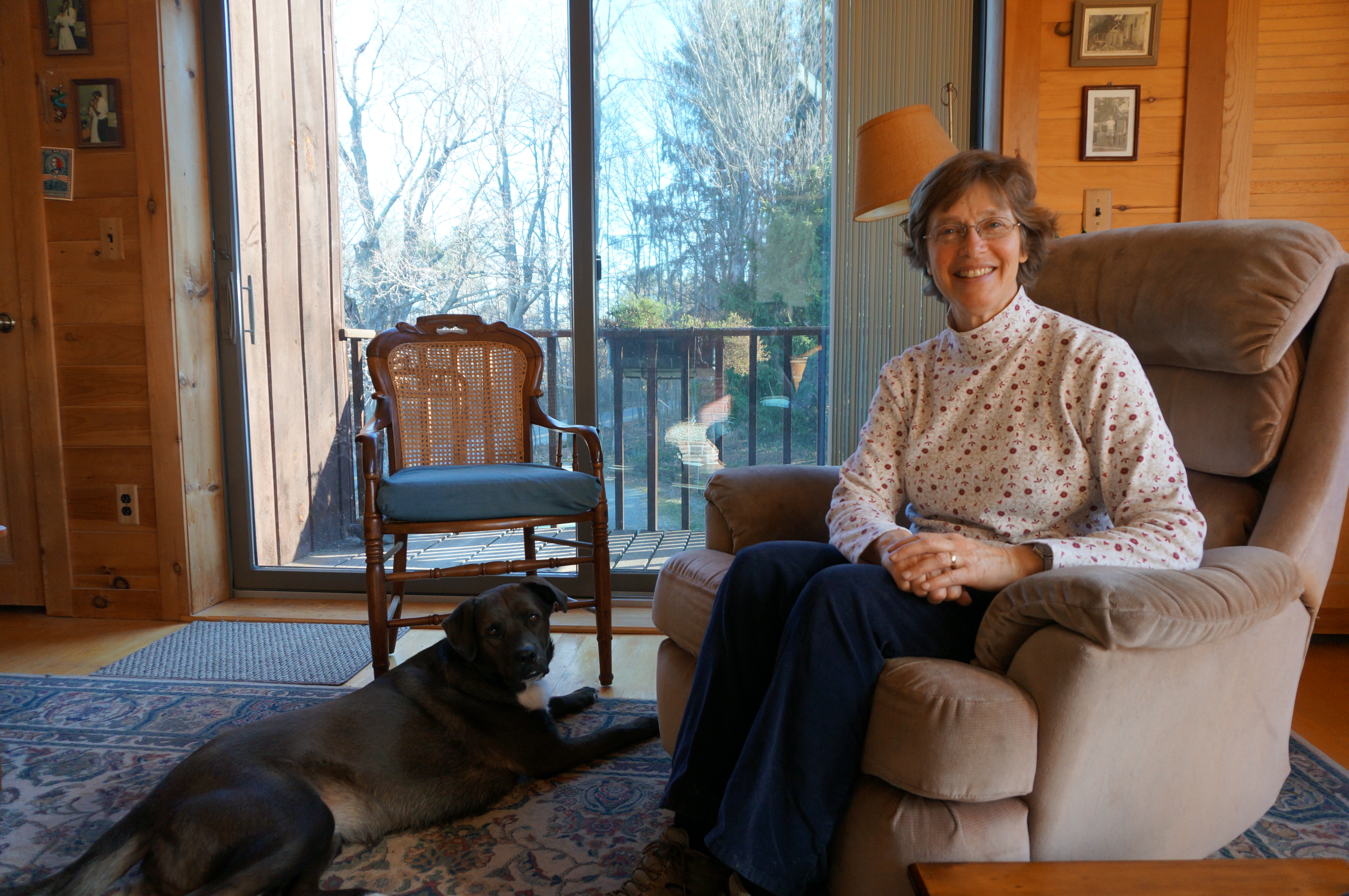
Karen Dunlap is a long-time resident of Cooperstown, New York. Dunlap grew up in Schenevus, New York. Dunlap attended Binghamton University, graduating with a degree in biology. After college, Dunlap worked as a nurses' aide at Mary Imogene Bassett Hospital in Cooperstown. She became a registered nurse while working at Bassett. During that time she met her husband John. The two were married in August of 1983. Dunlap raised her two children, Sarah and Tim. The Dunlaps moved to Mexico for a year and a half in the early 1990's. Within this interview, Dunlap reflects on that move and life when coming back to Cooperstown.
Dunlap is an active member of the First Presbyterian Church of Cooperstown. Her work and faith are an important part of her life. Although she was raised Catholic, Dunlap began attending the Presbyterian Church while dating John. She has been an active member there since her marriage. At the time of the interview Dunlap was a member of the Deacons' board at her church. Near the end of the interview Dunlap reflects on changes in the church and in the world.
The interview is recorded at the Dunlap's home in Richfield Springs. There are a few interruptions and some background noise, as John was being interviewed downstairs by Patricia Norman.
-
Transcription
-
LS = Leanne Schmadtke
KD = Karen Dunlap
[START OF TRACK 1, 0:00]
LS:
This is Leanne Schmadtke interviewing Karen Dunlap at her home in Richfield Springs, New York on Monday, November 23, 2015 for the Cooperstown Graduate Program's oral history project, which is part of the Research and Fieldwork course.
Can you tell me a little bit about where you grew up?
KD:
Yes. I grew up in Schenevus, New York, which is in Otsego County. I was born in 1954. My parents moved there when I was four months old from Duanesburg. I spent all my growing up years outside of Schenevus. We lived on a dairy farm. I went to school in Andrew S. Draper School which is right in Schenevus, we lived six miles out of the village. The school was K through twelve. A very small school.
LS:
What was your schooling like?
KD:
It was, like I said, a small school. My graduating class was thirty-two people and there were some kids in my class that I was with from kindergarten right though graduation that I knew all those years. The teachers were the same for many years. There was one first grade, maybe two, doesn't matter. Like I said, very small school. In high school I had the same math teacher for four years, same science teacher for four years, same social studies, same English, because those folks did nine through twelve.
LS:
Did many people go to college afterwards?
KD:
I think a fair number did go to college although I could not tell you the percentage. I am going to guess half went to college, but I really am just guessing.
LS:
Did you?
KD:
Yes, I went to college. I applied to state schools. I have an older sister who went to Albany State. Although we both graduated at the top of our classes, we were encouraged to go on to college but not to look at private schools at all for financial reasons. I don't really know why but it was assumed that we would go to a state school and I went to SUNY Binghamton.
LS:
What did you study there?
KD:
I started in the nursing program and my mom is a nurse. I had applied to Plattsburg and SUNY Binghamton and Oneonta, which does not have a nursing program but it was a fallback position in case I did not get accepted but I was accepted at every place. I started in nursing in my freshman year but all my best friends were in liberal arts. There was a friend of ours too who was in the nursing program, not a great friend, I kind of foolishly wanted to distance myself from her and be with my other friends. I decided after my freshman year to transfer to straight biology, which I really enjoyed. I graduated with a B.A. in Biology but with no idea what I was going to do with it.
LS:
So, what happened after college?
KD:
So then, I didn't have a plan. My parents did not push me to have a plan, which is a little weird. I moved back home and applied for whatever little jobs I could get. I really didn't want to do lab work. I didn't really have a plan. My mom finally suggested I apply at the local hospital, [Mary Imogene] Bassett Hospital in Cooperstown, to be a nurses' aide. They did training and you could work in the hospital full time. I was living at home and I did that. I went through that training so I was a nurses' aide. It was good work for me. I was thinking of nursing anyway. It was something to do. It made money. I could pay my parents something for rent or whatever, I don't remember what that arrangement was. Finally, I moved out. As a nurses' aide I kind of grew up. I worked in the intensive care unit, which I really liked and realized I could do more for the folks if I had more autonomy; if I became a nurse. I finally did the external degree program, which in New York is now the Empire State Program or Empire program. I got my associate in nursing and could take the boards and be an RN. I went to work on Friday as a nurses' aide, then on Monday I went in as a nurse. I still worked there and they helped support me. They really didn't give me financial support but I didn't actually need it. I could pay for the courses I took. That is what I did. I became an RN.
LS:
Did you work as an RN long?
KD:
Yes. I started as an RN in 1980, maybe 81. Actually not that long. I was working full time but then when my daughter was born in 1984, January of '84, I stopped work for about five months. At that time they had a pretty extensive maternity leave. I had said I would come back to work three nights a week. I worked nights. I liked working nights and I worked nights most of my career. Then I decided I really wanted to be home more so I worked one night a week, and then our son was born sixteen months later. After that I did not work for about ten years, so I took a long break.
LS:
How did you meet John?
KD:
That's a good story. I was working as a nurse, just about the time I had taken my boards, so I was working as a nurse. A friend of mine who was also a nurse on a floor where I worked, Liz, she went to the Presbyterian Church and invited me to go Christmas Caroling with a group from that church. It was a pretty small group and it was something I had always wanted to do. By that time I had moved from home and had an apartment on my own in Cooperstown, a very small apartment. I went to this event and John was there because he also went to that church and was a member of that church. He was one of this little group of us that went caroling before Christmas. We walked down from that Presbyterian Church in Cooperstown, went to a couple homes, and then we walked to the Thanksgiving Home and sang there. He happened to stand right behind me and I could tell from little comments he made that he had a good sense of humor and a lovely singing voice. That's how we met.
LS:
What happened after that? Did you hang out more?
KD:
He called me up for a date before Christmas; well we didn't have a date. The same friend again- there was a little Winter carnival in Cooperstown - was having friends over and then were all going to go to the Pepper Mill [restaurant]. There was a fifties dance, so you had to wear fifties type clothes and John showed up with two women friends of his from Middletown, where he used to teach. They had been staying with him in his house as house guests. He brought those two women to this dance. Actually, we met at Liz's house first, or her apartment first, and we all went to the dance. There were all women except for John, so he took turns dancing with each person, but he danced a slow dance with me so that was nice. After that he called me up for a date. He called to see if I wanted to go tubing. I don't know if you know what tubing is but at Glimmerglass State Park they built this tubing slide. I was working days at the time on OB. I must have been getting ready to take my boards so they let me work on the OBG floor. I remember getting changed. I didn't really have snow clothes, but I got ready to go out. I was excited to go. When he pulled up in his truck he said it turns out they were closed. He picked me up at four and they closed by four, but we went out to dinner anyway. I think we went to The Pit. So, we had a date but we didn't go tubing. After that we had a couple dates. We did break up a couple times too and eventually we got married.
LS:
What was your wedding like?
KD:
That was very nice. That was at the Presbyterian Church. I was raised Catholic and all this time I had been attending Saint Mary's Church in Cooperstown. I was a pretty devout Catholic. After we were dating pretty seriously I would go to church with him. I would go to mass Saturday afternoon or evening and then I would go to church with him on Sunday morning. They were very welcoming, really great family oriented, very nice church. When we decided to get married we were married in the Presbyterian Church because John was married before. He was married for four years to a woman who I think he married in Singapore, but I think he had met her in Laos when he was working over there. That marriage only lasted four years and I never knew her. In the Catholic faith you can't marry someone who has been divorced so we decided to get married in the Presbyterian Church. We both like things more simple, not spending a lot of money and things like that. Some people will spend $10,000 on their wedding and that kind of thing. I made my own dress. My mom and I went looking for material and patterns. I had a square neck, long dress, but short sleeves. We got married in August. August 20, 1983. My mom and I both sewed. I made my dress first as a sheet pattern to make sure it fit, and then I used regular cloth that I wanted to use. It was white eyelet. My mom helped make the bridesmaids dresses. She made most of them I think. We got married in the church at seven o'clock. It was a very hot day. Since I was working as a nurse at Bassett, I could use Bassett Hall as a reception hall. I had four friends who I worked in the ICU with and I was talking to them about trying to find a caterer for the reception. One of my friends said that she had always liked to do something like that, so they put on the reception. We went shopping and to get the food. I made food for it or helped get things ready. It was a buffet with vegetables and some hot dishes. We both were not that keen on wedding cake so we made homemade pies. The day we got married I made two pies in the morning for dessert. Although one of my other friends of these four friends, it was Charlene, Sue, and Mary, and Gail, Mary thought we had to have wedding cake so she bought a small wedding cake for us. It was on the table with all the gifts but we didn't cut it that night. We took it to my parents the next day and had it at a party with family. That didn't tell you too much more about the reception then the wedding, but it was very nice.
I wasn't sure I wanted to get married because of our difference in age. There is a fourteen year difference in age but I got pregnant with Sarah, our daughter. This is probably too personal for this, I don't know, but that settled it for me. I was thinking should we get married, or not. I was just happy, not worried or anything, when we got pregnant and so was John. We didn't tell anyone about it except our parents. My mom and dad, and his mom, and his dad had passed away. I told his mom, or we told her ahead of time but we didn't really tell anyone else. Except for the minister, they knew too. When we got married I was four months pregnant, I think, three or four months pregnant. It became obvious soon after our honeymoon. I don't know why I brought this up. I remember when I was making the food I was having a little morning sickness and I didn't want to tell my friends. They were terrific when I did tell them. After we came back from the honeymoon; that was when I told the friends in the ICU. I was careful at work because sometimes when they were doing x-rays, you had to get out of there or take care of a patient, and I was well aware of what I needed to do. I would have said something ahead of time if I really needed to at work, but I didn't have to. It worked out alright. I know what I was going to say, I wouldn't advise that as the best way to go into marriage, but it worked for me. In fact, before Sarah was born, I bemoaned the fact that we weren't going to be on our own for longer. But it was a great thing to have her. I think that it was a great thing and John thought so too.
LS:
How did your parents feel about the wedding?
KD:
My mom was a little upset that he was so much older than I was. I don't know if the fact that he was not Catholic made too much difference but the difference in age really bothered her. It was a little rough but she was supportive. That was before she knew I was pregnant. When I got up the nerve to tell her, she was quite distressed about that but she was happy for me and knew that I was happy. My brother told me years later that she was afraid that I might get hurt by John or something. She wanted me to be safe and happy and was not convinced that John was the one. But he was, and it was okay. I have a younger sister–four years younger than I am. At the time, she married a man who was older than my dad. He was 35 or 36 years older than her which is extreme. My parents were very much against that, but they did go to the wedding. At first they said they weren't even going to go. John and I went to that wedding too. They were married for 26 years and he passed away when he was 83. He was older of course than Marie. At any rate, I think that might have figured into my mom's [thoughts]. She was worried about Marie, now here I am marrying someone quite a bit older.
LS:
What was it like being a parent?
KD:
That was exciting. My older sister had one son by then and breast fed, etc., so she gave me a lot of tips. Since I had worked OB I had helped with the little babies a little bit. I was very keen to be a mom. When I was little, you know, when you're ten years old, “What you want to be when you grow up?” I wanted to be a mom. That was my goal in life. I was very happy. She was a great baby, up at night, but we were so excited to have her. I had parenting books that my friends gave me or that I read. I felt that we were mature adults by then, it was a learning curve of course with any little kid, but we liked it. It was great with our son too. He was even easier in some ways.
LS:
How?
KD:
As a little kid he was more outgoing and not as a shy as Sarah was, more socially apt. Is apt a word? Inept? [Adept?] So he was easier as a little kid. They were only sixteen months apart, which is pretty close. When we had Sarah I was almost 30, and John was 44 or 43. That is older. I was afraid I wasn't going to be able to have another child because I was a little bit older. We conceived him sooner than I expected. Just right away. I had always thought I wanted four kids, but after we had two and they were that close together I thought this is great. It worked out well. I could stay home with them, which was nice, and John was working full time. I could be supportive of him and take care of the kids. I was happy with that lifestyle.
LS:
What was it like raising them in this area?
KD:
I thought it was terrific. We lived in the country. I think the school system was great. Our church was very supportive. We had been going to the same Presbyterian Church and there was church school and nursery care. We felt like we had plenty of support. We liked doing things outside with them like gardening, or hiking, or walking, or letting them play outside. They made tree forts eventually. It is a beautiful area. I thought it was a safe area and I grew up in this county so I was used to it. For me, Cooperstown was a bigger school. It was much bigger than Schenevus. We liked raising them here.
LS:
Can you tell me a little bit about moving your family to Mexico?
KD:
Yes. John had worked abroad as a teacher of English as a foreign language. He talked from when we had little kids of going somewhere. He talked about it so much, he was anxious to do it. It was something he really needed to do and I wanted to support him in that and did not want to put it off. It was complicated by the fact that when we went, my mom had been diagnosed with really a terminal illness, pulmonary fibrosis of unknown origin. He was so keen. I don't want to say I was nervous for his health, but it was something he really wanted to do. He was looking for a job, he went to a conference in Baltimore to see what they had, and found a job in Mexico. He had the possibility of going to Korea, but that was too far away for me. He found this little job in Mexico, flew down there, had an interview, flew back, and then we decided to go. So we did. I thought, my parents were in Florida all winter anyway. We would be able to come back if we needed too. So I rationalized that and we went. I was nervous about it, but he was very confident. The kids were small. They were ready for an adventure. I mean they were sad too. I think Sarah was sad to leave her classmates and stuff. It was sort of this is what we are doing, so we did.
LS:
How did life change down there?
KD:
For our family? We kept some of the same traditions. I make my own bread so I continued doing that down there. It was hard at first because we found a place to stay that was just a boarding house. When we got our own apartment it was easier. That only took several weeks. It wasn't that bad. The school system was very different. There were so many children there that the school building had two schools; morning school and afternoon school. Our kids went to afternoon school from 1 until about 5. I would walk them to school, it was in walking distance of our house, at noontime and we would pick them up afterwards. Sometimes we would walk different ways. Sometimes I would meet John and we would come and get them. Sometimes we would walk over to John's school where he was teaching and then we would all get in the car and go home. It was very different for me. I had to learn Spanish, the kids had to learn Spanish, and John was trying to learn Spanish. It didn't work too well because he was teaching English. John's first job wasn't a very good job. It was sort of a language mill. After one semester there he actually found a much better job at the university in Monterrey. It is a huge city, three million people at the time, which was very different for us because I was never in an urban environment except for when I was in college. I always lived in a dorm, so that was different; the traffic, the people. It was months before I learned to drive there. I could drive, but I didn't dare drive, finally I got over that and was driving. It was different on lots of scales. The other thing bad about it was that we didn't have a phone and it was before cell phones. It was harder for me to be in touch with my folks and that turned out to be not good at all. It was one of those things I would go back and change. If I could, I would have found an apartment with a phone. They couldn't easily reach me. That was bad.
LS:
Where did you live in Mexico? You mentioned Monterrey.
KD:
In Monterrey City. That is in Northeastern Mexico a state called, Laredo, no Nuevo León. Laredo is another city we went through on our way there. A border town. Monterrey is about an hour and a half to two hours from the border. We were in what they called colonias, small little neighborhoods. Kind of lower middle class. Our good friends, the next door neighbors, he worked for Pemex which is the oil company down there and he was always fixing his car at night. They were making it, but they were not really rich. Let's put it that way. The way they have the neighborhood, there are hillsides and up above us would be what is called favela, it's kind of the slum area. They didn't have city electricity, they would rig up electric, and had dirt roads. That was quite close to us. Just a few streets away and up the hill. Monterrey was like that. Some very wealthy neighborhoods and then on the outskirts folks who had very little. We would routinely see beggars on the street and things like that which we're not used to here.
We went to church there too. First it was a non-denominational church, which they were kind of fundamentalists. Friendly folks, but we really didn't want to stay there. We wanted English speaking services. We looked in the phone book and there were only three - Catholic, this one, and one more which was Episcopalian, but the folks were great there. There were some folks that were much wealthier. The fellow who was the minister, the pastor, he was the chief financial officer for Alfa Company, which is one of the biggest companies in Mexico. He had a lovely house, and they had some servants, gardeners, and this and that. Very hospitable people, though. He wanted to become a minister, felt that calling, went to seminary, and took on the Holy Family Church. It was very small English speaking church, but he wasn't paid for it. It was kind of a sideline for him. It was great. They hosted a bible study Wednesday nights at their house, so we would go to that. It was all English speaking. Otherwise, the kids were in school, they spoke Spanish and I spoke Spanish if I went to the grocery store, or tried to I should say.
That's what kind of the city was like. We would drive through these spots. To go to the post office or UPS for a parcel was a big drive. To go to a library, there was one library we found with English books, we had to drive quite a ways to get to there.
LS:
How long were you there?
KD:
We were there a year and a half. We were supposed to be there a year. We signed up for a year, but when John found a new job that was for a year. We decided to stay until June of '94. That is when we came back.
LS:
What did your kids think of it?
KD:
I think our son loved it. He played soccer with the other kids in the street. Like I said, socially friendly. He got right out there. He had a remote control car and other kids gathered around him. He learned Spanish pretty quickly. He was in the second half of second grade. Our daughter had a little harder time. I don't think she was thrilled with it. She looks back on it a little more favorably. It was hard for her because she is more shy and couldn't play soccer. When we were first there, everyone wanted to see these gringos moving in. We were in a neighborhood of all Mexican people. The little kids would be around and on the step. We invited some in to play or to visit. Somebody took Sarah's set of markers or colored pencils or something. She was sure they stole them and she was not happy. She wasn't keen on having any more kids come to the house.
While we were there, there was a woman and her husband who were missionaries there, planting Pentecostal churches. It was a very Catholic neighborhood. They came knocking when they heard about these people who spoke English down the street. They lived a couple blocks away. They came and said hello. We got to be friends with them and other folks through them. We had friends who spoke English who were from the U.S. and we had friends who were Mexican.
LS:
Do you keep in touch with anyone?
KD:
No, I feel bad about that. We did for a while but it kind of fell off. I have to say, that is the same for me with some of my college friends. I haven't been good about following up about that kind of thing. We were just talking the other day because the daughter of the principal of the school, her name is Annelise, and she was our son's best friend when we were there. Later on, both our kids went to visit Mexico and stayed with them, and we went back to visit and stayed with them, and Annelise came to visit up here with a different friend and stayed with us some years after, '96 perhaps. Annelise is on Facebook now. I've seen some of her stuff, so we could get back in touch, and we were talking about doing that. It would be good. I feel a bit badly. At that time, it was so close and important to us but over time other life things intervened, so we let it go. Mostly I've let it go. I'm the correspondent in the family. John will call folks, but he is not a letter writer.
LS:
Did you travel anywhere else with your children?
KD:
No. We drove across the country a couple times going to Mexico, coming back, going to visit, coming back, and we did travel to Canada a couple times for Dunlap reunions. His mom sponsored these reunions to get together every year or every couple years with his family.
[START OF TRACK 2, 0:00]
That took us to Vermont once and to Canada twice, things like that. When we were Mexico we traveled a bit in the country there because we wanted to see the country and that was fun. That was about it. We didn't go live anywhere else or travel anywhere extensively else with the kids.
LS:
What was moving back here like?
KD:
I was very keen to move back because I was homesick. John would have stayed. He really liked his job and really liked the whole situation. The kids were okay. I was keen and also it was complicated by my parents, my mom's illness initially. She died while we were there. It was around Mother's Day of '93. She wrote to me and said she would feel better if I was just over the hill. But at the time our house was rented out. I would have had to bring the kids with me and stay at her house and that would not have worked. What I wish I had done is come back before, it is hard to know though, you know what I mean, and left my kids with someone in Cooperstown. I was reluctant to do that because it is a lot to ask but I could have done that. I did fly back, not really in time to see her. I had seen her in Florida. I had flown back on my own but I did not get to see her right before she died. I didn't get home in time. That was in March or April, whenever Easter was. That early summer my dad called me and he had been diagnosed with pancreatic cancer. We were in McAllen in Texas. I talked to him when he told me and I talked to our friend Carol Beechy, who is a physician. As a nurse I didn't realize that was absolutely, or pretty much, a terminal illness. I think it was probably a little bit of denial. I didn't really research it. I asked him if he wanted me to come home. He was going to have some surgery. He did have surgery that summer. I talked to my sister and she said, “Oh no, don't come home now. Come home later after he is recovered for a visit.” So I went home and visited for about a week on my own. Our friends really helped out with my kids with John working. That was in September. He declined pretty rapidly. He died 11 months after my mom died. I did get home in time to see him right before he died but I didn't come home and stay for a while. He was with my sister, who was also a nurse, and he was in hospice care. I was torn. My kids really needed me there. It was complicated. It was unfortunate. John has told me he feels badly about how that worked out because I was there because of him of course and the kids. This is a long story to say. I was glad to come home.
My dad died by Easter time of ‘94, and we came back in June of ‘94. So I was just excited to come home, and we had good friends here. By that time the renters we had were gone. They moved out of our house. The guy that was overseeing it, Ron Johnson, he had people, his wife, who got the garden ready and put up a big sign “Welcome home” in the house. It was so nice. I remember being happy. The day we were leaving we were selling our stuff in yard sales, which is not something they do in Mexico, by the way, but we did it. I just was thrilled. It took a long time to drive home. We had adopted a cat down there, so we brought the cat to McAllen with us and then put it on the plane and John's sister grabbed it for us. She kept it for us on her porch until we were able to get it. We got home June 16th, maybe the 15th, of that year.
LS:
What was it like adjusting back into life in this area?
KD:
I didn't find it difficult at all because our contacts were still here. John had taken a leave of absence from his job. He was self-employed as a contractor. He had told people when he was coming back so he got work again quite quickly. John would have liked to stay, but that was cushioned by the fact that right after we left there was a financial crisis in Mexico and the peso was devalued by a third or two-thirds. So we left at a good time for us financially, let's say. His work started up. It was hard for the kids because we got home right before the end of the school year. They were very nice at the elementary school. There was one day they could both go in and rejoin some classes there before summer started. That was really good. The problem was, it bothered my daughter more than our son, the kids there didn't want to hear about the experiences. You know how little kids are; this was fourth grade now. She wanted to tell them about everything, but the kids didn't care. They weren't interested in her stories. It sounded like she didn't get a good response from the teachers. The next year she was in fifth grade and the social studies teacher. They were learning about the states. Sarah goes “Well, there are thirty one states in Mexico,” and the teacher said “Well, no there are not.” I didn't know why, of course this is Sarah's report. We didn't talk to the teacher. I probably should have. Again, her experiences, everybody was a little parochial about it. They got back to school and were doing well in school. I should ask them what they think about that. That is a good question, how it was for them. I hadn't thought about that. I knew it was a little hard for Sarah but Tim did alright.
LS:
Can you tell me a little bit about the Presbyterian Church?
KD:
Well, let's see. I was raised Catholic so it was new to me how they did things. This particular church has had very open-minded ministers since we have been there. Some of the people I respect the most are those folks. Bob Herst was the minister there and he married us, along with an associate pastor Julie Sheetz. Our present minister is Elsie Rhodes and she is terrific. The Presbyterian Church has a governing system that the United States government is partly based on. There is a session, that's the governing body. It is not like the minister is the one running the show. Very important, but this other session, governing body–it's nine people–do that also. In our church there was a woman voted to the session back in the late fifties, I believe, which is really a progressive thing. We knew her, her name was Kitty Ketcham. Now there are more women than men on the session. It was one of the first churches in Cooperstown that had a female pastor and we have had several now. Some have worked out better than others. It, like I said, is more forward thinking. I don't know if that is enough information for you.
LS:
Do you like that?
KD:
Yeah. I think it's a good thing, and to be inclusive promote everybody's participation. In fact, the church now has a rainbow flag outside hanging up to try to let the folks in the public know we want to include everybody because that is touchy for some, as you know. The folks who are gay are not as welcome in the Catholic Church or in other places too. I feel very comfortable there anyway. Like I said, when I first met John they were very welcoming and glad to see me. Maybe I just fell for it, I don't know. They shake your hands and all that stuff. They just don't do that in the Catholic Church. I've seen since lots of Protestant churches do that; have greeters, follow up on people, and talk to them and such. I was very impressed but I think it was sincere. I still feel welcomed there and we are pretty active there.
LS:
How are you active?
KD:
Well, right now I am co-moderator of the Deacons. The Deacons is a board that's like a compassionate caring. We try to make sure folks in our congregation have someone looking out for them. For instance, our whole congregation has almost one hundred and thirty members now and friends. There are people who come to church but aren't members but come to church regularly. We divide all these folks up among the nine members of the board in prayer or care lists. The people on my list I try to pray for them daily. I try to keep track of them and, if I remember, I send them a birthday card. If I didn't see them for a while at church I call them up and say “Gee, is everything okay?” That kind of thing. The other thing the Deacons do is operate a fund, which is outside the church's budget, people can contribute to. Folks, mostly in the community, who end up needing some help - financial help, say their electric is going to be cut off, or they need help with their heating bill, or their car breaks down and they need a part, things of that nature - we hear about them through referrals, one of them is Caring Connections operated by Catholic Charities in Oneonta. There are a couple people on our Deacons' board who receive those emails or calls who will meet with those folks or learn about them from the Catholic Charities folks, who do some good screening. We will write a check to the electric company or the car fix place. That is another thing the Deacons do. I'm the co-moderator so I help moderate every other meeting and try to set up the agenda, you know, kind of keep my eye on things. I do some other helping kinds of things. If we have a reception following a memorial service I help organize those. We have a little program every fall. This Sunday, we are going to have Cookies for College Kids. It's something we do every fall for the kids in our congregation who are away at college. We get their addresses and everybody brings cookies and puts them in little bags and packages them up. Either the kids pick them up because they are home for Thanksgiving to take back to school or else we mail them. Let's see, what else? I sing in the choir, John also sings in the choir, and that is very fun. I play saxophone. Sometimes I play in church. That is all I can think of now. I help John with the Lord's Table in Oneonta. It is a feeding program. It's only once a month. I go with him and help him with that; serving people or washing dishes. We will be having a meeting with the mission committee on the church to see if we want to continue doing that. Some of the volunteers have gotten older or injured, who can't help as well. It's harder to get volunteers to do that. We need about five. Anyway we will have a meeting about that.
LS:
What is the congregation like? Demographic-wise?
KD:
Overwhelmingly white. Not completely, but overwhelmingly. Older, pretty much older. We have only a few families with young children. On Sunday I helped with the little Sunday school class which had just four little kids in it; two siblings and two little girls. Emma [the dog], do you want to go downstairs? Go ahead, go downstairs. You don't have to entertain her, unless you want to. Anyway, back to Sunday school. There are some middle school age kids, but it is different than when our kids were small. There were lots of small kids. I think that is a change in churches in general, I think even in Catholic Church. We don't have… Okay Emma… come here… sit…down. Okay stay…So it is changing now.
In its history we have had some ministers come and go, some interim ministers. We had a very difficult time when our good minister, Bob Herst, had a pulpit exchange. He went to New Zealand and it was close to his retirement time. The New Zealand guy came and the New Zealand guy was a pedophile. Yeah, and in fact they knew about it in New Zealand and they didn't tell us - like the Catholic Church shuffles people around. That was very bad. The Church and the Presbytery went through some uproar about that. The guy finally went back to New Zealand then was defrocked or whatever happens. Later we had other folks, a couple came.
[John and Trish went outside to let out the chickens]
Are we close to the end of your time?
LS:
We've got a couple more minutes.
KD:
Well, anyway. The church had some ups and downs. [Phone rings] So kids are… We will let that go, let the machine. [Phone rings] The upshot is families have other things they are doing and it is not as important so there are not as many kids, but there are some who are coming. We are hoping that will increase.
LS:
How did the church react to the New Zealand pastor?
KD:
It was big turmoil. There were some folks who were very angry because they had a son who had been affected and didn't want anything to do with the church. They'd grown up in the church and had been very active, so you can imagine that they were really angry about the whole situation. Our pastor Bob was very angry when he found out about it. We worked with a regional organization called the Presbytery. At the time, I was on a search committee for a new pastor. We did find a fellow who was an unintended interim, young with children. But he wasn't as accomplished or experienced as I think we needed after that experience. He left after several years, while we were in Mexico. The church school dwindled to almost nothing. We've had some ups and downs, let's put it that way.
LS:
What do you think about the change in religion today? Moving away from the church into more…
KD:
Well, as someone who has always been a church goer, I feel badly about it. I feel like, including myself, we don't do enough to show folks, share faith, and to help folks in their lives. In view in the stuff going on now, like the stuff in Paris the ISIL attacks, like Elsie was saying on Sunday, the best way to combat hate is with love. She quoted Martin Luther King, Jr. about that: “Light is the only way to get rid of darkness.” Violence just generates more violence. I think that's true. I don't know what the answer is in France or Syria right now. I sort of wish, I know it's not going to happen, we could just flood the area with people, food, education, and such. Nobody's going to do that. We don't even want Syrians to come here. So I'm not very good maybe at living out my faith, but I think if there is loving and tolerance it is going to go a long way to help. That is what would be helpful for folks in this country too -- making community connections, making it so people support each other, know what is going on with each other's lives, show that kind of caring. I think we could use more of that in this country too. I think that the church has to do a better job of showing what we have to offer and it would benefit people. Stay tuned.
LS:
Are you optimistic for the future?
KD:
Gee, that's a hard question. I feel somewhat optimistic because I have faith but I think climate wise and just in our own country, where we have so many gifts, but with [Donald J.] Trump and [Ben] Carson at the top of the pack it doesn't look good. So many people buy into the things that they say which are off the wall, I think. I don't think that looks good. It's unfortunate that there is a lot of selfishness in the U.S. We have potential to do really good things and too often we haven't done the right thing. As far as climate change, we are the biggest user of energy out of anybody and that is not right. I feel a little nervous about the fate of the planet and how people are not able to get along. Forces like ISIL and Boko Haram are hard to combat. Maybe I should say I am a little pessimistic.
Folks have faced pretty difficult things and been able to do well, like Martin Luther King, Jr. However, we are still a racist society, still. We've made a lot of progress, but we still have a lot to do.
LS:
What do think we can do?
KD:
I think we have to educate people. I think education is the answer. The more people know what other folks are like. The Rotary program is terrific; people go to other countries and see what other people are like, like we did. People are basically the same underneath. If we are able to do that with countries that are very different like, I'm going to say, Syria, and Saudi Arabia - they don't even let women drive. That to me is hard to put my head around. I think that would be a help. Educate young people here with lots of different experiences, have them go abroad, and have people come here. I think that is the answer.
LS:
What role does music play in your life?
KD:
It is very important. I like to sing in the choir. It's a very fun thing to do. Like I said, I play saxophone. I started and learned in Schneveus. I played for one year in college, then I quit. I didn't play for twenty-five years. Now I play in the Cooperstown Community Band in the summer, alto sax, and I play in the Small Town Big Band which plays year round and plays at dances, local nursing home, and at other local events. I play in the quintet, which is the sax section of the Small Town Big Band. We play also at nursing homes. We are going to play December 1st at the Thanksgiving Home. It's very important to me. I like to go to listen to music too. We went the other day to Fly Creek to listen to music at Portobello's. We listened to a jazz trio. That was fun. Yeah, I would say it is very important.
LS:
Is there anything that I missed that you would like to talk about?
KD:
Nothing comes to mind right now. I'm watching a deer. I don't know if you can see it with the way you are in the chair. Nothing comes to mind. I am thinking about what I spend my time on. For me, I was talking about not picking up clutter. I like to take Emma to dog agility class, and that is something I like to do. I go to the gym, and that is something I like to do. I garden, so that takes time. I walk with my friend and like to be outside. Sometimes I think that I am doing all these things that I like to do that are really focused on me; maybe I should be doing things for other people? I think we covered things pretty well. It's been good. I feel funny talking about myself and not asking you about your things. [Laughing] But I realize the point of this is to do an oral history.
LS:
Thank you so much for your time. I really appreciate it. I'm looking forward to going back and listening to this again.
KD:
I hope you can hear it well and I hope it is clear and useful to you. So thank you. It was fun to do.
-
Coverage
-
Upstate New York
-
1954-2015
-
Schenevus, NY
-
Creator
-
Leanne Schmadtke
-
Publisher
-
Cooperstown Graduate Program, State University of New York - College at Oneonta
-
Rights
-
Cooperstown Graduate Association, Cooperstown, NY
-
Format
-
image/jpeg
-
6.2 MB
-
audio/mp3
-
69.2 MB
-
23.4 MB
-
Language
-
en-US
-
Type
-
Sound
-
Image
-
Identifier
-
15-006
-
Abstract
-
0:50 Track 1 - Schooling
-
3:23 Track 1 - Nursing
-
8:53 Track 1 - Wedding
-
18:48 Track 1 - Life in Mexico
-
7:20 Track 2 - Church