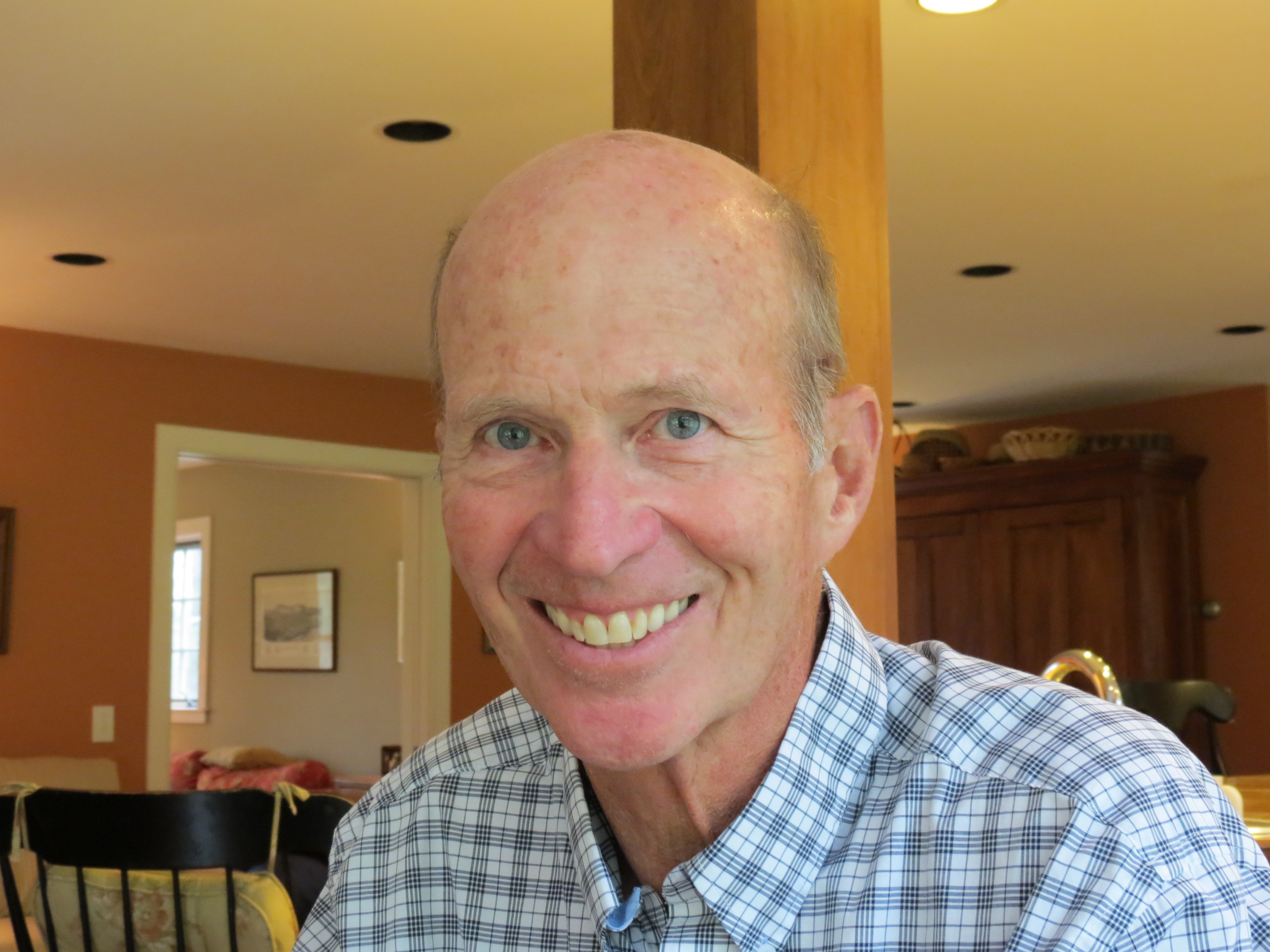
-
Title
-
Patrick Dietz, November 11, 2015
-
interviewee
-
Patrick Dietz
-
interviewer
-
Elizabeth Remy
-
Date
-
2015-11-11
-
Subject
-
Cooperstown, NY
-
Bassett Hospital
-
Cooperstown Dreams Park
-
Description
-
Dr. Patrick Dietz was born in Poughkeepsie, New York. He first attended school at the College of the Holy Cross in Massachusetts, and later attended Dartmouth College and Harvard University medical schools. He did his internship and residencies in San Francisco, California, a fellowship in Detroit, and began his professional career in Reno, Nevada. Dietz ultimately became the first vascular surgeon hired at Mary Imogene Bassett Hospital in Cooperstown, New York.
The conversation begins with Dietz's childhood summering in the Adirondacks in order to limit exposures to polio, and continue into his education in the healthcare field. He reflects upon how Boston has changed since his time at Harvard University, as well as how Cooperstown has changed since moving to the town in 1979, including the tourist industry. The interview focused primarily on the medical field as he has experienced it. Dietz discusses the differences between a big city hospital and a small town hospital, and focuses on the relationship between the town of Cooperstown and Bassett Hospital. He also explains the residency program at Bassett.
-
Transcription
-
Cooperstown Graduate Program
Oral History Project Fall 2015
PD = Patrick Dietz
ER = Elizabeth Remy
[START OF TRACK 1, 0:00]
ER:
This is the November 11, 2015 interview of Dr. Patrick Dietz by Elizabeth Remy at his home in Cooperstown, New York. So, Dr. Dietz, would you mind telling me a little about your childhood and how you grew up?
PD:
Oh, well, I grew up in Poughkeepsie, New York. Actually I was born in Hartford [Connecticut] and moved to Poughkeepsie when I was one. My mother and father were both from Poughkeepsie, although they had traveled around the country out to California with his job during the war. I had an older brother, a younger sister. Pretty nice childhood, really, lived in a nice neighborhood not far from the school playground. It was really a lot of fun. I played Little League baseball, sort of all of the usual things. The Leave it to Beaver childhood. But it was very nice. In the early ‘50s, there was a polio scare, an issue then. No one was really quite sure how you got it, probably respiratory. “Don't hang out in big crowds.” Summers in Hudson Valley were awfully humid, really tough. So we wound up camping in the Adirondacks for the summer, living in a tent, and my father would drive back and forth on weekends. I look back on that and think, it was pretty amazing spending ten weeks in a tent, Coleman stove, you know, lanterns, no electricity, bathroom down the road. Anyway, none of us got polio.
ER:
Well that's good.
PD:
The polio vaccine. And it was a nice way to grow up.
ER:
Is that what caused you to decide to become a doctor?
PD:
You know, that's a weird story. I had no idea, you know, what you wanted to do. Math and science were probably my better subjects, and I went to my college interview. Well, let me backtrack a minute. In freshman year of high school you have to do a project about what you were going to be, and my father had been an FBI agent, that's why they traveled around during the war. And so I thought I might be an FBI [Federal Bureau of Investigation] agent. I did an interview with the current FBI agent in Poughkeepsie. But anyway, I got to go into college and I had no idea what to do, and I had my interview at Holy Cross, and I told the interviewer that and he said, “Well, why don't you apply for our AB Pre-Med Program, which is a liberal arts with just enough science and math to qualify for med school.” Because he said it was easier to get out of, than it is into, if you want to change. Nobody in the family had ever been in medicine, so, okay, that's what I signed up for. And that summer I got a job in the local hospital, and when I applied I thought I'd be working on the garden crew or something like that, some maintenance job or something, but they hired me, and a college classmate of mine, and one other kid, one other guy to be OR [operating room] tech trainees, and then substitutes for the people going on vacation during the summer. So I did that for three years, actually, and I really liked that, you know. It's really exciting and watching the people that were surgeons, they made it look like a pretty nice thing to do, so that's why I did it. The third guy, not my college classmate, but the third guy they hired, was a conscientious objector to the Vietnam War, and of course, I was pretty apolitical at that time, so that was a fascinating education, why somebody would do that. We talked about that a lot, why somebody would do that and what to do. This was his alternative service duty, actually, working at the hospital. It was a good education.
ER:
And you went to Dartmouth for your first stint at medical school.
PD:
Right. Dartmouth at the time was a two-year medical school, and had been since 1915. There was a famous Flexner report around that time that felt that medical education in the country was not doing the job it should, and Dartmouth went from a med school that would give the MD degree to a two-year med school because they could provide the early sciences that you need in med school, the first two years. And, so, I had a Bachelor of Medical Science degree from there at the end of the second year, and then about three-quarters of our class. Our class would then transfer to the clinical years in different places. Most of our class transferred to Harvard. There was a long-standing sort of relationship with that; Harvard had constrained facilities on how many bio-chem labs they had, and anatomy labs, and that sort of stuff, but they had a wealth of clinical material, so they could take on another thirty or forty people for the clinical years. Some people wanted to go to New York City instead of Boston, some went to Minnesota for different reasons, but being in Boston was an awful lot of fun as well.
ER:
Have you been back to Boston lately?
PD:
Two weeks ago, two or three weeks ago. Actually, just for a flight.
[TRACK 1, 6:35]
ER:
How has it changed since you were in school?
PD:
Well, like everything else, it's grown, and in order to get to the airport you go through the Ted Williams tunnel. I always loved Boston, it had the Callahan Tunnel and the Sumner Tunnel, but when you were going one way it was the Sumner Tunnel and when you were coming back the other way it was the Callahan Tunnel. It was Boston. Boston itself, you know, main Boston, I don't really think has changed really that much. All of the parks, and Beacon Hill, and the hospitals, are all just, you know, have occupied that territory for a long, long time. The surrounding area, of course, has just grown like crazy. Framingham in particular, which is about twenty miles outside of Boston, I guess, is amazing. The time I was in medical school, they started a Framingham Health Project. Framingham was a small town with a very stable population, and it was an opportunity; researchers, particularly at Harvard, thought it was an opportunity to follow people for a long period of time, based on their health habits, and lifestyle, and everything else, and see what would be a natural history of that. Actually, parts of it are still going on. But, you know, you could find out the consequences of smoking history, inactivity, diet, and management of blood pressure over long periods of time. So it's been a good epidemiologic study over a long period of time. I think it's still going on. But Framingham is an entirely different town.
ER:
And so, after medical school, you did your residencies in San Francisco.
PD:
I did. The first year's the internship, and in your last year of medical school you have to go around and interview and apply to different programs. And I wanted to leave Boston at that point and go out west, I think maybe because my parents had been out there in their younger years, and it was always sort of attractive. So you apply for a number of places and then it's done through a computer, the match, and I matched at San Francisco General Hospital for an internship, and then a residency of five years with the University of California systems in San Francisco.
[TRACK 1, 9:56]
ER:
What's the most memorable thing that you remember from your residency years, what's that one day that you remember?
PD:
Oh my goodness. Well, there are a couple. The San Francisco General Hospital was the county hospital. There were a lot of significant events to somebody who wasn't very worldly wise, would go on there, but I think, there were a couple of things that were memorable. One was how hard we worked. You know, it would be a hundred, a hundred and ten hours a week, and I remember I was on the emergency room schedule. You would do a month, two months in the emergency room, so you'd do twenty-four on duty and twenty-four off, except there was a hand-off time there so that got longer than twenty-four hours, but I remember one of those days I came home at eight in the morning, I went to bed, woke up at 6 in the evening, ate, went back to bed, basically slept for 24 hours and went back to work. That sort of thing was a formative episode in my later years when I was the program director for the surgery residents here at Bassett, because during that time the hours regulations became state law and you had to follow laws and people could only work 80 hours a week at a maximum. And I remember that you look back at that and you look back at twenty-four on and twenty-four off as “the days of the giants,” you know, and that was crazy.
ER:
They seem like very long days.
PD:
Yes. Yeah, and so I was really amenable to the idea of restricted hours, contained hours. Some people need a lifestyle, need a life, outside of the hospital. I do remember, I mean, there was a string of liquor store robberies also that year, and it was supposedly a gang of seven Hispanic youths who were suspected of these liquor store robberies. They were known as the los siete, the seven. San Francisco is a very ethnically mixed city, and so while the cops were looking for los siete, they were also sort of a support group for whatever reason or another at the time in the community. Anyway, they finally robbed this liquor store, the police came, there was a shootout, and nobody was killed but they were significantly injured, and they came on my service, on my team, for their injuries. It was an interesting time.
ER:
What did people think about treating them after what happened?
PD:
You know, it was just what you did, you know? I think everybody knew they were special, and they had policemen at their bedside, you know, to make sure they didn't go anywhere and that other people didn't come and do anything, but I would say there was not any kind of adversarial approach, just kind of medium. They're there, they're injured, you take care of them, and they're going to wind up going to jail, and they did. I wouldn't say you could do this in your whole career and not wind up taking care of someone you didn't like, you know. I think that would be humanly impossible, that's just the way we are. But there are certain people you have more sympathy for, because of their circumstances, for one reason or another. These los siete guys had been shot in the leg, and they had broken their femurs, so they were in traction for a while, and there was another guy who was driving his Volkswagen across the Golden Gate Bridge and a gust of wind came and knocked him out of his lane and into an automobile accident, and he broke his leg, too. Here are two broken legs, and the poor guy in the Volkswagen. Accidents, you know, circumstances, inability to control life, basically, and things happen to you.
ER:
So, switching from a big city hospital to a small town hospital, can you tell me a little bit about how you came to [Mary Imogene] Bassett [Hospital}?
[TRACK 1, 16:25]
PD:
After the residency, I spent two years in the Navy at Twentynine Palms [California], which is a Marine Corps base, the Navy provides docks for the Marine Corps, and a year doing a fellowship in Detroit in vascular surgery, and then you've got to look for a job. And it's kind of an amorphous way when you look for a job, it's who knows somebody who is looking for somebody, and there are blind ads in medical journals to reply to, you don't know what you're getting in to. But through a connection at the Henry Ford Hospital in Detroit I joined a practice in Reno, Nevada. They were very good acquaintances. So I went out and joined that practice. It was interesting, because that was a private practice, which you really don't get a sense of while you're in training and in residency. You know, you're just a resident, this is your job, you do whatever. Then you get into private practice, and it's a business, it just is, and I really didn't like that aspect of things. And so I wanted to come back. I decided I wanted to leave and come back East to look for a different medical setup, and Bassett was looking for a vascular surgeon at the time, and I answered the ad, talked to the people, came back for an interview. I knew about Bassett from growing up in Poughkeepsie, because Bassett had a very significant reputation even at that time in the ‘50s, especially in the ‘50s and early ‘60s, so I knew about it. So I liked the idea of coming here. It was back closer to our families, I think that played a role in it; my wife is from Massachusetts. So that worked out well, and I really liked the fact that here, at Bassett, it's a business, there's no question about it, but it was a business that I didn't have to do. You know, it didn't matter what kind of insurance anybody had, they were all treated the same. There was no special section of the hospital for privileged people or unprivileged people, it was all just there together. You approached everybody sort of equally, and I really didn't like the business part of things. I didn't have to hire a secretary, I didn't have to fire a secretary, I didn't have to worry about that sort of business. So you could just practice, you could just do your job, it was a really nice way to do it.
ER:
And so you're a vascular surgeon.
PD:
Yes.
ER:
How did you get into vascular surgery?
[TRACK 1, 19:50]
PD:
Well, at the time, vascular surgery was part of general surgery. General surgery encompasses surgery in the abdomen, breast, thyroid, a whole bunch of different areas of the body, one of which is vascular. But during your experiences in your surgical residency, at the time you might get [thump] oh geeze, put it on pause. [A bird flew into the window; Dietz went to check on it.] Yes, vascular surgery was part of your experience, although my experience in vascular, because of different rotations, was somewhat limited. So I felt a need for more training in that, and that's why I did the fellowship year at Henry Ford. General surgery and vascular surgery were all part of the same group for the next ten or fifteen years, but eventually vascular surgery became a specialty of its own, and fewer and fewer general surgeons did vascular surgery, and more and more people were taking vascular surgery fellowships, so there were more vascular surgeons around. So, eventually, for the first fifteen years that I was here I did both general and vascular surgery, and then as the department grew, we got a second vascular surgeon, we did less and less general surgery, the general surgeons did less and less vascular surgery, and we became our own little section.
ER:
How does a hospital in small, upstate New York compare with something in Reno or Detroit?
[TRACK 1, 22:04]
PD:
Well, obviously, size is a big difference, personnel, but initially, I think the thing was that there were more super-specialists in some of the bigger institutions like, you know, a thousand-bed Henry Ford Hospital, has large number of people who are more specialized. And initially Bassett wasn't, I would say, was not particularly that way, we did much the same surgery, but with a wider spectrum of practice. It was also much more collegial, you know? People were just very supportive, and honestly supportive, of your practice here. You live next door to somebody, you're not only partners, but friends, and your families are friends. I think of the differences, the major difference for me was not having to commute, not having to waste a lot of time on the highway getting to or from work, and my feeling was that when you did do that, you had basically two separate lives. Your work life was over there, your family had nothing to do with it, because it was twenty miles away or whatever, and then you had your family life. Not that my family was involved with the hospital very much here or any of that, but it wasn't that separation of distance. It was more comfortable.
ER:
Do you mind me asking what year you moved to Cooperstown?
PD:
1979.
ER:
How have you seen the town change since then?
[TRACK 1, 25:04]
PD:
Well, number one is the hospital has grown dramatically since then, from a staff of eight or nine surgeons all together, one orthopedist, then two orthopedists, five general surgeons, one ENT {Ear, Nose, and Throat] person. It started to rapidly grow right around that, '78, '79, '80, there was a lot more additional staff coming on board. That has changed dramatically, with the space it occupies, the new clinic it built, the parking lot issues, all of that has changed that corner of town significantly. Bassett has tried to continue to squeeze into that area over time. Downtown Cooperstown itself, structurally, hasn't really changed much, I can't think of a new building, except for the Biological Field Station. But in town itself, that really hasn't changed much. The stores, the type of stores, have changed dramatically. When we first moved here there was a sporting goods store, all kinds of sporting goods stores, including a lot of nice camping equipment, two downtown drugstores, two or three downtown hardware stores, clothing stores, shoe stores, a cobbler, a shoe repair man. You don't see that anywhere anymore. That's been a big change. Now the village is very active seven or eight months out of the year, but the wintertime is a little tough. You look at downtown and you see almost all baseball stores. I mean it's hard to deny that from an economical point of view, and also from a personal point of view, people shop online now, and so a clothing store or a hardware store or whatever else, a furniture store, is going to have a hard time, competing with that. And then the worst part of that is sort of the wintertime when you go downtown, when a good number of the stores are just closed. The positive aspect of things is that the Hall of Fame has grown, the opera has developed, there are more and better restaurants around, so that's been a positive thing. I think one of the things we miss the most, my wife and I, is the movie theater. There was one when we came to town. It was cute, but you could tell it wasn't going to last that long. We went to the movies one time, and as I was buying the ticket to get in, my pager went off and I had to go outside to the payphone to answer it and the guy said, “Don't worry, we'll wait for you to come back before we start the movie.” It was a very nice, close community touch, and that still exists. It's a tremendous community for when anybody is in need, it's incredibly supportive. It's wonderful.
[START OF TRACK 2, 0:00]
I guess that I would say that.
ER:
Alright. So since the wintertime is so hard, what do you and your wife like to do during the winter to kind of alleviate?
PD:
We like to ski, cross-country ski, snowshoe, we do a lot of that. There's the gym. Oh there's a new building in town, I shouldn't have left that out. And the gym is a great resource for activities, you know, for physical activities. But just like last year, we did a lot of cross-country skiing and snowshoeing. And the nice thing about that is that it's almost out your back door, you don't have to drive ten or fifteen miles to go someplace where there's a facility of some kind, you just go. We've been pretty tied to the school vacation schedule, that's a significant part of the living in the village, the school activities. My wife was a teacher, and so the February vacation and the April vacation, we would usually go someplace. Usually we go ski on the February vacation, and then try to go south for the April vacation. So I don't find the winters, I mean it's cold, but I enjoy the outdoors, so as long as there's snow. If we're going to have winter we should have snow, and not just the cold, freezing rain. And last winter was just spectacular that way.
ER:
So, you talked about how the community is very close knit and very involved with each other, what are some ways that you're involved in the community of Cooperstown now?
PD:
Now? Well, in one I still work, I'm on the per diem staff, so I do work a little bit at the hospital. I help out at the food bank on occasion, usually on the days that they unload the truck once a month. A number of people get together, usually men, but some women, and we help unload the truck. My wife is involved with that on a weekly basis. I meet with my friends on a fairly regular basis, a small running group that we have. And then there are just a bunch of other little community activities that we are part of, Christmas decorations downtown on the poles, or the Adorn-a-Door program on Thanksgiving, we're involved with that one way or another. I would most likely join in or help out in some activity like that rather than be a full-time part of a particular activity. There are lots of opportunities for that.
ER:
Is your family in the area?
PD:
No. My brother lives in Poughkeepsie, my sister lives in Indiana, so my brother is about a couple of hours away. My daughter lives in California now, she's lived out there for about six or seven years after she got out of college. My son lives in Clifton Park, just north of Albany. My oldest daughter lives here in town; she has three children, three grandchildren, so she and her husband have three children.
ER:
And how are the grandchildren?
PD:
They're wonderful. They're great. One's a freshman in high school, one's a seventh grader, and the youngest is a fourth grader. So we spend a fair amount of time with them. It's nice to have them close. It really is nice to have them close. You just run into them here and there around town.
ER:
That must be nice.
PD:
It is. It's a real privilege. The kids, my son-in-law, John, his parents also live in town, too, so the kids have I think an unusual life in that way, that they have both sets of grandparents in the town they live. That's unusual in this day and age, people move and travel too much.
ER:
So earlier you were talking about how you were part of the residency-training program. Can you talk a little about that and how that works at Bassett?
PD:
Sure. Bassett has a residency-training program, as you mentioned, in surgery. When I came here there were two people in each year of the program, which is a five year program, so that makes about ten or eleven people all together. It's now three people in each year, so it enlarged about five years ago. I thought that my experience in residency training was a little, what do I say, that the organization of the program, it was a large program, so it was difficult. There were eight or nine people in each year in the program. We went to four or five different hospitals, so your contact with people who were actually in charge was somewhat limited, in a way. And when I got here, after a couple of years, I felt like I could do that job, in terms of being the program director and have a good relationship with the residents as well. The program director is involved from the get go. Intern applicants, interviews, selecting people to come, organizing the educational program, organizing the schedule, managing personnel issues that always come up. And so that was a really fulfilling part of the job. The other part of it that was really helpful again comes back to Bassett and its size and the communication, and the supportive efforts of everybody. You need everybody, and the program, all the other staff, to buy into the training of the residents; it's not a one-person job. They can learn vascular surgery from me, they've got to learn some other section of surgery from somebody else. I've always had an immense amount of support for that, particularly from one of the chiefs of surgery in the department, Doctor Gold. But usually, in a surgery residency program, it's always evolving, especially as the rules and regulations come down from, over time, not only the government, but also from the national organizations that direct that. So on at least a yearly basis you go to the national meetings, and find out that there's a bunch of different stuff you have to do, things you need to change, and every time I came back, I just said, “This is the change, this is what we need to do,” and everybody I worked with said, “Okay, we'll do it, we'll do it that way now.” It was really nice. So I did that for about twenty-four years, and then it was probably too long, but it was nice to do it for twenty-four years, and it was nice to turn it over to somebody else. I think you know there's a lot you get out of becoming more senior, but it's maybe harder to relate to a younger group as you did when you first started, and of course when you're in charge, sometimes your relationships are good, and easy, and sometimes they're not. You can be the good guy, and sometimes you have to be the bad guy, you know. Anyway, after all of that, it was good to turn it over.
ER:
So how, in your view, as both a resident of Cooperstown and someone who worked and works still at Bassett, how do you see the connection and the relationship between the community and the hospital?
PD:
I don't really want to speak from a hospital organization point of view, you know, like how hard it was to get parking lot certification and approval from the village or whatever else. There have been those struggles and issues, and usually they work out over time, that's sort of politics and business. I would say that 90% of the community is supportive of the hospital, a large majority. I think it's an excellent hospital, and because of its size, you get an opportunity to relate well with your patients, as well as the community, your patients in the community, who you might see at Price Chopper or at the post office some three or six months later. I think that the community is, from a medical point of view, very supportive of the hospital. Nothing's perfect, and the hospital has its issues in some form or another in terms of relationships. I've heard people complain about trying to get an appointment, or something like that, makes it difficult. Sometimes parking. Those are important issues, but separate from the community's support of it as a medical institution, and getting their medical care there. And I think that if you said that 90% of the people like it and 10% want to go elsewhere, I think I wouldn't be surprised. If it was 80/20, I guess I wouldn't be surprised. You know, some people want to go elsewhere, just want to go elsewhere. Some people have family in Boston. It's easier if they're going to have some major hospitalization to go there, because they have a better support group. I think that's pretty understandable. The community in the neighborhood, we did live in the neighborhood right next to the hospital, is fairly watchful and protective of their property, and spots, and things like that, so that when some new building or expansion or parking lot or whatever is proposed, there's a segment of the community there who want to make sure it has a minimal amount of affect on where they live. I think that's reasonable.
ER:
And they don't seem like concerns that are limited just to Bassett and Cooperstown. They seem like they can be extrapolated to other locations.
PD:
Sure.
ER:
How do you see the summer season here, with all of the tourists coming and the baseball tournaments?
[TRACK 2, 15:17]
PD:
That's a good question, because people react to that differently, you know. Some people find it a big intrusion, and annoying, and other people who are less affected by it, I guess. I think we have 250,000 to 300,000 visitors a year to the Hall of Fame, and sometimes you wonder why we don't have a camping store downtown, or an outlet store of some kind, with all of that traffic. And of course, a large part of that is in those eight to nine months, and not the winter months, and I guess it means it's not sustainable. But I think it's good for the village, it's a good economical engine for the village. It brings a lot of people, there are a lot of people who come back for extended stays during the summer, for five or six months, and so a whole new population who haven't been here for the last six months, who come back. So I think that it gives you a change to the system and the social networking that may go on when people come for the summer, and when they go away for the winter. The [Cooperstown] Dreams Park has had a pretty significant effect on the town. And the number of people who go through the Dreams Park in the summertime, it's just amazing, the number of kids and baseball teams who come through, and they come downtown in groups, and they're all twelve and under, cute. It's nice to see them. And baseball fans here who usually come, love it. They often, you'll hear them say, “Oh, it's a great town. It's the way America used to be.” They used to say that more when there was a more diverse small town economy there, I think. They're very good visitors to the town, and supporters to the town. I like it when the summer comes, and things change, and I like it when the winter comes, and things changes again. The opera is a big contributor to that as well. There are lots of events during the summer time, lots of entertainment that comes through town. It's just a busy time, it's a lot of fun.
ER:
So you've brought up the opera a few times, do you and your wife go?
PD:
I go about once a year, she's not a big opera fan, but I do. I like the fact that they've started to broaden their repertoire a little bit, I think that's a positive thing. The last couple of years they've put on some Broadway shows, some older Broadway shows, so they've expanded the audience a little bit. I think they're a big draw for the town, as well.
ER:
What's one of your most memorable shows that you saw there?
PD:
Oh, actually Madame Butterfly. That's pretty standard, a lovely opera. I guess you'd have to say I like the famous, or more standard operas, but, yeah, Madame Butterfly. I've seen it a couple of times, and I just love how it's presented. It's just a beautiful opera.
ER:
That is a good show, I enjoy that one. So we're coming to the end of our interview period. Is there anything about the town, or about the hospital, or simply raising your family here that you want to share?
PD:
Well, raising the family, and you'll hear this all the time, it's a great place to raise a family. I think everybody would agree with that. There could be some more opportunities along that line, but I don't know. They would be additions, not essentials. We have good friends who live in Boston, New York, or Chicago, and sometimes you feel like they have more opportunities for their kids than here, and yet, I think that's not all together true. I listen to my friends in Boston who talk about how their kids were taking Japanese over in Cambridge. I said, “Well, how long does it take for you to get to Cambridge from here?” They live in Wellesley. “Oh, about forty-five minutes to an hour.” I mean, I could be in Utica, I could be in Albany almost by then, if there was something that was essential, that I thought that we needed. But I don't find that to be a terrible deficit. I hate urban traffic. I think that the kids form, in a small group, solid relationships around town that last forever. You see that when they come back for their high school graduation things, it's a big deal. It's a small school; you have a very high percentage of people back for their twenty-fifth reunion and things like that. Many of them still live here.
ER:
Alright. Well thank you very much for your time, and for putting up with me asking you questions.
PD:
Well, thank you, Lizzy, I'm happy to do that. And if we need to talk some more, just let me know.
-
Coverage
-
Upstate New York
-
1940s-2015
-
Cooperstown, NY
-
Creator
-
Elizabeth Remy
-
Publisher
-
Cooperstown Graduate Program, State University of New York-COllege at Oneonta
-
Rights
-
Cooperstown Graduate Association, Cooperstown, NY
-
Format
-
audio/mpeg
-
27mB
-
21mB
-
image/jpeg
-
4000 x 3000 pixels
-
Language
-
en-US
-
Type
-
Sound
-
Image
-
Identifier
-
15-004
-
Abstract
-
Track 1 - 6:35 - Education
-
Track 1 - 9:56 - Hospital Residency
-
Track 1 - 19:50 - Vascular Surgery
-
Track 1 - 22:04 - Basett Hospital
-
Track 2 - 15:17 - Tourism