-
Title
-
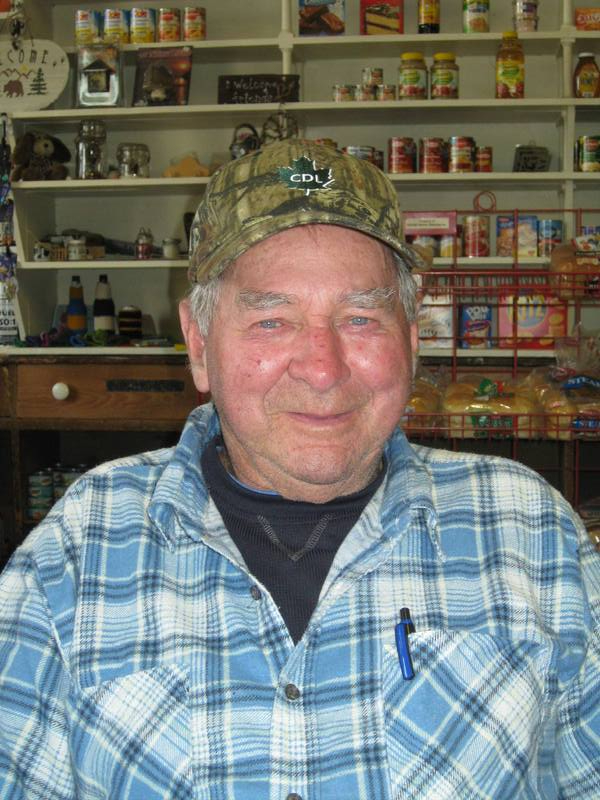
Larry Roseboom, November 6, 2014
-
interviewee
-
Larry Roseboom
-
interviewer
-
Samantha Smithson
-
Date
-
2014-11-06
-
Subject
-
Maple Syrup
-
Dairy Farming
-
Community Relations
-
Family Relationships
-
Business Technology
-
Rural Life
-
Description
-
Larry Roseboom was born in Westford, NY on October 15, 1935. The Rosebooms founded and established the town of Westford in 1829 and generation after generation of the Rosebooms have maintained residences in the surrounding area ever since. Larry started out as a dairy farmer on the farm of his father, which then became his as he continued to dairy farm and eventually began to incorporate maple syrup production into his daily business. Over time, Larry turned the majority of his focus to his maple syrup and ceased dairy farming altogether when he established Breezie Maples Farm with a neighbor. Larry is also involved in many local committees and organizations, maintaining a respected and visible place in the surrounding community.
The maple syrup industry has experienced many technological changes during the time that Larry has been involved. Maple tubing has replaced the laborious process of using sap buckets. Vacuums, reverse osmosis, and other advances have been brought into the production of maple syrup. The maple syrup industry is also evaluating and updating their grading system, which is to take effect in early 2015.
Larry's recollections range from his early life on the farm in a small Upstate New York town to his opinions on the growing technological advances going on in the maple syrup industry. Some of the most interesting material in the interview concerns small town community relationships and the culture of small town Upstate New York built through rural politics, organizations, and events.
I interviewed Mr. Roseboom at the Westford Town Hall, where he sat on the town board for many years. He had just broken ties with his Breezie Maples Farm business partner and was beginning his own independent maple syrup production out of his home.
Mr. Roseboom speaks in a slow, but deliberate manner. I have tried to convey the self-deprecating humor and unique phrases in Roseboom's speech. I have also chosen to preserve some grammatical particularities. It is impossible, however, to accurately reproduce all of the details in Roseboom's dialect and it is crucial for researchers to consult the audio recordings to get a complete sense of the interview.
-
Transcription
-
Cooperstown Graduate Program
Oral History Project Fall 2014
LR = Larry Roseboom
SS= Samantha Smithson
[START OF TRACK 1, 0:00]
SS:
This is the November 6, 2014 interview of Mr. Larry Roseboom done by Samantha Smithson at the Westford Town Hall for the CGP Community Stories. So, Mr. Roseboom, Larry, could you please tell me about how your family got started here in Westford and what you remember from being a child here?
LR:
What I remember I've heard during the past that they first came from Scotland. The Roseboom family first settled in Albany, where he was some kind of a trader. Some of them ended up in New Jersey, and one from New Jersey came here. Would that have been Robert? I'd have to look at my notes. And that's how we came to settle in Westford. I don't know what else to tell you at this point.
SS:
That's okay. Were you born in Westford?
LR:
Ah, yes. I was born in Westford on 10-15-35. That's when I was born. Very close to where I live right now. I've lived there all my life. Well not quite, I'm still alive. So primarily, it was a dairy farm back in my day. That's what I spent most of my lifetime at, being a dairy farmer. Many, many changes have taken place in the dairy since I was involved. And I was also involved in some maple syrup production along the line, which I'm still working at. And I don't know how deep you want me to go here.
SS:
How were you introduced to the dairy farming?
LR:
I grew up with it. It's what my father did, and so that's what I did. I just followed him around ever since I was old enough to walk. I followed him every step he went. So what I've learned I learned mostly from my father. Did go to college. Graduated from Cobleskill College, which didn't hurt me any. Oh, I'm thinking, I don't know what else to say right now.
SS:
So, what kind of things did you do with your father on the farm when you were learning the ins and outs?
LR:
Everything. That was still back in the day when we still had horses. I got very little education on horses, not too much. But that was the only source of power back when I started following him around. Thinking about it, that was pretty good of him to let me tag along, ‘cause I learned a lot that way. I see some young men now that never have their sons with them. Which I don't think is quite right. Any old man has something to teach his son.
SS:
How did you like working with your father?
LR:
Always enjoyed it pretty much. He was always the boss, but that's alright I didn't know any different. Yup. No, we spent a lot of time together. Things change, I guess.
[TRACK 1, 04:44]
SS:
Did you do anything with your father outside of just working on the farm?
LR:
Oh yeah, always looked forward to springtime and going fishing just in the little trout stream. We always could find time for that, which I enjoyed. Thinking back on it, that was the fun time. Yup. Ballgames, we used to go to ballgames. The local ballgames. I'm one of five kids and Saturday night he always seemed to manage to have money enough to take us to the movies, which was a kind of a highlight in our life, I'm sure. We didn't know it then, but it was. Lot of these things you think about after, they were really great. They don't happen near as much as they used to, I don't think. Well, I don't know where to go from here.
SS:
What made going to the movies so special for you and your siblings?
LR:
What made it special? Something you look forward to all week. That was always grocery night. My mother would always grocery shop. We would either go to Worcester or Cooperstown. That's when both the theaters were running good. I don't know, it was just fun. [laughing]
SS:
So you're one of five kids then?
LR:
Yes.
SS:
What was it like growing up with four siblings?
LR
We got along pretty much. We had our differences. Three older sisters and one younger brother. I think we did pretty well to look back at it, when you see some of the things that happened to other families. We all still get in touch with each other. I am now, if you haven't figured it out, 79-years-old. [chuckles] So that's quite a few years gone by. Okay?
SS:
Alright. So, when did you decide to incorporate maple syrup farming into your… did it start as a hobby?
LR:
It was something my mother did. I call it the “Right of Spring.” You can't have spring until you've made a little maple syrup. So I kind of followed along with what she used to do and gone all the way from a flat pan to an ultra-modern operation I was involved with. It's a great progression in the way that industry has changed a lot. Still is. Does that tell you anything?
[TRACK 1, 09:02]
SS:
It does. What sticks out to you with what has been changing over the years?
LR
What has been changing? Well, probably one of the biggest changes is the use of the sap buckets to the maple tubing for collecting the sap. Because the buckets were very labor-intensive. Which like most other things you can't find the labor or anyone interested in doing the labor. And it doesn't pay well enough to hire anyone to help us. But I'd say that's probably, for me that was the biggest change. I started out with buckets. I can remember going with my father in the horse and sleigh to gather sap. So that was back awhile.
SS:
How did you find the trees for that?
LR:
Oh, we've got lots of woods. Quite a few acres of woods. That was kind of the least of our problems. Getting there was more of a problem.
SS:
Why?
LR:
Because of the snow. Deep snow, usually. Oh, the horses were very good for that job. When you move ahead and bring a bunch of buckets to the next and quite often you didn't even have to tell them to they would do it on their own. My brother-in-law, he used horses right up until a few years ago in his sugarbush.
SS:
So your whole family is involved in maple syrup?
LR:
Yes and no. All the girls, all of course, drifted away here and there. My oldest one, she was more involved because her husband he made quite a lot of syrup up north where they can make a better flavored syrup because of the soil.
SS:
Is that the key?
LR:
Yeah, a lot of it is the soil. Yup.
SS:
What do you need in soil for good maple syrup?
LR:
I don't know. You go north of the Black River and you get into better soil for syrup production. If that makes any sense, but it does with the syrup when you taste it. Now they're trying to get people more thinking that darker's better, which I don't and I never will but that's alright.
SS:
Why not?
LR:
I don't know, I just don't like the flavor of the darker myself. It's different. There's a big difference in syrup. Huge. To me light is always better, but that's just me.
SS:
What are the differences in syrup? How does the light and dark come out?
[TRACK 1, 13:07]
LR:
Usually you get your lighter the early part of the season. What makes it get darker, actually, or a lot to do with it is the bacteria growth in the sap before it gets turned into syrup. Sugar and water, well, let the bacteria grow, of course. They have many ways to combat that, which most of them I don't think work. But that's another one of my old-fashioned ideas. I gotta give up on some of these old ideas.
SS:
Why do you say that?
LR:
Well, you don't keep up with what's going on you get left behind. That make sense? Okay. I see some things that work and I see some things that I don't think work. But, I don't know. Lot to it. You can't cover it all. [chuckles]
SS:
So when you came back from Cobleskill, did you go right back home to farm or did you start your own?
LR:
No, back on the home farm. It's where I've always been. I guess I never had nerve enough to strike out on my own, I don't know. Of course there was never any money either so that made quite a difference.
SS:
How was it managing money and finances being a farmer?
R:
Well, I didn't get a chance for a long time, for as long as my father was running things. He kind of seemed to make sure he did that. Then it got be a challenge. I think one of the first things I learned: don't spend more than you can afford, and don't let yourself get in deep. If you don't have it, don't spend it. Maybe that's why I'm still there, maybe it isn't, I don't know. Got anything else? [chuckles]
SS:
Sure. What was it like starting and raising a family on a farm?
LR:
What was it like… Well, I have a son. He followed me around just like I followed my father around. So that's how he learned a lot until he discovered motorcycles and 4-wheelers and things like that. [chuckles] Then he didn't follow me so much. We farmed it together for quite a few years until it got so farming couldn't pay. We started going backwards and I said, “No, we can't do that. That's not going to work.” So he works out and I kind of got more involved in the maple business. That's about how that is. We've still got the farm. We still do haying. Try to make enough to pay the taxes, that's about it. I hate to give it up, I'm not going to give it up. I'm not. That also gave me, after the cows left, I had a lot more time to be involved in a lot other things, which now I am. On this board and that board. I was on the town board, I sat right here for quite a few years. Where we happen to be. I guess we mentioned we're in the town hall.
[TRACK 1, 18:38]
SS:
Why did you decide to join all these different boards and what were they?
LR:
Oh, the Maple Producers [Otsego County Maple Producers] that was more of just a group. The County, we still get together quite often. That's not really a board but an organization. I was asked to come on the Soil and Water Board, which I am on the county board. I got kind of invited to one meeting, Cemetery Association, though I was on their board for a few years and then all of a sudden they said, “Well, you're going to be president from now on.” [laughing] “No, I don't want to be president.” “But you are and that's that.” So then I got on the Historical Board here in town. And a bee club, I'm in a honey bee club.
SS:
Busy guy.
LR:
Yeah, I forget some now and then. People will remind me. It's no fun not being busy, I don't like that either. I can't do a lot of the things I used to do. I guess that's part of it.
SS:
What kind of stuff can't you do that you used to be able to do?
LR:
If I wanted anything built I built it, but now I can't. Shoulders gave up, I've got one new shoulder. Limits my ability to reach and lift and things like that.
SS:
Do you think that's from your years of farming?
LR:
Had quite a lot to do with it. Yeah. Kind of wore things out.
SS:
It's tough work.
LR:
It is tough. Also kept me in shape. I didn't know it. Now I've kind of gone to fat. [laughing]
SS:
So when you started to do more maple syrup farming, how did you get involved in all the farmer's markets? Because you seem to be pretty involved in the community right now.
LR:
Sort of. Farmer's markets, yes, I had a partner and we worked well together for quite awhile, and around here locally, I just went around and asked questions at the farmer's markets. “Do you have a maple vendor?” “No we don't.” “Would you like one?” “We can give it a try for a week.” I said okay. I took product to this one particular market and the market manager came to me after the day was over and said, “You have a permanent spot.” That's how that got started. But, then it wasn't under my name, it was under a farm name, not my farm name, and when we had our dispute that's one thing he took away from me and so I can no longer sell at that market.
SS:
How did you get started in Breezie Maples?
LR:
How did I? Well, this family from New Jersey bought the place sort of next door and he didn't know a thing about maple. Never heard of it. Well, he'd heard of it but it didn't know how to process it. And he got hooked on it, he really did. He invested an awful lot of money. “Woo this is great, now I can do all sorts of things.” So I learned a lot there. Then we parted ways so now I'm working on my own again.
SS:
What kind of stuff did you learn through the years?
LR:
Went from a little pan to a wood fire arch. From wood fire to oil fire. And kept getting bigger and better equipment. Steam-aways and reverse osmosis and UV lights and vacuum systems. It's just a major progression of things. But now I'm not. I'm doing my own thing now.
SS:
What are you doing with Middlefield?
LR:
Middlefield? Which part of Middlefield?
SS:
The orchard.
LR:
We did a market in Delhi yesterday. He's there and I'm there. We don't work together much. We know each other, that's all. Delhi market, Franklin market, Bassett market. Let's see… That's about all I'm doing now.
SS:
What's different about striking out on your own?
LR:
I did look up source of syrup, which I found wasn't hard at all. Lot of syrup out there. Buying more equipment that we used to share, which we don't now. I'm trying to make it like it really is. I guess I'm trying to say, I'm trying to be nice, but I don't know.
SS:
I understand. So, what kind of things do you get to do now that you're by yourself that you maybe weren't able to do with Breezie Maples?
LR:
Make up my mind what I want to do. I found I have quite a following. I hear here and there, “So and so wants to know where are you?” and somebody else will say, “I haven't seen you in so long. What's going on?” Stuff like that. I feel good about that. That people ask about me. They do. I thought I had a few followers, I didn't know I had that many.
SS:
What do you like or dislike about living in this community, in Westford, Upstate New York?
LR:
If I had my druthers, I would never go anywhere else but here. Which is what I'm doing and where I'm going to stay. I haven't been far. Yeah, it's still the best place to be, is right here. Because I don't know any better, I don't know. Okay?
SS:
Okay. What kind of relationships have you built here? It sounds like you're getting quite a following. Sounds like you a pretty popular guy.
LR:
Some. Of course you never hear about the ones who don't like you. [laughter] But I like to think I'm alright, I don't know. There's a lot of people who will tell you different but that's their opinion, not mine.
SS:
What keeps you involved in the maple syrup and all these committees here around Westford?
LR:
What keeps me involved? It's something I enjoy doing, and I must keep in touch with what's going on. I've seen a lot of people who are not involved in anything and they don't seem to be around for long, I don't know why. I like to think I do a little good once in awhile.
[TRACK 2, 0:00]
LR:
We've had few things that got going in town because I stepped in and helped a little. That's all.
SS:
Like what?
LR:
Like what? [chuckles] The one that comes to mind right now was helping some people that lived on a private road get their road taken over by the town to get a little maintenance done on it. Which for some reason the rest of the town board was not in favor of. It took a couple years to get it done but the town now does take care of their road. And the people that live on the road were grateful. Just didn't sound right to me that yeah we'll take you tax money but we aren't going to give you anything for it. Somehow that doesn't sound right. I think I helped there.
SS:
Why do you like to help the community around you? Your neighbors.
LR:
Why? I don't know if we want to go down that road. I've seen how things have changed over the years from people moving in, which is fine, you can move in. We don't mind that, but don't bring your ways with you. You leave them home.
[TRACK 2, 2:15]
SS:
What are you talking about there?
LR:
[laughter] I can't say this without getting in trouble. They seem to want to change things when they get here. Why'd you come here? We like it the way it is. Let's leave it alone.
SS:
What things do they want to change?
LR:
Oh, they do it all the time and don't know it. Little things; they'll get a little twist in here and little turn in there. I used to be able to ride up the road and didn't see any posters. Huh. Now your ride up the road you see all kinds of posters. Don't walk here, don't do this, don't do that. And every now and then you'll see a driveway with a locked gate across it. What the hell is that for? Don't drive in here. They're the things that upset me. I even had a man request that, “Oh, I really wish you wouldn't work in your woods hunting season because I want to hunt in my woods that adjoins yours.” But wait a minute, do I own that woods? Is that my woods? And you tell me I don't want you in there? Hmm. Keep quiet, don't say anything. Well I did already, here it is on tape. [chuckles] I don't know.
SS:
Why do you think you feel that way?
LR:
Old. Don't like change. Didn't know it until they start pushing my buttons then I realize it. It's not going to change back, I know that. Just trying to slow it down, that's all.
SS:
Is there a kind of change that you want to see?
LR:
Any kind of change? No. No, I can't think of any right now.
SS:
Except roads being taken care of.
[laughter]
LR:
So, I probably talked too much already. No?
SS:
No, I'm enjoying this. What makes you choose the communities you do to go out and sell your maple syrup?
LR:
Anywhere I can get. If it isn't already saturated with somebody else. I try not to step on other people's toes. It seems to be the way if you get a market in a particular spot, most of us respect each other. Don't go there. Of course there's always some that don't, and I guess competition's good.
SS:
Are the other maple syrup farmers around here much like you? Or are they a little bit younger? Is this their main occupation?
LR:
There's a little. Actually, there's quite a few, come to think about it.
SS:
Like you?
LR:
Yeah, some of them don't do markets, some do. I enjoy the market part of it, myself. See people, get places. It's more of a social hour. If I sell something, fine. My main objective is to make enough money to get gas to get home. That's about it. It usually works out.
SS:
Have you started to make friendships with people in these markets then, because you're going so often?
LR:
Yup. Quite a few. Some of them are lasting friendships, I think. Getting to know a few around the state, even, going to some these meetings and whatnot. It's opened a whole new world for me, I know that. Being a dairy farmer for years, you don't get far. From the house to the barn and back and that's about it. Trying to get anything out of me probably a lot like pulling teeth, isn't it?
SS:
No.
LR:
She says no. [chuckles]
SS:
Are you doing anything now besides maple syrup?
LR:
We've got a couple projects going. One of them is a chicken house and one's of them is a new sap house. Well, sap house/kitchen. I like working in the maple kitchen doing different things. Right now they're trying to do it in my kitchen in my house and it's pretty crowded. I'm trying to clean the stove today and that's not working either.
[TRACK 2, 10:07]
SS:
How does the sap kitchen work?
LR:
Sap kitchen work? Well, you've got your different equipment in there for making your cream, maple cream, and all granulated sugar, candy, the hard sugar. It's all maple-related but it just takes some time and it takes a lot of luck and a little know-how. It don't always turn out. I've got some equipment bought, but need more. The boys need more. And if I get my own kitchen I wouldn't have to mess around so much in the house. Which, it'll get there if I live long enough. Quite a lot. Not a real lot, but enough to keep one busy in a maple kitchen.
SS:
So are you making most of the maple syrup at your house now?
LR:
I don't make the syrup but I make all the creams and candy and granulated sugar and things like that. We have to bottle syrup and do some blending and just whatever comes along that needs doing. There's always somebody calling “Well, could you do this?” or “Couldn't you do that? I need…” Which happens quite a lot. Sent some candy up to my sister in Illinois last week and somebody from Long Island wanted a couple quarts so I sent that out. I'm not real busy, but busy enough.
SS:
How do people in Long Island find out about you?
LR:
I don't know how they found out. We have an open house and, did have, things like that in the spring. Somebody tells somebody and it seems to gain that way quite a lot. Word of mouth.
SS:
How do decide what kind of stuff to make out of your maple syrup?
LR:
Whatever they call for. Whatever the demand is. I try to keep everything in stock. Like right now I got some maple cream I'm not real happy with, I don't know what to do with. It separated and I don't like that. Can't be I boiled it quite enough. I have a hard time finding a thermometer I can trust and like. I bought a new one the other day and I've been both sides of the spectrum trying to make candy with it so I've got to get there in the middle, I guess. Some of it was too soft and some of it was too hard. There's got to be somewhere here in the middle that's just right.
SS:
What's the ideal temperature?
LR:
Depends on the day. Today wouldn't be a good day to make candy or cream. Humidity's too high. You put your thermometer in boiling water first. You start from there. The other day it was boiling at 209 which is quite low. Then you add so many degrees for the product you're making. And you're supposed to stop there. I guess 33 degrees above boiling water to make candy. And I was watching it and it got up to 34. And well, it should be alright, but it wasn't. It was too high. [chuckles]
SS:
It's a delicate science.
LR:
Yes, it is. Well, it's not delicate, but you've got to watch what you're doing. You find the right mark with each barrel of syrup you got is different. Always seems to boil a little different. I love talking to others. Most of them that make the sugar are girls. Went to breakfast last Sunday. Sharon, I was looking at her sugar, “Gee, that turned out.” “Oh, I'm not real happy with that.” I couldn't see a thing wrong with it. “Ohh I don't know.” We never seem to be quite satisfied, I'm not, with the product that day how it turns out. It always seems like I could always be a little bit better. I've made lots of batches of maple cream and I don't think I've ever made two alike. Really. Why, I don't know. If it turns out too bad then it ends up in granulated sugar.
SS:
So you like to hang out with other maple syrup producers? Farmers? Compare some product?
LR:
Sure. You always learn. I try to take in most their meetings or whatever I can. Went to maple grading school two weeks ago. They've got a new grading system coming out for the maple industry. I'm trying to learn about that. I bought one of their new kits. They still need a better way to grade syrup, but that's just my idea. Too many people well, you do it by color and taste. Color - most anybody can come up with a color but my taste is different than your taste. So what I could call good a lot of them - “Well that's a little too weak for me.” So I don't know how they're going to do that. Well, that's where we're at with that I think.
SS:
What do you think they should do?
LR:
I don't have any idea because do they have a taste machine? I don't think so. [laugher]
SS:
Give it a few years.
LR:
Maybe they will, who knows? One thing we can do is buy all new stickers, we can't use our old ones. Because it's changed. First of the year you have to have your new sticker on.
SS:
What does the sticker represent? The grading?
LR:
The grade. I don't think I can name it yet. Delicate, the light one is a delicate. The next grade they call Medium Amber. The third grade is Dark Robust. There is no more Grade B for cooking. I've forgotten what they called the fourth one, but there is four of them. They're all Grade A. Not to me, but… [laughter]
[TRACK 2, 20:27]
SS:
Why do you think they're changing it?
LR:
I have no idea. Vermont and New York and I guess Canada's in on it too, I think. Where most of the syrup comes from, Canada. I'm glad I'm not producing in Canada. I talked to some of those boys up in Vermont this summer. There's some Canadian producers there and all their syrup has to go through the Federation. I can't sell you more than a gallon of syrup without it going through the Federation because they want a piece of all the action of the syrup sold in Canada. They said they watch for that too. That was interesting.
SS:
So what do you hope to do with all of your syrup in the next coming years?
LR:
I'm just going to sell it to farmer's markets wherever I can. There's good years and bad years. It only takes one bad year to use up a lot of the excess syrup around the country. Right now I've been able to buy up to $3 dollars a pound, which is like $33 a gallon. And the time I get it in the jug and get it to market I can get $48-50 for it. Which sounds like a lot, but it isn't a lot.
SS:
So you don't tap your own syrup anymore?
LR:
I'm going to, yeah. [I hope to get] this year. Hopefully, if things come together for me, we'll see. You need to be a producer to sell at a farmer's market, that's the way some of their by-laws are reading. You can only broker so much and right now I'm brokering all of mine.
SS:
Does that make it difficult for you to find farmer's markets?
LR:
Yeah. It will, it could. Depends on how close they want to follow the rules. That's it. I guess I'm running out of things to say.
SS:
That's quite alright. We covered a lot.
LR:
You think?
SS:
Yes, I think so. Thank you so much for talking with me.
LR:
Well, I hope you get an A, or something. [chuckles]
-
Coverage
-
Upstate New York
-
1935-2014
-
Westford, New York
-
Creator
-
Samantha Smithson
-
Publisher
-
Cooperstown Graduate Program, State University of New York-College at Oneonta
-
Rights
-
New York State Historical Association Library, Cooperstown, NY
-
Format
-
image/jpeg
-
1944x2592 pixels
-
audio/mpeg
-
27.5mB
-
22.4mB
-
Language
-
en-US
-
Type
-
Sound
-
Image
-
Identifier
-
14-034