-
Title
-
Noel Dries, November 11, 2014
-
interviewee
-
Noel Dries
-
interviewer
-
Melissa Olsen
-
Date
-
2014-10-11
-
Subject
-
Dairy Farming
-
Land Patent
-
Creameries
-
Description
-
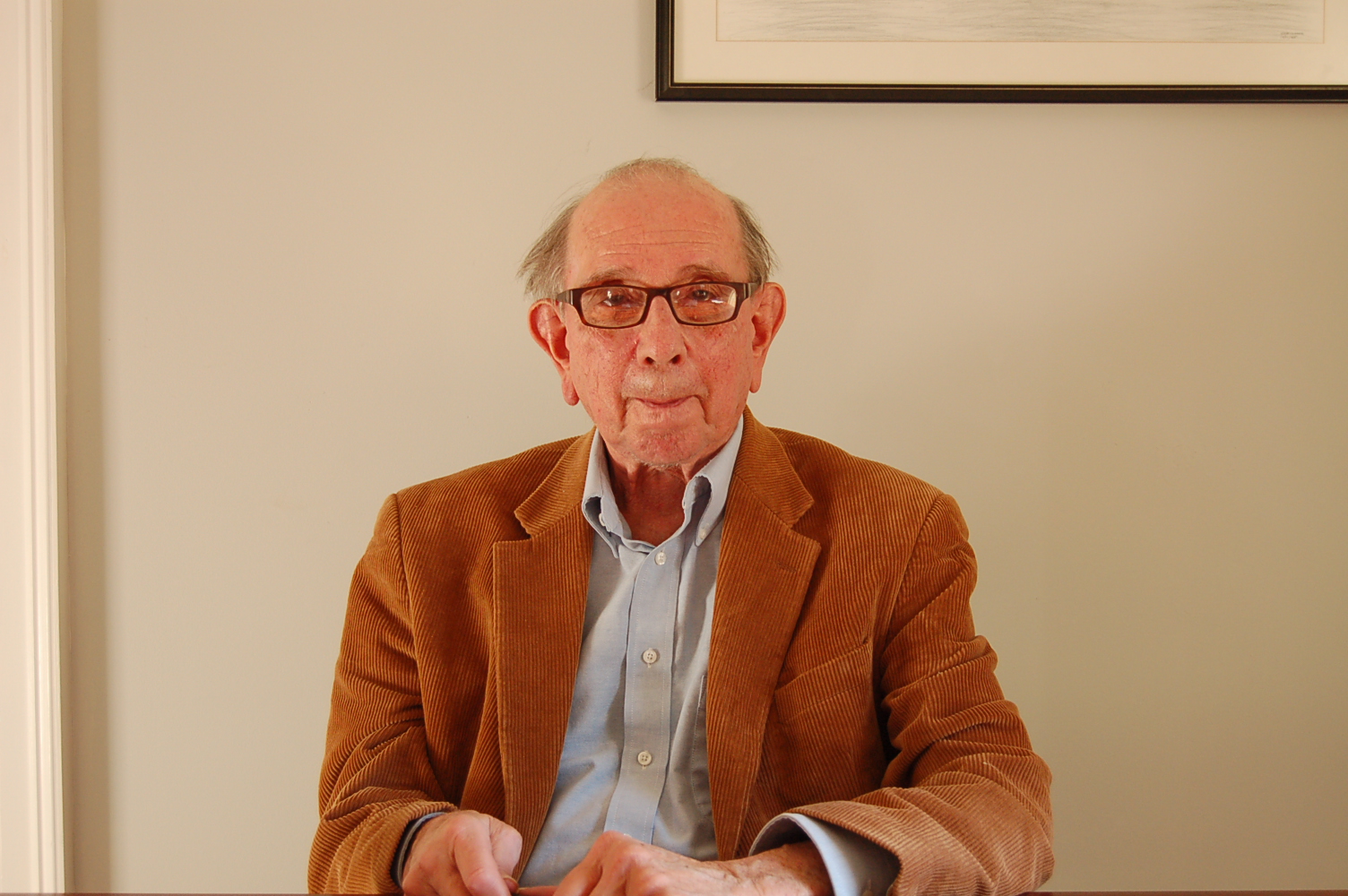
Noel Dries plays an important role in the overall establishment and maintenance of Hyde Hall in the Cooperstown, NY area. He was born in Springfield Center and still lives there today. His historical knowledge of the area is expansive. Mr. Dries was a chemistry and physics teacher in Walton, NY for many years. After his retirement he became heavily involved in Hyde Hall as well as Saint Mary's Church and the Springfield Historical Society. He is very knowledgeable regarding the transfer of land and its usage on the northwestern part of Otsego Lake. Mr. Dries's parents worked on the Cary Mede estate, located directly next to the Glimmerglass Opera today.
During Mr. Dries's life he has seen many changes in the area. When he was a boy the area was full of small dairy farms. Over the years these small farms were forced to close due to technological and economic changes in agriculture.
Mr. Dries's recollections of his time spent on Cary Mede and growing up in the area provide wonderful insights into the changing face of the area over many years. He recalls fond memories of swimming in Otsego Lake as a boy and current efforts to make Springfield Center a historic district. Additionally, he discusses the challenges facing Springfield Center and what he believes can be done to ensure the long-term success and growth of the area.
I interviewed Mr. Dries at Hyde Hall. As a volunteer in the collections department he is intimately aware of the history of the home and how it is relevant to local history today. Hyde Hall is located in Glimmerglass State Park at the north end of Otsego Lake.
Mr. Dries speaks in a clear and proficient tone. Very few changes were made to the transcript as his dialect and thoughts are highly organized and easy to follow. He refers to numerous people and places throughout the area. All spellings were confirmed with Mr. Dries for accuracy. As the interview took place at Hyde Hall, there was a bell that rings as people come in and out of the building. It can be heard a few times throughout the interview. Additionally, there was a fly that can be heard flying by a few times during the interview.
-
Transcription
-
ND = Noel Dries
MO = Melissa Olsen
[START OF TRACK 1, 0:00]
MO:
This is the November 11th, 2014 interview of Mr. Noel Dries by Melissa Olsen for the Cooperstown Graduate Program's Research and Fieldwork course recorded at Hyde Hall. Thank you so much for being here today Mr. Dries.
ND:
You're welcome.
MO:
Would you tell me a little more about where you were born?
ND:
I was born in Cooperstown, NY at the Bassett hospital when it was essentially just a little field stone building surrounded by all of the modern structures today.
MO:
Perfect, and I understand that your parents worked at Cary Mede.
ND:
That's true, that's right.
MO:
Okay, would you tell me a little bit more about them?
ND:
My mother was a native-born Springfield family in Springfield for hundreds of years, or two hundred years. My father was a transplant from Brooklyn, NY. His sister owned property here and that's how he came here at the time of the depression and he worked at Cary Mede as a groundskeeper and so forth for almost forty years.
MO:
What was it like for you growing up on the Cary Mede estate?
[TRACK 1, 01:32]
ND:
It was country. I was a young child. Where the current opera is now it was a dairy farm. The property was owned by Bradley and Jeanette Goodyear. It was really a gentleman's farm; he had employees that did the work, but it was not a huge dairy complex where you were exporting milk and so forth. It was just mainly for private consumption. Then, in the early 1950s their youngest son Tom came back from a mini career in sales and started operating it as a turkey farm. So the milk cows and the pigs disappeared and they were replaced by Beltsville turkeys, white turkeys. He ran that as a farm from say the early 1950s until the mid-1970s. Then he became interested in the opera at that time. Subsequently he was out of the turkey business and ultimately he gave the farm part of Cary Mede to the opera and that's how the opera house happens to be at the north end of the lake rather than the south end of the lake.
MO:
Could you tell me a little more about the Goodyear family?
ND:
They were from Buffalo. One of the things that happened, the land on the northwestern shore of Otsego Lake, the lake, was part of the hundred-thousand acre Croghan patent. Six thousand sixty acres of land was transferred to Colonel Croghan's only white daughter and her husband Augustine Prevost. I say only white daughter because he had several Indian children. Augustine Prevost built a log cabin at the head of the lake. We don't know exactly where. It's somewhere in the area between where Swanswick is now and where Cary Mede is now. He erected a sawmill and was there for a brief period of time because he was gone by the time of the Revolution. His father was a general in the British military and was very much involved in the Revolution, mostly in the southern states. At some point in time, a man by the name of Cornelius Low, a New York merchant, acquired the land. By that time, the land had been confiscated from Prevost because he was a British subject. I never really figured out I think land at that time had many speculators involved. So you won some, you lost some. Some you kept, some you lost. Some developed, some didn't develop. When Cornelius Low was there, obviously, he probably improved the Prevost log cabin. But he named the place supposedly Rose Lawn, because Mrs. Low was a Roosevelt. They said land changed hands very easily if you didn't pay your mortgage or your taxes. Ultimately the land became part of the Low family, to a lady whose name was Helena Kipp; she might have been a Low niece or possibly sister. Because what they did at that time, they simply named their children after their siblings. So you have three Cornelius Lows, one of which has nothing to do with the other two. You have two or three Helena Lows. One was a niece and one was a sister. You don't really know unless you have their exact birth date. It ended up that Cornelius Low supposedly was leaving the land to his daughter Ann who had married Richard Cary who had been for a brief period of time an aid to General Washington early in the Revolution. I think he lasted about a year. He was a Bostonian, and of course the thing was all the New Englanders did not trust that man from Virginia as being the head of the Army so they made sure he was surrounded by their folk of which we assume Colonel Cary was one. He was an aide-de-camp on record and after the battle of Long Island he seems to have disappeared. Subsequently, he married Ann Low. At the time, I believe it was in 1793, he and his wife purchased the land, now usually the man purchased the land and it was sold by the husband and wife, because of the dower rights, but it was purchased by Richard and Ann Cary, the deed is on file in Cooperstown at the clerks office. That was the same land that she was supposedly to inherit from her father. One of the kooky things about it was they purchased the land from the Kipps before her fathers will was signed. So you see all these really crazy things and it is a mystery. One of the conditions of leaving the land to his daughter Ann was that she return to the name of Low, not Cary. So whether he did not approve of Colonel Cary or not, who knows. The Carys bought the property and they say it was in 1793 that the deed is signed. They might have been here for a couple years before then, who knows. [On] some of this land people were there before they bought it. Colonel Cary was a debtor. Strangely enough due to his debts he was placed in confines in Cooperstown and became quite close friends of the Cooper family. In the meantime Hannah Cooper, the beloved daughter of Judge William Cooper, was thrown from a horse and died. When Colonel Cary was on his last leg, so to speak, he said the only way of getting into heaven was on Hannah [Cooper]'s apron strings. So consequently, he is buried in the Cooper plot, by Christ Church, next to Hannah Cooper. Whether he got into heaven or not, who knows. Then of course [a] daughter, [Ann], of Colonel Cary married as her second husband George Clarke. Her first husband was Richard Cooper. Her second husband was George Clarke. She had Cooper children and she had Clarke children. But she was essentially the first lady of the house here at Hyde Hall. There was another sister Mary, who married a man by the name of Lyman White. They, Lyman and Mary White, essentially had the land where Cary Mede is now. Their name doesn't officially appear on a deed until I think the late 1800s. The house that I live in is the house that Mary and Lyman White lived in. It's certainly nowhere as elegant as Hyde Hall. I believe at that time the land that they had at the lake, where Swanswick is now, was called Low's Grove. In fact when Clinton's Army came through here in 1779 the detachment of artillery camped at Low's Grove. As I said, it was also called Rose Lawn. When those names came about or were changed or were interchangeable I really don't know. In the early 1800s it was called Rose Lawn. One of crazy little things that happen was that Richard Cary was a debtor. I am not sure the year, 1804 or somewhere in that period of time, Richard Cooper paid off one of Richard Cary's debt for $150. He claimed 150 acres of land. Which was an extraordinary non-descript deed because it went 1000 feet [on] the old patent line between the Croghan patent [Prevost Tract] and the Springfield patent, which would essentially be, I think, about the middle of the 5th fairway on the Otsego golf course. Turned at a right angle, it does not say left or right, east or west, it couldn't have been west or right because Colonel Cary did not own 150 acres of land on that side of that lot. So it had to be eastward, or to the left. It went as far as to that, a line drawn perpendicular with the first, included 150 acres. That would put the land, including where Swanswick is today, where Mrs. [Suzanne] Kingsley lives, it would include the current land that the [Glimmerglass] opera is on, it would include Cary Mede, it would include part of Mohican Farm, which is the Spaulding place that was torn down in 1978 or 79 which was a magnificent white house. The reason I'm bringing that up in this context is that Richard Cooper owned the land so it would have gone to his heirs, not Cary heirs. So when Mrs. Cary died, she did not leave the house to her daughter Anne Low Cary Cooper Clarke because Anne Low Cary Cooper Clarke already probably owned it. Her deed, or her will, is at the NYSHA library and it says nothing about leaving the house to her daughter. Anyway, after George Clarke, the builder of Hyde Hall died his American heir was his son who was not twenty-one years old yet. George Clarke died in 1835 I believe, George Jr. was born in 1822. At some point in time when George Clarke Jr. reached majority his mother went to live at her family homestead [Rose Lawn]. Somewhere at that point in time she left it to her son, Alfred Cooper Clarke, who was conceived while Richard Cooper was alive but was born after Richard Cooper died. Was he a Cooper or a Clarke? But she left Swanswick to her son, Alfred Cooper Clarke, whether he changed the name from Rose Lawn to Swanswick or whether she did we really don't know. But by the 1860s it is referred to as Swanswick. Swanswick has significance because it was Clarke property in England, only called Swaineswick. I think you can tell I am interested in land. That's one of my interests here at Hyde Hall to try to piece out all this land. The extraordinary thing is George Clarke, the builder of Hyde Hall, was left supposedly about 120,000 acres of land in New York State. Which by the time he came to it it was about 56,000 acres from his great grandfather [also a George Clarke], and his grandfather who was Edward Clarke, and his great uncle who was George Clarke Jr., who was the secretary of the province of New York. But he did not own this land, where Hyde Hall stands. He purchased the land from a man by the name of William Gilchrist who had purchased it from the estate of William Cooper. William Cooper did buy a little land in Springfield, probably lake land because this was the transportation corridor from the Mohawk Valley or the Great Western Turnpike, south. A good many people say that George Clarke had all this land around here but he didn't have a lot of land around here. He had land in the town of Middlefield, the long patent, and he had a great share of the Cherry Valley patent. But he had no land in Springfield. Even though his great grandfather as governor, granted the Springfield Patent during his administration. Do you have some other questions?
MO:
No, that's wonderful. Returning to the idea of Cary Mede as a turkey farm at one point, can you tell me more about turkey farming in the greater Otsego region?
ND:
There was not enough acreage to support a huge dairy farm in the beginning. There was not enough room. There was not enough acreage to support it, to raise the crops to do it. By the 1950s the small farms were starting to go out. You had to mass-produce which meant you had to have more land and greater facilities. Which Cary Mede was not ready to do that. Poultry was coming into vogue at that time as a sustainable occupation but it also kind of fit in with more of a gentleman's farm, a small farm. It did not take a lot of manpower. You bought your turkey feeds in the store and you raised the turkeys in pens. Also the process was kind of a boutique niche because you had the usual Christmas and Thanksgiving turkey business from the stores and individual customers, but he also had a turkey package that had your sausage in it and your cranberry sauce and a plum pudding and you put a red bow around it, the turkey, so it made it a more festive thing. [Many of the local restaurants served Cary Mede turkey.] But it was still a small scale. There was never any thought of increasing the size of it. A couple thousand turkeys were raised a year so it wasn't really designed to be a true moneymaker. It was designed to sustain the property. Pay the taxes.
MO:
And can you tell me more about how dairy farming changed over the years?
ND:
There were several small farms. When I say small I mean 75, 100 acres, maybe 150 acres at the most. There were several [farms] back 150 years ago before modern refrigeration and so forth. Your dairy farms, they made cheese. That was transportable. Gradually with the railroads and so forth your small farmer could haul the milk in mechanized vehicles and so forth. You could haul the milk to the rail station and ship it off in a refrigerator tanker to the city, to New York. In the mornings you would see this big truck come buy and pick up the milk cans and haul them off to the creamery. There were creameries that did processing. There were creameries in Cooperstown. There were creameries in Cherry Valley. Creameries in Van Hornesville. Much of the milk went to the Mohawk Valley where it got on a train and went to New York. But that was really not sustainable. Your farm size had to increase. So by the 1950s the small farmer started to go out of business or consolidate some, and the larger farms came in. I believe even until about twenty years ago there were still twenty-six dairy farms in the town of Springfield. It wasn't the small farmer that milked ten cows; it was the farmer that milked dozens of cows. Now there are very few farms in Springfield. I think Waterpoint is one of the last large milk producers. There are still some small ones, but you don't see them around the way they were fifty years ago, or even twenty years ago. Many were farms and they still do grow crops that they do sell, hay grain, and so forth, so you still see the crops in the fields. There are some individuals that do grow beef.
MO:
How else have you seen Springfield Center change since you were a boy?
ND:
The farms never really sustained all the family members. The children had to work somewhere else or be employed somewhere else. There were a number of individuals who went to Canajoharie and worked in the Beech-Nut factory. They canned baby food and so forth. There was much more industry in the Mohawk Valley than there is now. Utica had the cotton mills. Ilion, Utica also had manufacturers so we had people who used to work at Remington Arms [in Illion] or Savage Arms. Which that industry is gone now. But you had a number of people who went away from home to work. Of course with the influx of homegrown industry by expansion of the [Otsego] county [offices] and the Bassett Hospital, now many people are working for Bassett Hospital. When I was born at Bassett Hospital it was just a little field stone building. It employed fifty people. God knows how many people they employ now. Of course the county services have expanded as well. You find many people who fifty years ago, seventy five years ago, worked for the county now a much higher percentage of people work for the county or Bassett. Of course many people have left since industry has left Mohawk Valley. Very few people go to the Mohawk Valley to work. You had basically two thriving villages in the town of Springfield. You had East Springfield, which was the intersection, which is now Route 20 and County Route 31, and then Springfield Center was the second little village, technically called a hamlet. But there was industry in Springfield Center. Around 1830 or so a man by the name of Oliver Newell Shipman had his Spring and Axle Works, it was the iron foundry in Springfield Center. He made plows and other farming machinery. A relative of his was Squire Whipple who had devised a metal truss bridge. They couldn't afford to build stone bridges across the Erie Canal. They built wooden bridges that rotted away very quickly.
[START OF TRACK 2, 0:00]
ND:
So Whipple devised this Whipple truss, which was an iron bridge that could be made somewhere, shipped somewhere, and fabricated on site. We assume that Shipmen Spring and Axle probably made a lot of those Whipple truss bridges that were shipped across the state of New York to [span] the canal. There again, we're far away from a source of iron and a source of fuel. Coal mainly, which you need for the big iron process. So ultimately, at the end of the Civil War Shipmen Spring and Axle moved to Fort Plain then it moved to Ohio, then it went through a gyration of ultimately disappearing. Of course [at that time] Buffalo became a huge steel manufacturer, and of course you had Pittsburgh. The iron mongering had taken place in Albany too at that time. But as I say, when I was a young child you had two very viable communities, Springfield Center and East Springfield. East Springfield had a grocery store, a general store, [Post Office]. Springfield Center had two grocery stores; they were both kind of general stores [Post Office]. And you had garages and back before my time, there was a millinery shop at Springfield Center. So you didn't have to go to Cooperstown or Cherry Valley to buy your Easter bonnet or clothes. I suppose if you needed a good suit you had to go somewhere other than Springfield Center. Both the little villages were quite self sufficient in many ways.
MO:
Can you expand on other types of industry that were big or popular during the same time in Springfield Center?
ND:
There really wasn't any. We had a sawmill which was mostly catered to by local farmers that would cut their logs and would take them to the sawmill to have them sawed into rough lumber, for use on their farm and in construction. Back in the mid-1800s there were at least two cheese factories in the town. There was the one up on 31, Grayville. There was another one over on Route 20 near the intersection of Route 20 and Route 80. That was a cheese factory. There again they employed some local people. When you had too many kids to work on the farm you would send them to work at the cheese factory. Whether it was a boom or a bust is debatable. George Clarke Jr. [son of the Builder] had a mania for owning land. He acquired a lot of land in Springfield. He had over twenty-five thousand acres in Springfield and a comparable amount in Middlefield. He was the type that he mortgaged land to buy more, and the house of cards fell. He was also involved in the hops and growing hops. He was one of the foremost propagators of hops in the area. Of course, the hops market was very touchy. Some of the better houses that you see in Springfield dating from the 1800s were probably built with hops money because you could buy hops at five cents and sell them at 85 [cents] so money could be made and lost in a hurry. So there were a number of very nice houses that were built in the 1800s in Springfield that probably came from hop money. They didn't come from milking cows or selling cheese. George Clarke made money in hops but he lost more in hops than he made. At the time of his bankruptcy, which I think was around 1885 and the first creditors had been chasing him, but it was 1887 when things ultimately fell apart. He owned all the land north of here on the west side of the lake. His nephew Leslie Pell Clarke, and this is where things get more convoluted than ever Leslie Pell Clarke, his mother was Anna Clarke Pell who was the daughter of the builder of Hyde Hall. She was married to a man by the name of Duncan Pell who was a Newport type. He was Lieutenant Governor of Rhode Island at one point in time. Alfred Cooper Clarke, who was the questionable child of Ann. Alfred Cooper Clark was married and had a child that died young, but he had no heirs. So he left Swanswick and the land he had inherited from his mother to his nephew Leslie Pell, if Leslie Pell would assume the name Clarke. So the child that was born Henry Leslie Pell became Leslie Pell Clarke. He was more contemporary of the third generation of Hyde Hall, of G. Hyde Clarke, [grandson of the Builder and son of George Jr. who is called the Bankrupt.] [George Jr.] who we don't like to call the bankrupt. He [should] probably be called the land baron, he did go bankrupt, but land baron is a little bit more indicating of what he actually was. Leslie Pell Clarke and his mother Anna Pell were also creditors of Anna's brother George Jr. who ultimately went bankrupt. It was due to the fact that he owed them money that Hyde Hall was saved to the family. It was sold at auction, but apparently in those days when you bought it if somebody could come back and give you the money you could reclaim the property. Of course this is what they did. Leslie Pell Clarke gave the bankruptcy judges their money and wanted the house back. Subsequently, Mary Gale, who was G. Hyde Clarke the third generation's wife, she had some money from her family in Cooperstown. She was able to reimburse Leslie Pell Clarke. In the meantime, here was all this land for sale. Leslie Pell Clarke had friends. One was Henry Lansing Wardwell who bought the land just north of here on the east side of the lake. The purchase was in three parts, one was from the Sheriff, one was from George Jr.'s widow, and one was from somebody else. It was pieced together in various ways. He also had another friend Arthur Ryerson who bought the land from him at the head of the lake. Consequently, the land at the head of the lake was never available to be developed the way the western shore of Otsego Lake was and as it is now. It was held pretty much in three or four families. You had the Clarkes of Hyde Hall and you had the land that was sold to the Wardwells who took the rest of the land to the head of the lake, then you had Leslie Pell Clarke who had the land at the head of the lake that ultimately was sold to the Ryerson family. Leslie Pell Clarke was also married, but he had no children. There was no one to leave it to. That generation for one reason or another, they were quite community minded. He built or was responsible for building the Saint Mary's Church complex in Springfield Center. There was an Episcopal church in East Springfield that has been long gone now [for the lack of a congregation.] Leslie Pell Clarke also was responsible for building that building that is across from the public landing road from Saint Mary's Church, which we still call Town Hall. It was built as a Guild Hall, where organizations could meet; you could have your dances, and put on dinners, and vote, and put on theatrical productions. At the time, [at the turn of the century], it was anticipated that the railroad would come to Cooperstown and possibly either connect with the Mohawk Valley at Fort Plain or connect with Richfield Spring. The road at Richfield Springs came in from Utica. That road never materialized, but there was a huge building right next to the little post office in Springfield Center that was a gristmill. It was four stories high and the second, third, and fourth stories were supposed to be office buildings. At one time people thought something big was going to happen in Springfield, which never did. Ultimately, Richfield Springs was a tourist mecca because of the mineral waters. It was on a level at the same time as Saratoga was, but Saratoga took off more because they had horses. Richfield Springs had the mineral waters and that's why Route 20 through Richfield Springs is very wide for a village street. We had several large hotels. One of the big attractions was Fenimore Cooper as he was still a literary personage. People would come over from Richfield; they would bring a stage over on what is the Allen's Lake Road now to Otsego Lake and take the steamer to Cooperstown. They would pay homage to Fenimore Cooper's grave or whatever. Apparently one of the people that had been on this stay in Richfield Springs was Samuel Strong Spaulding who had a streetcar business in Buffalo. He came and he bought land at the foot of the Allen's Lake Road, from Leslie Pell Clarke, and he built his Mohican Manor, which was a magnificent, huge white house. It had a carriage barn, stables, and he built essentially those white barns you see along Route 80 today. It was his farm and it was a gentleman's dairy farm; it was never built for major milk production. It was local consumption only. In any event, that kept the north end of the lake pretty well protected from outside development. Once you get below where Mohican Farm is now those summer camps seem to have sprung up like fenced in chickens. In fact it was one of those things maybe, about fifty years ago when they had three land owners and they said you know I have 100 feet of lake front, and I have a 100 feet of lake front, and I have 100 feet of lake front but there was only 100 feet there. So that's why you look at the tax maps for some of that property. One might have seventy-five feet and one might have fifteen feet and one might have ten feet because they are all claiming the same 100 feet of lakefront.
MO:
In addition to Hyde Hall you volunteer at Saint Mary's Church, which you talked about earlier.
ND:
I am very much involved in Saint Mary's Church.
MO:
As well as the Springfield Historical Society, can you tell me more about those organizations?
ND:
You can tell I'm interested in history. After I retired from teaching in 1994 I taught Chemistry and Physics in Walton, NY, in a public school. After I retired from that I came back and a colleague of mine, who had retired a few years before I, said don't get involved in anything for at least six months because everyone is going to be after you. I said I'm already pretty well spoken for because I have the church and I was involved in the library at that time in Springfield Center. I think I got my time pretty well spoken for. A couple months later this man came and spoke to me and said would you like to be in charge of the local cemetery and I said let me think about it. The next day I walked into the post office and they said oh I hear you're taking Harland's job. So, I had an unexpected new job, which I've since retired from that. But I did it for eighteen years and I felt that was long enough. But I've been an Episcopalian all my life and been involved in the church. And of course as I said, I got involved in the cemetery and the wife of the man [Harland] who had been in charge was very much involved in the historical society and of course a lot of the historical stuff that people want to know is buried there and something about them. It was kind of a natural thing that I would be corralled into the historical society without any opposition. We were very much involved, very much interested in having Springfield, the patent, which we worked at for a number of years, to be declared a historic district. Some of our native town residents were very much adverse to it. I think it was a lot of misinformation that they had. There is mistrust for government. I think many people in this area just don't want to have anything to do with any government control that is seen or unseen, or imagined or unimagined. Consequently, the area around the lake is in the Glimmerglass Historic District, which has created no problems for anyone. But we went by the Springfield patent as being a historic district, which was disappointing. Because it would have meant that we have a lot of property that needs help and people would be willing to buy it and do something with it if they could get the tax write off or get the grants to do it. But some of our townsfolk couldn't agree with that.
MO:
Could you expand on some of the concerns they had around making it a historic district?
[TRACK 2, 21:58]
ND:
Who knows, who knows? It's just, we've never done it and we aren't going to do it. You talked to those people in Cooperstown. Doesn't make sense to me. But then you know I look at the mentality, as I said I taught Chemistry, and sometimes it was very hard to say sulfur is yellow. That's not yellow, it's canary. Sometimes things just don't make sense to some people.
MO:
What do you think is one of the biggest challenges facing Springfield Center right now?
ND:
When I graduated from Springfield Central School, it was a small school; I was in a class of thirteen. We had a few dropouts as soon as they turned sixteen. Most of the class sizes would have been eighteen or twenty. Then the Springfield School merged with Cherry Valley. There aren't any children in the town of Springfield It's the sustainability of a community. We have people that come that have summer homes here. There's no abundance of employment to attract people to the area. Not everyone can work for WalMart. I think as a community it's the sustainability [issue]. The Roman Catholic Church in Springfield closed their doors a couple of years ago because they didn't have the congregation to support it. It's the sustainability of the community. There will always be people here. You have the fire department. But there used to be a Masonic Lodge, and an Eastern Star, and DAR [Daughters of the American Revolution] chapter and you had other groups that played cards or sewed or did something, but you just don't have those people anymore, to keep a sustainable community.
MO:
What do you feel the town could do to help address this issue?
ND:
This is one of the things that we hoped with the historic district, that it would attract people to come in and take over some of this older property, as years go on some of this older property that hasn't been attended to is going to fall apart, rapidly now. Not that we would ever really bring a lot of young people in, which we really do need, but if you had a sustainable community of retired people or people that were here not only to maintain the tax base but to keep something going on.
MO:
How about the [Springfield] Historical Society, can you tell me more about how they interact with the town?
[TRACK 2, 26:39]
ND:
There is for and against. It is amazing because, I think, in the last couple years with some of the baby boomers being of retirement age they are interested in genealogy. So we've had people working because we do have some genealogical records and it's a place to work. Some people are afraid to go to the NYSHA library but they don't mind coming and hanging out with us. You have, you know, people who are interested in genealogy and then of course you have those that could care less about anything. We've had occasional programs that we put on. We're in the process now of having a website which we hope will give us exposure and will link to things like the Fort Plank site, the Three Rivers site, the Hyde Hall site, obviously. We're hoping when [they visit the site] it will be easy to click on things and search about themselves. Right now it's in the development phase, it's going to happen but how fast it happens. But it will happen.
MO:
What is a fond memory you have of your childhood?
ND:
Swimming.
MO:
Swimming in the Otsego Lake?
ND:
This is another thing too, in Springfield you have lake people and people that hate the lake. But certainly as a child learning how to swim and being able to swim was great fun. I think of all the people around here who don't know how to swim because they are not close to the lake. When I was still in high school there were a couple boys older than I, that could swim, and they started the first swimming program because they were amazed [by] the number of children that couldn't swim. So they set up this swimming program where a school bus picked up children in East Springfield and Springfield and brought them to the lake and that program has been going on now since 1952 or 53.
[START OF TRACK 3, 0:00]
ND:
The lake is our treasure. In all the gyrations of what we should do, but it is part of the charisma of this area.
MO:
Absolutely.
ND:
Swimming was, I think, the highlight because you know you couldn't wait for the ice to leave and for it to get warm and play in the lake.
MO:
It means spring is around the corner.
ND:
Spring is around the corner.
MO:
Wonderful, thank you so much for being here with me today.
ND:
Thank you.
-
Coverage
-
Hyde Hall
-
1938-2014
-
Cooperstown, NY
-
Creator
-
Melissa Olsen
-
Publisher
-
Cooperstown Graduate Program, State University of New York-College at Oneonta
-
Rights
-
New York State Historical Association Library, Cooperstown, NY
-
Format
-
Audio/mpeg
-
28.8mb
-
28.7mb
-
816kb
-
Language
-
en-US
-
Type
-
Sound
-
Image
-
Identifier
-
14-021
-
Abstract
-
01:32 - Cary Mede Estate
-
21:58 - Historic Districts
-
26:39 - Springfield Historical Society