-
Title
-
Joan Bruneau, November 10, 2014
-
interviewee
-
Joan Bruneau
-
interviewer
-
Caitlin McCaffrey
-
Date
-
2014-11-10
-
Subject
-
Middlefield Orchard
-
Farmers' Market
-
U-Pick
-
Description
-
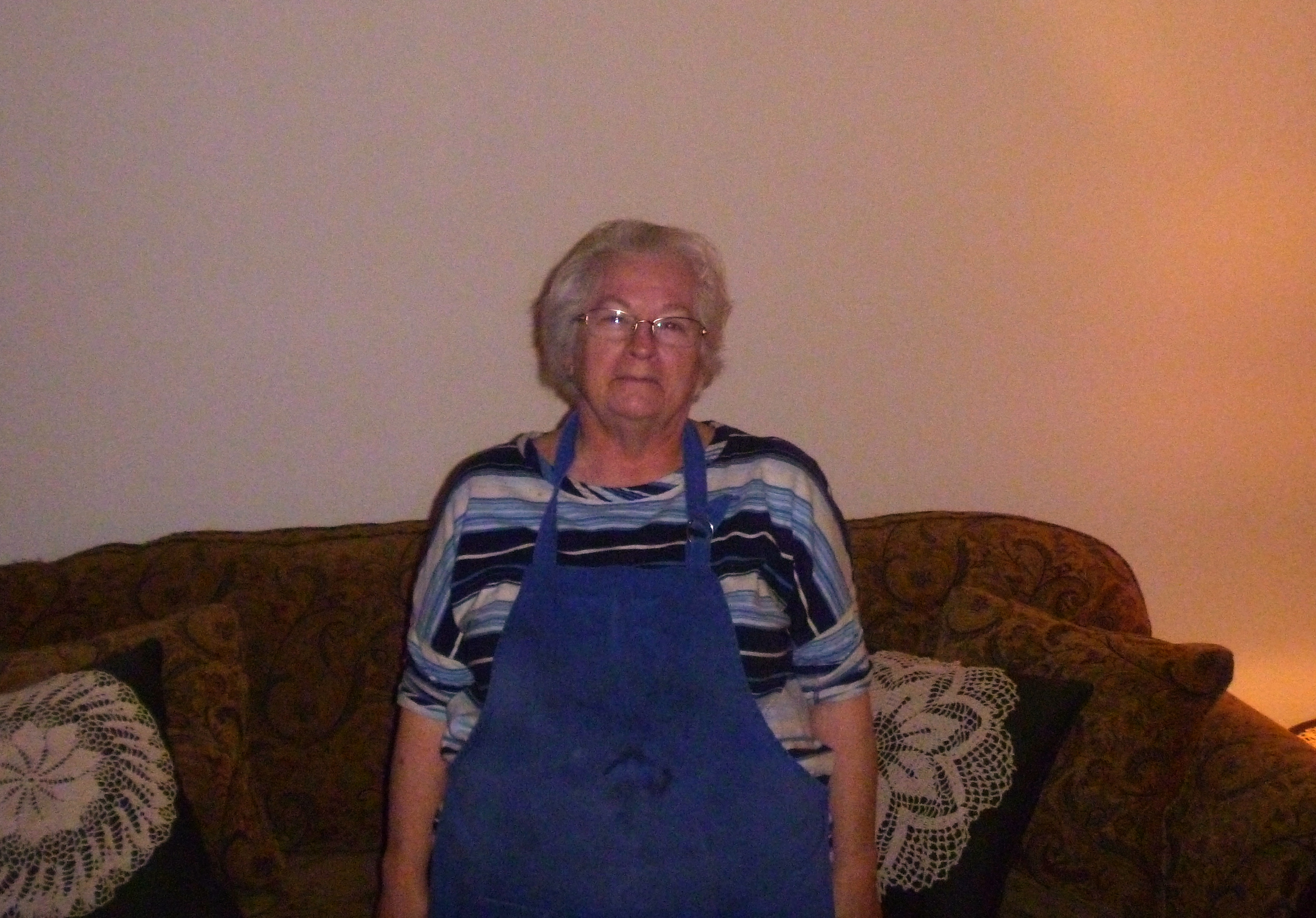
Joan Bruneau, the owner of Middlefield Orchard, has become an important part of the Cooperstown community because of the farm-grown goods she brings to the area. Joan Bruneau, and her husband Willy, have owned and operated Middlefield Orchard for the past 12 years. Their delicious jams and farm-grown products have become a staple in local farmer's markets, bed and breakfasts, and various stores in the area. Middlefield Orchard has also become a destination for families to from miles around.
Joan Bruneau was born in Miami, Florida in 1947 and spent most of her youth traveling around the world. As the daughter of a member of the United States military and World War II veteran, Bruneau moved from Florida to Wisconsin, to California, to Germany, to Washington State, to South Carolina, and from there to Hawaii where she graduated from high school.
While in Hawaii, Bruneau experienced some difficulty being one of only a few white students at her school and church. However through her membership in the Church of Jesus Christ of Latter Day Saints, or the Mormon Church, she met her husband, Willy. After graduating high school, Bruneau went to college at Brigham Young University and graduated with a Bachelor of Science in genealogy. During this time Joan Bruneau also married Willy Bruneau and they moved to Massachusetts.
Joan and Willy led a happy life in Massachusetts where they raised a family and had successful careers. Bruneau owned her own bookstore, as well as lectured and taught classes about genealogy. After Bruneau's husband retired, they moved to Central New York and established Middlefield Orchard.
Joan Bruneau and Willy work hard to participate in local farmers' markets as well as welcome people to the orchard to pick their own apples, strawberries, and raspberries through the U-Pick program. They are always looking for ways to expand and build on the success of Middlefield Orchard.
While Bruneau stays extremely busy with all of the demands of running an orchard, including twelve-hour days preparing jam as many as three times a week, she still maintains time for church and volunteering at the Family History Center. Through her volunteering, Bruneau helps locals to research their family members and their histories.
I interviewed Mrs. Bruneau at her home in Middlefield Orchard in Cooperstown, NY. She was in the middle of preparing loaves of bread for the upcoming farmers' market; as a result the researcher will hear a timer go off during the second track of the interview. This interview was a live recording and therefore contains some beginning of sentences, which trail off and a new sentence begins. Researchers are encouraged to listen to the audio recording as well as reference the transcript for greater context.
-
Transcription
-
Cooperstown Graduate Program
Oral History Project Fall 2014
JB = Joan Bruneau
CM =Caitlin McCaffrey
[Start of Track 1, 0:00]
CM:
This is the November 10, 2014 interview of Joan Bruneau by Caitlin McCaffrey for the Cooperstown Graduate Program's Research and Fieldwork course recorded at Middlefield Orchard.
CM:
So tell me about where and when you grew up?
JB:
I was born in 1947 in Miami, Florida. Did not stay there long. We moved to Wisconsin, where my mother is from, and we stayed in Wisconsin for a couple years. My father had been in World War II and in Wisconsin he had several recurring bouts of malaria that he had got during the war in the South Pacific. Malaria was hard to treat at that time, so he rejoined the army because they had the most advanced medical treatment. From Wisconsin we went to California, California we went to Germany, from Germany we went to Washington State. From Washington State we went to South Carolina. From South Carolina we went to Hawaii where I graduated from high school.
CM:
That is a lot of places.
JB:
That is typical military.
CM:
Did you have a favorite place where you lived?
JB:
A favorite place. You know I enjoyed every place that we lived. I think, as you grow older you appreciate where you are. So, the places that we lived when I was a little more observant, I probably enjoyed them more. In Washington State I discovered geology and rock hunting and that is a very fertile ground for that type of thing and in South Carolina it is also. You would not think of South Carolina being a geological area, but it was once under the ocean and there are sand deposits that are the purest in the United States, so they use them for the glass for the astronauts. In Hawaii it is just a beautiful area and that is where I met my husband.
CM:
What got you into geology?
JB:
I do not know, accept that we lived close to Mount Rainier. We had a spring-fed stream as our boundary in the back. Everywhere you went there were agates and there were jasper and there was all these semi-precious stones. You could look at different things and see how it was made. I used to go around making fossils so someone could find the perfect fossil. When you are a kid you do things like that. We lived in Germany before we moved to Washington State. We were confined because there was still some hostility among the German people so we had to be on the base and sometimes we were escorted to school. When we moved to Washington State we were free. We could run, we could go in the woods; we did not have to have a chaperone with us. We could just play, and so I think that was just part of the attraction to Washington State was with the freedom of movement and discovery.
CM:
Can you tell me a little bit more about what school was like going from place to place?
JB:
School was very interesting. Started kindergarten in California and when we went to Germany, we went to an American school and we had to learn German and that was scary and that was fun because we, my sister and I, learned to be translators for my parents. So when we would go shopping with my mom we would translate for her and I do not remember school being particularly hard or anything like that, but it was multicultural. It was just all kinds of kids from different countries and that was good and then we went to Washington State, we were out in the country. It was a two-classroom school and we got on the bus and went into the city for gym because we had no gym. We went to the local YMCA and had swimming lessons and gym, exercise and things like that. My eighth grade graduating class there were eight of us. It was totally different, totally, totally different. Everybody knew everybody and everybody was friends. That was good, and then we moved to South Carolina for my first year of high school and it was heavily military, so you know, people from everywhere again. But also, you knew that you had to make friends or they were going to be transferred or you were going to be transferred so I enjoyed that area too. Hawaii was scary. The first place we went to, because it was a huge high school and it was more local. Most of the kids went to different high schools. The high school we went to was more local and there were a lot of gang wars and you would think, you know, Hawaii would be more tolerant but it was not. There was a lot of racism there and so you would be in your last period of the day and they would say “take your books at your table and go to your bus. Do not go to your lockers. I repeat do not go to your lockers go to your bus.” And, you knew that some gangs were going to get together. So you did, you just went to your bus; you could not do your homework because you did not have your books. But, you know, the teachers knew what was going on. Then we went to a different high school in Hawaii and it was a surfer school, which was totally different, very much a don't-worry-be-happy school. That is the one I graduated from. The schools were all different. Good points, bad points. But, you know, a lot of people have said “wasn't that life hard?” It was in many ways, but my sister and I always had each other and I would not trade it for anything for the experiences and the places I have been and the people I met and learned from, no I would not, I would not trade it.
CM:
I can see that. Can you tell me a bit about your mother?
JB:
My mother, who lives with us. Have you met her? Oh. Mom lives with us now. My mother was born in Wisconsin and was pretty much raised in Wisconsin. During the Depression, her father had trouble finding work and they moved to North Dakota but then back to their homestead in Wisconsin and that's where she was mainly raised. She is the second oldest. There is her sister, my mother, twin boys, another boy, and then there were twin girls. But they lost one of the twin girls, so she was kind of the mother of the family. She kind of took care of everybody. After she graduated from high school her oldest sister convinced her to go to Florida with her. They got an apartment close to Miami. They found jobs and both; her sister and Mom met their husbands there. Mom's sister stayed in Florida and Dad went everywhere [laugh]. He rejoined the army and so we moved a lot.
CM:
So you mentioned that you met Willy in Hawaii?
JB:
I did.
CM:
Can you tell me a little bit about how you all met, your story?
JB:
We were towards the middle of the island towards the city of Wahiawa and my dad was offered the chance to teach military science at Kamehameha schools, which was a boys' military school closer to Honolulu. So we moved and I went to a different high school then. I had joined the Church of Jesus Christ of Latter Day Saints, commonly called Mormons, just before we moved to Hawaii. While I was in the second place in Hawaii, Willy, who was in the army, joined the church also. I was the only haole, white girl, there, the other girls really did not accept me, because I went to a different high school then they did. They said, “Well why don't you go with the single adults?” because I was a senior in high school. I went to their activities. So we met and started dating. Then he was out of the military, he went back to work for IBM and I went to Brigham Young University for college. We talked on the phone and wrote letters. He went on a mission for our church, when he got back I was in my senior year of college and we got married.
CM:
Can you tell me a bit about your wedding?
JB:
Our wedding, [laugh] I had sixty dollars [laugh] and that was our wedding. I had a good friend, who was also fairly short in stature, but she was from Mexico, so coming back from Hawaii I was blonde and she had very black hair. We were in the same field and did a lot of things together. So she offered her home and we had a little wedding ceremony with our Bishop who married us there. I made my wedding dress, I bought a wedding cake and I bought a veil. That was my sixty bucks [laugh]. After we had the wedding we went to the Salt Lake Temple and were sealed for time and all eternity and came back to Provo to my friend's house and had a little wedding reception. My grandfather came from Wisconsin; Willy's mother came from Massachusetts. My sister, of course, was there and my parents were there and just our roommates and friends. Very simple, very nice, cozy. I made my bridesmaid dresses for them. It is what you do when you did not have money and you are in school.
CM:
It sounds really nice.
JB:
It was, it was good memories, good memories.
CM:
What did you study at BYU?
JB:
I got a Bachelor of Science degree in genealogy.
CM:
Wow, very cool. I want to come back to that. But, when did you move to the New York area?
JB:
We moved here about twelve years ago. Willy graduated as an electrical engineer and he worked for Brigham Young University for a while with their computer departments and then was offered a job with Digital Equipment Company in Massachusetts. He is originally from Massachusetts and so we moved to Massachusetts and stayed there for over twenty years. Digital sold out to Compaq, Compaq sold out to HP, and when they did, Compaq and Hewlett Packard were working on the same product and you knew which one would be cut, and it would not be HP's. So they offered early retirement and Willy chose to take that and we looked for land and moved here.
CM:
When did the interest in farming come up?
JB:
Oh he has always been interested in farming and orchards. I grew up, Dad's family were farmers and mom's family were more dairy people in Wisconsin, but were farmers also. So everywhere we could, we had a garden and none of his family were anywhere near gardening but they always had an interest in it. In Massachusetts we had about fifty fruit trees and we raised all our own fruit and vegetables. We always had a cow and we had pigs and horses and we raised our turkeys. We did all that and it was just a natural way of life. You always did that type of thing. So it was just a natural thing. I had no concept, never dreamed of coming here and having over 10,000 fruit trees. No, it was never in the vision [laugh], maybe Willy's, but not mine [laugh].
CM:
Did you ever do any selling of your products when you were in Massachusetts?
JB:
No, no we never did. We used to give away the excess. The kids used to sell corn to earn cash or something like that, and eggs. Our youngest one had an egg route and went to our neighbors and delivered the eggs every Saturday. No we were not doing any of that. We did not need to; we had a very nice income.
CM:
So, Middlefield Orchard, how did you decide to start the farm and go into farmers' markets?
JB:
Well, when we moved here my parents had moved up from South Carolina where my dad had retired and they were living with us, but Willy had built them a home. We knew with the retirement package, that you almost had to have another income. The land in Massachusetts, the zoning when we built the house for Mom and Dad, destroyed our fields and so we could not farm we only had twenty acres. We had to find new land and Massachusetts's prices were just exorbitant. If you went to New Hampshire, the price was high but there is no property tax or income tax. However, your growing season is shorter. So, you know, you really could not do a lot unless you stayed close to the border. Willy got on the Internet and looked around and we took a couple trips to New York and I think as soon as we saw this property he fell in love with it. It was not even advertised. The realtor just knew that the farmer wanted to sell it. That determined the place, then it started.
CM:
Can you tell me a little bit about the process of how you began the business, what you had to do?
JB:
Okay, we started the house first; we finished it in May, the end of April, May. We moved in and that year we planted 2,000 trees. The next year we planted 2,000 trees and we kept repeating that process of 2,000 trees and 2,000 trees and it didn't take too long to ask “what am I going to do with all this?” And not having a huge amount of apples with just 2,000 trees because they have to mature enough to produce, the logical place would be the Farmers' Market, so we applied and we had to give them samples of our product and take a picture of what our little space would look like, and go through the committee and get their approval. You go in as part-time and they put you wherever they have an opening and so you go in and sell your product. Then we got more and more trees, more apples going, and so we started kind of compensating and branching out and selling apple products. Of course apples are very seasonal and so what do you do when the season is down? So I started baking and making jams. Then realized that you had to have your kitchen certified to do that, so we went through the process of getting a certified kitchen and getting the water inspected and doing all that kind of thing. Then we just started filling the demand. People would want a different type of apple, so that year we planted a different type of apple because that one, you know, several people asked for it so we would have to have that. We tried doing the peaches, which are not a success in this area. But the berries did very well and people really really like them. We expanded the berries and tried to meet the demand for the area, what they want and what we can reasonably produce. After a few years you get known and you get a permanent space so people come to you. Then we started selling out front, just a small little place, a self-serve. That did not work because people just were not honest, they would take the cash plus all the produce. So we moved it down farther and manned it and that is working out pretty well too. We are at the point we need to expand again. So it evolves, you meet the demand and then there is more demand and you got to meet that and then you have to do this so you can meet that demand, it just kind of snowballs.
CM:
What kind of expansion are you thinking about doing?
JB:
Oh, we are thinking about putting in a commercial kitchen so that I can do more baking. Right now some of our products have to be made by someone else in a commercial kitchen. I could make them myself here. Also, it would give me more space; I could do more at the same time. Willy does not have enough storage space in the winter to store the apples. He needs more storage cooler spaces. He needs more space for display of the product to sell down here. If we could sell basic lunches, hamburgers, hot dogs, soda, make donuts--things like that, especially on Saturdays, it would be very popular. There are a lot of things; you can always think of a dozen things that you could do to expand. You have to just put a priority, which is the most important to do. We invested in a larger tractor a couple years ago and that is ok but now he needs other equipment to go with that. Another greenhouse we will be putting in this winter/spring. Different things. Where do you stop? I don't know [laugh]. I have no idea.
CM:
You mentioned you had 10,000 trees on the property?
JB:
In order to be officially called an orchard, you need 10,000 trees.
CM:
Really? And are those all apple trees?
JB:
They are mostly apple trees. We have, well Willy has over 100 peach trees, but they are not producing. We had a lot of cherry trees, but a couple years ago we had some really really bad weather and it killed off our cherries. So we have to replant the cherries. He put in some pear trees, and they seem to be doing pretty well. So that is good. We have mainly apples, but we have the pears and the peaches and we will replace the cherries.
CM:
What varieties of apples do you have?
JB:
He has over twenty varieties of apples, and I am not sure I can name them all, because like I said, you plant the trees as the demand came in. One of the big demands that we did not have was Northern Spy and Willy planted more Northern Spies and they are very popular and I have learned how to use them and I like them very well. I don't know all of the varieties.
CM:
Last time I was here I saw you were finishing up some of the canning. You were boxing up cans; can you tell me a little about that process?
JB:
Was it the jam that I was doing? Yeah. I have jam sessions [laugh] and it is really fun! I am trying to simplify it. We were making 26 different types of jam, and that is just ridiculous. We are trying to cut it down to maybe the most, twelve of the most popular jams or whatever. When we have the strawberries come on I cannot handle all the strawberries at one time so I do a lot of strawberry jam and then I freeze and in January I will start making more strawberry jam. When the raspberries are on it is the same thing. When I do get the peaches, to keep up with everything, I put them in the freezer so that I can make jam year round. It differs, in the last four or five years Triple Play was the most popular jam, strawberry, rhubarb, and Triple Play. Well now, Grand Slam is more popular than Triple Play so you just kind of go with the flow. What everybody wants to buy you just make more of that particular type and obviously you can control that by how much you make. If you do not make enough Grand Slam, then people will buy Triple Play. But you try to meet the demand and you know there is a couple jams that we make that are very time-intensive and almost not worth the effort of doing it and so you have to at one point make the decision of not making that anymore. There is another jam maker in the market and we do not make very much of the same jam, so if I say I am not going to make this jam anymore, I will let him know and if he is making it he just increases and I just send people to him. “Well Gregory has it, go over and see him.” A jam session is a nine to nine day of just making jam and if it is a good day I can make 9-10 batches of jam in that day and that will vary from four jars to seven jars per batch. So 40-70 jars of jam, somewhere in there, that is a day's work.
CM:
How have often do you have jam sessions?
JB:
At least once a week, yeah. In the summer, it is very hard when there are multiple markets going on. My days to make jam get eliminated. When things slow down in January I will have two or three a week so it generally works out to maybe two and half days of making jam so that I can just get stocked up for the coming year.
CM:
Do you all have any animals on the farm?
[END OF TRACK 1, 29:59]
JB:
We used to. We have had several attempts at having chickens, but there is too much wildlife around. We encourage the coyotes because when they come out and sing at night the deer do not like it…
[START OF TRACK 2, 0:00]
JB:
…so it helps the deer out of the orchard, but we have mink that come down the little stream and they are vicious with the chickens. We have fox. We have, oh you name it. Anything and everything that loves chicken, raccoons will kill chicken, and skunks will kill chicken. We finally gave up on our chickens and right now we just do not have time to raise a cow or pigs as we used to. We just lost our dog and we just lost our two cats, and it is time to reconsider. We need another dog around, we really do. And we need another cat but I am not ready to be emotionally attached to them. In time.
CM:
Absolutely.
JB:
Yeah. You know, it varies. The dog really makes a big difference with the groundhogs and even the deer. The cat keeps the mice and the voles and all those things down. I am trying to get some wild cats, some feral cats to come around, and we have got one but where we encourage the coyotes, it is kind of hard to have the dog and cats around also. We have not hit the happy medium yet. We will. It will work out one way or another. My father, when he was alive, he used to raise beagles, so we always had a beagle around. And you know, it's a hound [laugh] it kept everything away, and yet was very friendly and loved children. That type of breed of dog.
CM:
Dogs are always nice to have around.
JB:
Yes, it is.
CM:
So you all have folks come to the farm during the summer. Do people come out here and do different activities?
JB:
When we open the U-Pick, which opens with the raspberries and strawberries, raspberries, similar time frame. Then people come out, school groups, they mostly come out when we start picking apples and then we have lots of groups. The local schools come, a lot of the churches and youth groups come and pick for food banks. We had one person who wanted to have their wedding here, you know, you do get a lot of that type of different... You know we have a lot of groups who come and when we have the corn stalk tipi and the hay fort the kids just come and play. Parents come out and buy two apples and let their kids play for an hour, and that is fine. You know if they live in an apartment, and this is a good place to come and run. They can scream and who hears them, and who cares? So, yeah that's good. Hartwick and SUNY come out with their youth groups and they do the corn maze. Different things, which is another area we could develop with hayrides and different things like that.
CM:
Did you reach out to these schools and church groups to come here, or did they start coming on their own? How did that go?
JB:
I think it was just word of mouth. You know, people would come just to do U-Pick and then they would say, “Well, can we have lunch while we are here? Can we bring our lunch?” Then some teacher would tell somebody that we did this and it just spread that way. We really have not advertised that aspect at all. We have not needed to. People have just developed and passed the knowledge on.
CM:
What exactly is U-Pick?
JB:
U-Pick is where you come and pick your own apples. You determine how much you want, you always pick more than you think you need. I cannot go in the raspberry patch and pick a pint; I always end up with two or three pints. It is a natural thing for people to do so we try to warn them and if they pick too many, that is fine. That is okay, they do not have to pay for and take home everything. Especially if you are on a budget, that can be devastating but some people come from quite a distance and pick a bushel or two. That lasts them through the winter and that is to make applesauce or apple butter or whatever they want to make. You go to the tree and you pick what you want, the variety you want, and which apple you want. You want that one from that tree, and a different one from a different tree. That is the fun of U-Pick. All the trees are dwarf so none of them need a ladder. So even the children can go pick apples.
CM:
Was that something you all planned, or did it just happen?
JB:
No, we planned to do dwarf trees. Most orchards--I do not know if it is most, but a lot of the orchards are going to the dwarf trees. They produce quicker because they put their energy into the fruit instead of the root system so they require more support at first. If you have a standard tree it puts its energy into the root system before it produces apples so you can wait for four to five years before the tree produces. Where a dwarf tree, the first year, will give you some apples. Although you do not want to burden it too much, you want it to adjust and grow a little before it starts doing that. The dwarf trees can produce two to three, three is really pushing it, but up to two bushels per little tree, so that is fine. They produce well. Because you can have more, they are placed closer together. They take less effort because you do not need the ladders and you do not need high extension to prune. Because most trees and orchards are pruned so that they look like they are water falling down. That is for picking purposes and the point of pruning is to get the sun into the inside of the tree. If you get them so that they are shaped like a mushroom you have got the sunlight in them already. With the dwarf tree you do not have to worry about that. You have to prune but you do not have the extensive pruning.
CM:
They are a bit more low maintenance.
JB:
Yes, absolutely.
CM:
Do you all have anyone who helps out around the farm?
[TRACK 2, 7:58-END OF TRACK 2, 9:23]
JB:
In the summertime we have college students and high school students who come and help maintain, plant, and in the fall pick and go and do some of the markets so Willy can be here and help out. We do not have any full time employees, but we had one young man who worked from freshman in high school to senior in college. So you know, you have to enjoy outside labor. I do have, off and on, someone who comes in and helps with the jam. I have someone right now who can come in. I have trained her. We have worked together and then she can come in while I am at the market on Saturday and make jam. Then I have jam made while I am not here and come back to having just had to label and package and that is wonderful. That really helps. [Timer beeping in background] But Willy needs more help outside, and that timer is going to go off forever.
[START OF TRACK 3, 0:00]
CM:
What is a typical summer day like for you? I know you said you have jam sessions, you probably do a lot of different things, but what are some of the tasks you do?
JB:
Mondays I go to the bank, pick up anything at the grocery store that needs to be done for me or for my mom. Then I come home and decide whether I need to bake or whether I need to make jam. I do that, and then make dinner. Then Willy and I and Mom spend Monday evening together, just us. Sometimes we do things, but most of the time we stay home and talk or do something together. Then Tuesday is baking for market on Wednesday. Wednesday is making jam all day. Thursday I volunteer and grocery shopping, doctors appointments, dental appointments, anything like that. Come home, make jam. Fridays I bake for at least two markets on Saturday. Saturday I go to the market, come home do any special orders that I have, whether it's jam, or baking or whatever. Then Sunday I go to church and then I start again on Monday.
CM:
What is the market like?
JB:
The market is very different. In the summer I am outside and so you always worry about Saturday's weather. Whether you are going to be rained on, poured on, snowed on. Because I am out until the first of November, June through November, I am outside. I enjoy it, I like being outside. I really have a little more space outside, but then the weather elements are a big thing and when it starts getting cold, I go inside the building. It is an old brick building with cement floors; it is cold. But you do not worry about the weather, and you have more people around you, the other vendors, and so you interact. When I am outside I do not get to interact with them. There are maybe three of us outside. When you are inside, you do get to interact more with the other vendors and, you know, form more relationships and have little things you can do for each other and things like that. It is two different atmospheres kind of, and I cannot say which one I like more than the other. This time of year, it is hard because it is a lot of heavy lifting and taking all of the apples to put them out and then repacking at the end of the day. It is tiring in that way. Later on when we do not have as many apples, you get tired because you are bored and you feel the cold more because you are not moving around. So you know, pluses and minuses of both aspects. I look forward to going out; I look forward to coming in. That is the way it is.
CM:
What kind of special orders do you do?
JB:
Special orders that I have gotten are for half sheet cakes. This last Saturday someone wanted raisin bread, which is not something I generally make but they know I make it so they asked to make it for their family. I have little sampler jars, they are little four-ounce jars, and someone wanted 300 for a wedding. Then wanted 300 jars of peanut butter to go with them. [laugh] Those are special orders; they are not always that big, you know, two loaves of raisin bread as opposed to 300. Someone will want a case of a particular type of jam for Christmas. These 30 little mini loaves are a special order. One of the bed and breakfasts will order 20 loaves of the rosemary lemon bread. That type of special order.
CM:
Did the bed and breakfasts in town and those types of places that have begun to contact you; did they begin contacting you because of the farmers' market?
JB:
Yes, I think most of them have because most of them have bought the bread, thought that they would like it, experimented with it. Then they come and ask for multiples of it, because I only take so much per market. You only want to take what you are going to sell that one day. If they come and want 20 loaves, I do not have it. The same with jam, if they come to the market wanting a case, I am not going to have it there. Then they can come back after the market to the orchard and I will have it for them or give me a week and I will fill that order for you. You know, we have a couple places that will order 10 to 15 cases at a time of jam and I do need a little time to get that done. Most of the time I can do it within a week. It is just when they call me Thursday and want it Saturday [laugh]. That's a challenge. Ten cases, I did that once. But they were in a bind and they needed it, so. You stay up and you make it.
CM:
What effect do you think the farmers' market has on Cooperstown and other small areas around here?
JB:
I think that it has a really good effect. The farmers' market is more than just a place to go to get your fruits and vegetables. It is very much a social gathering on Saturdays. Oh, very much. I was shocked, never growing up around a farmers' market. I had a totally different concept of what a farmers' market was, and I think its evolved and changed over the years. It used to go where you would buy large quantities for a low price, and now it is more where you go to get fruits and vegetables that you know have been grown locally in safe conditions. As opposed to buying three bushels of peaches or something like that, which used to be the farmers' market. So I think Cooperstown specifically is very much a green community, they are very aware and they want local fresh and they know they can get that at the market. The market has some pretty strong, strict rules that everyone has to comply with and if you do not, then you have the potential of not being there anymore. So I think most of Cooperstown trusts the vendors of the market, that they can get good product there.
CM:
Can you tell me a little bit about the community of the vendors?
JB:
The community of the vendors. It is a community; everybody is pretty much there to support everybody else. There is one lady, she was helping me unpack or pack up; that can be challenging. She was huffing and puffing a little bit. As soon as she helped me fill my van she went back and helped another lady fill her van and then she went and helped someone else do her van. She sells venison and she has two coolers and that is all she brings. So she loaded up her van and then she just went around seeing what she could do to help anybody else. If someone goes to one of the bakers and asks for something and they do not have it then they will recommend, you know, so-and-so is probably going to have it and if they do not then maybe you should try… So we are all kind of supportive of each other even though there are maybe four bakers, you would think there would be competition, but we all try not to make the same thing. We try to make something different for everybody. So, yeah, it is a community, we work together. [JB speaks to someone else in room]. Be with you in just a minute, Jim.
CM:
Would you say that the farms are similar in their community feel?
JB:
I think that most of them are. There is always a rogue in the mix, which makes it interesting. The other jam maker is, he is a real character, but he looks at competition like, “come on just come to me” and so when we came with jam he was no problem at all and our jams are entirely different. Ours are all fruit, he will use specialty fruits and liqueurs and different things like that. Our jams are very, very different. We really are not in competition, and I think most of us try to be that way. One of the vendors' wives was having a baby and we had a little shower after the market for her you know, we try to be very supportive of each other. I think that we accomplish that, yeah.
CM:
Outside of farming and the farmers' market, what other things in town or in the community do you like to do?
JB:
I do not have a lot of time to do the things that I would really like to do. When we first moved here and I did not have a lot of demands on my time, I used to go to the Fenimore, what is it called anymore? It's lunch and lecture. I used go to those; I enjoyed them immensely. I do volunteer on Thursday mornings at the local Family History Center. I would love to be involved in quilting groups, which is a love of mine. I like to garden, I do not have much time for that. I love to read, I do, I make time for that. It is just not the phase of my life where I have the time to be involved in things like that. When the kids were growing up and I was a stay at home mom, even though I had my own bookstore, I volunteered in the schools and I volunteered at the library, you know and did things like that, when I had time. Sometime in my life I will have time again and I will do those things again, yeah. But I do not have a lot of time. I do hold very tightly to volunteering every Thursday morning. I need that. I need to be able to volunteer and help other people.
CM:
What do you do when you are volunteering?
JB:
I help other people research their family and find out about their families and hopefully not just the facts, but also the life story of their families. I find newspaper articles and different things that would describe what their life was like. When I first started doing this, it was called genealogy and it was a science, now it is called family history and it is more about the person and their life than just extending your pedigree back far as you can go. I like this aspect; it is a little more difficult sometimes, to dig out the facts. But you get to know who these people really were and what they went through. I like that.
CM:
What got you interested in genealogy? I know you mentioned that was your degree.
JB:
I like books, I like research. It just kind of clicked. There was a prerequisite for my freshman year in college that was full and that I could not take it because it was full and so one of the advisors recommended that I take the genealogy class instead. That was it; I just was hooked and from then on that is where I went. [JB speaks to someone else in room]. I'll be there in a minute. No, not yet.
CM:
Have you done a lot with genealogy since you graduated?
JB:
I did, I worked while I was a student, and I worked for a private company to help pay my bills. Then when we moved to Massachusetts and I had a young family, I did more guest lecturing and things like that. I volunteered in libraries that had historical rooms. I did indexing like the Ellis Island when they indexed all the records, I was able to help index. Did things like that and then about two-three years before we moved I started my own genealogical research company, which I closed when we moved here. When you are an hour away from Boston, you are very close to resources. When you live in Middlefield you are not as close to resources. All we could have out here at that time was dial-up, and doing research on the Internet was just, people could not afford to pay for it. And so, I put that behind. I still do lectures, I still teach classes, I still volunteer. I will never let it completely go. Right now, I am researching for one of my cousins who does not know anything about her father's family. So, I have been researching her father's family and took them back to 1740 in North Carolina. It has been fun; it has been a lot of fun to be back in research.
CM:
Where do you lecture?
JB:
Wherever I am asked. I do not do as much of that anymore. I do not know the local history as much. I have read a lot about it, but there are other people around here who know so much more than I do. I do still get occasionally asked to do a lecture, but it's more broad on how to than on specifics of one area, the history of one area. But it is fun, I like it.
CM:
Well, we are about toward the end of our hour. Is there anything you want to discuss or anything else you want to add?
JB:
I think you have covered a lot of stuff [laugh].
CM:
Well, all right. Well, thank you so much. I really appreciate the interview.
JB:
Well, that's fine, yes.
[END OF TRACK 3, 17:43]
-
Coverage
-
Miami, Florida
-
Hawaii
-
1947-2014
-
Cooperstown, New York
-
Creator
-
Caitlin McCaffrey
-
Publisher
-
Cooperstown Graduate Program, State University of New York-College at Oneonta
-
Rights
-
New York Historical Association Library, Cooperstown, NY
-
Format
-
audio/mpeg
27.5 MB
-
audio/mpeg
8.6 MB
-
audio/mpeg
16.2 MB
-
image/jpeg
3585 x 2500 pixels
-
Language
-
en-US
-
Type
-
Sound
-
Image
-
Identifier
-
14-019