-
Title
-
Fred Miller, November 16, 2010
-
interviewee
-
Fred Miller
-
interviewer
-
Casey Lewis
-
Date
-
2010-11-16
-
Subject
-
Circus
-
Entertainers
-
Presidential candidates
-
Depressions--1929
-
Teaching
-
Description
-
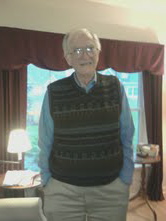
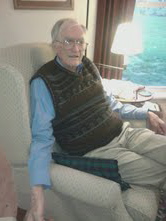
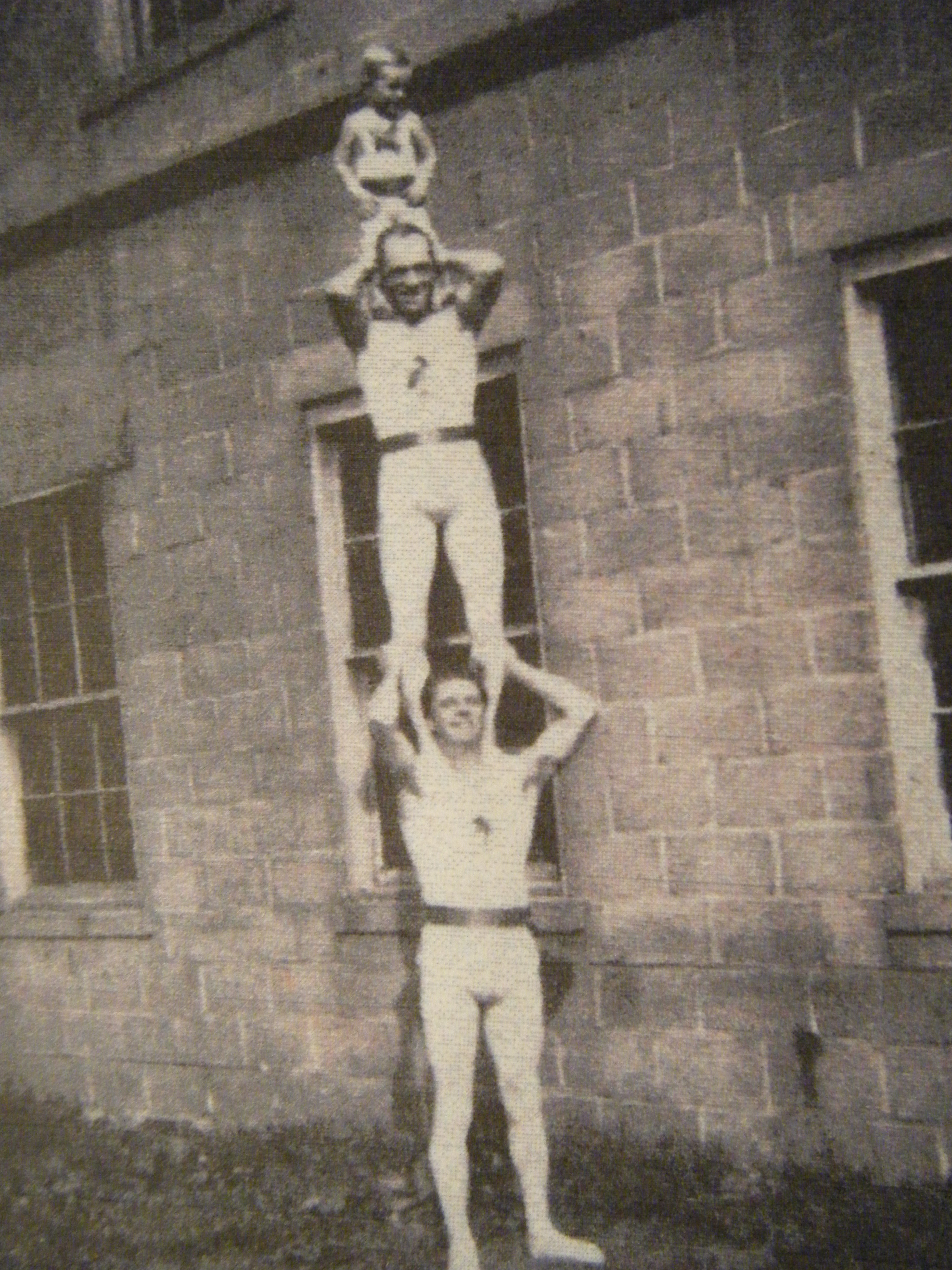
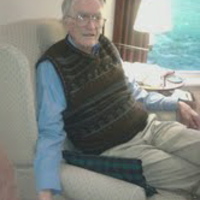
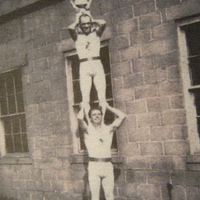
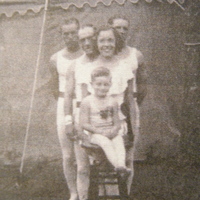
Fred Miller was born in 1930 in Muncie, Indiana into a show business family. As a child, Mr. Miller traveled around the United States as part of the "Flying Millers," a trapeze act in the circus. As a circus-performer, Mr. Miller eventually had his own radio show called "Circus Boy," where he discussed his life in the circus and answered questions from his listeners. Mr. Miller's circus career spanned the length of the Great Depression, a topic which he discusses at length in his interview.
After graduating high school at fifteen, he attended college, received a master's degree and a doctorate degree. Mr. Miller is married and has two children. As a professor in the theater arts at such universities as Columbia University, Boston University, and SUNY Oneonta, Mr. Miller experienced various different performing opportunities. Along the way he met Helen Keller, Lyndon B. Johnson, and Amelia Earhart. Mr. Miller talks about what it was like to meet such famous people. Fred Miller currently lives in Oneonta where he has been living since the 1960s.
-
Transcription
-
Transcript
CL = Casey Lewis
FM = Fred Miller
[START OF TRACK 1, 0:00]
CL:
This is the November 16th, 2010 interview of Fred Miller by Casey Lewis for the Cooperstown Graduate Program's oral history project at Fred Miller's house in Oneonta, NY. So, to get started Fred, I thought we would talk about where you were born.
FM:
All right. I was born in Muncie, Indiana, but my family was in show business so part of the family legend, if I get it right, is that I was born on a Wednesday and by Saturday we were in Louisiana. I'm not sure of the days.
CL:
Ok, and you say you were born into show business, so let's talk a little bit about your childhood and what you did.
FM:
Well, my father and his brothers were the Flying Millers. They had a flying trapeze act and I performed in it after I got to be, oh about, five years old and on. They didn't believe in putting children to work too early. I got a couple years vacation. My paternal grandfather and his brothers had been circus acrobats also. My maternal grandfather had been a magician and exhibitor of exotic animals so I had a lot of show business background. Anyway, that's the way I started in those things for a number of years. I went to a different school whenever we'd move from place to place during the school year. Most of the traveling shows, state fairs, and all those things that we played, mostly occurred in the summer and or very early in the fall so that a lot of the school year I was not on the road, but a lot of it I was. I changed schools hundreds of times. I used to say I went to hundreds of schools and that's not quite fair because I went to some of them over again the following year if we played the same towns. Managed to get a reasonably good elementary education that way. Later when I got to high school age my dad, obviously made a considerable effort to try to stay with one location almost all of the school year so I was able to play sports and things like that. That was nice. I liked that. And I missed very little school. Now and then we'd get a booking someplace that was too good to resist so I'd be gone for three days or a week or something someplace else and then come back, but not much of that. Didn't miss much school. I don't know what else I can tell you about the early years.
CL:
Well, how did you feel your upbringing was different than other kids your age?
FM:
Well, to tell you the truth, it took me awhile to really realize it was different because it was the one I knew. I didn't pay much attention. I knew that some of the other children that I'd be playing with knew the names of the rest of the children in the class and things and I didn't. That and I knew I was in and out and gone, but generally the old joke about the rich boy that says "What? Doesn't everybody have a yacht?" Well, my case “Well, doesn't everybody travel around the country every week or so all over the United States. Well, goodness gracious." Ya know. It was familiar because it was my family's, right? I often joke that if I'd been raised on a farm I'd have learned to milk a cow. Instead, raised like I was, I learned how to do somersaults and ride a giraffe and things.
CL:
Well, what was your relationship like with your family?
FM:
Oh, very good family relationship. I've made the joke for a long time that I've made two wonderful decisions in my life. The first was I said to the stork "land there," cause I have a swell mom and dad, just incredible genes, and the second was when I asked the young lady to marry me many years ago. Both were good decisions.
CL:
Great. Do you have siblings?
FM:
No, no. I'm an only child of my parents. I say it that way because one of my uncles and his wife had a daughter, an only child of her parents, and I was raised in adjoining hotel rooms and the other end of the railroad car, what have you. So, my cousin Ilene and I were every bit as close, maybe closer, than many many brothers and sisters and she died, oh, I guess more than ten years, probably 15 years ago and I miss her every much. We still visit her daughter, her grandchildren, her great-grandchildren and they live in Texas, in San Antonio Texas where she and I spent much of the wintertime of our childhood.
CL:
What was your favorite part about being part of a performing family?
FM:
Oh, I don't know. It was interesting performing, but again, as I say, I don't want to exaggerate that. It was what I knew. It was what we did so I didn't probably appreciate it anymore than the farm kid appreciates milking the cows at the time. It's just a chore. You do those things, but it was, I don't know how to say it. In retrospect, but even at the time I think I was aware that it was a terrific family. My dad was a wonderful teacher. He had a language all his own. He had to make up words to fill in what he didn't know, couldn't say. But how well he was able to teach me, to do somersaults, to do the physical things and not get hurt doing it, but still do them. One of the early tricks that I did when we were still doing some vaudeville in the early 30's we did what we called a little act, or casting act. Instead of trapeze bars swinging through the air, two people hang upside down and throw the third one between them, all right. Instead of trapeze bars you've got people. It worked so much lower, closer to the ground and closer to the stage so we could use nightclub floors, places like that. Well, my job in that act was I was the obstreperous kid in knickers and a dirty shirt and a cap. We didn't have baseball caps around much in those days. They were the cloth-billed caps. I would come off the edge of the stage and make fun of, in pantomime, of the act, rude things. This would irritate my father who was the principle leaper, and he would pantomime getting more and more angry with me until he would come across the stage and grab me by the face and throw me across the stage. The audience loved it, right. They roared with applause. The kid getting punishment and then to show that there was no hard feelings he'd help me up into the rigging and I couldn't reach out to my Uncle Fred, who was the first catcher, so my dad would pick me up by the hips and throw me up to him and I'd do a trick across to my Uncle Marvin and back and then I couldn't reach the pedestal so my dad would have to lean way out like that and grab me and pull me back up. I was about, eh, five when I was doing that. In fact, want to stop that a second?
CL:
Sure.
FM:
Anyway, that was what it was like cutting, stories about the circus. Want another one?
CL:
Yes.
FM:
All right. This is also one of my favorites.
CL:
Ok.
FM:
I was about five, six years old and one of the men, a man named Hannaford, who had horse acts. He had several different acts with horses. One of the acts was horses that would run around the hippodrome track. And I don't know if you know, but all kinds of words in the circus relate to horses because that's how the circus first started with a horse show, I guess. I don't know what else you'd call it. And the hippodrome, round horse, right, track, the horses run and the stage manager of the circus was an equestrian director. I always thought it was question director because everybody was always asking him questions anyways. (Laughter) Equestrian director, the stuff is equipage, it was horse. Anyhow, it's all horsy stuff.
CL:
Uh huh.
FM:
Mr. Hannaford had one act with the horses, with no riders, would run around the track and jump over hurdles and it was nice. Then he decided it would be more interesting and entertaining if he got rhesus monkeys and put them in jockey suits and they rode the horses around the track. Then he thought it would be even more interesting, he got me, borrowed me from my family and put me in the jockey suit and along with the last of the monkeys I would ride one of the horses around. Of course the horse did this with or without the monkeys or with or without me, but he thought I had a future in riding so he put me into the act that was the closest thing to dressage, where the horses do different gaits and different steps and I remember his instructions to me. He said, “You sit up straight, you hold the four rings, two in each hand, like this and like this, keep your heels down, sit up straight and don't monkey with the horse. He knows what he's doing. Just let him alone.” (Laughter) Because he took all his cues from the music, the horse. Anyway, one day I was out riding, exercising the horses, exercising the one I rode regularly and I thought, “Well when he changes gaits and things, I have to change my seat and the way I sit on the horse. What would happen if I changed my seat? Would the horse change gaits?” I did. He did and I've always told me a horse told me how to ride. Nothing to it. He knew what he was doing so he showed me.
CL:
(Laughter) Makes perfect sense.
FM:
Yeah, It did to me. I had a lot of interesting like that. Horses go. The morning of December 7, 1941 when they announced the raid on Pearl Harbor, I was on a polo field playing polo. They stopped the game and called everybody over to the stands and I remember sitting on the horse, King horse, listening to the radio and one of the beautiful old Lincoln continental convertibles had pulled up by the fans and listening to the report of the raid on Pearl Harbor. Everybody remembers where they were at big important events, 9/11, Kennedy's assassination, Pearl Harbor. Kennedy, John Kennedy's assassination. I was just about to go on the air with the television show I was directing in Boston and a fella came in and stopped us and said "there's big news breaking." I went with some other people into the control room and was able to watch virtually all the network feeds that were coming in from all over the United States into the television stations from the reporters all around. No one knew anything and that was what most of it was. Don't have any news yet, nothing has happened. There's trivia and every now and then a piece of real information and that would then be broadcast over the air. That was an interesting day. Obviously tragic and sad and everything else, but to see that kind of communication, I wonder how those things are handled nowadays with cell phones and some of these other electronic advances that we've had even since then.
CL:
Uh huh.
FM:
I don't know what it's like now. Things change. In fact, things change a lot. My family and me, the act did a televised broadcast in 1939 that is among the first broadcast television ever done. We broadcast from Flushing Meadows, in New York City, the World's Fair in 1939 into downtown Manhattan. That was it. (Laughter) That was the only sending and receiving possible. We did one of the early ones. A piece of the act. I don't know how long. I couldn't see it. I was over there in Flushing. Then, of course, the Second World War came along and everything on television really got suspended and we never really got back to it again until after the war and then very quickly became very popular. Culture, at home.
CL:
Well, you were born in the Great Depression.
FM:
Yes.
CL:
Were you aware if that growing up? I mean, I don't have anyone in my life to talk to about the Great Depression. Could you tell me a little bit about that?
FM:
Yes. I think in some ways I have a different point of view than some other people have. We traveled so we were in the Northeast, the deep South, the Midwest, the Rocky Mountains, all within weeks, months of one another. We got to see how all of the nation was interacting with it. It sounds kind of callous to say this, but the Depression era was really very good for show business. It seems that that happens over and over again when things are bad for people they look for entertainment and that's when the business seems to be at it's best, most of the ways around. I was at a meeting of retired people and what have you, and we talked about this current recession we're having and I don't remember how or what the stimulus was but I said "Hey guys. I may be the only here who was working in the 1930s during the Great Depression. I had a job and a union card and all that stuff." But it was, well it was like all show business work, it was feast or famine. You'd get paid pretty well for this and sometimes go a long time between jobs. That was the least pleasant part of the business, of show business. Spend a time at liberty, as they used to say, and that wasn't good time. But one of the things I watched the building of Hoover Dam. What'd we call it instead of Hoover Dam? Well, now they renamed it, and they call it Hoover Dam again. I forgot what they called it in between times because everybody was mad at Hoover in the 30s. Oh I got to participate in the sculpting of Mount Rushmore, the presidential figures there. Sounds great when you say it that way. What occurred was we were playing Rapid City, South Dakota and there was an ad in the paper looking for volunteers to work on a project outside of town so I went and volunteered. They put me behind a wheelbarrow and I got to wheel away some rock while they were blowing chips off the mountainside, but not everybody got to participate in building Mt. Rushmore. (Laughter).
CL:
So true.
FM:
It was things like that would happen every now and then. I said something about Mt. Rushmore, the Black Hills there in that western country. My maternal grandfather was a magician and exhibited exotic animals, among his area of specialty were snakes, reptiles, but snakes. Back in the 1930s pharmaceutical companies would pay for rattlesnake venom because they were using it to make digitalis. My grandfather would reward me when I had been a good boy all week, he would reward me by letting me go with him out in the Western United States and hunt for rattlesnakes. He would find them and then my job was to lift the rock or whatever it was so that they would come out and he would grab them with his bare hands and milk them. He'd have a jar with a rubber diaphragm on it, usually made out of an old inner tube and you forced their fangs down on that and that ejects the poison into the jar, right? Then he would turn them loose. After I got to be an adult I began to think, "Ya know that may not have been the great reward that I thought it was at the time," but it certainly was adventurous. A lot of fun stuff. I got to see a lot of the West on foot and on horseback. The thing would be to ride out into the countryside wherever we were and I enjoyed that a lot. I rode a lot.
CL:
So did you have a favorite part of the country?
FM:
No, mid-1930s we began to, I guess we better stop. [Phone rings]
CL:
So tell me about your radio that you were mentioning to me last week.
FM:
Well, don't remember which one I told you about. When I was still performing as an acrobat, my Uncle Marvin, who I mentioned before, had left the road and had gone into radio production in the Chicago area. He arranged for a, this was before Sesame Street and the Muppets and what have you, and there used to be some children's radio programs on Saturday mornings. One of the most famous was called, huh, I can't remember. Pretend a woman named Mac was the producer there. Well, my uncle and she were associated in whatever way so it was suggested that we do a radio show entitled "Circus Boy." It started as a sort of melodrama adventure show with the circus boy adventures. I was circus boy, obviously. Then it gravitated. In those days a 30-minute radio show was two sides of a huge phonograph record. To make that record, with no tape recording, no wire recording, you made it on a lacquer, virtually a wax disc that then was transferred to the plastic. If you made any errors you had to start over again at the beginning. You couldn't edit, right? All right so you had to do 15 minutes without an error. We never did 15 minutes without an error, right, so we got to do a lot of recording. We'd record mostly in the winter or off-season or when we were in Chicago. I don't remember how many episodes, but I'm going to say it was something like 18-20, somewhere in there, shows a year. We only did it for like two years. I don't remember it was a long thing. Then they would be sent to syndicated stations around the United States and played on Saturday mornings and what have you. Every now and then I'd hear it someplace or another. That was kind of fun. Well, the second year my uncle said “We've been getting reports from people and they really want to know more about what the life is like on the circus,” and so we changed the format so they shortened the dramatic part of the show and then had questions to circus boy. Listeners would mail in their questions and I would answer them on the air. They were all pre-recorded. I'm willing to bet some of the questions really came from listeners, but always secretly suspected my uncle wrote them. (Laughter) They'd be interesting questions and he did not tell me what to answer. He did coach me a little on how to answer. He disapproved of my using foul language, but that was made very clear to me very early, but other thing; he would urge me to use more politically correct phrasing. It wasn't called that in the 1930s, but politically correct, and I would be careful with that. One of the questions that got a lot of notoriety back then, that's a long time ago, one of the letters sent from a young man who said he had to go to dancing school and he had to wear velvet trousers at dancing school and how was he going to get up and down the streets in velvet trousers in order to attend this school? I don't remember exactly what I answered, but what I answered was "There's no place there to change your pants? There's no restroom? You've got a problem but it ain't your velvet pants!" (Laughter) Evidently a lot of people thought it was funny. I did too. (Laughter). Having changed wardrobe in restrooms and what have you all around the country wasn't… We didn't do it a lot, but when we played a nightclub or something, all those conditions were really miserable for the entertainers getting in and out and away from the audience and any of those things. The offstage area of the circus is called the backyard, no matter whether it's in front or back. It's all the backyard. It's a slang term. In a way that's a very, very comfortable community. Virtually every nationality, ethnic group, religion, language, that you've ever heard of or thought of is spoken and practiced or was, and I think still is, last time I visited one. Still seems to be that way. My wife and I were discussing not very long ago, like many communities, we were very very careful of what we did with one another, very conscious of that. What occurred outside of that community we didn't give much thought to. It wasn't very important. Things like the war in Europe, those were important. I don't mean that, but, well, the electric and gas company didn't directly affect us very much. In fact, in the 30s we had to carry our own generators with us because if we played a town like, I don't know, about the size of Oneonta. I shouldn't pick on Oneonta, but cities this size throughout the United States didn't have enough electricity to handle their home needs and the demands of the show so we had our generators. We had a neon sign that was about forty feet long that said "Flying Millers." We played towns that had never seen neon. I remember one village, small town, we played and we asked why everybody was gathering downtown at sunset. We were told that it was because there was a light bulb in the drugstore and it was the first light bulb in town and people would go down to watch it come on. We're playing there with a forty-foot-long neon sign, right? You can't wind it up. You've gotta have electricity so we generated our own power for those things. I remember in the Southeast, Tennessee Valley Authority, in the 30s, to put rural hydro electrification in places that had no electrical power, no oil. Nothing else, but wood and candles and that's about it. Oil lamps and the beginning of electricity. Much of that country was really startling. You had asked about the Depression. The Grapes of Wrath of John Steinbeck, the family going from the South to the West Coast. Many people, as I think about the Great Depression, forget that along with the financial failures in the country there was one of the worst droughts in the history of the United States. All that farmland in the middle of the United States, literally was dust. No crops. No farms producing anything, or at least that was the way it seemed. It certainly looked, and those people were moving on. Later in the 40s/50s in California, particularly around Los Angeles, it was a common place to meet someone who met someone who came from California. I thought everyone came from Indiana and to come from someplace because in the 30s they moved west where there was crops and some chance. Nowadays, we're in danger of trouble with our dairy farm industry here in New York. Terrible thing back in the early 30s, hundreds of thousands of farmers were sharecroppers. They didn't own the land. They leased it and their lease was to share the crop with the owner and there's no crop and there's no water and there's no way to borrow money for seed so you can't have next year's crop even if starts to rain again and so
[START TRACK 2 0:00]
they moved west of Nevada someplace where there was water. At that time not a lot of people. They had to do something. That's what I remember most about the Depression. That and the fact that we made pretty fair money at that time. The act was really in great demand at that time. And banks had failed. What do you do with money when you're traveling around the country in railroad car or a truck, ya know, whatever? So my family used to convert the cash money into diamonds and other jewelry that they could wear. Something they didn't even have to hide it someplace (Laughter). You had your hands on it. The diamond rings you had them on your hands all the time. Then of course cashed them in as needed. Cash money was really rare. I can remember playing some dates in the Midwest, the far west and people coming looking to me like rural agricultural sorts, coming up to pay for their tickets with the old dollar bill left from the 1800s. They were about that long and that wide. They looked a lot like our current ones, but these huge shinplasters was the slang name for them. One-dollar bills and things that they had obviously saved for 30-40 years in someplace or another, maybe circulating in the community. I don't know. But they hadn't had wide circulation to trade for the newer one. And the old coins, my mom put together quite the collection of old coins that would come in that were cross the counter change at the time. That was funny times.
CL:
Well, what did you notice the change once World War II started? How did that change the country?
FM:
Well, it motorized things. The war, the Second World War had absolutely dominated our entire culture. Everything came from, went to, was altered, or directed by that. I know it isn't really the most popular view of that period, but the Second World War is really what got us out of the Depression. It got us out of the Depression by the government spending so much money on the war. It was government money that built the airplanes, that put the money in the pockets of the workers at Lockheed, at amphenol on the road, things right? I know that's not a popular or tea party view of the world right now. That did fix it. I'm not advocating another war, but it was government money that brought that back up and then once the soldiers started to return they wanted jobs and there weren't jobs. Many of them invented jobs, things that had not really existed before 1946/7 began to exist and grow with industries and things. Many of the returning servicemen went to school. The professions grew and numbers of people involved in law, medicine, education, those things were all big changes. The war itself caused some other changes. Things were developed in relation to the military that might not have been developed or at least might not have been developed as much by that time. Obviously things specifically, some of the aircraft, let's see, helicopters for instance. I remember playing a date, I think it was in Indianapolis, but I'm not sure if that, with Amelia Earhart, the aviatrix, the woman flier of the 30s, 20s/30s. As she flew in on her auto gyro, the auto gyro was a precursor of the helicopter. It worked with a propeller in front, like a World War I airplane, but instead of a rigid wing it had the spinning blade on top that functioned as the wings, but it took the power of the forward thrust to turn the windmill on top, but it rose and came down almost vertically. Not quite, but almost vertically. It was a big deal. She landed in the infield. I was a kid sitting probably on the trunks or one of the boxes, watching her come down, going "wow." Anyway, the Second World War developed that helicopter draft rapidly and it might not have for a long time. [Interruption] Anyway, I don't know what she was signaling. I was thinking about telling another story. In 1948, I was doing some radio work in San Antonio, Texas and a man, I was in the studio and I was coming out of the studio and a man grabbed me and said, "Our announcer hasn't shown. Can you announce our next show," and I stumbled around and said, "I don't know." He said "We'll pay you double scale," and I said "Sure." (Laughter). Twice the minimum wage was all right for me and they handed me a script and we went right back in the studio and began to broadcast and it was a political campaign show for Lyndon Johnson. He was running for the senate. He was a congressman running for the senate in Texas in 1948. I didn't mind the announcement. I introduced somebody and that was it. I said goodbye and that was the end. Then the man, the same man, caught me as we were leaving and asked if I would be willing to do more announcing for the campaign and I said, “Uhhh.” He said, “same wage” and I said, “sure.” And I did. We did a lot of radio. Of course there was no television in those days. Did a lot of radio, but we used to drive into a town Oneonta's size, a little Texas town, in that era anyway, all had sort of city squares. There'd be a county courthouse, city hall, what have you. Almost Mexican/Spanish style plaza in between them, a park. We usually set up in one of those either there would be a ready made dais of some sort there or we'd have a flatbed truck and put chairs up on top of that or whatever it was and set up the public address system. My job was to get up and start the thing and call everybody to attention and the people would stand around out on Main Street, looking up over the sidewalk at the thing set up in the park with city hall in the background, whatever. I did do that and I would introduce whoever the lowest office Democrat in the area was and then he in turn would go up the ladder of hierarchy until they got to now former-President Johnson. One of the things, why I thought of it, the way Mr. Johnson used to come into towns like Sidney, or what have you, smaller than Oneonta. He'd land in the open field near by, by helicopter. Helicopters were brand new in that time, right? Hardly anyone had ever seen one. They make funny noises [mimics noises] and the whole town would com out and look around to see this thing coming in. We'd gather the crowd and he'd come out of the helicopter and take off his Stetson and he'd throw it out over the crowd and, in addition to announcing, my other job was to go out and find his hat (Laughter). It would take me just about as long for me to find his hat as it would take him to get out of the plane and then with the people and what have you, and then we'd get up on the platform and I'd start the announcement, but it was a fun period.
CL:
So did you get to meet him?
FM:
Oh yeah.
CL:
Oh neat.
FM:
I've at least got a photograph of me and Senator Schumer and me at the same parade, not anything I don't think with Mr. Johnson. The one thing I will say about him is that a lot of people forget in 1948 one of the planks in his platform was civil rights and he never wavered from that all those years. The civil rights issue in 1948, South Texas was different from what it was in a lot of other places. In fact it was different from what it was in a lot of other places. It was a problem. Part of the problem was that at that time the Hispanic population was treated almost as badly as the African American population and I think it's better now, but it's still not really terrific, as in the problem in Arizona. Of course, that's immigration, but it also splashes over into the resident population as well as with immigrants ya know. Funny business. In the 1930s the German-American…the rise of the Nazi party in Germany. As a boy playing in New York City, blond, blue-eyed Germanic looking kid that I was, inevitably someone on the street would press a paper pamphlet in my hand almost always anti-Semitic. Not too long ago, a couple years ago, I was in New York City at some meeting and then I was walking down, I think, fifty-someplace in there, a fella stepped forward, handed me a piece of paper and I looked at it and it was for a porno enterprise of some kind. I thought, "Look at that. Used to be anti-Semitic and now there's no limit to the way you can make pornography.” Obscenity can occur in all kinds of ways. The targets change, right? The ideas seem to linger on some how. Anyway, I don't know what else to tell you about. How about teaching?
CL:
Let's talk a little bit about how you decided to go to college and what your parents felt about that.
FM:
Well, my parents were all in favor of that. I was lukewarm, but I couldn't figure out any other way to continue playing ball and I thought "Ya know. I can play ball and chase girls and other than that do pretty much like I've been doing now. Ok I'll do that." So I went to school.
CL:
Where did you go?
FM:
A couple different places. I probably ought to back up a little bit in that. I had great good fortune. I had learned to read before I ever started into school. My family wasn't very familiar with child-raising culture and so they taught me how to read when I was just a little kid. Having the ability to read when you entered kindergarten and first grade always put me ahead of everybody and I always managed to stay that way, traveling from school to school the way I had to do. One of the things that would happen was that, oh I don't know, I'm going to invent places that are probably inaccurate so forgive me. Louisiana would believe that their school system was ahead of the school system in Georgia, maybe it's the other way around, maybe neither of those states were involved. I don't remember. That sort of thing. So if I'd be in Georgia which was the inferior state, if that's what I just said and then go to school in Louisiana the following week they would want to put me back a grade and my dad would argue. "Fred he can do this. Third grade. Fourth grade." "Test him. Test him." And, I passed and I'd stay at that grade. If it went the other way and they wanted to put me ahead he'd say, "ok," and they'd put me ahead a grade so I started college when I was 15.
CL:
Oh wow.
FM:
Right. That's the upshot of all that story, which was fun. I don't want to sound arrogant, but I was always a competent student if not enthused (Laughter). Some things would enthuse me, but not everything. Then I got my master's degree and decided while I was in Washington, D.C. and got a job teaching at George Washington University and like that. I thought college teaching is a pretty good rack. So, I decided I would get my doctorate and so I went back to school for that and had a job as a, what would you call it, instructor or something, at Columbia and Mrs. Miller was a student working on her master's degree there and we were together. I was in charge of building scenery for the theater and she was required to take a class for the theater and that involved working in the laboratory scene shop and she was such a good carpenter that I got to know her well. One night, I remember this one very well, one night, afternoon...oh well, we built the scenery at nights because everybody worked during the day and went to school during the day so we worked nights to build the scenery. We'd stop for coffee after. She and I lived in the same apartment building on Amsterdam Avenue. Anyway, one day I said "Prokofiev's Romeo and Juliet's playing downtown tomorrow. Would you like to go," and she said, “yeah.” I said I would meet her and we got to the theater and I walked up to the box office and said "Two," and she said, "Oh, it's a date," and that's the way we got started dating. It was kind of informal, casual. It's been a tremendous partnership ever since. Like I said, two good decisions. That was the second. A lot of the others haven't always been the right decision, but those worked out well. But I started teaching, really, in 1948 and retired in 1998 so it made a nice neat number. I like neatness and she taught at SUCO here at Oneonta also for, oh I don't know, thirty years. I'm not sure how many years she was there. Among other things, for a couple years she was there and taught classes and then didn't and then it was steady for a number years. I'm not sure, but a long time. She continued to teach for several years after I retired. I don't remember, three, four years, five. Students always liked her better than they liked me. That's because she's short. That's the only reason (Laughter).
CL:
She mentioned that to me earlier. So when did you move to Oneonta and what got you here?
FM:
We came in 1964. I had been teaching at Boston University and our daughter, our youngest child, our daughter was born in the winter of '63 and I had some correspondence with a man here in Oneonta, Lawrence Goodrich, who was then chairman of the English, Speech, Theater, and Foreign Language departments. All right? Which was almost a division instead of just a college department. I had some correspondence with him and got a letter while over in Boston suggesting that there was growth going on in the SUNY system and this, that, and the other and they were looking for experienced play directors and stuff like that there. I answered the letter and it kind of started a correspondence. A little later I got another letter from him explaining that he was going on sabbatical leave and this, that, and the other. So I thought "he really makes it sound like a nice place over there and Boston's a swell city, but it was a pain in the neck commuting in and out of the city and I don't like cities much anyways. So I thought, "Well we'll have a look at it so on a nice spring day, I think it was Easter. On a nice spring day I drove over the Mass. Turnpike and down Route 7, there was no I-88 yet, down Route 7 and I got into the Scoharie area and that beautiful hill down toward Cobleskill and I thought, "God I like this." (Laughter). If the job looks decent at all, I'm willing to move to live in this country. Well, I never regretted it, but that Lawrence Goodrich was a sneaky guy. The SUCO campus was not built then. Everything was in Old Main. After we had done some other things around he said "let me show you where we're going to have the new campus," and drove up to approximately where the Hunt Union is now. The pond was a reservoir with some little [indistinguishable] forests around that time and a dirt road running through that, connecting with what is now the street there. We got out of his car and the two of us are sitting on the front of his car, looking out at the hills, beautiful day, and he starts discussing salary and I thought, "you know. That's not fair. You're taking advantage of a poor boy. But you know, advantage or not, I took it. Late summer I was directing Barn Theater that summer so I finished that job and then we moved here. I have been very happy every since. First we lived in Colliersville, then a swell house up on Franklin Mountain, an old 1830s New York farmhouse that we go to renovate, rehabilitate, do all kinds of stuff to. Had a swell time there. I don't remember, but 18 years ago or something like that we moved to a relatively new 1950s ranch house out the Osawa road in Otego area, well out in the woods, even more isolated than the Franklin Mountain house had been. We were there for quite a while and really enjoyed that and then when they began to build this complex, houses, and apartments and what have you, we decided that we were getting older and that it might be wise to move where there was public transportation and our nearest neighbors might even be seen from our house. So we moved here and it's been very nice.
CL:
How many kids do you have?
FM:
Just two children, and they're swell. Our son is now going to take classes at SUCO, working on an advanced degree in geology. Our daughter has, I'm not sure what her degree is. I know she's gone back to college in order to get an advanced degree in library science, but whether it's a master's or a master's in education, I don't know what the degree is, but is a librarian in the school, in the Saint Albans area in Vermont. I don't remember the name of the town, the school district; maybe it's called Chester, I don't know. Saint Albans is a metropolitan area, a little smaller than Sidney. The other villages are [small] Vermont villages. Their house is an old Vermont farmhouse and I measured it one time and it's almost exactly 12 miles to the Canadian border so it's pretty far north.
CL:
Uh huh.
[START TRACK 3 0:00]
FM:
That's way far North and everybody up there talks like a Vermonter (accent) and I don't understand that at all (Laughter). They're nice.
CL:
Oh dear!
FM:
Her husband is an accountant and he's currently working for, and I don't know the name of the company and I should, but their major product is radios, one of their major products is radio shows dealing with health services for use in foreign radio. The idea is they can't get the general public in, I'll make up a place, in Nigeria interested in the problem of AIDS, but they're interested in a good radio drama/melodrama and so they do a dramatic show that teaches all the elements of health and well-being, nutrition, protection from disease, these things right? Sounds like an interesting area. It's a wonder I didn't get into something like that, but I didn't (Laughter). I did talking books for a while. Directed them and that was fun. Before they became so generally popular. We have some around here. I listen to them all the time as I drive around. I commend them to you. They make the miles go much faster it seems. In those days they were pretty exclusively used by the blind, but had some very fine actors. Last night I saw a little piece of 1950s, I guess 50s, movie with Glen Ford and Alexander Scourby. Alex was the villain in the piece and Alex and I got to be good friends. He did a lot of recordings there. He was one of the recorders. We got a wedding present from Jose Ferrer who was another one of the better-known actors. One of my jobs was pretty low on the totem pole of management out of this, but I would consult with people on what books would be recorded and which actors/actresses would be the readers and things like that and one of the stories I enjoy. One day my boss said, "Tomorrow you better come in a little early because we're gonna have a tea party. At 2 o'clock we're gonna have a tea party and Helen Keller is coming and I knew you'd like to meet her. And I said "I'm gonna have tea with Helen Keller." So the next morning I got up and spent 30 minutes trying to decide which necktie would look best with my shirt and I thought, "ya know. I probably don't need to worry." Ms. Keller, by that time a senior person. The lady with her was not her famous aid, but a younger woman. The way she listened to me was she put her hand over my face like that so she could feel the vibrations from my bones and the movement of the lips. I'm sorry, this way cause two fingers were on the larynx and here so the vibrations and the lip movement gave her enough signal to know what I was saying. I don't know if you've ever had tea and cookies with anyone when you were very embarrassed, but try balancing your teacup and your cookie and carrying on a polite conversation with one of America'a idols with her hand over your face when you're trying to talk. I don't think I was at my best (Laughter), but charming. Another one of that same era, when you were setting this up, your doing it reminded me of a couple things. One day the fellow that was in charge, Arthur, his name was Arthur, said "Fred, I want you to go downtown and do a remote this afternoon." I said, "A remote?" He said "Yeah." I said, "Well ok, sure." He said, "you're gonna engineer it." I said, "Well alright. Whatever you want.” I didn't ordinarily do much engineering, but the same kind of ampex machine I was talking about earlier before portable recordings. So I went down to the address he told me, at the Waldorf. I think it was the Waldorf and it was a remote with former-President Harry Truman. He was going to read the forward to one of our books so I got to help him speak his piece and I said, "Hey. How come you sent me?" He [his boss] said, "I knew you liked Harry Truman and I thought you'd enjoy meeting him." I thought that was very nice of him. It was a nice place to work. Nice people. It was during the blacklist time, of HUAC. We had to be careful what performers we would hire. One of the readers that I got to know pretty well, name is Bob Bradley, I don't think anybody would mind me telling you now, because every time I saw him he had a new union card with a fake name, well not fake. They were his names. They were the names on the card and I would see him and say, "what's your name now?" and he'd tell me and if we were hiring I would say, "Well how about whatever it is ?”and for years he worked radio and really got to be very popular on television in the 50s and motion pictures. A lot of good feature roles. He was a character actor. Bucks County, Pennsylvania was his home and we'd always talk a lot about that. He was a nice guy, but he had been a member of the communist party so he was one of the people they spotted and blacklisted, but that was only by name. The rest of us knew what he looked like. We'd hire him by face instead of by name. It was a bad, bad thing. Really bad. I'm listening to a novel now that's set in that era and involves the blacklist and stuff. It's an incredible idea. I was teaching at a college through that era and at one point the dean asked me at class. I remember the dean. He was a tall, very black-haired German and he had one of those kinds of accents. He used to remind us all that he graduated Tulane one day back in 1939. One day he called me in to talk to him and he said, "Fred, are you teaching a class in modern theater." I said, "yeah." "Do you think it's absolutely essential to include George Bernard Shaw in that class?" I said, "Well, for crying out loud, he's one of the giants of dramatic literature." "You know he's a socialist." "Well I know he's a socialist, but that's not the same as being a communist," I said, "That gives me an opportunity to talk about the differences in class. Besides, most of those plays don't have much to do with that." Also, I meant to stay teaching there, but one of my colleagues' adult daughter, married daughter, participated in one of the anti-book burning episodes that were in the city. They were taking books out of the public library that were socialistic, leftist in their writing and she joined the others in protesting. Her father was seriously threatened with his job and he said, "Well what in the world, but I didn't do anything." Well, yes but what kind of family must she have been raised in to have that kind of attitude? It was tacky, but that was the way a lot of people were thinking in the 50s. Terrible time. So afraid. I guess like everything else, more afraid of things you don't know. I don't know. I'm pretty much afraid of things I do know so I don't know if that's true or not. Fear does funny things to us. There was this thing on television. I think this morning or last night, talking about the new searches going on in airports and people protesting to having their liberty infringed upon because of the fear of terrorism, which is worse. I'd say, "what do ya do.” How do you balance between the two problems? But as the one fellow, a television comedian, used to say, "it's not my job." I don't have to worry a whole lot, but I do anyway. Anything else we want to do?
CL:
Well...
FM:
We must have used most of your time and all your good will.
CL:
We're getting there, but your wife was telling me earlier about when you got to meet her father so I was wondering what your side of that story was.
FM:
All right, sure.
Mrs. Miller:
The way you and dad got a long instantly.
FM:
Sure. I don't know what she told you about her father, but he was a P.h.D. at Lowell Institute when I met him, Lowell Institute in Massachusetts, had been an officer in the First World War and had been recalled into the Second World War in command positions. He came out of the service as a full Colonel, a Bird Colonel as we called him. Oh, and old, old, old Williams family of New England. Williamstown, Williams College, Williams, Williams, Williams. That's the family, so about as old school as you can imagine. Her mom, really Mayflower descendent, all right? And I an acrobat. Makes a likely couple. Well, Dr. Williams was, well I wouldn't say short, but not a very tall man, about 5'6'' or 8'', somewhere in the middle fives. Of course by the time I knew him he was 50-60 years old and just a terrific guy. He was just swell. One of the things that made that second decision such a good decision. I got a pretty swell person to be with all the time. I got into a swell family. Her dad, her brother, just terrific. Very, very pleased to get to be a part of that. Dr. Williams was certainly part of that. He and I hit it off right from the beginning in all sorts of things. We'd wonder, I was gonna say, we'd get over in the corner and giggle and talk, and swear. Yes, he was very proper and polite and frank. All those years in the military he had learned a different vocabulary and all those years in show business I certainly experienced that same one. But both of us were a little cautious in family and it struck me, as I put it to my wife and she's giggled about it ever since, but it was true. We'd get in conversation and as soon as we'd get out of the house, as soon as the screen door slammed behind us the vocabulary would change and, oh, all those expletives got slipped in there (Laughter). Of course I was a whole-hearted participant. Neither of us shy about it. That was boy talk. It really, really was. That was a part of it, but all of it was. He and my dad got a long very, very well. Him with his PhD, my dad in doubt whether he went to the third grade or finished the third grade, certainly self-taught, but not educated and they just got along fine. In their case, both the same generation, basically, both nice people. I think that helps. That was good, good stuff. And they're home in Groton was another, I don't know when it was built, but I think it was rebuilt around the time of George Washington's time. I think it's one of the houses that was burned in the Indian oppressions in 1710 here, but it was rebuilt, so it wasn't an old house. The old was gone. This was the new one that they built and lovely house, right off the, I guess that's Main Street, I don't know. Main Street in Groton kind of forks and the Main Street goes that way or goes this way and they lived on this street, up a ways, and very nice.
CL:
All right.
FM:
Right behind their house was a little stream and the little stream was named James-His- Brook. The apostrophe stands for the “his” or “hers.” That's the way the line reads were spoken. Fred-his-book. James-his-brook.
CL:
Oh, Ok.
FM:
But free lesson, no tuition is needed. The comma stands for a word or words that are left out of a sentence. When you make an apostrophe above the superscript, above the writing, it stands for a letter that has been left out. If you put it between the word it stands for part of the word that has been left out. Right? James'. You don't say James's. Well you do. To make it the possessive. No tuition for that.
CL:
Thanks.
FM:
You're welcome.
CL:
All right, well I guess we'll wrap up. So, thank you for your time.
Mrs. Miller:
You're going to have a lot of editing to do.
FM:
Oh, heavens to Betsey.
CL:
Oh it'll be a pleasure.
FM:
Dog growls.
Mrs. Miller:
The dog growls in there.
CL:
Oh, I'm not that talented at editing.
FM:
Oh, I did my first commercial with the digital recording not long ago and the woman who was directing said, "no, no. If you make mistakes, stop, pause a beat and do it over again, do the word over again." I said, "Oh ok." She said you can edit it out portions of the syllables, portions of the vowel sound, shorten the word. Took me years to do that physically.
CL:
Oh I know.
FM:
When I used to edit the tape I used to do it with scissors and tape and glue it back together.
Mrs. Miller:
It's true. It was ridiculous.
FM:
Oh, I'm sorry. You were about to quit and here I got into another silly story.
CL:
Oh that's all right. I'll just pause. Thank you for your time.
-
Coverage
-
United States
1930-2010
Cooperstown, NY
-
Creator
-
Casey Lewis
-
Publisher
-
Cooperstown Graduate Program, State University of New York-College at Oneonta
-
Rights
-
New York State Historical Association Library, Cooperstown, NY
-
Format
-
audio/mpeg
1.9mB
-
audio/mpeg
28.5mB
-
audio/mpeg
22.9mB
-
audio/mpeg
16.4mB
-
image/jpeg
166x221 pixels
-
image/jpeg
2,736x3,648 pixels
-
Language
-
en-US
-
Type
-
Sound
Image
-
Identifier
-
10-119