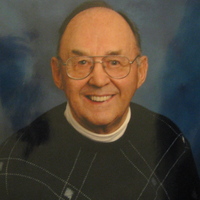
-
Title
-
Leslie Gray, November 9, 2009
-
interviewee
-
Leslie Gray
-
interviewer
-
Ginny Reynolds
-
Date
-
2009-11-09
-
Subject
-
agriculture
-
dairy farming
-
travel
-
real estate appraising
-
Pomeroy Appraisal Associates
-
Springfield, NY
-
recreation
-
World War II homefront
-
Description
-
Leslie Gray was born on 8 April 1924 in East Springfield, NY and grew up on a hundred-acre dairy farm. In high school Gray was an active member of the Boy Scout Troop 47 and was the first troop member to become an Eagle Scout. With the Boy Scouts, Gray traveled to the 1939 World's Fair in New York City. After graduating from high school he attended Morrisville Agriculture and Technology Institute and then returned home to farm with his father. In 1944 he married his wife Janet; together they had five children. During World War II, Gray was exempt from military service because of a previous heart condition and later received an agricultural exemption. Gray sold the family farm in 1956 and began a successful career in the real estate appraisal business. After working for the state and several smaller firms, he joined Pomeroy Appraisal Associates in Syracuse, NY and served as president for twenty years. Gray and Pomeroy earned a reputation for working with difficult properties. As president, he appraised bankrupt railroads in the Northeast for the U.S. Railroad Association, formulating and developing a methodology still in use today. Gray retired in 1988 and spent several years traveling around the country in a travel trailer with his wife. At the age of eighty-five, Gray still remains involved in the Springfield community as a member of Saint Mary's Episcopal Church, Springfield Public Library Board, a local pitch (card game) group, and Meals on Wheels.
Aside from the twenty years he spent working for Pomeroy Appraisal Associates in Syracuse, Gray has spent the bulk of his life in Springfield. He speaks extensively about Springfield and how the community has changed over time. Farming, agriculture and work are predominant themes. Gray also discusses recreational activities such as playing cards, reading, and traveling. He references to twentieth-century events of national importance, such as the Great Depression, the 1939 World's Fair, and Pearl Harbor. In one of the most interesting sections of the interview, Gray discusses making maple syrup as a substitute for sugar during World War II. Many of the interview questions were derived from Gray's memoir, a short, unpublished document. The memoir covers certain subjects, like the Great Depression, in greater depth. Researchers interested in corporate history or real estate appraising may find Gray's comments on Pomeroy useful. Overall, the interview is a thorough account of farm life in the second quarter of the twentieth century. It also addresses the challenges the rural Springfield community faces today.
Several editorial decisions were made to make the transcript more readable. False starts were omitted unless they served a distinct function within the sentence, such as introducing a description. In many cases, longer sentences were shortened and additional words - that do not impact the meaning of the sentence - were removed. Most other grammatical particularities were preserved.
-
Transcription
-
Cooperstown Graduate Program
Oral History Project Fall 2009
LG = Leslie Gray
GR = Ginny Reynolds
[START OF TRACK 1, 0:00]
GR:
This is the November 9, 2009 oral history interview of Mr. Leslie B. Gray - Gray is spelled G-R-A-Y - by Ginny Reynolds, a first year graduate student in the Cooperstown Graduate Program. The interview is being recorded at Mr. Gray's residence at 136 County Route 29 A in Springfield Center, New York.
Les, can you talk to me a little bit about living in Springfield Center today?
LG:
Springfield Center, of course, is a small hamlet that used to be the center of an agricultural area. Today agriculture in general is declining compared to what it used to be. It's sort-of a bedroom community for Cooperstown hospital, county, workers, and so forth. We have very little commercial outlets here in Springfield Center - a post office and a small convenience gas station and store at the corner of Route 80 and 20. It's still typically a rural community. We're sort-of in a transition from agricultural to some other use and I'm not sure what that is yet. Not that agriculture will completely disappear. Dairy farming is no longer the primary occupation in the town due mostly to economic conditions, which have resulted in the diary farm income continuing to decline over the years. As we drive around the country and see all the farms that used to operate - in fact, right on this road there were three operating dairy farms and now there's none, even though the land is still worked. We do have one farmer that does raise sheep but no longer any dairy farms. And that's pretty much what we find all over the county. I can't see any real change in the foreseeable future. So we have to become something different to a certain extent and I'm not sure what that is going to be. Hopefully we can find maybe small businesses that operate over the internet or something of that nature. I don't expect any large industry or anything [Laughter] to relocate to Springfield. Living in a small, rural community such as Springfield Center has many advantages in that the people are very friendly and we help each other out. The population is aging, mainly because we have little opportunity for the younger folks to be employed, with the exception of the hospital and the county. Really, that's pretty much it.
GR:
Is there a strong sense of community here?
LG:
Yes, very strong. Yes. As I said, we're in transition. A lot of people have moved here from metropolitan areas for retirement and things of that nature. People would like to see things stay the way they were and not change. That's not really possible. Madison Square Garden had proposed to have a concert site here in town, where up to 75,000 people would be attending a concert. That created quite a bit of controversy in town, I mean, those who were in favor and those who were against. Taking a realistic look at the people who were opposed, were mainly those who were fifty and over. Those who were in favor were under fifty. That's not really surprising, I guess. That's pretty much the way it divided up. Of course because of the economic conditions Madison Square Garden withdrew so that question never really got answered. [Laughter]
GR:
There's a strong Amish population in this area, isn't there?
LG:
Yes. I feel that's wonderful in that it allows a lot of the farms to continue to operate as farms. The Amish lifestyle is such that they can afford to operate a diary farm. [With] typical methods, where there is such a large investment for the amount of return, it makes it very difficult. The Amish generally speaking have large families, which makes available labor at relatively low rates. They don't rely on very expensive modern machinery. They use horses and horse-drawn equipment and things of that nature where it keeps the cost down. Their churches, for instance, they meet in each other's homes. In other words, they have a lifestyle that doesn't require as much money - cash - as the typical lifestyle. By and large I think it's great for the community. They're good neighbors. Really, yes.
GR:
Do they interact much with other members in the community?
LG:
No, not really. Through their church and so forth they have their own get-togethers. They don't interact with other people in the community, except you know, they're very friendly and very good neighbors.
GR:
How are you involved in the community here?
LG:
I'm becoming less involved. Since I retired, which is twenty-one years ago, I've been involved a great deal with the church - our local Episcopal Church.
GR:
Saint Mary's?
LG:
Pardon?
GR:
Is that Saint Mary's Episcopal Church?
LG:
Saint Mary's Episcopal Church, yes. There were two or three of us who met every week to help with the maintenance of the buildings and maintenance of the grounds and things of that nature. Janet and I have cleaned the church quite a few months of the year and have been actively involved in the church. I haven't been involved much in town government. I did serve nine years on the assessment review board. Which, of course, my experience and training as a real estate appraiser was very appropriate and I felt I could contribute to the town that way. Other than that, we do have a local pitch group. I've been involved in that.
GR:
How do you play pitch? Is it similar to bridge?
[TRACK 1, 9:59]
LG:
No, it's not. Well, of course you still use the same deck of cards. You have high low jack in the game, are the points - there are four points to each play. You bid and the high bidder then tries to get those four points or whatever they happen to bid - if they bid three or two. You try to keep track of the cards that are out and how many are out and so forth. Whereas bridge is a much more cerebral game in that what you try to do with your partner through your bidding is let them know really what you have in your hand. Not directly, but indirectly. Their answers to your bid hopefully lead you to successful contract. Bridge, as far as I'm concerned, is a very interesting game. You have to do a lot of thinking. [Laughter] It does help to have a little bit of card sense. I enjoy bridge and I enjoy pitch. We play pinochle with our next-door neighbors quite often. [Laughter] We play cards. When our family is here, which is pretty well scattered around the country, when they're all here we get together and play pitch. Sometimes Uno. You've heard of that. [Laughter] We do play quite a few cards.
GR:
When did you first learn how to play pitch?
LG:
When I was a kid. Pitch around in this area is a pretty common game. A lot of people play it or know how, although I think there is much less emphasis on cards, particularly with the young people. Times have changed. When I grew up, of course, there was no television. There was very little radio, even. Finally, when I was probably a teenager, radio became a part of entertainment. Therefore, in order to amuse yourself and everyone else you played cards and board games and you name it. [Laughter]
GR:
Is the pitch group different from the bridge group that meets at the Clark Sports Center in town?
LG:
No, the history of the pitch tournament - if you want to call it that - in Springfield has been going probably back seventy, eighty years maybe. It used to be men, all men. When I first retired and moved back to Springfield, it was still all men. This is a guess, of course: along about ten years ago or so our numbers kept decreasing so finally we said, “Why don't we include the women?” Which we did and it's turned out very well. Now, during the session we have twenty-eight to thirty people. It's about fifty-fifty. When the women first started playing, the men took it pretty seriously. If you made a mistake, somebody'd let you know and so-forth. So when the women started playing, there were quite a few of them who hadn't played a lot and were a little timid in their bidding, but that's all changed. We have a lot of fun. We have a fall session and a winter session - there's no winter and spring. What we do when we start, we have these numbers that we draw, and color, that show which team they're on, whether they're red or black. There's no picking of anybody. It's just random which team you're on. We play for twelve weeks and then whoever wins, the other side buys their dinner. [Laughter] You always had something that you played for.
GR:
It seems like a nice deal to me.
LG:
Especially if you're a winner. [Laughter]
GR:
You're also a member of the local library [Springfield Public Library] board. Is that correct?
LG:
Oh. Yes, I am. I use the library extensively. I do a lot of reading. I always have, even when I was a kid. That's something I've carried throughout the year. I always figured you don't ever have to worry about entertaining somebody that does a lot of reading because they've always got something to do, something to amuse themselves. I use the library extensively. A couple, I guess it would be about three or four years ago, three years ago went on the library board and I was just reelected for another three years. [Laughter] Of course the library's pretty handy being right across the street.
GR:
What sort-of books do you like to read?
LG:
My favorite are historical novels. I really enjoy them. I read quite a lot of nonfiction as well. I find a lot of it very interesting. I do have a [Laughter] pet peeve, I guess you could call it that. It seems that the writers that we get today crank out books, you know, ten, fifteen, twenty books. It gets after you've read five or six of them you pretty know what they're going to write about. Maybe it's because I'm getting older and feeble and so forth, but it just seems to me that the quality of the writing today is not as good as it used to be. That's probably not true but that's my take on it.
GR:
What's your favorite book that you've read most recently? Do you have a favorite?
LG:
I read so many books that I have trouble keeping them in my mind. I can't think of something that I've read recently. Oh. A book by Delderfield, who was a[n] English writer. He wrote about this fellow who got out of World War I and was seriously injured and went to work teaching at a private school. I can't think of the title as I sit here. That was a wonderful book, very well written. They made it into a mini series - the British Broadcasting Company and we watched that. It was fantastic in the mini series, which is usually true, partly because the casting was so perfect.
GR:
And you had read the book first before seeing it?
LG:
Yes, yes. Yeah, sometimes you're disappointed when you read a book, if it's a movie or a show and it doesn't quite live up to what it ought to be. That was one that really did live up to expectations.
GR:
Can you tell me about your involvement with the local historical society?
LG:
Yes. The historical society just celebrated it's fiftieth year a week or so ago. We didn't join the historical society back then when it was form and I'm not sure why except that we were sort of leaving the farm and I was going to work other places and then we moved to Syracuse. When I retired and we moved back here, we have become very active in the historical society. I've given a few presentations about different things of history in Springfield.
[TRACK 1, 20:23]
GR:
Is historic preservation something that's important to you?
LG:
Very much so. Yes. Observing the preservation of Hyde Hall has been one of the things that has interested me. I think it's wonderful. Many things of history - museums such as the Fenimore House and so forth - are a big part of our life.
GR:
Were you involved with the preservation efforts with Hyde Hall?
LG:
Only as a contributor. [Laughter] And going to their functions and that sort of thing. Of course having lived here as a kid, after I grew up, we always knew about it. In fact, my grandfather, who was a retired Methodist minister, but also a cabinetmaker and carpenter [Laughter] - after he retired - did some work there. Many years ago [I] went in Hyde Hall. They're doing a wonderful job. It's just wonderful that it can be preserved.
GR:
I understand that you just finished up today earlier, with Meals on Wheels?
LG:
Yes.
GR:
Can you tell me about that?
LG:
I've been working with Meals on Wheels probably over forty years. I started in Syracuse. I was a member of the Kiwanis Club and the Kiwanis Club supplied drivers for a route there in Syracuse. I was one of the drivers probably once a month or twice a month. I was also put on the board of directors of the Meals on Wheels. At that time in Syracuse, it was a[n] independent run organization with no funds from any governmental agency. They served about three hundred and fifty meals a day. All of the labor with the exception of a cook and a director was volunteer labor. The space where they prepared these meals was also donated and of course an awful lot of food was donated. Of course each person who received a meal paid a very modest amount. One of the things I really enjoyed was visiting with the people as you go around and take them a meal. [For] some of these people, you're the only person that they see during the day. A little conversation and so forth is very helpful I think to them as well as yourself. Some of these places you take meals, it kind of makes you feel how lucky you are that you don't have to live under some of the conditions that people live under.
GR:
How many people are served by the Springfield Meals on Wheels?
LG:
At the present time, there are ten. I travel about thirty-two miles. I do it on a Monday.
GR:
You're one of the drivers?
LG:
Yes, I'm one of the drivers. Have been ever since we moved back to Springfield. We pick up the meals in Richfield. Between picking up the meals in Richfield at the vet's club and delivering them, I travel about thirty-two miles. Compared to, like in a city, you don't have to travel far to deliver a lot of meals. The highest number I think that we've had since I have been delivering here in Springfield is fifteen. Which was just about a year ago, we were delivering fifteen. It's a great program. Now funding comes from the county, state, federal government. If somebody can't afford to pay for a meal, they still get the meal. But they still try to collect a very modest fee. They do supply two meals for the driver. So Janet and I, on Monday eat a meal that comes from Meals on Wheels.
GR:
How has Springfield changed since your childhood?
LG:
I guess as I said before. I'm eighty-five years old. Fifty years ago or more, [Laughter] every little farm was a dairy farm. At that time you could milk twenty - thirty cows and survive. That's happened, of course over the years it has gradually declined. Farms have gotten larger. The remaining farms have gotten larger. I don't know the exact figures but I would guess that there is only twenty-five percent of the farms still operating that were operating fifty years ago even though probably they produce just as much milk on a lot fewer farms. They're larger. Cows produce four or five times what they did fifty years ago. Of course the farms have gone to very mechanized from what they were when I was a kid. When I grew up on the farm horses were a big part of the way things were done. That was probably true until about after World War II. After World War II things happened quite rapidly in that respect. I better be careful of how I say this. I forget the figures. Now a days a cow would produce four and five times what they did back fifty years ago.
GR:
How is that possible?
LG:
There's several things. One being the breeding. That's probably the biggest factor. To a certain extent they're better fed today than they were back then, although I'm not so sure of that. [Laughter] Mainly it's the breeding selection of higher producing cows, which over time become quite a factor.
GR:
You grew up on a dairy farm?
LG:
Yes. It was a dairy farm. We had about twenty - thirty milkers, three hundred laying hens, kept a few pigs. It was much more diversified, farms were at that time than they are today. That's another factor. Today if you have a diary farm, that's what you have usually. You don't bother with poultry.
[START OF TRACK 2, 0:00]
In fact, they've all gone to large factory farms so to speak. The same way with raising hogs. They talk about these hog farms that have five hundred to a thousand hogs on them and so forth. The dairy farms today, if you don't milk a hundred cows it's very difficult to make a go of it.
GR:
When were you born?
LG:
I was born April 8th 1924.
GR:
And that was in East Springfield?
LG:
In East Springfield, yes. On Route 20. [Laughter]
GR:
What were your parents' names?
LG:
Harold was my father's name and Gladys was my mother's name.
GR:
Did you have any siblings?
LG:
Yes, I have two sisters, both older. Dorothy and Janet, who both have deceased.
GR:
How large was the farm you lived on growing up?
LG:
It was about a hundred acres. I'd say we had about twenty-five to thirty milk cows. When I was a kid - until I was about twelve years old - my father made butter, cottage cheese, and of course with the chickens, he had a route in Fort Plain where twice a week he sold butter and eggs and cottage cheese and so forth to a route he had in Fort Plain.
GR:
What was it like growing up on the farm?
LG:
It was fun, [Laughter] even though when you're on a farm there's always a lot of hard work. I never minded the work. I don't think I ever complained about it much. There was always something to do. You had your chores to do. You also had time for a little fun, although [not] by today's standards. You didn't travel. [Laughter] You didn't have a lot of the things that we expect today.
GR:
What chores did you have to do?
LG:
When I was real young I used to help both feed the chickens and gather the eggs. Feed the hogs. Feed the calves, if you had calves you were raising; feed them. [I] probably didn't start milking much until ten - eleven years old. Of course back then when I was real young, everybody milked by hand. We didn't getting milking machines on our farm until I was probably twelve or fourteen or something like that. We were expected to milk three or four cows and do the chores, you know, that needed to be done.
GR:
You said that you got milking machines when you were twelve or fourteen?
LG:
Yeah.
GR:
Did that mean you didn't have to milk anymore? Or did you still have to milk cows?
LG:
You still had to milk, but you ran the milking machines or helped run them. You know, helped do it. It seemed like anytime I was on the farm after that I always had to milk. [Laughter]
GR:
So it didn't cut out all the work?
LG:
No, no, no. It made it a lot easier, of course, with the milking machines. You still had to be there and do it.
GR:
What did you do for fun growing up?
LG:
As I say, as a family, we played a lot of cards, a lot of games. Played poker. In the wintertime we'd go ice-skating. School became the center of your universe, so to speak as you're growing up. The people you've met in school and played with or later on, played sports with were a big part of growing up.
GR:
Did you play a lot of sports?
LG:
That's an interesting question. Yes, I played a lot of sports. However, I had a problem. When I was eight years old I had what at that time they called, Bright's disease, which today they give you antibiotics and it's all over with whereas I had to go on a special diet for three or four months or something like that. It left me with an enlarged heart. My physician, who also of course was the school doctor wouldn't let me play any sports when I was a freshman and sophomore in high school. When I became a junior I played football and baseball, but he wouldn't let me play basketball. [Laughter] We had some pretty good teams. In fact, my senior year of high school we were champions of the league and had a great baseball team.
GR:
Did you want to play basketball in high school?
LG:
Yes, of course.
GR:
Why did your doctor not let you play, but he let you play the other sports?
LG:
My heart was such that he didn't think that I should do it.
GR:
But you were still able to do the other sports anyway?
LG:
Oh, yeah. Yeah, I was. When World War II started I ended up in 4-F because of my heart. That didn't mean I couldn't work or anything. The doctors didn't think that I would be able to stand the stress and whatever of combat.
GR:
That's how you weren't drafted?
LG:
Yeah. I guess I was 4-F for a couple or years and then I was put into an agricultural exemption, which bothered me a little at the time but was probably for the best. [Laughter]
GR:
Now I'm going to backtrack a little bit. In high school you were involved in the Boy Scouts?
LG:
Yes. We had a teacher by the name of Earl Spooner. He taught seventh and eighth grade. He started the Boy Scout Troop probably around 1935 or '36. I became very active and loved the Boy Scouts. It was Troop 47 and we had a really good troop mainly because of his leadership. I became the first Eagle Scout that the troop had.
GR:
What did you have to do to earn that distinction?
LG:
You have to have so many merit badges. I can't remember now how many it was. You had to have some kind of a project - not quite as formal as it is today - but some kind of a community project.
GR:
Do you remember what your project was?
LG:
No, I don't. [Laughter] I stayed active in the Boy Scouts even after I graduated from school. I eventually became the Scout Master for a few years until I sold the farm and had to travel some in my work it wasn't possible of course.
GR:
As a Boy Scout you went to the National Jamboree. Do you remember anything about that?
[TRACK 2, 10:03]
LG:
Yes. You know that's a long time a go, but I remember. I think there were five boys that went. Earl Spooner drove. I think somebody in town donated a station wagon at that time and we went to the jamboree in Washington, D.C. It was quite an experience for a little country boy where other thousands and thousands of Boy Scouts from all over the country [were] camping next to the Potomac. I also remember coming home. We stopped and camped somewhere on the beach in New Jersey. That's about the extent of what I recall, you know, except all the activities that went on at the Washington Jamboree.
GR:
You also went to the 1939 World's Fair in New York City?
LG:
Yes. There again that was with Earl Spooner. I was a little older then so I remember a little better. We camped. There were five or six boys that went again. We camped out on Long Island, near Frank Buck's, whatever it was called. [Laughter] They had these wild animals and so forth. We had nothing to do with that; just we happened to camp next to it.
GR:
Was that part of the fair?
LG:
No.
GR:
No? That was a separate attraction.
LG:
That was a separate attraction. We just happened to be camping near there. The fair, of course, was pretty exciting. I should be remembering all the educational things but the thing that really sticks in my mind was they had a parachute jump. [Laughter] They had this tower and they took you up in the scene-it thing and then they'd release you and the parachute would open and you'd come down. [Laughter] I remember that. I remember - this gal who was a famous swimmer - I remember her show. I can't think of her name now. [It] doesn't matter. [Laughter]
GR:
How long were you at the World's Fair?
LG:
We were probably there four or five days.
GR:
Did Earl drive?
LG:
Yeah.
GR:
He drove.
LG:
One of the people who went was a bugler. I can remember riding down the road and we'd get ready to pass somebody and he'd blow charge on the bugle.
GR:
So it was an exciting trip?
LG:
Very much so. When you live on a farm and you live in a small rural community that's quite an excitement.
GR:
Your junior year in high school East Springfield and Springfield Center schools united.
LG:
Right.
GR:
Do you know why that happened?
LG:
It became more difficult to operate small schools so the joining together created a school that was larger and more efficient to operate. Before the two schools joined there, the school in East Springfield centralized. That was a name for a type of school district back in the mid-thirties. It also told how you were financed by state money and so on and so forth. East Springfield centralized and that brought in Salt Springville, Hessville and students from that part. They all became part of a combined centralized district when Springfield and East Springfield joined.
GR:
And then you attended Morrisville Ag. and Tech Institute?
LG:
Yes.
GR:
Can you tell me about your two years there?
LG:
Yes. Well, my fathered had gone there in 1915, shortly after the school was founded. I guess that probably played some part in my going there. Of course I was interested in agriculture at the time. I enrolled there and the farm manager there was a very good friend and had been a classmate of my father. They had remained friends over the years. I lived with him for a year and worked for him in the morning - before school started - on the farm hauling manure and spreading manure and all that sort-of thing. I became quite active in the school. I was active in the Christian Union and Theta Gamma Fraternity, played football and so-forth. It was a very educational and fun time, really, for me. The second year I went back I had been home for the weekend and hitchhiked back - that was how I got back and forth. Back then everybody hitchhiked. I had hitchhiked back to the school and a bunch of us were playing pinochle on a late Sunday afternoon and that's the day of Pearl Harbor. So obviously that sticks in my memory. That changed everything at the school. Shortly after that fellow started enlisting and getting drafted. The second year I was quarterback and captain of the football team. We ended up the season undefeated, which was a very enjoyable time. These fellows - there were four or five or six of them, probably maybe even more than that - had enlisted. They played the football season and then went in the army. I came home for Christmas vacation. During that time, when I was home - Springfield central school had an agricultural teacher named Dick Means who went home near Cazenovia for Christmas vacation and was working in the woods and was killed. Because everybody was going in the army there just weren't many teachers around to fill that spot. The principal there in Springfield asked if I could fill out the year. I had talked to the school in Morrisville and they had agreed that I could do it. I did fill out that year teaching vocational agriculture. When I look back, it was a little unusual in that I was only nineteen years old. Half my students, of course, were only a year or so younger - maybe some of the weren't a year younger. It turned out real well, fortunately. Everything seemed to go well.
GR:
Were you having to travel back and forth between…?
LG:
No, I was full-time teaching.
GR:
So you graduated from Morrisville?
LG:
They gave me full credit because I was teaching. They gave me full credit for the rest of that year. So I graduated along with my regular class. As long as I'm speaking about teaching agriculture, I'm getting a head of myself here, but - I did go to Cornell for one year.
GR:
Did you get your degree from there?
LG:
No, I didn't. The next year, I think it was 1944, I was contacted by the Madison central school because they had lost an ag. teacher to the army, in the service. They wanted to know if I would teach that year. I agreed to do it. I did travel back and forth from home - the farm. I was actually farming with my father at that time. I'd milk and so forth and everything at home whenever possible and still teach school.
[TRACK 2, 20:28]
GR:
Did you not finish your degree at Cornell - you married Janet around that time - did that influence that?
LG:
I'm sure it did. I'm sure it did. At that point I decided - father and I had an agreement on the farm and we more or less farmed together as a joint venture. The teaching in Madison - they offered to send me back to Cornell and pay my way. They had a house we could live in, so I guess they thought I did a pretty good job. We opted not to do that. I didn't think I wanted to be a teacher the rest of my life. Father and I had a partnership arrangement. That was the end of the teaching at that point.
GR:
Around that time, your first son was born.
LG:
Yes.
GR:
Correct? How many children do you have?
LG:
Five.
GR:
When and where were they born?
LG:
Well, they were all born at Bassett Hospital in Cooperstown. [My] son Peter was born three years after Bill, the oldest child. Then we lost a little girl about three years later. A youngest son, who was named Leslie, was born a year after that. Probably three or four years after that, Judy was born. Only a year later Lorie was born. That's the five - three boys and two girls.
GR:
I read in your memoir that you made maple syrup during the 1940s, during the War.
LG:
Oh yes. We had a sap bush on the farm, which was planted probably thirty - forty years before by my grandfather. The farm had been in the family since 1852. Anyway, this sap bush was planted, which meant that it was a very productive because the trees were spaced such that they had large grounds and produced a lot of sweet syrup, sweet sap. When I was younger, when I was on the farm, we started making maple syrup in a very limited way. My father had made some before but he discontinued it. We started it up just in a small way to make enough for our own use. Even though sugar was rationed and very hard to get during the war, that didn't create any problem for us because we used maple syrup on our cereal, in the coffee, or whatever. It was a lot of fun because it's in the spring of the year when it's starting to warm up. It was very enjoyable. We didn't have to work that hard. [Laughter]
GR:
The sap bush, that just refers to the plot of land dedicated to growing the maple trees?
LG:
Right, right.
GR:
How large was that?
LG:
It was only about four acres. Afterwards, looking to make a little more money, we started making syrup on a much larger scale. I use to tap the sap bush - we only tapped a small part of it before - and then tapped a lot of roadside trees so that I was making between two-hundred and fifty to three hundred gallons of syrup a year. You put it up in attractive smaller packages, which were sold on Route 20 at gas stations and so-forth. The only problem with that, it became a lot of work. I really enjoyed making syrup, but between making syrup, doing the normal chores and work that you have to do on a farm it got pretty hectic. When sap is running good, you have to take care of it. Some nights I'd boil all night. If you've read in the memoirs, one of the things that happened - the firemen put on a play that I happened to be in and it came right during maple syrup time. Here I was working eighteen - twenty hours a day on a lot of the days and practicing for the play. We put the play on and then we went out and had a little party afterwards. I probably better let my wife tell you [Laughter] about the party. To make a long story short, I was so tired that I had two or three drinks and I was gone. [Laughter]
GR:
Did she have to take over your sap responsibilities at that point? Was that a problem because you were in the middle of working the sap?
LG:
Well, yeah. You know, there were just too many things to do at once. You can only do so much. I never knew enough to say no anyway. [Laughter] I did enjoy making syrup. It did become a lot of work.
GR:
At what point did you sell the farm?
LG:
We sold the farm in 1956. I was sort of - can't think of the words I want to use - disenchanted I guess is the word - with the way farming was going. It's transition was going very fast and I sort-of felt that [a] small farm - with a large family and so forth - would[n't] be where I wanted to be in the next fifty years. So we sold the farm. That, as it turned out, was a very good decision, but probably at that time it was a pretty stupid one. I mean, here I had five kids. No, had four kids and one on the way and sold the farm. To start a new career - not too smart. [Laughter]
GR:
You eventually ended up working in Syracuse with Pomeroy Appraisal Associates.
LG:
Right. I worked for American Agricultures for a year and then I was hired by a company by the name of Thorne Appraisal in 1957, who did reappraisals and real estate evaluation work. A fellow in Cooperstown, who was their vice president, knew of me and asked me if I didn't want to go to work for them. And it sounded real interesting to me. As it turned out, it was a very fortunate thing because it was work that I enjoyed, work that I loved, and work that I was good at.
[START OF TRACK 3, 00:00]
What more can you ask for? I worked for them for a while and then went to work for another company that did the same thing, [Laughter] which didn't turn out too well because they went broke after about four months. So here I am again, no job and now with five kids and with this new career. I knew some people who worked for the state equalization board. I contacted the state equalization board and I went down for an interview to see about working for them. That was on a Thursday and they asked if I could start on Monday. I worked for the state equalization board for four and a half years. They went around, you know, studying each town in the state to establish the state equalization rates, which consisted of appraisers who did appraisals of these properties that were picked at random. My work with the state, even though I wasn't a good state employee, my work with the state was wonderful because I got experience that I never could have gotten other places. After I had been with them maybe a year, or something like that, if I can immodestly say, my skills were better than the average. I was put on what's called special assignment. I went around the state appraising property that was unusual. For instance, like the Ausable Chasm operation, cooperative apartments in Westchester County, you name it. That was tremendous experience for me. Here I was doing all kinds of different properties that were more difficult than normal. So it was great background for me. Do you want me to keep taking about all this? [Laughter]
GR:
Yeah. Go ahead.
LG:
While I was working for the state, I was up in Syracuse and a fellow I use to work with worked for this mortgage brokerage company as an appraiser and I called him up to get together for lunch. We had lunch and he said, “Well, I'd like you to come talk with my boss,” which, I did. Anyway, he offered me a job. He didn't tell me but at the time I didn't realize the mortgage brokerage business had been sold to Marine Midland and the appraisers were going to form a company, just doing appraisal. There were three other guys so that made four of us besides Mr. Pomeroy himself. I went to work for them. I didn't realize it at the time, but Don Pomeroy was looking for someone he thought could lead this group of very independent people. That's the nature of real estate appraising, really. After he retired or partially retired, I was appointed or elected or whatever you want to call it, executive assistant or some such thing. And I did that for a year and after he retired I took over and became president for twenty years. We went from four people. We employed almost thirty people and became well known with a very good reputation nationally as well as locally. That's that. [Laughter] Sorry to bore you.
GR:
Oh, no. You've had a very distinguished career in that realm.
LG:
As I say, I loved the work. I just did it. I looked forward to going to work because I had so many interested assignments. I sort of gained a reputation of being able to do properties that were difficult and hard. In fact, some of our competition, if they had hard problem they'd call me up and ask me advice and I'd give it to them. My partners didn't think that I should be doing that but I never felt that way. One of the jobs that we got as a result of my reputation - I guess you could say, and the company's too, probably - was: In the Northeast there were seven railroads which went bankrupt, mainly because when the railroads were formed it was fine. They had good passenger service and so forth, but then the competition came and the railroads were so close together, you know, there were duplication[s]. Anyway, there was these seven bankrupt railroads. So the Northeast, in a sense, didn't have any railroads that were, you know, surviveable. The United States Railway Association got the job from Congress to do something about this. Take over these railroads, you know, pay them for what their assets were worth, which they did. They took this thing over. They were looking for people to appraise bankrupt railroads, which had never been done before. Nobody knew anything about it. The first order of business was to devise and formulate a methodology to appraise bankrupt railroads. As I say, I was hired on that and more or less became the lead appraiser. We spent probably six months or more meeting in Washington once a week setting up the methodology of how we were going to appraise these railroads because everybody figured they'd end up as a court case. What are they worth? So anyway, we devised this methodology, which is still being used today. [Laughter]
GR:
Was that when you were president of Pomeroy?
LG:
Yes.
GR:
Do you remember about what year that took place? Or years?
LG:
Well, it would have been probably '82 to '85, something like that.
GR:
When did you retire?
LG:
I retired in '88.
GR:
What influenced your decision to retire then?
LG:
I don't know [Laughter] for sure. As I said, I liked my work. It wasn't that. We like to travel. There were certain things that would maybe agitate me a little bit that never did before. I thought, “Well maybe it's time to do something different.” I worked out a plan with the company to take over my interest. I worked half-time for - was going to be three years - as it turned out it was only two years. But anyway, we started traveling then. We were enjoying that so much that the work interfered with my travel. [Laughter]
GR:
Where did you travel?
LG:
We had a travel trailer and we traveled. We went to Florida for three months in the winter. Three of our kids lived in Colorado. One winter we went to the southwest. One summer we went to the Northwest and we went to Colorado two or three times with the trailer. It was a great way to travel, you know, because you take your home with you. Your toothbrush is in the bathroom and your clothes are hanging in the closet. At least we thought it was a great way to travel. We put about 46,000 miles on the trailer in the six years that we had it. [Laughter] We saw a lot of the country in a way that we had plenty of time to see it. It was very enjoyable.
[TRACK 3, 10:37]
GR:
How many of your children live in Colorado now?
LG:
Three.
GR:
What influenced them to move there?
LG:
Our youngest daughter, Lorie, went to Colorado State and took Park… Park… whatever you call that…
GR:
Management? Park Management?
LG:
Yeah. Park Management. I think that was her major. Then two of our sons, our oldest son and our youngest son, took a trip around the country and they liked Colorado. I think while Lorie was still in college out there, one of them - the oldest son - went out and set up an appraisal. He had come to work for us for a few years.
GR:
At Pomeroy?
LG:
Yeah, Pomeroy. Yes. He set up as an individual appraiser out in Colorado near Glenwood Springs. The youngest son, he went to the University of Colorado, and he wanted to stay out there. He want[ed] to become a real estate appraiser also. He also worked at Pomeroy for a short time, two or three years. And they're both still real estate appraisers. [Laughter]
GR:
So you kept it in the family?
LG:
Yeah, I never really agitated to do that. But it turned out that, Bill, who was an engineer, wanted to change his location and so forth and so he came to work for us. He was very well suited for the work. He worked with me a lot. I did an awful lot of court work. You don't want to go to court and have a lot of surprises, if somebody screws up or something. He was very good. He helped me. I did teaching. I taught appraisal courses at Syracuse University and at a community college for about twenty years, that's on the extension courses, they're called. He helped me doing some of the teaching when I'd be out of town or whatever. That worked out quite well. I did get back into teaching then, which I enjoyed.
GR:
Is there anything I've forgotten to ask you about or anything you would like to add?
LG:
No. Well, maybe some of the things that have happened in the town that, you know, that have been important, at least in my opinion. Some of them happening, of course, a long time [ago] in history. Such as, during the Revolution, General James Clinton's march from the Mohawk Valley to the Otsego Lake and then down; there's a continental road in Springfield where they went. Another very important factor, which played a large role in my growing up because we lived on Route 20 - it became the Cherry Valley Turnpike in about 1805. My father always told stories - of course, he was born in 1893 - so that was many, many years later after that was formed. It became a very busy road. One of the main things it did was allow the farms to take their products to Albany and then on down the Hudson River to New York and so forth. It became a very important method of travel. He telling about the cows and the pigs and all these animals that were driven to Albany, even turkeys. I can't imagine driving a flock of turkeys on a road. [Laughter] Apparently what they'd do at night, wherever they'd stop, they'd go up in the trees and roost in the trees. In the morning, they'd come down and take off again. It's kinda hard to imagine today.
GR:
Did your grandparents tell you about doing that?
LG:
No, that was my father. I had very little association with my grandfather Gray because he died when I was about seven years old. I really didn't have much. My other grandparents - I guess I had mentioned them once earlier - my mother's father and mother, he was a Methodist minister. He served a lot of churches around central New York. He had a, I guess you could call it a nervous breakdown, he got away from the ministry for a few years and came to live near us in East Springfield. Grew strawberries and, as I said, he was a cabinetmaker by hobby and was a very good carpenter. He was there when I was growing up. I have a lot of fond memories of my grandparents. Growing up on Route 20, you know, was a little bit different. Back before World War II, it became a main east-west artery here in New York. The traffic was terrible and it created some problems on the farm. Getting the cows across the road and this that and the other thing. One of the things I remember during the Depression, was, we had a lot of what we call tramps. You know, hobos I guess is another word, that were traveling along Route 20. Some of them would stop to get food and handouts. I remember my mother always gave them food. There were some interesting people. Once in a while, some of them would ask for a place to sleep. We had a hop house, where the laying hens were kept and machinery and that kind of stuff. But anyway, my father would let them sleep there, which probably wasn't a good idea. Anyway, these people were, you know, kind of down on their luck. In the summertime, you needed extra help on the farm and one guy came back probably four or five years in a row in the summer. He was in the Merchant Marine and he'd come back every summer and work a month or two for my father. I used to love hearing him tell his stories about his traveling around the world in the Merchant Marine. I probably sat around and listened to him with my mouth wide-open or something. [Laughter] We had all kind of experiences, accidents and such. It's a little different living on a busy highway. Of course today it's not the busy highway that it was. When the thruway opened it was like somebody pulled the switch. It used to be traffic was heavy and then there was no traffic. A lot of it has come back.
GR:
Thank you so much for talking with me today. I learned a lot. [Laughter]
[END TRACK 3, 20:28]
-
Coverage
-
Upstate New York
-
1924 - present (2009)
-
Springfield, NY
-
Creator
-
Ginny Reynolds
-
Publisher
-
Cooperstown Graduate Program, State University of New York - College at Oneonta
-
Rights
-
New York State Historical Association Library, Cooperstown, NY
-
Format
-
audio/mpeg
27.5 MB
-
audio/mpeg
18.7
-
image/jpeg
852 KB
-
Language
-
en-US
-
Type
-
Sound
Image
-
Identifier
-
10-093