-
Title
-
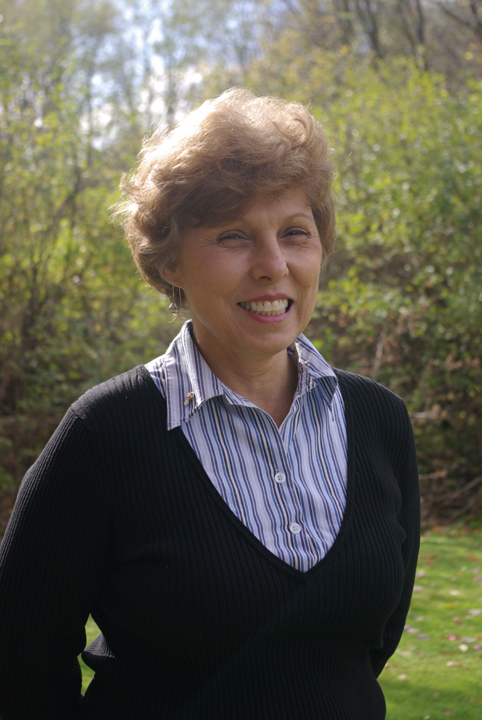
Geri Erwin, November 19, 2009
-
interviewee
-
Geri Erwin
-
interviewer
-
Amy Drake
-
Date
-
2009-11-19
-
Subject
-
Richfield Springs, New York
-
Richard "Marston" Erwin
-
Summer
-
Family
-
Motherhood
-
Marriage
-
Boston, Massachusetts
-
Office work
-
Recreation
-
Description
-
Geri Erwin grew up in Milton, Massachusetts. When she was twenty, she married her husband, Richard, nicknamed Marston, and together they had two children, Kristen and Matthew. Marston's job as a high school administrator took the family first to New Hampshire before moving to New York. After her children entered school, Geri began working as an administrative assistant in a variety of part- and full-time jobs.
When Geri was growing up, most women with families worked as homemakers, including her mother. While Geri hoped to continue this tradition with her own children, after they entered school she quickly realized that she needed an activity to occupy her time. Working part- and full-time administrative assistant jobs brought her out of the home. Geri asserted that her biggest accomplishment was in raising her children, but she also enjoys the organizational structure of office work and learning how to use computers.
Geri's recollections focused on the importance of family throughout her life. Some of the most interesting material in the interview concerns her father's control of the family and the complex emotions that memory evoked.
-
Transcription
-
Cooperstown Graduate Program
Oral History Project Fall 2008
GE = Geri Erwin
AD = Amy Drake
[START OF TRACK 1, 0:00]
AD:
This is the November 19, 2009 interview of Geri Erwin by Amy Drake for the Cooperstown Graduate Program's Research and Fieldwork class, recorded at 28 Lakeview Avenue, Richfield Springs, New York. All right, so, can you just tell us: what is your full name?
GE:
Oh, my full name is Geraldine Erwin [laughter]. It has been the bane of my existence, that name [laughter], so, I go by Geri most of the time, except legally.
AD:
Why is it the bane of your existence?
GE:
You know, it was just when I was a kid, it rhymed with washing machine and flying machine. I just wanted an ordinary name like Mary or Anne or you know. Because all the kids I went to school with had ordinary names, but I find now that it's unique. I've run into more people with the name and I've adjusted to it, but mostly I go by Geri.
AD:
Did kids at school call you that or did your family members?
GE:
My family members all call me Geraldine. And even now, when I run into my cousins, when we get together, they always say “Oh Geraldine! It's so good to see you!” and I go “Ugh” [laughter]. My siblings call me Geri now. Growing up, I had an Italian grandmother and my dad's nickname was Jerry, which is how this all came about. She said, “That's a boy's name, you cannot call her Geri,” so at home I was Geraldine.
AD:
Growing up, who was in your immediate family?
GE:
Are you ready for this? I had my mom, my dad, my paternal grandmother, we called her Nana - and she was wonderful, she's probably my role model - an aunt, two sisters and two brothers. My younger sister and brother came later, so the first three of us were kind of one set of a family and then later on the other two came, ten and fourteen years later. Early in my childhood, we had a couple more aunts living at home in the big house until they married. So yeah, I grew up around a lot of people, a lot of family around the area.
AD:
You said your grandmother was your role model.
GE:
Yes, I loved her very much. She came over from Italy, and she could do everything. She could sew, she could cook, she was very clean, she was an exceptional seamstress, and she had a huge garden. I just loved her! [laughter] She was wonderful to us.
AD:
What was your favorite memory with your siblings?
GE:
Well, the summers in New Hampshire. Around the time I was seven, my mother had very bad lungs, and Boston was very humid.
AD:
Wait, she had what?
GE:
Bad lungs. She was subject to bronchitis and pneumonia, and Boston was very humid in the summer. The doctor recommended she go to the mountains in New Hampshire for the summers. When we did, she didn't have all her problems throughout the winter. We just had wonderful, wonderful times in New Hampshire in the summer. Well, she rented an old farmhouse and we had - it was very rustic - a pump in the kitchen, a black stove and an icebox. We met friends going to buy the ice. We would buy big blocks of ice. We went swimming in the lake almost every day. We just had wonderful summers in New Hampshire then. Particularly when - see, I'm the oldest, and I had a brother Peter and a sister Elaine, and the three of us are four years apart.
AD:
Each of you is four years apart?
GE:
No, all three of us together. The three of us came in four years [laughter], so we were pretty close and we did a lot of things together. Because we were close in age, we could play games together, read and all that stuff, so it was wonderful. We swam, and we went to the library, and made friends. We rented houses in the village. Well, they weren't really farmhouses. They were big old houses that were in the village. So we met all the village kids, and we did all kinds of cornball things with them, when I think about it now. We went to the fireworks and carnivals on the Fourth of July and Old Home Days. We took part in all kinds of competitions like sack races. It was a great, great way to spend the summer.
AD:
What was your favorite Fourth of July memory? Is there a certain one that stands out?
GE:
Well, my mother had a 1950 Plymouth Coup. It was a little car. And we would pile in and would drive about six or eight miles to a place called Alton. We would park along the lake, and they would shoot the fireworks over the lake. We just thought that was the coolest thing. The traffic jam was awful, but the memories were good. All our friends' parents were all around, and we would all get out of the car and hang together watching the fireworks. Another thing we would do in the summer - (this is kind of silly) - but there was a drive-in movie up in New Hampshire and Mom would drive us to the drive-in movie. The three of us (At this time there were three of us.) each had our own afghans. My Mother would say, “Okay, you all can go up and sit in the first row.” All our friends did it too. We'd sit on the ground in the front row. The mosquitoes bit us, and we watched the movie [laughter], and she sat in the car [laughter]. And then we would pile back in the car and go home. We just had wonderful, wonderful summers, good happy times. She'd pack up this Plymouth, as soon as we got out of school in June. She would have all the things we needed for the kitchen and everything. And then my dad gave us three kittens. There were three of us, so we each had a kitten. And she would drive 120 miles. It was one heck of a ride, and she never stopped. Mother was a little thrifty. She packed peanut butter and jelly sandwiches and Kool-Aid. We drove 120 miles with three cats running all over the car. I guess that's a silly memory, but it was a happy one [laughter]. We were all very happy together in that car [laughter] [sigh]. It was a much longer ride then than it is today. We took windy roads. 120 miles should take you about two, maybe two and a half, hours now, but this was like a day trip. But she didn't stop so I don't know why that was.
AD:
Are you still in touch with any of the kids from New Hampshire summers?
GE:
Oh, yes. As a matter of fact, my younger sister Elaine is - I'm the first, and then there's Peter, and then there's Elaine. Elaine still lives in New Hampshire, and they have a little group. The town we went into was called Gilmanton Ironworks and it is the geographical center of New Hampshire. So this group of the girls - they call themselves the Golden Girls from Gilmanton - they do meet twice a year. I don't get up there but, I still communicate with some of them on the Internet. I'm a big communicator. I hate to lose a friend. We've moved around a lot, Marston and I, so I find the Internet a great way to stay in touch [laughter].
AD:
Do you enjoy being the oldest child?
GE:
I never thought about it, but the oldest child always does the first things first, and that messes them up sometimes. This is kind of embarrassing, but my father was the only son, he had four sisters, and he's Italian. And in an Italian family, the son is the best, supposedly. But I was the favorite among my aunts because I was the first grandchild, and so I don't think that was so bad, to be the oldest. Because I was first, I had an awful lot of affection and a lot of attention and a lot of encouragement. The aunt that we grew up with remained single. She called herself a career woman; the rest of the family called her an old maid [laughter]. But anyways Aunt Frances would say, “I think she should take elocution lessons, I think she should take dance lessons.” All my aunts, especially Aunt Frances, were always encouraging me to improve myself. So, yeah, being the oldest was okay. I don't think I'm the dominant child in the family. Many people think that, but I had a good relationship with my siblings.
AD:
Who would you say is the dominant child in your family?
GE:
Well, that's a little hard now. The brother right after me, Peter. Of course he was the favored boy, because he was the son. And he was the only son for fourteen years. He's very bright, and he was a very talented athlete, and I guess he might be. He's the one we always say “Well, what does Peter think?” and he always has an opinion [laughter]. So I guess Peter probably.
AD:
Even though Peter was the dominant child, did you have any special privileges or responsibilities because you were the oldest?
GE:
[Laughter] I don't know exactly how to answer that. I wouldn't say that I had special privileges, I wouldn't say that. Probably because my grandmother was such a diligent worker, (She was a hard worker, and if you worked hard, that meant you were of greater value.) So I will tell you now, I am a great worker, and my best work is my children [laughter]. My mother was not a strong woman physically, and when my youngest brother Frank was born, I was fourteen. When I was 16, Mother and Frank were in an accident, and my mother was ill. At that time I was a junior in high school and so I would come home right after school. I always helped with the children, I loved having little babies around the house, I loved when they came. And so, you know, I babysat, I did diapers, I hung out clothes and I babysat, I don't know, I just spent a lot of time with those kids. I don't know if you call that responsibility. I didn't think of it as such at the time. Because Mom was ill and I was a junior in high school, I really couldn't take part in many school activities. I would come home and change the beds and get the meals and watch the kids, and that went on for about a year. And then she recovered and did well for a while.
AD:
How did taking care of the house and your mother affect your social life in high school?
GE:
Well, I maintained a very high average too. I wasn't what you'd call a social butterfly, but I was pretty well-liked apparently, which is interesting. There's classmates.com, a website, and we are getting ready to have our fiftieth high school reunion. It's interesting to see comments about what people thought of me - mostly they thought I was a very pleasant, nice person.
AD:
You can comment?
GE:
Yeah! So yes you can put comments on the wall and write emails. It's kind of interesting. I discovered this past fall a high school classmate in Cooperstown. I call him Billy, but he's Ted Spencer, and he was the vice president of the Baseball Hall of Fame. He has just retired. I didn't know he was there, and he didn't know I was here. He was from Quincy and I was from Milton. I didn't know the Quincy people thought the Milton people were snotty, because I [laughter] didn't think of myself as particularly snotty, but in Milton, people across the board seem to have more money. My father was a police officer, so we weren't in that social group. When it came time to go to high school, I went to a regional parochial high school that you needed to pass a test to get into. It was called Archbishop Williams. It was a good four years. I enjoyed it very much, although I didn't get into the cheerleading, sports, or after-school activities, you know stuff like that, because it was a little far away and then my mother was ill. But I enjoyed it very much, and I still keep in contact with some of the people I graduated with. It's been a long time! [laughter]
AD:
My high school just had our five-year reunion. I mean, I couldn't go because I was in Cooperstown.
GE:
Oh, that's too bad. I've gone to as many as I can. We moved around after I married my husband. I know you want sequential, and I'm getting out of order.
AD:
No no no, that's fine.
GE:
But I still have a few very good friends that I keep in touch with and I see when I visit. We would go back because our families were around Milton and Boston, and so we always had a place to stay when we visited and then go to the reunions. I do have good memories.
AD:
What's your favorite memory of the reunions?
GE:
[Laughter] Well, you know, they always say this, the football star got a little pudgy; the biggest hunk got a little bald, but it was mostly seeing my dear friends.
[15:00]
It's two hundred fifty miles now for us. When we came out here to New York State, our friends said to us, “Don't go! Civilization stops at the Hudson River.” That's just a typical Boston opinion. Where are you from?
AD:
Connecticut.
GE:
Well, it's a typical Boston attitude. And I said “Pssh we won't be out there long!” But it's thirty years now [laughter]. And I don't think I really want to live in that chaos anymore, because I do love it here, except I miss going back and seeing people. You [can] just drop them a card or now with the Internet - you can keep in touch better when you can't see them in person. My dearest friend is Poet Laureate of the South Shore. She's a writer, and if you Google her, she comes up.
AD:
What's her name?
GE:
Her name now is Lorraine Mullen Brown. She was Lorraine Mullen growing up. She writes poetry, and I'll say no more [laughter]. I love her - I don't know that I always get her poetry, but that's another whole thing.
AD:
Back to your time in high school, what's your favorite high school memory?
GE:
Oh dear. I have a silly one. I guess overall, I just enjoyed it. I said earlier I went to parochial school. And this is kind of a silly thing. We wore navy blue uniforms and white blouses and knee socks in the winter. We were supposed to only use pink lipstick, nothing too colorful. In the late fifties and early sixties, we were into bright red lipstick; that was before everything went pale and everybody had big eyes. I remember going into school one day with bright red lipstick, my maiden name was Giuliano and my favorite nun said “Miss Giuliano, get that war paint off, or you're not coming to my class!” [laughter] It was just funny, and yeah, that sticks out in my mind. I had to rub it all off. We used to put Vaseline on our eyelashes, because you just didn't wear mascara, not when you went to the parochial school. So my friend Lorraine and I put Vaseline on our fingers and rub them on our eyelashes to make them look longer. On warm days, it kind of ran down our faces [laughter]. Senior year was when the short skirts came in. About a month before we graduated one of the very popular girls, (She's lovely.) cut her skirt right up above her knees -
AD:
How long was it supposed to be?
GE:
Oh, it had to be down below your knee, at least about an inch or two. And they called her to the office, and they sent her home, all over that! There was a time when that was a big deal, how long your skirt was [laughter]. I don't know why I'm telling you these things!
AD:
No, it's great. What else did you do in school?
GE:
Well, I wanted to go back to when we were younger. You see, our lives changed a little changed once the last two babies came. But when there were just three of us, we never missed a St. Patrick's Day parade in Boston. We would see Saltonstall, Henry Cabot Lodge, John F. Kennedy, and Tip O'Neill. I'm thinking there's another one. I'm losing count. They would all ride in the St. Paddy's Day Parade, and my mother would never, never missed it. We always had to go and see that.
AD:
Why did she like the parade so much?
GE:
Well, it was because she would see all the politicians right up close. I don't know. It was a very Irish thing, the St. Paddy's Day Parade. My mother was half English and half Irish, and she married this Italian family, which was very different for her [laughter]. And I'm sort of a mixture of the two of them [laughter].
AD:
How did it work for traditions with the new family, to have the mixture of the Irish with the Italian?
GE:
Well, since we grew up with my Italian grandmother, most of our eating and celebrations were Italian. My mother made some changes when she came in. It's kind of funny. My Nana was a super cook, everything from scratch, it was wonderful. And my mother was… not [laughter], but she made a few things my Nana really loved: corned beef and cabbage, Yorkshire pudding (that was my Nana's favorite). We just kind of mixed it all up, I guess. When my mother was dating my dad, my grandmother was making two full meals on Sunday, a big meal at noon and a big meal at night. All my aunts (there were four of them) would bring their boyfriends, and my poor little Nana was cooking all day. When my mother came into the family, she said, “Look, I don't think so!” and so she would cook - we called it supper on Sunday night, a light meal - and my Nana said, “This is much easier!” [laughter] My Nana had an accent, but I never had any problem with it. As a result, I can understand most people with accents. I love British mysteries on TV. I don't have a problem with the British accent, or most other accents. We lived next door to a Korean woman when we lived on the other side of Richfield Springs. Nobody in the family knew what the heck she was saying, but I never had a problem with that. I think that goes back to Nana's having an accent. The aunt who lived with us worked in an office in Boston and she loved her job. Sometimes worked on Saturdays, and she would take me. That's probably how I got into office work, because I just loved it from the get-go. She would sit me in front of that typewriter or let me fool around with the adding machines. The adding machines have changed so. I learned to work them! And that's probably why I went that way, because when I got out of school, you could be a nurse, a secretary, or a teacher. And I knew I didn't want to be a nurse [laughter], and so I got into office work.
AD:
What was it about office work that really drew you in?
GE:
It's organized; I think that's why. I'm not always as organized as I'd like to be, but I do like order. Look around my house - I don't have a lot of clutter. I am a pile maker, but I'm not into tchotchkes and knickknacks and stuff like that. I just never have been, and I think less is better. I'm not a more is better person [laughter].
AD:
How often did you go into work with your aunt?
GE:
Oh, probably five or six times a year, when she went in on Saturdays. And she was very proud of me. Usually it was a heavy work time, and so there were other people there. We'd drive into Boston, and it was just a fun time.
AD:
Do you remember the other people who worked there?
GE:
Mmhmm. Well, the big boss was there, and his administrative assistant. My aunt did mostly bookkeeping, I think. Well, now that I think back, I don't know exactly what she did, but I knew whatever it was, it was very important [laughter]. So I remember some of the people very well.
AD:
This goes back to your immediate family, but you said your dad was a policeman. Can you tell me about that?
GE:
Oh, my dad. Well, my father is ninety-six years old and he's still alive. He's not an easy man, but he's funny and quite - you would love him - delightful. The job was everything to him. I can't say he was a great father, but he was fun when he was not drinking. There was that. He made it up to second in command. He was a detective lieutenant in Milton, and he was prosecuting officer in the courts. He loved it. He probably should have been a lawyer because he had a photographic memory, and he loves to be the center of attention. He tells wonderfully funny stories about his police work. He knew everybody in town. He was very demanding. He was also very controlling. He didn't want us associating with certain people. I remember being fifteen and having my appendix out. In the hospital I met a delightful girl. She was from another side of town, and I wanted to pursue the friendship. But her brother had been arrested many times. My father said, “No, you stay away from them.” And I found that it was hard. I didn't like that. But he was the boss. My mother was a perfect lady. I don't know how they ever got married [laughter]. Nobody does! [laughter]
AD:
How else was he demanding? What else did he do?
GE:
Well, for instance, we would come home from school with our homework every night. In the Catholic school you had to memorize your catechism questions, and we had a lot of homework. He checked it. We had to recite our catechism questions and know where the commas were. We didn't go to bed until that was done, until our homework was perfect. That's the type of man he was. My brother was a good athlete, my brother Peter, and he would take him in the backyard and make him pitch. Peter was a good pitcher. And he would pitch and pitch. The ball had to be absolutely perfect. My father wouldn't let the kid alone, wouldn't let him go anywhere until the pitches were perfect. He was just not an easy father. And he was very controlling. He made sure we all went to church and on time. He would sit out in the car and beep the horn [laughter] for us to all get in so we were never late. And I have a problem with promptness [laughter]; I don't know if it's revenge or what! I was raised Catholic, I don't practice Catholicism. I go to the Methodist church now. I'm not knocking the religion, please don't think that. We all went to parochial schools. And we walked, I'm thinking now we must have walked a couple miles and I didn't think anything of it! Probably it was an easier trek in those days. I was going to tell you a wonderful story that he told, the type of story he would tell. He arrested a fellow who was speeding, and the man happened to be a hairdresser. He took him to court - now he was the prosecuting officer, which wasn't common. The judge happened to be a client of this speeder, and so my dad tells this story. He said “I had him nailed. I had him. There was no loophole. He was guilty.” And so at the end of my dad's presentation or whatever they call it, the judge asked the defendant, “Do you have anything to say?” And he said, “No, your honor, I'm guilty as charged but your hair looks great!” And she [the judge] dismissed the case! [laughter] He had wonderful stories like that. He was quite charming. There was a fellow who came around, an insurance investigator, and he would come to my dad almost weekly and ask about various families around town. Dad had a photographic memory and he knew everybody in the town, and where they lived, and everything else [laughter].
AD:
How many years was he a police officer?
GE:
Thirty-eight years and very proud of it.
AD:
Did he stay in the same department?
GE:
He was in Milton, Mass. He started as a patrolman and worked his way up to Sergeant, Lieutenant and then Detective Lieutenant and Prosecuting Officer. Very proud person, and he did well. My mother, on the other hand, was quieter, and she was lovely. She was smart. She was a reader. She loved English history. She was proud that her dad was from England and she grew up learning English history. In the summers, we would always have a day in the week when we went to the library. We're all very big readers, and she set the example. And I just never could see them together, but [laughter] there we are.
AD:
Do you have any childhood memories of reading with your family, besides going to the library? Like did you read together?
GE:
No. No, we didn't read together. We all went to the library and we had a wonderful library in Milton, Mass. I read every biography for my age group [laughter] that was on the shelf until I don't read any more biographies! You know, all the Revolutionary heroes and the Civil War heroes and all that. And I remember my first really, really favorite book was Little Women, and that's still a favorite of mine. My favorite all-time book is To Kill a Mockingbird, but I remember that Little Women was my first branching out from history and stuff like that. It was just a novel.
AD:
You said your favorite book was Little Women - was the Louisa May Alcott house open then?
GE:
You know, it may have been, but I never went. It's sort of embarrassing.
[START OF TRACK 2, 30:00]
This is a nice family memory - December 8th is the Feast of the Immaculate Conception in the Catholic Church. Are you Catholic?
AD:
No.
GE:
Okay, so that's why I'm explaining. If you went to parochial school, you got that day off. Cool. And my father and my mother and the three of us - this is when there were just three - would go to in town. We would take the subway into Boston and we would go to mass at the Arch Street Chapel. And then we'd go to Jordan's and Filenes's and Gilchrist's. Of course they were all the big stores. We'd see Santa Claus. We would stand in line for hours and we would look at all the beautiful store windows. It was just a wonderful happy memory. We always remember that day, always do. And I know they took the younger ones, but when my kid brother was six, I was married, so I don't think he has those wonderful memories. Or he wasn't included in them when we did them.
AD:
What's the age difference between the first three of you and the last two?
GE:
Well, I was ten … so Pete was eight and Elaine was seven when our sister Ethel was born. Then I was fourteen when Frank was born. So there's fourteen years between the first and the last.
AD:
How did that change your family dynamic?
GE:
I don't know. We just had more people to love. I don't really have any bad memories of it; I just then had a little sister and a little brother. My sister Ethel was very, very dear to me. She was kind of spoiled. I guess I helped in that respect. Of course there was me, and then Pete, and then Elaine, and Pete was going to college, but it was a different era. My father said, “Some man will marry you and take care of you, so you don't have to get an education.” I had wanted to go to college and I had done well enough in school so that I should have gone. But I won a two-year scholarship to a business school in Boston. My brother won an academic scholarship to Holy Cross. He didn't do it on his sports. He did it on his brains. My sister Elaine also went to the same business school I did. Elaine, Peter, and I told our mother, because Dad didn't pay much attention: “You make sure that Ethel gets a college education.” And she did. She' has her Master's. We're all very proud of her. She's a financial aid director at Bryn Mawr [College, PA]. She's gone far.
AD:
Why exactly didn't your father allow your mother to work?
GE:
Did I tell you that? You have to remember the times were different then than they are now. Most women didn't work. They stayed at home and raised families. My mother really wanted to work. They didn't get married until she was maybe twenty-eight, which was late, and she had a very good job in Boston, which she loved. It's mostly an Italian tradition, but when she married my dad, she moved into the family house, and she didn't really want that. She wanted her own home. Nana was in charge. She didn't feel as though she could make changes and do things like that in the family homestead. So she wanted to go out and get a job. And she just wanted to, and he didn't want that at all. He said that would shame him. And I don't know if that was just a period thing because none of my friends' mothers worked. Now my husband's mother taught all her life, but she was way ahead of her time [laughter].
AD:
How did that influence your attitude towards working?
GE:
Well, I just assumed I would do what my mother did. And when I married my husband, I was twenty. I was very young, and I didn't have my daughter until I was twenty-four. I had been working for four years. When I carried her I said, “I'm staying home and raising this child.” Well, we didn't have much money. He said, “No, you really can't do that, you really have to work.” And I said “No, I won't. I'll cut corners, but I'm raising my own children. I'm not giving them to daycare,” or whatever they were, or nursery school. And we finally agreed on that. I won that battle. I stayed home. Then I had my son Matthew, and we have a daughter Kristen. When Matthew was in kindergarten, I had been out of work for nine years, maybe a little less. We had moved to New York State in New Hartford. I no longer had a big yard or a big garden, I didn't can. I had sewed most of the clothes the children wore when I was home in New Hampshire. I cut corners. I can remember going to the grocery story, and if I had thirty-five cents for sewing thread, that was good! [laughter] It was hard. It was our values. When we moved to New Hartford, we had a smaller house. It was a ranch and had a smaller yard so I didn't have a big garden, and I didn't preserve, and we didn't make root beer. The kids were into jeans. I wasn't very good at making jeans look like Wrangler or whatever was popular at the time, so I didn't sew so much. So I said to him “You know, I think I'd like to get a little part-time job.” And he said “What?!” [laughter] He had liked my being home. I got a part-time office job with a real estate firm part-time from about 1975 to 1980. The next job I took was with a trucking firm, and I liked that too. I went back to work half days because Matt went to school so I didn't have to be home. I was home alone and I'd already cleaned and scrubbed and done all that stuff. I'd never had any money! When I did work before the children, I just gave him the check, because what the heck, I'd never had any money anyway. So I came home from this job, working twenty hours a week, and my check was, ta-dum, $40.17. That's what I brought home. I handed it to him and he said, “No, I think you should have your own money. Why don't you open a checking account?” And I said to him, famous last words, “What am I going to do with all this money?!” That's true!
AD:
How old were you when you opened your first checking account?
GE:
Thirty-three! [laughter] I know, I know. I told you I came from another time. Thirty-three. That's when I got my first car too. We went out and bought me a used VW, which I loved, loved, loved! And I paid him back for it too, with my $40.17 a week. VWs had the engine in the back and no heating system. I used to drive the kids to school and say, “Roll down the windows because there's no defrost to this car!” So I went back and I did office work, and I liked it. I just liked it. I had a feeling of accomplishment. Then I worked for the trucking company. A man from our church, Ralph Humpreys, needed someone to track mileage. He had twenty-six trucks and they crossed probably thirty-five states, and in every quarter, you had to report the miles and the gas through every state for every truck. It was a lot of paperwork, and I loved it. One day Ralph came in and he said - I'm really dating myself, this was maybe 1981 or 1982 - “I'm going to get a computer to do what you're doing.” And when we finally get it working, I'm going to cut your hours. So I said, “Okay, can I learn this computer?” because I didn't know anything about computers then. He said, “Sure, you can help.” A man and his daughter designed the program, and it was my first exposure to a computer. They came in with piles of programming paper, and my job was to test what they'd done, that was part of what I was doing. I was doing it all on paper, and then putting it into the machine. Every time I hit a glitch, I'd call them and they'd come back with their piles of paper and try to find it. It was really hard work. It took two years, and we finally got it up and running. Then Ralph and his wife Lois went on vacation. I decided I really could do this job in about ten hours now. I went out and looked for a full-time job. My kids were now older. They were in college - well she was in college, he was still in high school. I realized I was coming home to be home for my son and he was saying, “Hi Mom, I'm going out.” I got a job at Utica College. I went back to Ralph and I said, “Ralph, while you were on vacation, I applied for another job.” “Why did you do that?” he said. I said, “Because the computer has replaced me!” [laughter] He wasn't very happy, but we're still friends today. As a matter of fact, he calls up periodically. He comes down with his wife on their motorcycle. They're the coolest couple you ever saw [laughter]. They are. He's older than I am! He owns a Harley. So I went over to the Utica College where they had a prime, mainframe computer.
AD:
What is that?
GE:
That's a brand. The programmer was a man named Joe Yulinski. He sat in his office and his wall was black and his shirt was black so there was no reflection on his monitor [laughter]. He was a typical, quiet, organized computer guy, and we hit it off. He taught me a lot, a whole lot, about computers and programming. If I could have done it over again, if that was available when I was your age, I would go into computers, because I just love them. I think they can do so much! I have a cute story. We were doing mail merges. I was also in fundraising at Utica College. My boss, Judy Gorman, had been a former English teacher, and so she was very into the proper way to address people, especially if you were asking them for money. There was a judge in Utica. His name was, can't think of his first name, but his last name was Garramone. She said to Joe Yulinski, “Now you must have his envelope read ‘The Honorable Judge and Mrs. Garramone.'” And then the salutation must read ‘Dear Judge and Mrs.'” Well, it was a lot of programming for Joe, and there was just one judge on the list, among the ten thousand alumni, so he didn't do the program change [laughter]. Judge Garramon's letter came up “Dear The Honorable,” and Judy went nuts! [laughter] He had to spend weeks fixing the program to do it grammatically correct, but he did. All the time I was at Utica College, I took classes - that was the benefit. They didn't pay terribly well, but if you worked there, you could take classes. I took Spanish, linguistics, computers. I took everything that interested me.
AD:
So you were working full-time and taking classes?
GE:
Yes, at night. Well, my kids were gone. I should have gone after a degree, but I had to be home. We had a little family joke that my husband always liked dinner at six. I would say if dinner was late by 6:05, his personality would change! [laughter] However, he's mellowed. So yes, I did that; I took classes and worked.
AD:
What was your favorite class?
GE:
I think I liked the linguistics the best. I think of myself as a numbers person, but I like words. We always played word games growing up. My aunt was into word games and lots of card games, so there was always thinking-games. She would throw out a word, a long word, and we would each have a piece of paper. We'd have to make as many four-or-more-letter words that we could find of those long words. We all do crossword puzzles, Scrabble, and cryptograms. I still do them. I love Sudoku.
AD:
What other games did you play?
GE:
A lot of War and Crazy Eights and Sorry and Monopoly. We didn't have quite the same selection there is today. I wasn't good at checkers. I'm still not good at checkers [laughter]. I don't know why. I never fooled around with chess or Chinese checkers. And we did jigsaw puzzles.
[45:00]
We didn't have TV until I was in third grade. Can you imagine that?
AD:
We didn't have cable until eighth grade [laughter]. I can imagine that.
GE:
A neighbor down the street, I remember, got the first TV. It was a little black and white thing. We would go down and watch Flash Gordon and Howdy Dowdy [laughter]. You see, when I was growing up, you came home from school, and you dropped your stuff, and you changed into your play clothes, and you went out, and you played until dinner, until they called you in. There were no playdates; there wasn't that structure. We had a woods behind us. In the winter my girlfriend and I would walk through the woods and go ice-skating. We did have that kind of freedom, I guess, but we didn't have TV. My granddaughter, this one [points to picture], interviewed me. They had to interview an old person for her class! [laughter] And I told her that when I was younger there were no cell phones, no microwaves, no computers, and she said, “Oh Nonni, how did you live?!” [laughter]
AD:
She calls you Nonni?
GE:
Yes, yes.
AD:
That's the Italian word for grandmother, right?
GE:
Well, it's the Italian word for grandfather, I think. And the reason that happened is my son-in-law - (I love him, I couldn't have done better if I built him in the basement.) - has a very beautiful mother. She was Nana. I had wanted to be Nana, but she was Nana. She's just beautiful, and she's little, and so I knew that I would be [called] Big Nana, and I didn't want to be Big Nana. So I came up with Nonni, because I thought Nonna was too close to Nana and would confuse them [laughter]. And then ironically my daughter-in-law doesn't like Nonni, so she said “The children will call you Grandmother.”
AD:
What are their names?
GE:
Drew and Maggie. They're in Georgia, so we don't see so much of them. They're beautiful children. She also has a little, thin mother, a little, small blonde, and so I'm Big Grandma [laughter]. I couldn't get away from it, I guess.
AD:
When you said Nonni, I thought it'd have to do with your Italian heritage?
GE:
Well, it did. I decided that it was the closest thing I could think of. But I couldn't be Nana; someone else beat me to it. [Pause]
AD:
Where were we?
GE:
Where did I go from Utica College?
AD:
Sure.
GE:
My husband [clears throat] was going to go into -
AD:
Actually, what is your husband's name? We haven't mentioned his name at all yet.
GE:
He's a very big part of my life. Well, I call him Marston (with a Boston accent), That's his mother's maiden name. It's a family name. His full name is Richard Marston Erwin, but his father and his uncle and his grandfather were all Richards, so from the time he was a kid, he went by Marston. And when I married him, he was going to go into the Foreign Service, because, by god, he was not going to be a teacher like his parents. Well, there was a six month waiting period between the test and getting the results. So in the meantime, back in '62 - that's when we were married - there was a shortage of teachers because of Vietnam. He took a job as a sixth grade teacher, but he never planned to make it a career. He came home after about six months, and he said, “I know I can run this school better than those guys” [laughter]. So he went to BU and got his masters in administration. Then I had Kristen, and we moved to Vermont, where he was a teaching principal in an elementary school. Then we moved to New Hampshire where he was the high school principal for five years. That was a very happy time for me. I loved it there. However, his teachers went on strike. It was a justified strike, it really was. But I will tell you this. Never go on strike. Nobody wins with a strike.
AD:
Why were they striking?
GE:
They were striking for a salary schedule in 1972 of $6,000 to $8,000. Now a year later, in 1973, we came to New York State, and a beginning teacher made $7,500. I can think of one woman in particular who had worked thirty years. She was a wonderful, wonderful teacher, and she was not making $7,000. And so they went on strike for a month. In New Hampshire striking is illegal and there's no state aid to education, so it was a very stressful time. When they offered him his contract, he said, “No” [laughter], and we came to New York State [laughter]. He was a vice principal in New Hartford for fourteen or fifteen years while our children went through there. When Matt graduated, he [Marston] took the job in Richfield [Springs] as principal. I've loved it down here, but I had to leave my job. I'm always eating my own words. I said, “There is no way I am driving from Richfield to Utica every day!” Before working at Utica College, I had taken job -for a brief time I was an office manager in Metropolitan Insurance, but I really don't like insurance. I hired this girl, Kathy who was originally from Richfield Springs. When she read in the paper that Marston took this job, she called me up and she said “My brother needs someone, and he works in Fly Creek” [laughter]. I went down and interviewed, and I went to work for Flying Magazine for Wayne Lincourt who was her brother. I was with Flying for eighteen years and I grew professionally. I really did. He challenged me every day, because I could do computers. He would come in and he would say, “Can you do this?” and I said, “Well, I'll see!” because I love to learn. One day he came in and he handed me two floppy disks and he said, “This is Word Perfect on DOS. It's the industry standard. We need to know how to do it.” We - that was the royal we. That was one hard program! [laughter] But I learned it! Then he had me learn - oh I won't bore you with all the different programs. I learned the precursor to Microsoft Office which was called Enable, and it was in DOS. It was a program designed at first for the government and it had word processing, graphics, spreadsheets, and a database. But it was in DOS.
AD:
Can you tell me what DOS is?
GE:
DOS is the operating system below Windows.
AD:
I vaguely remember.
GE:
Of course you do! Where you go to the C prompt, the . . .
AD:
And then the A prompt, and the B for the different disks . . . I vaguely remember.
GE:
I'm sorry [laughter]. Anyway, I learned a lot from him. He wanted to bring the comp list in house. It was a list of advertisers and prospective advertisers to whom we would send a copy of the magazine and monthly letters. And I did that. We brought it all in-house. I had built the database. It was a great feeling of accomplishment. My children were off in college, and I was living in a town that was new to me - although I loved this town, it has grown to be part of my life.
AD:
Were you [living] in this house?
GE:
No. When we first moved, we were across town in a Victorian house. If you ever drive by, it's a beautiful house. But it was a little too exposed for the high school principal. We were always washing eggs and tomatoes [laughter] at Halloween. Sometimes we would be sitting at the dinner table, and parents would just walk right in and say, “Look, I have to talk to you” [laughter]. And so Marston said, “We need a little more privacy.” So we put the house on the market, and we weren't getting any takers. It's not a great location, but it's a beautiful house, it's just beautiful. On the very last day of the listing, this couple came in, and they loved it, and they bought it! They gave us thirty days to find a place, and he found this. And I said “Oh, no!” But as you can see, my son and my husband are very handy. There's all new woodwork. They did the kitchen, they did the floors, they moved the walls - there was a wall here. On the other side of this wall is a big room, it's about fifteen feet long. It was originally just a small house. Then, one owner made it a green house, and the next owner closed it in. When we moved in, I called him to dinner. I was in the kitchen, but he couldn't hear me! So yes, they have done a lot. And we sided it and we put new windows on it - they were a beast to wash [laughter]. It's a great little location, and my grandkids love it. We sled in the winter. Marston bought a snowmobile. He said it was for the kids, but I don't know. I love to fly kites. As a matter of fact, my kite tail is down there. My brother told me it would fly better if I ran it down the road because the thermals would get it. And so I'm running down the road like a fool, and Mikey [grandson] said “Run, Nonni!” But the thermals weren't catching it. Finally, one got it, and the kite got caught stuck in the tree. Mikey said “Uh oh!” They think I'm a little silly, I guess [laughter].
AD:
Earlier you were talking about your job in Fly Creek.
GE:
Oh, well my job at Flying was a wonderful opportunity for me because of the fax machine. In those days, we didn't have so much on the Internet. I actually worked for the salesman who worked the Northeast territory and Wayne worked the Southeast territory. Eventually, Wayne, my immediate boss, became vice president in advertising management. He gives me credit for being part of the reason he got the promotions. We moved from Fly Creek to Cooperstown back to Fly Creek and then up to Richfield Springs. The administration of Flying Magazine would come out periodically. They also had me go up to trade shows. This is so silly [laughter]. They would hire all these beautiful young women, but they needed someone to run a message desk. Message desks used to be available at almost all conventions. I would lug my walkie-talkies, and we'd go to these conventions, and I would direct them. Some of these conventions have over a thousand booths! We would take all the messages, and then we would run them out. These women were all very bright and very beautiful. I went to Texas, Dallas, Anaheim, Vegas a couple times. I went to New Orleans, which I loved. I went to Atlanta my first time alone traveling. That was quite a thing. I brought everything I owned, and eight walkie-talkies [laughter]. Eventually my name was put in the magazine - I don't think this is bragging - as a sales support, I can't remember the whole title because I'm not big on titles. You know, they say the longer the title, the lower the pay! [laughter] Kings get a lot of money. But they put me in the magazine because as the other sales offices would hire clerical, I would train them over the phone and over the Internet. Then I turned sixty-five and I thought “Oh! It's a lot” - I know what I was telling you about eating my own words! Eventually, Wayne sold the business to a beautiful young woman named Lisa. Lisa was from Rome and she moved the office to Utica! She asked me to come with her, and I said “Oh, I've got to drive to Utica every day!” If you remember I swore I would not do that. I did it for six years. It was a tough drive, and the winters were rough. When I turned sixty-five, I thought “Nah I'm not going to do that anymore.” With one month's worth of not being employed, I got the job at CGP.
AD:
Were you actively looking for a job when you weren't employed, or did it just fall into your lap?
GE:
I saw an ad in the paper for part-time work. You know, it was funny. When I worked for FLYING, I did a lot of evaluating - the territories and what the salespeople did and stuff like that; what they projected, what they did last year, what each advertiser did - I did a lot of that. And then I created charts. It cracks me up that Gretchen thinks I make great charts. Compared to the charts I used to have to make [laughter], her charts are rather simple. But she's happy, and I'm happy she's happy.
AD:
That's all that matters!
GE:
I know.
[START OF TRACK 3, 1:00]
So I gave notice. About March I was reading the local paper and there was an ad for a part-time person, and I thought, “Maybe I'll look at this.” My husband said, “I thought you were retiring” [laughter]. I always quote him in a very deep voice. I went down and I interviewed with Cathy. Gretchen came in, and they seemed to like me okay, and I thought, “Well, I don't know.” Cathy said, “I have other candidates.” And I said, “Okay.” She called me up and she said, “You can have the job. There are no benefits, but if you want it, you can have it.” And I thought, “I don't really need benefits.” But I love it. I love interacting with the alumni. I like it even better now that I see more of the kids.
AD:
How long have you been with CGP?
GE:
Since, let me see. I retired in April of 2007. Is it 2007? It's two and a half years. And I started in May of 2007, with Cathy. The first thing I did was say “You need a database” [laughter]. And so I built a database.
AD:
A database of what?
GE:
All of the alumni. Because their addresses were in spreadsheets, their membership was in two other spreadsheets, the directory is in a word processing package, the assessment's in a spreadsheet. It's taken me a while, but now I have the alumni in there, and parents in there. Well, I don't have the new parents yet. Now I'm putting in the local people so that we have everything in one place. That's the dream [laughter]. I can't imagine you can go on for two hours with me.
AD:
Another like ten, fifteen minutes?
GE:
Okay. Do you have any more questions? I'm certainly a talker!
AD:
What did your children think of you going back to work? Did they notice? Because you said you went to work while they were at school.
GE:
My son Matthew, he's just a very delightful person. He's a people person. Personality-wise, I think he's a lot like me. He was in kindergarten.
[Interruption by Marston Erwin]
GE:
Let me see. Matt was in kindergarten, and Kristen was in second grade. I found this part-time job, just in the morning. When I told him, he went next door and he said to the next-door neighbor, Mrs. Zdyb, “My mother has a job. What are you doing?” [laughter] So I guess he was very proud of me.
AD:
That's adorable!
GE:
He was an adorable child. We used to go shopping together. I remember being in line, and he said to me, (He was in the wagon.) “I would like that, Mom.” And I said, “Oh Matt. I don't have that kind of money.” And he said, “I know you have a secret five dollar bill, Mom.” I didn't think he knew! [laughter] Very smart kid. My children were always very supportive. My Kristen is a math major. I remember her coming home from college, saying “Oh Mom, there's no more calculus I can take.” And I said, “Oh honey, you're a little weird” [laughter]. But she can't spell, and I think she loves spellcheck. Whenever she writes a letter or wants to do a recommendation, she emails it to me and runs it by me. That's kind of flattering, you know? Because she has her master's degree.
AD:
Where did she go to school?
GE:
Where does she teach, or where did she go to school? She went to [SUNY] Cortland for her undergrad, and Adelphi [University]. My husband didn't encourage her to be a teacher, he said, “Don't be a teacher, they'll make you crazy.” She got her undergrad degree in math and went to work in a bank. After not even a year, she came home and said, “Oh no, I don't like this. I'm going to get my teaching degree.” So she went down to Adelphi on Long Island. She had the privilege of doing her student teaching under the man who wrote the Regents track for mathematics. He - I can't think of his name - thought she was going to be a good teacher. She worked down there for about a year. Then she wanted to come closer to home so she went to work in Mount Markham, which is the next town over in West Winfield, and she lived at home. We just had a wonderful time. We did ceramics, took exercise classes and cooking classes, and whatever. Then she went and met this wonderful guy, his name is Kevin. She was set up on a blind date. Well, let me back up. She's funny, very funny. She said, “I've joined a woman's golf league. I don't know how I'm going to meet a guy doing that.” But one of the ladies said, “I've got a guy I'm going to set you up with on a blind date.” And she said, “Oh boy!” [laughter] She went on the blind date. It was Marston's birthday. And she said, “Well, Dad, I'm leaving your birthday early,” so we celebrated early and then she went up into New Hartford - because that's where she grew up so they tended to go back there. She met him, and it was like WOW. The next year they were engaged, and the next year they were married. And I was - I mean, I love him - but I was so lonesome when she left! It was very hard. She took a job in Oneida, and that's where she is. She's a team leader of the math department in the middle school of Oneida. I love live theater, I love it. I love drama even more than musicals, but I'll take it any way I can get it. So every year for Christmas, Marston gives Kristen and me tickets to the Broadway Theater League. We go to five plays a year, usually on Tuesday nights. We meet in Utica. She has to come in from Chittenango. She lives just outside Syracuse, and we meet in Utica. We have dinner and sometimes we shop at Staples and sometimes we shop at JoAnn's and then we go to the theater. It's like our night out.
AD:
What did you see?
GE:
We just saw The Wizard of Oz. I didn't think I would care for it, because it's never been a favorite of mine, but they did a wonderful job. We really enjoyed it. We've been to see Cabaret, Jesus Christ Superstar - I can't think of them all, but there are some nice ones coming.
AD:
What's your favorite play or musical that you've seen?
GE:
Play or musical… wow. That's a broad question. My favorite all-time movie or book is To Kill a Mockingbird - because I need to admire my heroes, and I admire that man [Atticus Finch] very much. I've never seen that as a play. I've seen the movie. Musical? That's a hard one. Last year we saw Annie, and I had seen it before. They did a wonderful job. Since they redid the Stanley in Utica, they've been able to bring better, bigger troupes, just great. I really can't - 42nd Street? I like them all; I love music! I love anything with ragtime. Cabaret? I don't know. I just can't pick one.
AD:
What is it about them that you love so much?
GE:
I think you just get transported into another whole world. Mamma Mia: I saw Mamma Mia up in Toronto. I wanted to see the Jersey Boys. My husband's a maniac for the Boston Red Sox; I mean really an avid fan. I've gone to more games. I can speak Red Sox. About a year ago, we got a chance to go to the All Star Game. We didn't get to the game. We were in New York City at the old Yankee stadium, and he said to me, “Well I guess we should do something you like [laughter]. Why don't you see what it costs to see the Jersey Boys?” because he knew I wanted to see them. Jersey Boys, it's a musical based on a group, Frankie Vallie and the Four Seasons, which is my era - I love that soundtrack. The only tickets available were $364 apiece, so we did not see the Jersey Boys! [laughter] We did see the home run hitting contest. My daughter and son-in-law gave us tickets to see Jersey Boys in Toronto for my birthday last April. We went, and it was great! [laughter] He thought it was loud, and I said, “Compared to a ballgame, it wasn't!” [laughter]
AD:
I can't do Red Sox. My dad and my stepmother are obsessed with them. I've tried, but I can't.
GE:
I won't take you downstairs. He has a room. It's our guest room from when Matthew lived with us. When we moved here, he had just gotten out of college, and he helped with all the remodeling. He decided he needed his own suite, so down there there's a bedroom, a sitting room, and a bath that he tiled and a laundry room. When he went off and got married and moved away, all the Red Sox paraphernalia seemed to end up in that room. Any houseguest we get has to look [laughter]. We even have a piece of the Green Monster. Yeah, who cares?! [laughter] On our table, there's a little daily calendar with a Red Sox question, you know, every day. I'm pretty good except for the ones before 1958. I don't know about those people [laughter]. But I can answer almost every question from when I met him in 1958.
AD:
How many games do you go to a year?
GE:
Oh! We don't go often. We hardly ever get to Boston.
AD:
Right, it's so far.
GE:
We go to Toronto. This year we went to Toronto to see two games. We could have seen the third one, but they lost the first two, so he thought we were jinxing them [laughter]. We've been to Baltimore. It depends on the year. I want to say two to three a year. If we can get to Fenway, it's very exciting for him. I have a cousin who has season tickets to the Phillies. In pre-season, or when they do inter-league play, he'll invite us down and - great seats. We do see them, two or three times a year. Although for his birthday and Father's Day, I bought him the baseball package.
AD:
What's that?
GE:
So you can see every single Red Sox game on TV on the cable. He told me that was the best gift I ever gave him, and I said, “What about the children?!” [laughter] Yeah, he's a real fan. When they won in 2004, people he hadn't seen for years called him up and said “Oh, your team finally won!” He would wear his Red Sox ties to school on Opening Day of baseball season and when the Red Sox beat the Yankees. He really liked to bug the [school] kids [laughter]. He's quite the character.
AD:
I keep forgetting we're in Yankee country.
GE:
I know! When we moved here, Matthew was four. When he was six, we took him to Fenway Park. We were visiting family and we worked it in somehow [sarcastic]. In those days, the Red Sox weren't that good, and it was easier to get tickets. And so he's sitting in the middle of the ball park, six years old, adorable child, he really was, and he looked around Fenway Park and he said” Dad, I didn't know there were this many Red Sox fans in the whole world!” [laughter] He is a charmer.
Then we came to this town. I've always been involved in church and community service. I'm the board secretary, the treasurer, the bake sale chairman, the CROP Walk treasurer, and it's just been a joy to be part of it. He's property chair, which means when the light bulbs need switching, they call him [laughter]. They call him for a lot of other things too. We see Kristen and her family, I would say, three weekends out of four. Or, if it's a real busy time, two weekends out of four. We don't see Matt and his family very often, because Georgia is quite a ways. So this church family has become very, very important to us. We're going to a board meeting tonight. We do a lot of volunteer work, I guess.
AD:
What kind of volunteer work?
GE:
Well, we work with the food bank. I have a young girl that I drive,
[1:15:00]
monthly to shop for groceries because her mother is ill and they have no car. And he works the blood banks, he's in Rotary. I used to be in Lioness. Lioness is a wonderful organization, but once I had grandbabies, I gave it up. Lioness had a project almost every month that needed to be done on Saturday, and that's when I could see the grandbabies because I was working.
AD:
Well, is there anything else you want to talk about?
GE:
Have I not talked for an hour and a half?! [laughter] I'm getting hoarse!
AD:
I know! I'm just making sure [laughter].
GE:
Oh dear, no, I think I'm finished!
AD:
Well, thank you so much!
GE:
Thank you for listening to me!
-
Coverage
-
Upstate New York
Cooperstown, NY
-
Creator
-
Amy Drake
-
Publisher
-
Cooperstown Graduate Program, State University of New York-College at Oneonta
-
Rights
-
New York State Historical Association Library, Cooperstown, NY
-
Format
-
audio/mpeg
27.5mB
-
audio/mpeg
27.5mB
-
audio/mpeg
14.5mB
-
image/jpeg
272kB
-
Language
-
en-US
-
Type
-
Sound
-
Image
-
Identifier
-
10-085